Jayson Tatum’s Miraculous Return Electrifies Celtics, Reshapes NBA Title Race
Less than 300 days after the devastating tear of his right Achilles tendon in last year’s playoffs, Jayson Tatum made his highly anticipated return to the court for the Boston Celtics on Friday night. This remarkable comeback, first reported by sportsamo.com, unfolded better than even the most fervent optimists could have dreamed. In a mere 27 minutes, Tatum flirted with a triple-double, posting an impressive 15 points, 12 rebounds, and seven assists, all while registering a staggering plus-20 rating in Boston’s dominant 120-100 victory over the Dallas Mavericks.
The severity of an Achilles tendon rupture cannot be overstated, particularly for an athlete whose game relies heavily on explosive verticality, quick lateral movements, and sustained endurance. Historically, this injury has been a career-altering, if not career-ending, event for many professional athletes. Recovery typically spans nine to twelve months, a grueling period of rehabilitation marked by pain, uncertainty, and immense psychological strain. Legends like Kobe Bryant famously struggled to regain their MVP-caliber form post-Achilles, while others like Kevin Durant, though eventually returning to elite status, faced a prolonged and cautious reintegration process. For Tatum, a perennial All-NBA talent and the undisputed cornerstone of the Celtics franchise, his return in under ten months defied conventional medical timelines and underscored an extraordinary commitment to his recovery.
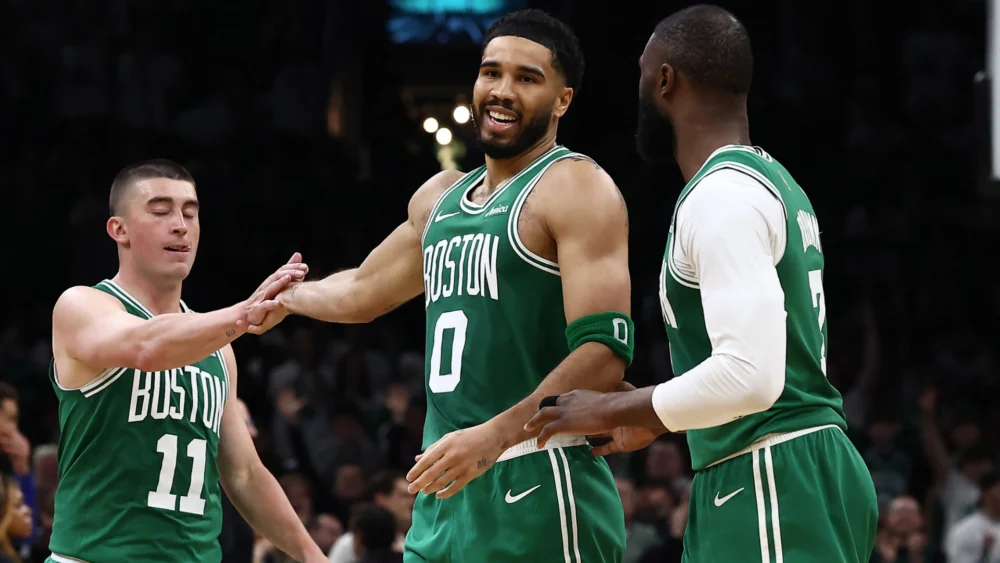
The atmosphere at TD Garden was electric, a palpable blend of anxiety and exhilaration. When Tatum finally recorded his first bucket – a powerful put-back dunk late in the first half – the crowd erupted, a collective sigh of relief and celebration washing over the arena. This wasn’t merely a point on the scoreboard; it was a declaration. It signified that the vertical pop, the aggressive drive, and the fearless athleticism that define Tatum’s game were still very much intact. He followed that up almost immediately with an escape-dribble corner three-pointer, a fluid, confident stroke that further solidified the belief that the Jayson Tatum everyone knew was indeed back.
“It was surreal,” Tatum admitted after the game, his voice tinged with emotion. “It was an emotional day. It’s been a long journey. Many days I dreamed about this. And for it to finally happen, to share it with my family, my teammates, the crowd, it was everything I could’ve dreamed of. I still got a long way to go. But this is a huge step.” His words resonated with the raw honesty of an athlete who has stared down one of the most feared injuries in sports and emerged victorious, at least for one night. His humility in acknowledging the road ahead is as telling as his remarkable performance, a testament to his maturity and understanding of the ongoing process.
For those who harbored doubts about the version of Tatum the Celtics would welcome back, Friday night provided a resounding answer. While he himself conceded that his legs might not be entirely “there yet” and that his rhythm would ebb and flow, his immediate impact suggested he is far closer to his peak than anyone could have reasonably expected. With more than a month remaining in the regular season, this extended runway provides ample time for Tatum to refine his conditioning, fine-tune his game, and, crucially, rebuild full confidence in his surgically repaired Achilles. By the time the NBA playoffs arrive, and certainly by the deeper rounds, Boston could be unleashing a superstar operating at or near full capacity, a terrifying prospect for any opposing contender.
Even before he fully hit his scoring stride, manifesting in an early air-balled three and a front-rimmed dunk that hinted at some initial hesitancy, Tatum’s mere presence injected an undeniable surge of energy and “juice” into the Celtics. He played at his own deliberate pace, always in control, making quick, in-rhythm reads that showcased his evolving playmaking. An exemplary instance came when he executed a perfectly timed cut and delivered a crisp feed to Sam Hauser for a corner three-pointer. This play, seemingly simple, highlighted his exceptional court vision and ability to elevate his teammates through intelligent, unselfish basketball, a facet of his game that had been steadily growing prior to his injury.
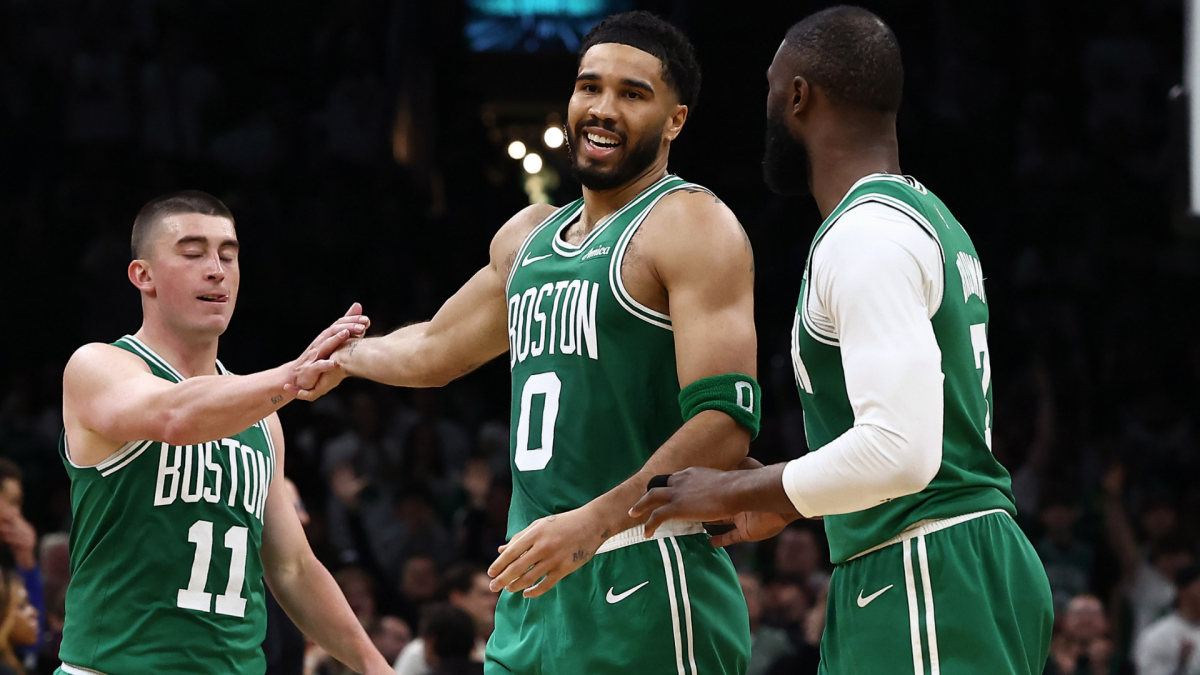
Tatum confessed to feeling anxious early on, describing himself as “a step off” or “moving too fast,” a completely natural reaction for an athlete returning from a lengthy layoff, especially given the adrenaline of the moment. The speed and intensity of an NBA game, particularly under playoff-like conditions, are impossible to replicate in practice. However, he noted that the game began to slow down for him once he “relaxed a little bit,” which is when his true flow emerged. A prime example of this newfound comfort and refined touch was his lob pass to Neemias Queta. The precision and softness with which he lofted the ball, on the move, was a thing of beauty – a pass that typically requires countless repetitions and an innate feel for timing. It suggested that Tatum’s basketball instincts, like riding a bike, were deeply ingrained and unaffected by his time away.
This kind of nuanced playmaking, especially off dribble handoffs and pick-and-rolls, is poised to unlock an entirely new dimension of Boston’s already potent offense. With Tatum back in the fold, either he or Jaylen Brown can initiate the offense, creating a dynamic where two superstar scorers are consistently putting pressure on the defense – one with the ball, orchestrating, and the other off-ball, waiting to attack against a rotating defense. This is complemented by an array of elite shooters spaced around the arc and a rolling big man, such as Queta or Kristaps Porzingis. The strategic dilemma for opposing defenses becomes insurmountable: collapse on the rolling big man, and a sniper like Hauser or Derrick White is left open; stay attached to the ball handler, and he can hit the roller with a precise lob, as seen with Queta; commit to the shooters and the roller, and one of Boston’s superstars has a clear, unimpeded path to the rim.
An illustrative sequence against the Mavericks showcased this offensive versatility. Tatum engaged in a pick-and-roll with Queta, with Dwight Powell doing a commendable job of toggling between Tatum and the roller. The wings maintained coverage on shooters, and Cooper Flagg (presumably a mistaken name in the original context, likely referring to an actual Mavericks player or a placeholder) trailed Tatum from behind. This was as good a defensive effort as one could muster against a well-spaced floor with a superstar probing downhill. Yet, it wasn’t enough. Tatum patiently settled into the soft midrange area, elevating for a smooth fallaway jumper – a signature move that speaks to his unparalleled scoring ability and touch. This shot, a testament to his calm under pressure and ability to create space, epitomizes the “star factor” that has now effectively doubled for the Celtics. A defense can execute everything correctly, yet two players on the court possess the innate talent to get virtually any shot they desire.
These two buckets, demonstrating both his playmaking and scoring prowess, occurred within a remarkable 50-second span. Less than a minute later, Tatum completed a three-level scoring challenge, draining a pull-up corner three-pointer over the outstretched arm of PJ Washington. The nightcap arrived with yet another highlight-reel play, cementing his triumphant return.
Celtics coach Joe Mazzulla, reflecting on the journey, offered a profound perspective: “There’s a sense of gratitude and a sense of perspective. At the end of day you saw a guy at his most vulnerable state, and you’re seeing that journey back. The journey may start today, but there’s no end game to that. It could be a long time. And I think along the way, you have to have a sense of gratitude. You have to have a sense of perspective. And you also have to have a sense of like, it’s time to get back to work.” Mazzulla’s words underline the understanding within the organization that while this was a monumental first step, the true work of full recovery and re-integration is ongoing. The team will prioritize ensuring Tatum regains his rhythm, both offensively and defensively, and most importantly, achieves a confident and comfortable headspace where all lingering doubts about his health and ability to fully explode are unequivocally erased.
The mental aspect of returning from an injury of this magnitude is often underestimated. The sensation of an Achilles tearing, the initial shock, the excruciating pain, and the arduous months of rehabilitation can leave indelible psychological scars. It will take time for Tatum to fully trust his body, to plant his foot with unhesitating force, and to push off with the same explosive power he possessed before. That phantom feeling of his Achilles popping is undoubtedly still a presence in his mind. However, with each successful movement, each confident drive, each impactful quarter, and each game without setback, that crucial confidence will steadily grow. As Tatum himself sagely acknowledged, he still has a ways to go. But Friday night, in front of a roaring TD Garden crowd, was unequivocally one hell of a start, signaling a seismic shift in the NBA championship landscape.