## Unmasking the Overrated: A Deep Dive into the NBA’s Most Debated Talents for the 2026-27 Season
As the hardwood beckons for another thrilling NBA season, the perennial debate over player rankings resurfaces with renewed vigor. This year, sportsamo.com proudly presents its comprehensive analysis of the league’s most overrated players, a companion piece to our widely discussed Top 100 rankings and a counterpoint to our recent spotlight on underrated talents. These selections, culled from a fascinating divergence between our staff’s collective consensus and individual expert assessments, highlight players whose current standing might be inflated relative to their on-court impact for the 2026-27 campaign. It’s a contentious exercise, designed not to diminish talent, but to provoke thought and fuel the passionate discussions that define basketball fandom.
### Evan Mobley, Cleveland Cavaliers (CBS Sports Top 100 Ranking: 22)
Evan Mobley burst onto the NBA scene with the kind of defensive potential rarely seen in a young big man. Drafted third overall in 2021, he drew comparisons to defensive titans like Anthony Davis and Kevin Garnett, quickly establishing himself as a versatile, switchable defender capable of protecting the rim and holding his own on the perimeter. His rookie season showcased flashes of offensive brilliance, leading many to project a two-way superstar.
However, as the 2025-26 season unfolded, a concerning plateau, if not a slight regression, in Mobley’s offensive development became apparent. While his defense remains phenomenal – a legitimate Defensive Player of the Year candidate on any given night – his offensive game has struggled to keep pace with the lofty expectations set for a player ranked 22nd in the league. Last year, his three-point percentage dipped to a career-low 29.5%, a step backward from his already modest 32% the season prior. His post-up efficiency, while showing glimpses of potential, lacks the consistent dominance required to be a primary or even secondary offensive threat for a contending team. His usage rate, hovering around 18-20%, positions him firmly as a third option, a role typically occupied by players lower on such elite lists.
To be ranked among the top 22 players in the NBA implies a significant two-way impact or an overwhelmingly dominant contribution in one area. While Mobley’s defense is indeed elite, his offensive limitations – particularly his inconsistent shooting and lack of assertive interior scoring – make it difficult to justify such a high placement. Compared to other players in a similar ranking tier, many offer a more complete offensive package or a higher volume of scoring and playmaking. The “need to see it to believe it” sentiment regarding a major offensive leap from Mobley resonates deeply. History suggests that while defensive anchors are invaluable, sustained top-20 status often requires a more diversified and assertive offensive game. For the Cavaliers to truly contend, Mobley must not only maintain his defensive prowess but also evolve into a more reliable and efficient offensive contributor.
### Jalen Duren, Detroit Pistons (CBS Sports Top 100 Ranking: 34)
Jalen Duren’s ascent was one of the more surprising storylines of the previous season. The athletic big man made a significant leap, betting on himself and earning his first All-Star and All-NBA selections, showcasing his immense potential as a dominant rebounder and powerful finisher. His regular season averages of 19.5 points and 12.8 rebounds per game were impressive, positioning him as a cornerstone for the rebuilding Detroit Pistons.
However, the bright lights of the postseason exposed significant vulnerabilities. Duren’s performance plummeted, particularly in the critical first-round matchup against the Orlando Magic, where he was noticeably outplayed by Wendell Carter Jr. Carter, a more polished offensive player with a higher basketball IQ, often exploited Duren’s defensive inexperience and foul trouble. The trend continued into the second round against the Cavaliers, where Duren was largely a non-factor. His scoring average dropped drastically to 10.2 points per game in the playoffs, and his efficiency waned under increased defensive pressure. His struggles in high-leverage situations raised questions about his readiness for prime-time basketball.
Compounding these on-court issues was a contentious and protracted contract negotiation this offseason. Despite his All-Star nod, Duren eventually signed a five-year, $200 million deal – a substantial sum, but well short of the $287 million max contract he was eligible for. The optics of his own team playing hardball, coupled with reports of his discontent and a desire to play for the Sacramento Kings due to feeling “disrespected,” paint a picture of internal discord.
Ranking Duren ahead of proven two-way forces and dominant bigs like Jaren Jackson Jr., Joel Embiid, and Anthony Davis feels premature. While Duren possesses elite athleticism, rebounding tenacity, and a developing offensive game around the rim, he lacks the defensive discipline of JJJ, the offensive versatility and MVP-caliber scoring of Embiid, and the all-around impact and championship experience of Davis. His playoff struggles revealed a need for significant refinement in his post-game, decision-making, and defensive awareness. This isn’t to say Duren won’t eventually reach his immense potential, but his current ranking feels like a projection based on raw talent rather than consistent, high-impact performance in critical moments.
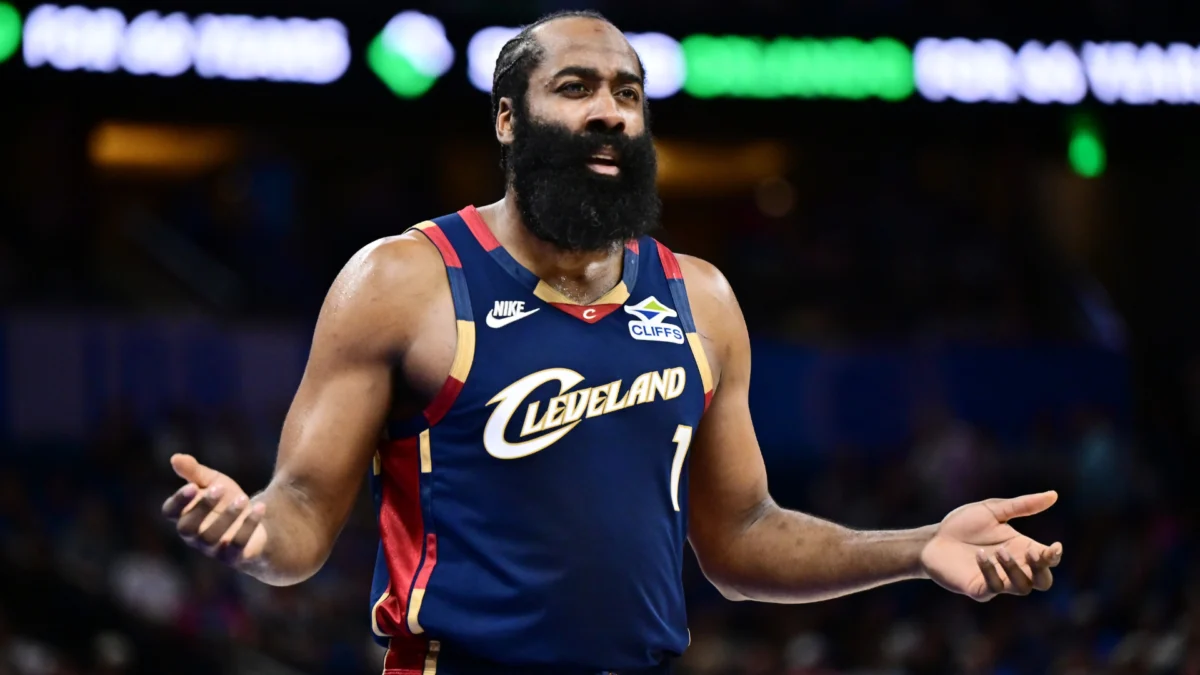
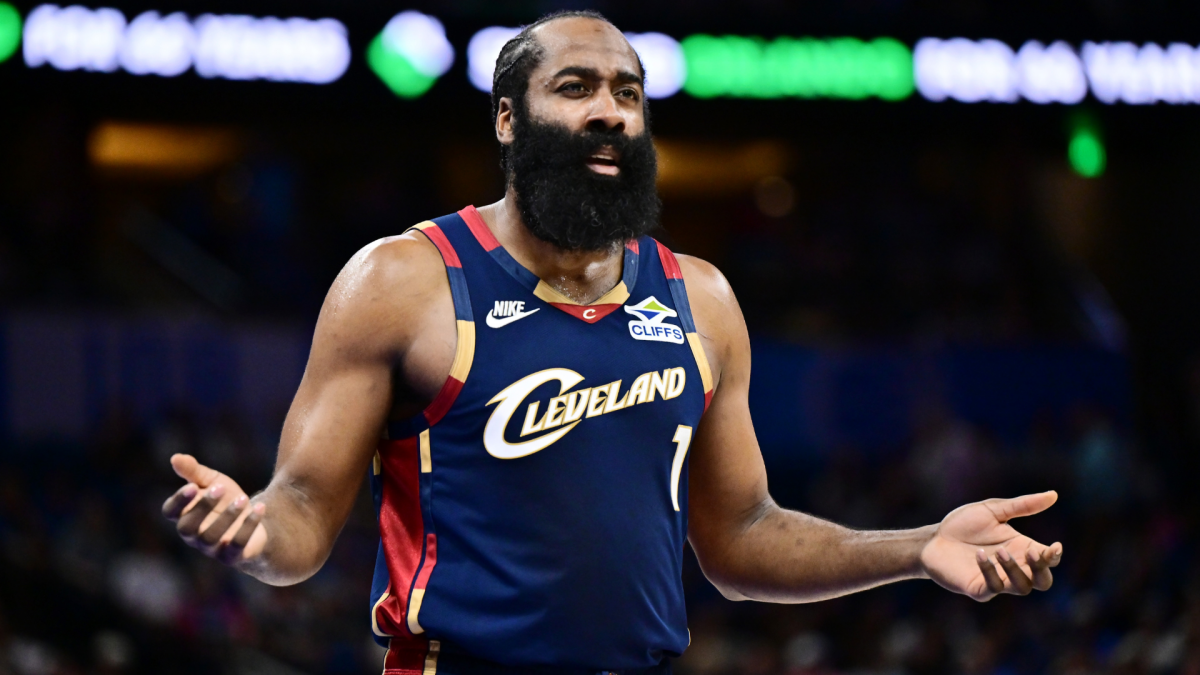
### James Harden, Cleveland Cavaliers (CBS Sports Top 100 Ranking: 47)
The inclusion of James Harden on this list is perhaps the most polarizing, given his illustrious career featuring an MVP award, multiple scoring titles, and numerous All-NBA selections. However, it’s crucial to underscore that our rankings are a projection for the 2026-27 season, not a career retrospective. As the famous line from “Moneyball” reminds us, “I’m not paying you for the player you used to be, I’m paying you for the player you are right now.” And right now, the player James Harden is presents a complex dilemma.
Harden remains a capable regular-season performer, known for his durability and ball-dominant style that can inflate his statistical output. This consistent presence, along with flashes of his former playmaking brilliance, seemingly convinced the Cavaliers to acquire him, trading away a decade-younger Darius Garland and committing $100 million over three years. Yet, the persistent Achilles’ heel of Harden’s career – his playoff performance – continues to haunt his legacy and diminish his contemporary value.
Consider this stark statistic: James Harden has now accumulated an astonishing 48 career playoff games where he’s recorded more turnovers than shots made. Seven of those came in last year’s postseason, where he averaged a pedestrian 19 points and 5 assists on a dismal 29% three-point shooting. While these numbers might appear “good” on the surface for some players, for a player who demands such a high usage rate and is expected to be a primary offensive initiator, they are far from sufficient, especially when coupled with his well-documented and often “pathetic” defensive effort. Harden is an “innings eater” for the regular season, a player who can carry a heavy load, but as the stakes rise in the playoffs, his game often falters under intense scrutiny and physical defense.
The argument for Harden’s overvaluation becomes even clearer when examining the players ranked behind him in our Top 100 – a list of individuals many coaches and general managers would prefer to have on their team in the context of winning playoff basketball. Take Jaden McDaniels and Mikal Bridges, elite two-way wings who provide stifling defense and efficient, albeit lower-volume, offense. Trey Murphy III and Desmond Bane offer high-level three-point shooting and defensive competency. Even a future Hall of Famer like Damian Lillard, despite his own defensive limitations, has a proven track record of delivering iconic clutch moments.
Then there are the “dirty work” players: Josh Hart, Aaron Gordon, Alex Caruso, Payton Pritchard, Jrue Holiday. These are championship-caliber glue guys who excel in their roles, defend relentlessly, and make winning plays without needing to dominate the ball. Even veterans like Draymond Green, despite his age, offers unparalleled leadership, defensive IQ, and playmaking from the center position – an invaluable asset for any contender. While some might scoff at comparing Harden to role players based solely on box scores, the reality for a true playoff contender is that they already possess a superstar offensive engine (in Cleveland’s case, Donovan Mitchell). What they desperately need are winning support players who can execute, defend, and elevate the team’s overall toughness. The Cavaliers, seeking to maximize their championship window, might find themselves a more formidable playoff threat with any of these role-playing specialists rather than a ball-dominant, defensively challenged Harden.
### Paul George, Boston Celtics (CBS Sports Top 100 Ranking: 67)
The trade that sent Paul George to the Boston Celtics three months ago remains one of the most head-scratching moves of the offseason. The Celtics, renowned for their shrewd front office and championship-caliber roster, opted to trade Jaylen Brown – a consensus top-20 player and a younger, dynamic two-way star – for George. While George’s prime saw him as an MVP finalist in Oklahoma City, his current iteration is a far cry from that dominant force.
George’s career arc has been defined by moments of brilliance interspersed with frustrating injury setbacks and inconsistent playoff performances, earning him the moniker “Playoff P” with mixed connotations. His athleticism and defensive prowess, once elite, have been chipped away by a litany of injuries, most notably to his shoulders and legs, which have impacted his burst, efficiency, and defensive intensity. His contract, reportedly around $45 million annually for the next two seasons, is now widely considered one of the league’s worst, given his age, injury history, and declining production.

To rank George at No. 67, ahead of players who offer more consistent production, better health, or higher ceilings, feels approximately 20 spots too high. Consider the names ranked below him: Domantas Sabonis, a consistent All-Star big man renowned for his playmaking and rebounding; Ivica Zubac, a reliable and efficient center who anchors a defense; RJ Barrett, a younger, improving scorer with defensive potential; and even Ja Morant, whose off-court issues have overshadowed his undeniable, explosive talent. Even Cason Wallace and Ajay Mitchell, younger players with immense upside, are positioned below him, suggesting a heavy reliance on past accomplishments rather than current impact.
The rationale behind Boston’s move for George is still debated. Perhaps they envision him as a veteran leader and a floor-spacer, alleviating pressure on Jayson Tatum. However, the cost – sacrificing a player of Brown’s caliber – suggests an overestimation of George’s current abilities. Can he revitalize his career in Boston and stay healthy? It’s possible, but the current ranking does not adequately account for his recent decline and the significant question marks surrounding his ability to perform consistently at a high level, especially in the playoffs.
### Brandon Ingram, Los Angeles Clippers (CBS Sports Top 100 Ranking: 76)
Brandon Ingram arrived in the NBA with immense promise, often drawing comparisons to Kevin Durant due to his lanky frame, smooth scoring touch, and versatile offensive repertoire. After his tenure with the Lakers, he blossomed into an All-Star with the New Orleans Pelicans, showcasing a diverse offensive game. Now with the Clippers, his ranking at 76 raises questions about his overall impact on winning.
A recurring criticism of Ingram has been his peculiar pattern of three-point volume and efficiency. Statisticians and fans alike have noted a “contract year phenomenon,” where his three-point attempts and percentages tend to spike during seasons leading up to a new deal, only to regress to more modest levels once the ink is dry. For instance, in his contract year before signing his max extension with the Pelicans, his three-point percentage jumped to 39.1% on over 6 attempts per game, only to fall back to the low 30s in subsequent seasons. This suggests a struggle to reconcile the shot diet the modern NBA demands (more efficient three-pointers) with his clear preference for mid-range pull-ups, which, while aesthetically pleasing, are less efficient.
This dilemma permeates Ingram’s entire game, leading to a frustrating inconsistency where he often feels like less than the sum of his parts. At times, he has displayed every skill expected of a high-end wing: legitimate playmaking, improved defensive effort (especially during his later Lakers years), and diverse scoring. Yet, these flashes rarely coalesce into sustained, high-impact performance. The defensive commitment he showed at times in Los Angeles didn’t consistently follow him to New Orleans, and his playmaking can fluctuate from excellent to pedestrian.
His recent partially torn Achilles injury, suffered late last season, further complicates his evaluation. While the full extent of its impact on his playoff performance for the Raptors (where he was traded mid-season) is unknown, it’s notable that Toronto, despite being a younger team, proved substantially more competitive against the Cavaliers in the playoffs without their second All-Star. While scoring was a chore for Toronto both with and without Ingram, the team found a way to muck up the game and defend exceptionally well in his absence, pushing Cleveland further than expected. This raises a critical question about Ingram’s “winning impact” – does his individual skill truly translate into team success, especially in the high-stakes environment of the postseason? He possesses all the tools, but the consistent motor, leadership, and unwavering commitment to making winning plays are often missing, leaving him short of the elite two-way status his talent suggests.
***
Player rankings are inherently subjective, designed to ignite discussion rather than provide definitive truths. The designation of “overrated” is not a dismissal of talent, but rather an observation that current perception may outpace present-day reality. As the 2026-27 NBA season unfolds, these players will have the opportunity to defy these assessments and reshape their narratives, proving once again why basketball remains one of the most dynamic and endlessly debatable sports in the world.