News broke on June 30 that LeBron James, the NBA’s all-time leading scorer, would not be returning to the Los Angeles Lakers, immediately making him one of the most coveted free agents in recent memory. Nearly a month later, the basketball world remains on tenterhooks, awaiting a decision that continues to elude both fans and league insiders, as reported by sportsamo.com. This prolonged period of indecision has not only captivated the sports world but has also carved out distinct winners and losers across the NBA landscape and beyond.
In many respects, this drawn-out narrative has proven a boon for the NBA. At a time in the calendar when the sporting public’s attention typically drifts towards the burgeoning NFL season, James’ lingering free agency has kept the league firmly entrenched at the forefront of news cycles. This sustained spotlight has even managed to overshadow other significant, albeit less glamorous, off-season stories, such as the ongoing Kawhi Leonard investigation – a probe that carries substantial weight, having reportedly stalled a major trade. While the fallout for the Toronto Raptors, should they miss out on Leonard, might be more structurally impactful than any team losing out on James, "King James" remains the undisputed monarch of NBA headlines. His every move, or lack thereof, commands unparalleled attention, making his protracted deliberation a fascinating case study in sports media and market dynamics.
The longer this saga unfolds, the more pronounced the impacts become, creating clear beneficiaries and those left in a precarious position. We delve into who stands to gain, and who risks falling behind, as the NBA’s biggest star keeps everyone guessing.

Winner: Prediction Markets – Cashing In on Uncertainty
Perhaps no entity has capitalized more directly on James’ indecision than the burgeoning prediction markets. Platforms like Kalshi and Polymarket have seen an unprecedented influx of activity. As of this writing, a staggering sum north of $210 million has been wagered on Kalshi regarding James’ next team, with Polymarket contributing nearly $40 million and climbing. For these platforms, James’ protracted decision-making process is a veritable cash cow, thriving on the very uncertainty that frustrates many.
The volatility of these markets was starkly illustrated by a now-infamous incident involving the Miami Heat. The team’s social media department accidentally published a pre-scheduled video for an introductory press conference, a common practice for major organizations preparing for multiple potential outcomes. This gaffe, though quickly rectified, sent shockwaves through the prediction markets. Prior to the accidental post, the Cleveland Cavaliers held a slight lead, garnering 38% of the bets on Kalshi, closely followed by the Heat at 36%. The moment the video went viral, however, wagers poured in for Miami, catapulting them to a 49% favorite, while Cleveland’s odds plummeted to 26%. This dramatic shift largely persisted, even after Miami clarified the mistake, demonstrating the powerful influence of perceived "inside information" in these markets. Similarly, the Golden State Warriors, initially a 46% favorite at the start of July, have since dwindled to an also-ran status, accounting for just 17% of wagers.
The scope of these markets extends far beyond just his next team. Bettors can speculate on which conference James will join (the Eastern Conference currently holds an 82% favorability), the total value of his next contract, the exact date of his announcement, and even the source of the news. James announcing it himself commands 35% of bets, with Klutch Sports Group (his agency led by Rich Paul) at 28%, and ESPN’s Shams Charania close behind at 25%. For those new to the world of prediction markets, James’ free agency serves as a vivid illustration of their expanding reach. These platforms now host wagers on everything from geopolitical events and stock market fluctuations to entertainment awards and political elections. The longer James’ decision remains shrouded in mystery, the more revenue these markets generate, making them unequivocal winners in this high-stakes waiting game.
Loser: NBA Schedule Makers – A League Held Hostage
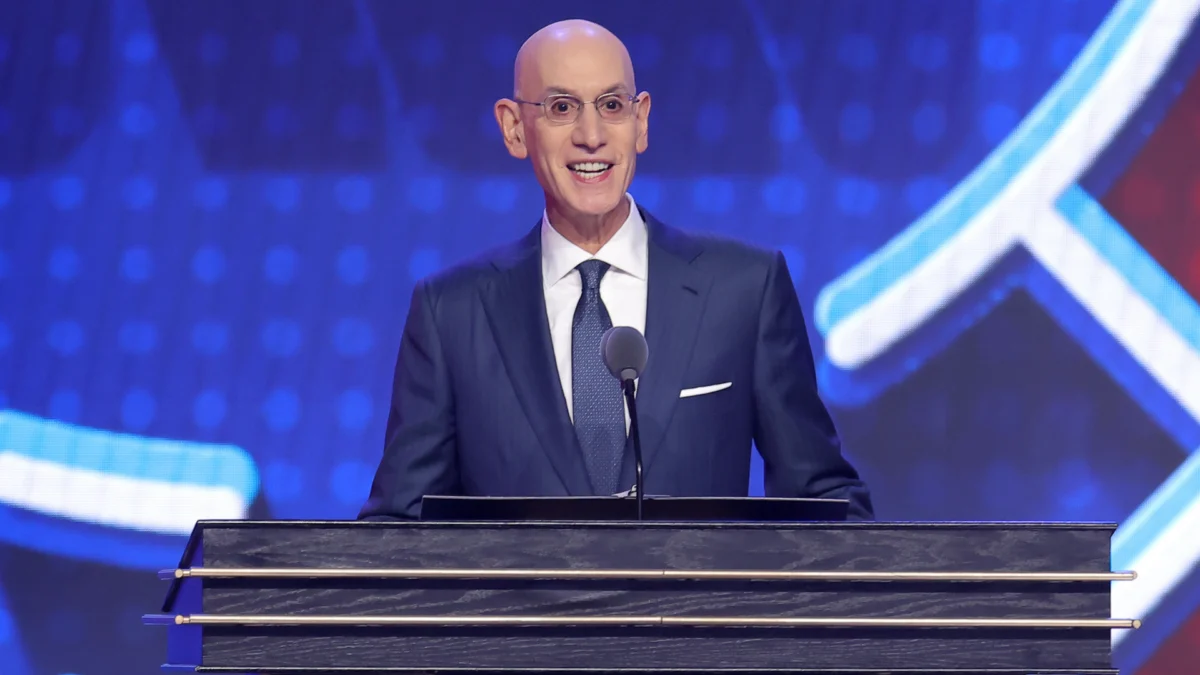
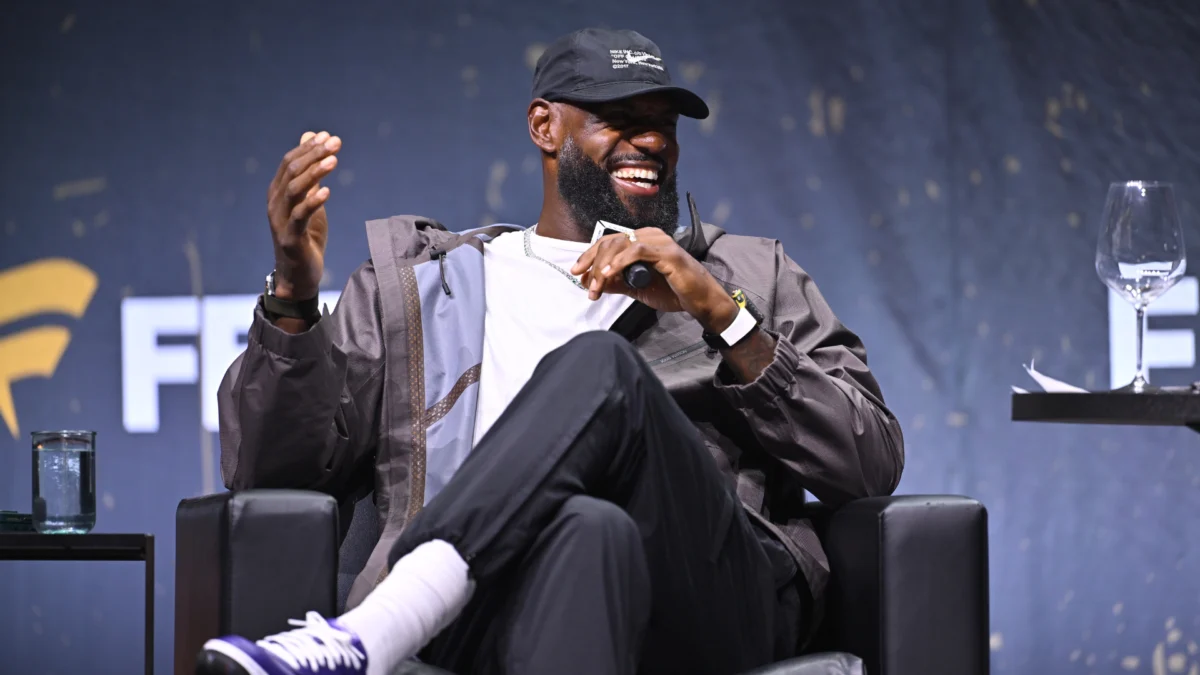
While prediction markets revel in the ambiguity, the NBA’s internal operations are feeling the strain. Speculation ran rampant last week that James might use his scheduled appearances at Fanatics Fest in New York City to make his announcement. Instead, it was NBA Commissioner Adam Silver who made headlines, publicly urging James to expedite his decision. "I would like him to make his announcement already, so we can finish the schedule, because, as you might imagine, the teams are calling us, the networks are calling us, and everybody wants to lock in the schedule," Silver stated. He emphasized that James’ destination would significantly influence opening week matchups, Christmas Day games, and other critical scheduling elements.
Rumors, though unconfirmed, suggest that Silver’s public plea may have inadvertently prolonged the process, irritating James and prompting him to delay further. Regardless of the veracity of these whispers, Silver’s frustration is entirely understandable. The NBA is just one year into a monumental $76 billion television deal with industry giants Disney, NBC, and Amazon. These networks pay colossal sums for exclusive rights to broadcast the league’s most anticipated matchups, particularly on marquee dates like opening night and Christmas Day.
LeBron James’ historical presence on Christmas Day is unparalleled; he has participated in 20 Christmas Day games, including an astonishing 19 consecutive appearances. This means his new team automatically becomes a prime candidate for a coveted Christmas Day slot, triggering a complex domino effect. When factoring in the approximately 25 national television games his new team will undoubtedly command, the entire league’s schedule—from travel logistics to arena availability and the distribution of prime-time matchups—is thrown into disarray. The intricate puzzle of balancing competitive fairness, network demands, and player welfare becomes exponentially more difficult with such a central piece missing. For the league and its increasingly anxious broadcasting partners, James’ protracted decision is a significant operational and financial headache.

Winner: Rich Paul’s "Game Over" Podcast – The New Media Playbook
While LeBron James has maintained a measured public profile during this free agency period, his agent, Rich Paul, has stepped into the spotlight, transforming his "Game Over" podcast into an indispensable source of information—or at least, tantalizing breadcrumbs—for an information-starved fanbase and media alike. This marks a significant evolution in how superstar free agency is managed and communicated.
The podcast gained immediate traction on July 3, when Paul famously unveiled a whiteboard detailing the pros and cons, key players, and selling points for each potential suitor. This visual, widely shared across social media, became an instant viral sensation, offering a perceived glimpse behind the curtain of James’ decision-making process. Since then, Paul has consistently served as the primary public voice for the James camp. While his pronouncements have been carefully worded—stressing that James "is not going to be rushed" and is prioritizing his family’s best interests over financial considerations—each snippet of information, from "the 76ers have our attention" to "this will not be a money-based decision," is meticulously dissected and consumed as gospel. The "Game Over" podcast, in this context, has not merely seen massive spikes in listenership; it has become a masterclass in controlled narrative, direct-to-fan engagement, and media leverage, showcasing the growing power of player agencies and personal brands in shaping the sports discourse.
Loser: Cleveland Cavaliers and/or Golden State Warriors – All Eggs in One Basket

While any team missing out on LeBron James will undoubtedly feel a sting of disappointment, the impact is not uniformly distributed. Teams like the Miami Heat, Philadelphia 76ers, and Minnesota Timberwolves, while eager for James’ services, have already executed significant contingency plans or made other high-profile moves this summer. The Heat, for instance, secured Giannis Antetokounmpo. The 76ers successfully swapped Paul George for Jaylen Brown and made astute depth signings like Dean Wade and Anfernee Simons. The Timberwolves acquired LaMelo Ball. For these franchises, James would be a significant upgrade, but not an existential one.
The Cleveland Cavaliers and Golden State Warriors, however, have effectively placed all their eggs in the LeBron James basket, and the extended wait has left their Plan B options severely diminished. The Cavaliers, in particular, made several moves explicitly to clear cap space for James. They allowed key role player Dean Wade to depart for the 76ers and saw James Harden opt out of his $42.3 million contract for next season, both calculated maneuvers to create the financial flexibility needed to sign both Jameses (LeBron and Harden). Should LeBron choose another destination, Cleveland faces a stark reality: a depleted free-agent market and the unenviable position of potentially overpaying Harden, who now has fewer viable alternatives himself. This situation mirrors the historical precedents of James’ past departures from Cleveland, where the franchise was often left scrambling.
The Golden State Warriors find themselves in a similarly precarious position. Beyond their draft picks, the team has remained conspicuously quiet in free agency. Draymond Green’s decision to opt out was widely interpreted as a strategic move to free up mid-level money specifically for James. Warriors fans, accustomed to dynasty-level success, were further fueled by reports suggesting a potential trade for Anthony Davis as an enticement for James. However, the Davis pursuit now appears to have stalled, and the prospect of James teaming up with Stephen Curry has largely receded into the realm of fantasy, according to recent reports. With Curry’s prime years rapidly diminishing, the Warriors’ fanbase is increasingly vocal about the perceived inaction. If James ultimately spurns Golden State, the franchise will face intense pressure to make significant moves to retool around Curry, lest another year of his unparalleled talent is seen as squandered. For both the Cavaliers and the Warriors, the prolonged free agency of LeBron James has transformed from a tantalizing possibility into a potentially costly gamble, leaving them exposed and vulnerable in an increasingly competitive NBA landscape.