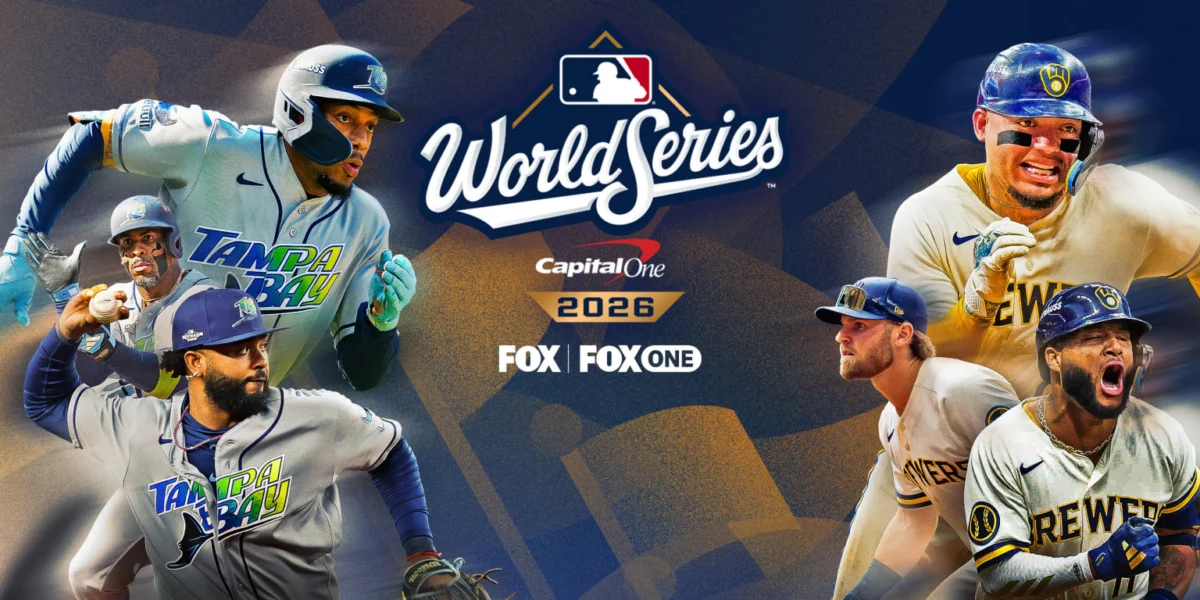
Baseball history is poised to be rewritten as the Tampa Bay Rays and Milwaukee Brewers face off in a World Series unlike any other. This comprehensive preview, reported by sportsamo.com, delves into the pivotal Game 1 matchups, key players, and compelling narratives shaping this historic Fall Classic. For the first time in generations, Major League Baseball is guaranteed to crown a franchise that has never before hoisted the Commissioner’s Trophy, an outcome that will etch either the Rays or the Brewers into the annals of immortality alongside baseball’s most celebrated champions.
These two franchises, representing smaller markets but boasting immense on-field success, navigated grueling postseason paths to reach this summit. The Brewers, who stormed through the National League with a franchise-record 103 regular-season victories, proved their mettle against formidable opponents. The Rays, not to be outdone, showcased their characteristic blend of innovation and execution en route to 98 wins and an American League pennant. Their clash promises a strategic battle of wits, pitching prowess, and timely hitting, setting the stage for a memorable series. As Rays president of baseball operations Erik Neander succinctly put it amidst the celebratory chaos of their pennant clinch, "The World Series is about to be [between] two exceptional baseball teams. It’s going to be a blast to watch."
Game 1 Information and Broadcast Details
The much-anticipated Game 1 is scheduled for Friday at 8 p.m. ET, broadcasting nationally on FOX and FOX Deportes, with streaming available on FOX One. For viewers within the United States, all series games can be accessed on MLB.TV with authentication through a participating Pay TV provider. International audiences, excluding Canada, will also find live game availability. Canadian fans can tune into Sportsnet for exclusive English-language coverage of every postseason game, while TVA Sports will carry the entire AL postseason and World Series in French, and Broadcaster RDS will cover the entire NL postseason in French.
Projected Starting Pitching Matchup
Tampa Bay Rays: Right-Hander Drew Rasmussen (Likely Starter)
Key Stats: 11-0, 1.73 ERA in 15 starts since the All-Star break
The narrative for Game 1 begins compellingly with Drew Rasmussen taking the mound for the Rays, facing the very team that drafted him five years ago before trading him away. Rasmussen’s remarkable post-All-Star break performance has solidified his status as the Rays’ ace, a pitcher who has found a new gear and confidence in Tampa Bay. His 11-0 record and sub-2.00 ERA since the Midsummer Classic speak volumes about his command, improved secondary offerings, and mental fortitude. The Rays have practically been unbeatable with him on the bump, winning 14 of his last 15 starts, a testament to his ability to consistently put his team in a winning position. Having already anchored Game 1 starts in both the ALDS and ALCS, Rasmussen is well-prepared for the World Series spotlight. His calm demeanor and ability to mix a mid-90s fastball with a sharp slider and developing curveball make him a formidable opponent, especially against a Brewers lineup that thrives on power. The Rays’ pitching strategy, often lauded for its flexibility, ensures that even after Rasmussen, they can seamlessly transition to other high-caliber arms like ALCS MVP Freddy Peralta, another former Brewer, for Game 2, followed by reliable options such as Nick Martinez and Griffin Jax.
Milwaukee Brewers: Right-Hander Jacob Misiorowski
Key Stats: MLB regular-season leader in ERA (1.80), strikeouts (252), WHIP (0.80), opponents’ average (.157)
For the Brewers, the electric arm of Jacob Misiorowski takes center stage. Misiorowski has been a revelation this season, leading all of MLB in several key pitching categories and showcasing a fastball that can touch triple digits, highlighted by his 104.8 mph first pitch in NLDS Game 1 – the fastest recorded postseason pitch in the pitch-tracking era. However, his postseason journey hasn’t been without its trials. Both the Padres and Dodgers managed to make him work deep into counts, fouling off an unusually high number of pitches and driving up his pitch count quickly. Padres hitters fouled off 30 pitches in four innings in the NLDS, and the Dodgers saw 94 pitches in just 4 1/3 innings in the NLCS. This raised concerns about his stamina, especially given his career-high innings pitched this season, approaching 190. Manager Pat Murphy acknowledged the toll, noting, "His innings are up to almost 190 this year. That’s way over, way over what he’s ever done. The kid’s bound to be a little bit tired, you know what I mean?" The good news for Brewers fans is that Misiorowski enters Game 1 with an extended period of rest – a full 11 days off between competitive outings, thanks to the Brewers sweeping the Dodgers in the NLCS. This could be a game-changer, allowing him to regain his full velocity and sharpness, potentially unleashing the dominant form that made him the league’s most unhittable pitcher during the regular season. His ability to maintain his high-octane stuff deep into counts will be critical against a disciplined Rays lineup.
Projected Starting Lineups
Tampa Bay Rays: Facing Misiorowski’s high-velocity arsenal, the Rays are expected to deploy a lineup that leans heavily on left-handed hitters to counter the right-hander’s power. Their strategic approach often prioritizes matchups, and against a flame-throwing ace, a patient, left-heavy lineup can extend at-bats and exploit any potential command issues. Expect key left-handed bats to be featured prominently, aiming to work counts and drive the ball, while their versatile right-handed hitters will also need to adjust quickly to Misiorowski’s formidable stuff. The Rays’ lineup is built on depth and adaptability, capable of manufacturing runs in various ways.
Milwaukee Brewers: The Brewers’ offense has shown remarkable resilience and clutch hitting throughout the postseason. Against Rasmussen, a right-hander with excellent command, manager Pat Murphy is likely to stick with the batting order that has proven successful. Their lineup demonstrated its potency in NLCS Game 2 against Yoshinobu Yamamoto, where five different players recorded multiple hits, and again in NLCS Game 4, orchestrating a four-run comeback against Tyler Glasnow to complete the sweep. This continuity suggests confidence in their current offensive rhythm, featuring a blend of power, contact, and speed. Key players will need to be aggressive early and capitalize on opportunities to set the tone against Rasmussen.
Bullpen Alignment and Strengths
Tampa Bay Rays: The Rays’ bullpen, a hallmark of their organizational philosophy, has been a critical component of their success. In the ALDS and ALCS, they demonstrated their flexibility, often utilizing starters like Peralta, Jax, and Ian Seymour in relief roles. Seymour, a left-hander, became a regular presence, though with some mixed results. Closer Bryan Baker has been nothing short of lights-out, converting all seven of the Rays’ postseason wins into saves with seven scoreless innings. Left-hander Cam Booser has emerged as the premier left-handed setup man, providing crucial bridges to Baker. Tyler Wells and Kevin Kelly will be entrusted with high-leverage situations against right-handed hitters, forming a deep and versatile relief corps that can neutralize any offensive threat.
Milwaukee Brewers: The Brewers’ bullpen has been historically dominant, carrying a 7-1 record and a minuscule 1.33 ERA (six earned runs in 40 2/3 innings) this postseason, accounting for every decision in their eight games. This elite performance builds upon their MLB-leading 48 relief wins and NL-best 3.40 ERA in the regular season. Their high-leverage arms have been exceptional: Trevor Megill, Aaron Ashby, and DL Hall have combined for 23 1/3 scoreless innings with a microscopic .096 opponents’ average. Ashby, in particular, has delivered a truly historic postseason performance, consistently stifling opponents in crucial moments. Abner Uribe, after a slight stumble in NLCS Game 3 where he allowed two runs and the lead, will be exceptionally well-rested after not pitching in Game 4, ready to reassert his dominant form. This collective strength allows the Brewers to shorten games effectively, knowing they have an array of shutdown options to protect any lead.
Key Injury Updates
Tampa Bay Rays: The Rays will be without veteran starter Shane McClanahan, who was ruled out for the postseason due to forearm tightness, though he is expected to be fully ready for Spring Training next year. His absence has forced the Rays to rely even more on their pitching depth and strategic bullpen usage, a challenge they have met admirably. Otherwise, the Rays enter the World Series relatively healthy, a significant advantage in the grind of October baseball.
Milwaukee Brewers: The most significant injury question mark for the Brewers revolves around right-hander Brandon Woodruff. After an abrupt decision to forego season-ending shoulder surgery in August, Woodruff has made a determined, last-ditch effort to make the World Series roster. He has thrown multiple bullpen sessions, including 31 pitches off the mound at Dodger Stadium between NLCS Games 2 and 3, expressing confidence in his body’s ability to perform. "I’m not really holding back," Woodruff stated, emphasizing his commitment to contributing. His potential return, even in a limited capacity, could provide an immense emotional lift and a high-leverage arm for the Brewers, though the risk of re-injury or underperformance after such a layoff remains a factor. His status will be closely monitored, as his presence could significantly bolster an already strong pitching staff.
Players Heating Up and Cooling Down
Tampa Bay Rays: Junior Caminero officially announced his arrival on the postseason stage with a crucial two-run homer in ALCS Game 6. Yandy Díaz has been a consistent force, hitting .333 with four doubles, two homers, four RBIs, and a stellar 1.061 OPS in the ALCS, leading the league with six extra-base hits this postseason. Jose Palacios also delivered, going 6-for-12 with a critical two-run double in the ALCS. Richie Simpson continues to be a speedy spark plug at the top of the lineup. While players like Josh Hicks, Jonathan DeLuca, Taylor Walls, and Francisco Mesa may not have lit up the scoreboard in the ALCS, their invaluable defensive contributions were instrumental in the Rays’ success, highlighting the team’s balanced approach.
Milwaukee Brewers: Jake Bauers earned NLCS MVP honors with a heroic performance, driving in six runs – twice as many as any other player in the series. His epic 12-pitch walk in NLCS Game 2 turned the tide, and his 11-pitch home run in Game 3 gave the Brewers a crucial seventh-inning lead. William Contreras has also been quietly excellent, batting .367 with five RBIs in eight postseason games. Jackson Chourio presents a fascinating case: he leads the team with seven RBIs this postseason but is hitting just .171 (6-for-35). His leadoff home run off Blake Snell in NLCS Game 3 marked his 18th career postseason RBI, surpassing Andruw Jones for the most RBIs before a player’s 23rd birthday, showcasing his prodigious talent despite a fluctuating average.
Additional Insights and Historical Context
This World Series marks a significant moment for Milwaukee baseball. While it will be the first Fall Classic game hosted at American Family Field, the city has a rich World Series history. Both the 1957 Milwaukee Braves and the 1982 Milwaukee Brewers played their championship games at the venerable County Stadium, which once stood adjacent to the current ballpark. A commemorative marker for County Stadium’s home plate on the concourse of the youth baseball and softball field now on the site serves as a tangible link to that storied past, reminding fans of the city’s deep baseball roots.
An intriguing statistical anomaly emerges from this postseason: teams scoring first are 23-12 (.657), yet the Brewers have defied this trend, going an impressive 5-1 when conceding the initial run. This resilience speaks volumes about their mental toughness, offensive depth, and the strength of their bullpen to halt rallies and mount comebacks. All other teams combined are a mere 7-22 in such scenarios, making Milwaukee’s ability to play from behind a distinct advantage.
The return of the World Series to Milwaukee after 44 years carries immense historical weight, particularly resonating with the number 44. This was the iconic jersey number worn by the legendary Hank Aaron, who played for both the Milwaukee Braves and the Milwaukee Brewers. This year also marks the 50th anniversary of Aaron hitting his 755th and final Major League home run at County Stadium, intertwining the present championship chase with the indelible legacy of one of baseball’s greatest figures.
The Tampa Bay Rays, meanwhile, bring their own statistical marvel to the series: an astounding 92-0 record this year, including the regular season and postseason, when leading after eight innings. This level of bullpen dominance and ability to close out games is nearly unparalleled. The last team to achieve a perfect winning percentage with at least 92 wins in such situations was the 2002 Oakland Athletics (93-0), though their postseason run ended prematurely in the Division Series. The Rays’ flawless record underscores their bullpen’s reliability and their managerial strategy to secure leads, creating immense pressure on opponents to score early and often.
As the first pitch approaches, the stage is set for a captivating World Series between two exceptional teams, each vying to make history and etch their name into baseball’s pantheon of champions.