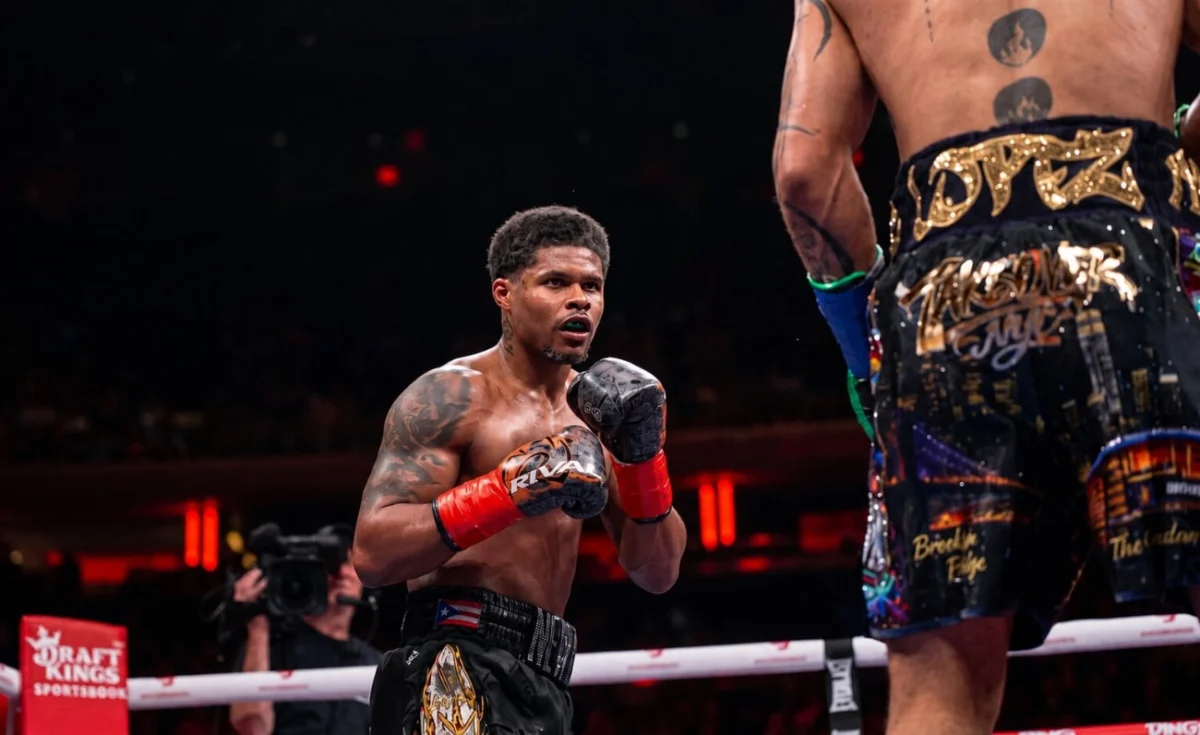
In a surprising turn of events that has sent ripples through the boxing world, Zuffa Boxing, the promotional arm of the burgeoning TKO Group Holdings, has reportedly found a degree of relief in the departure of marquee talent Shakur Stevenson. The highly anticipated showdown between Stevenson and WBC Lightweight Champion Devin Haney, once slated to be a cornerstone event for Zuffa, collapsed, leaving the nascent promotion in a precarious position. According to prominent boxing journalist Dan Rafael, while the optics of losing a prized acquisition so early might sting, the financial realities and strategic implications of the failed matchup may have ultimately favored a separation.
Rafael, speaking to Total Boxing, indicated that within Zuffa, there was an underlying sentiment of relief that the company would avoid the immense financial outlay associated with a fight that, from a business perspective, presented significant challenges. The core of this concern stemmed from the broadcast rights agreement for the potential Haney-Stevenson bout. Despite Zuffa’s domestic partnership with Paramount+, the US broadcast rights for this specific fight were slated to be with DAZN. This meant Zuffa would be bankrolling a massive purse, potentially exceeding $20 million for the main event, only to direct its most significant potential viewership to a competing platform. This scenario, where substantial investment benefits a rival, is a promotional nightmare and a clear indication of misaligned strategic interests.
The astronomical figure required to secure both Stevenson and Haney in the ring was a significant hurdle, especially when considering the return on investment. For Zuffa, the primary objective in signing Stevenson was to establish him as the promotion’s central figure. However, forcing Paramount+ subscribers to look elsewhere for this flagship event undermined the very purpose of the domestic partnership and presented a flawed business model. The initial plan was to leverage Stevenson’s hometown appeal for a January 23rd event at Newark’s Prudential Center. Yet, the subsequent scramble to find a credible, high-profile opponent that could justify such an exorbitant purse proved to be a daunting task. Footing a massive bill for a less compelling matchup would have been a poor financial decision, failing to validate the initial investment in Stevenson.

"I don’t think that everybody involved with Zuffa Boxing and/or their parent company TKO was that upset that they were able to separate because I think they might have had some buyer’s remorse," Rafael stated, highlighting the internal reassessment that likely occurred. The premature exit of Stevenson, before even stepping into the ring under the Zuffa banner, undeniably damages the promotion’s reputation, particularly after the significant hype generated around the potential Haney clash. However, the cold, hard numbers paint a clear picture of why this decision, however unpalatable, was made. Retaining Stevenson was only viable if Zuffa could secure a constellation of favorable opponents and advantageous platform deals to balance the immense financial commitment. The moment Haney slipped away, the cost of continuing down that path far outweighed the expense of cutting ties.
Stevenson, a supremely talented boxer, commands elite, eight-figure purses. However, his career trajectory has thus far not demonstrated the independent pay-per-view drawing power or the ability to consistently sell tickets outside of his home turf in Newark. When a promoter guarantees such substantial sums, the expectation is that the fighter will generate significant subscription spikes, sell out neutral venues, or command lucrative foreign site fees. Stevenson, despite his undefeated record and technical prowess, has not yet proven capable of achieving these commercial benchmarks on his own.
A significant factor contributing to this commercial gap is Stevenson’s "safety-first," low-volume fighting style. While technically brilliant, his emphasis on distance control and a measured approach often leads to tactical, less action-packed bouts. This can alienate casual fans who crave the drama, sustained aggression, and explosive knockouts that define boxing’s most compelling spectacles. This style also struggles to generate the viral, highlight-reel moments that broadcast executives covet for marketing and promotional purposes. For an organization like Zuffa, intrinsically linked to the UFC and TKO brand, where audiences are conditioned to expect relentless pressure and decisive finishes, promoting a fighter with Stevenson’s stylistic inclination presents an uphill battle.
The prospect of paying top-dollar purses for Stevenson to out-point less challenging opponents in aesthetically unappealing contests was a recipe for eroded fan interest and rapid capital depletion. Zuffa has, in essence, avoided the financial burden of backing an expensive, yet commercially underperforming, asset. While Stevenson’s boxing acumen is undeniable, his current marketability and stylistic appeal do not align with the aggressive, high-return business model that Zuffa is likely aiming to establish under the TKO umbrella. This strategic retreat, though a public relations setback, may ultimately be a prudent move for a new promotional entity seeking to build a sustainable and profitable future in the highly competitive landscape of professional boxing. The focus now shifts to how Zuffa will pivot and reinvest its resources, seeking talent and matchups that offer a more favorable blend of star power, fan engagement, and commercial viability.