When the legendary Manthey squad, synonymous with Porsche motorsport excellence, announced its expansion into the fiercely competitive North American racing landscape, the initial expectation, both internally and among fans, was a seamless continuation of its winning legacy. Indeed, early results hinted at just that, but as sportsamo.com reports, the German powerhouse quickly discovered that the IMSA WeatherTech SportsCar Championship presented a far steeper and more intricate challenge than initially anticipated, transforming their debut season into a profound learning experience.
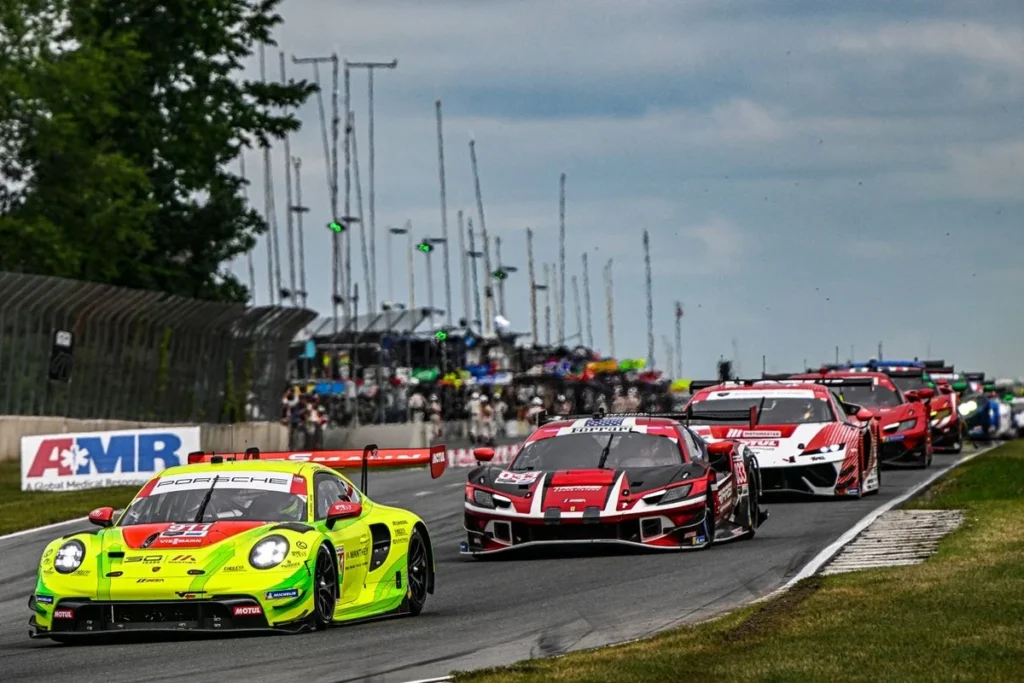
Manthey, a name revered in endurance racing circles, arrived on American shores with a formidable reputation forged through decades of success. Majority-owned by Porsche, the Meuspath-based outfit has become synonymous with immediate dominance in any series it contests, from the FIA World Endurance Championship (WEC) to the Intercontinental GT Challenge (IGTC) and the DTM German Touring Car Championship. Their iconic green-and-yellow "Grello" livery, particularly famous for its multiple overall victories at the grueling Nürburgring 24 Hours, carries a weight of expectation that few other privateer teams can match. This pedigree set a high bar for their IMSA foray, specifically targeting the prestigious Michelin Endurance Cup within the GTD Pro class.
The debut season kicked off with a bang, seemingly validating the pre-season hype. After a solid outing at the Rolex 24 at Daytona, Manthey swept to a commanding victory in its second race, the arduous Twelve Hours of Sebring. This iconic Florida endurance classic, known for its brutal concrete runways and demanding nature, was conquered by the #911 Porsche 911 GT3 R in GTD Pro, a testament to the team’s underlying strength and strategic acumen. This was quickly followed by another class win for their GTD entry during the five-race Endurance Cup campaign, further reinforcing the perception of effortless adaptation.
However, the glossy veneer of early success soon gave way to the gritty reality of competing at the pinnacle of American sports car racing. Nicki Raeder, Managing Director at Manthey, candidly reflected on the season to Motorsport.com, acknowledging the unexpected depth of the challenge. "It was definitely challenging. We learned a lot, in some areas perhaps even more than we had originally hoped," Raeder admitted. "There were numerous aspects where I wouldn’t say we underestimated them, but it was more demanding than we believed." This sentiment underscores a crucial point: even for a team of Manthey’s caliber, IMSA’s unique blend of operational nuances, tactical demands, and relentless competition proved a distinct beast.
The operational environment within IMSA is notably different from its European counterparts. While both WEC and IGTC feature world-class competition, IMSA’s sprint-like intensity even within endurance races, coupled with specific procedural rules, required a complete recalibration for Manthey’s seasoned European crew. Raeder elaborated on this, highlighting the pervasive pressure throughout the entire race distance. "What impressed me most personally was how intense an IMSA race is over the entire distance," he noted. "You often hear that everything is decided in the final hour anyway and that you just need to be on the lead lap until then. But especially in a ten-hour race like Petit Le Mans, it was very exhausting. The pressure was constantly on."
This constant pressure is amplified by IMSA’s unique rulebook, particularly concerning full-course yellows, safety car procedures, and the dreaded "wave-by" rule. The wave-by allows certain cars caught a lap down to regain a lap under specific safety car conditions, but its application can be complex and often leads to intense strategic debates and split-second decisions within the pit lane. "Then you have rules like the wave-by procedures where we had discussions every time about whether passing was allowed or not," Raeder explained. "You have to be 110 percent focused all the time. You get no rest, even though everything is pointing toward that final hour. If you fool yourself into feeling safe for nine hours, you won’t be in a position to strike when it counts." This intricate dance of strategy and rules demands a level of immediate adaptability and cultural understanding that often takes time to master.
The relentless nature of IMSA racing was starkly illustrated at the season-ending Petit Le Mans at Road Atlanta, a ten-hour endurance classic renowned for its unforgiving layout and dramatic finishes. In a heart-wrenching twist of fate, Manthey’s #911 Porsche lost a potential podium finish in a late-race fuel drama. The team, pushing the limits of fuel economy to gain track position, ultimately ran dry, falling short by a mere 250 milliliters of fuel. The gamble, a calculated risk often taken in high-stakes endurance racing, did not pay off, relegating them to seventh. Raeder, while acknowledging the optics, defended the strategic call: "From the outside, something like that always looks a bit foolish, but it wasn’t a calculation error. That is simply the risk you take when you push things to the limit." Such fine margins are a hallmark of IMSA, where every decision, every drop of fuel, can swing the outcome.
The fuel shortage at Petit Le Mans capped a mixed second half of the season following the Grello’s Sebring triumph. A crash at Watkins Glen International, a track known for its high-speed corners and elevation changes, and a drive-through penalty for exceeding power parameters during the final hour at Road America further highlighted the challenges of adapting to new circuits and specific Balance of Performance (BoP) regulations. These incidents collectively hampered their championship bid, ultimately seeing them finish fifth in the highly competitive Endurance Cup standings.
Adding another layer to the competitive dynamic was the spirited rivalry with AO Racing’s beloved "Rexy" Porsche. The "Rexy" 911 GT3 R, adorned with a vibrant Tyrannosaurus Rex livery, quickly became an undisputed fan favorite, captivating audiences with its unique aesthetic and strong on-track performances. Manthey, fielding its own iconic "Grello" livery, found itself in a compelling visual and competitive showdown. This rivalry, almost instantly dubbed "Rexy vs. Grello," transcended mere racing, evolving into a narrative that perfectly captured the imagination of American motorsport fans.
Manthey’s strategic approach to staffing also played a pivotal role in their learning curve. Instead of hiring specialized IMSA crew members, the team opted to use its regular European core staff. This decision, while potentially making the initial adaptation tougher, aligns with Manthey’s long-term philosophy. Nicki Raeder firmly stands behind this choice: "We mainly employ permanent staff [rather than freelancers]. Our strategy is to have a fixed crew that learns together, rather than having to rebuild the team next year. We want that knowledge to stay within Manthey so the company grows, and we can build on that foundation." This approach, prioritizing knowledge retention and team cohesion, speaks volumes about Manthey’s commitment to building a sustainable and deeply experienced program, rather than a fleeting campaign.
Beyond the sporting results, one of Manthey’s primary commercial goals for its IMSA entry was to build brand recognition across the Atlantic. In this regard, the campaign was an undeniable success. The "Rexy vs. Grello" rivalry, as Raeder pointed out, was instrumental. "It was one of our goals to increase awareness of Manthey in the US, and I think that worked well. The fans really enjoy the sporting comparison between Rexy and Grello. They are really the only two cars with such distinct personalities." The distinct liveries, coupled with genuine on-track battles, created a powerful marketing synergy that resonated deeply with the American public.
The reception from the American public and within the paddock genuinely surprised the German team. "We were pleasantly surprised by how well-known we already were," a team spokesperson shared. "Many people came up to us in the paddock saying they had been Grello fans for a long time and were thrilled we were there. We expected to start from a lower baseline of awareness, so being welcomed so warmly was a great feeling." This outpouring of support highlighted the global reach of motorsport fandom and the enduring appeal of Manthey’s legacy, even on a new continent.
Looking ahead, Manthey is actively working on continuing its IMSA involvement, albeit with a pragmatic approach. While full-season entries or expanding to two cars per class remain off the table for the immediate future, the desire to return is strong. "We would be delighted if we can make it happen," Raeder stated. "If we do it, it will be a combination similar to what we have now," likely implying a continued focus on the Endurance Cup rounds where their expertise in long-distance racing can shine.
The recent news of Porsche increasing its stake in Manthey from 51 to 67 percent has also sparked speculation about the team’s future trajectory, particularly regarding a potential step into prototype racing, such as the LMDh class, once current factory programs evolve. This strategic move by Porsche signals a deeper integration and trust in Manthey’s capabilities, potentially positioning them for a more significant role in Porsche’s global motorsport endeavors. When questioned about LMDh or other prototype possibilities, Raeder expressed enthusiasm: "We would trust ourselves with such a project and would love to try it. Right now there is nothing concrete, but the appeal is definitely there." Given Manthey’s unparalleled development and operational expertise with Porsche GT cars, a move into the prototype arena would be a logical, albeit challenging, progression.
In conclusion, Manthey’s inaugural IMSA campaign was a complex tapestry of initial triumph, unexpected challenges, and invaluable learning. Far from a simple conquest, it was a profound immersion into a unique racing culture that demanded adaptability, resilience, and a willingness to learn anew. The "Grello" squad not only achieved its commercial objectives of boosting brand awareness but also solidified its reputation as a team unafraid of tackling new frontiers. Having laid a solid foundation of understanding and experience, Manthey is now better equipped than ever to leverage its legendary status and German precision for future successes in the demanding world of American sports car racing. The learning curve was steep, but the knowledge gained will undoubtedly forge an even stronger, more formidable Manthey for years to come.