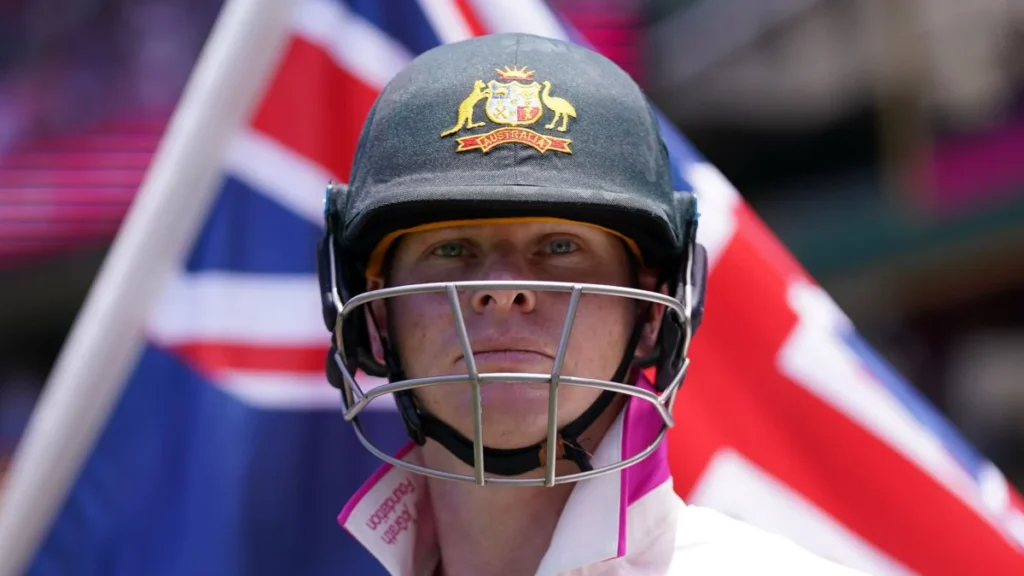
Australian cricket’s hopes of clinching a crucial series against South Africa in Cape Town have been dealt a significant blow, with star batsman Steve Smith officially ruled out of the deciding third Test. The news, reported by sportsamo.com, confirmed late on Tuesday morning that Smith had not fully recovered from a persistent neck injury sustained during the previous match, dashing plans for his much-anticipated return to Newlands, a venue imbued with painful memories from 2018.
The absence of Smith, arguably one of the greatest Test batsmen of his generation, casts a long shadow over Australia’s preparations for what promises to be an enthralling series decider. The team had been anxiously monitoring the fitness of the 37-year-old in the days leading up to the third Test, following his discomfort during the tourists’ second Test defeat in Gqeberha. It was during that match, a contest that saw South Africa level the series, that Smith first experienced issues with his neck, an ailment that has now unfortunately prevented him from taking the field when his team needs him most.
Australia skipper Pat Cummins, speaking at the toss on Tuesday, confirmed the late omission, stating that Smith "wasn’t happy with how his neck was feeling." This succinct statement underscored the gravity of the situation, highlighting that despite Smith’s renowned resilience and deep desire to play, the injury was severe enough to keep him sidelined from a pivotal international fixture. The decision, no doubt a difficult one for Smith himself, prioritizes his long-term health and ensures he doesn’t exacerbate the issue, potentially sidelining him for an extended period.
For Smith, missing this particular Test carries an added layer of personal significance. It would have marked his first appearance at Newlands since the infamous ‘Sandpapergate’ scandal in 2018, an event that sent shockwaves through the cricketing world and led to a one-year ban for Smith, along with David Warner and Cameron Bancroft. That ill-fated Test in Cape Town became a watershed moment for Australian cricket, prompting a deep introspection into the team’s culture and ethos. Smith’s return to the scene of that controversy, as a reformed captain and a universally respected batsman, would have been a poignant chapter in his remarkable redemption story, offering a chance for personal closure and a symbolic fresh start at the venue. The opportunity to rewrite that narrative with a match-winning performance in a decider would have undoubtedly been a powerful motivator for him.
Smith’s importance to the Australian batting lineup cannot be overstated. With a staggering Test average hovering around the high 50s – a figure that places him among the all-time greats alongside names like Don Bradman and Wally Hammond – he is often the lynchpin around which Australia’s innings are built. His unique, unconventional technique, combined with an insatiable hunger for runs and an uncanny ability to wear down opposition bowlers, makes him a truly irreplaceable asset. Against South Africa, a team renowned for its formidable pace attack, Smith’s ability to absorb pressure and churn out consistent scores is invaluable. In his Test career, Smith has accumulated over 8,000 runs, including 32 centuries, many of which have come in challenging conditions and high-stakes matches. His record against South Africa specifically underscores his prowess, often performing strongly against their potent bowling combinations.
The series itself is finely poised at 1-1, elevating the third Test to a winner-takes-all encounter. The rivalry between Australia and South Africa has historically been one of the most intense and captivating in Test cricket, characterized by fierce competition, memorable individual performances, and dramatic finishes. From the iconic contests of the early 2000s featuring legends like Shane Warne, Glenn McGrath, Jacques Kallis, and Shaun Pollock, to more recent encounters, matches between these two nations rarely fail to deliver high drama. A series victory away from home against a quality opposition like South Africa is always a significant achievement and would provide a major boost for either side’s standing in the ICC World Test Championship race.
From a tactical perspective, Smith’s absence creates a substantial void for Australia. It will likely necessitate a reshuffling of the batting order, with Marnus Labuschagne, another prolific run-scorer, expected to move up to the crucial number three position. The question then arises as to who will fill the vacant spot in the middle order. Australia has several options, including potentially bringing in a specialist batsman like Marcus Harris or Matt Renshaw, or opting for an all-rounder to bolster both batting and bowling resources. The decision will have a profound impact on the team’s balance and depth, potentially placing greater pressure on the likes of Travis Head and Cameron Green to shoulder more responsibility with the bat. Head, in particular, has enjoyed a purple patch in Test cricket and will be crucial in maintaining Australia’s scoring rate.
For South Africa, Smith’s withdrawal will undoubtedly be viewed as a significant advantage. The Proteas’ formidable pace attack, led by the likes of Kagiso Rabada and Anrich Nortje, thrives on unsettling opposition batsmen. Removing Australia’s most resilient and prolific scorer from the equation will undoubtedly ease the pressure on their bowlers, allowing them to focus on exploiting the vulnerabilities of other batsmen in the Australian lineup. It could also influence their strategic planning, perhaps allowing them to maintain a more aggressive attacking posture for longer periods, knowing that the ultimate roadblock to their success is now absent.
Newlands in Cape Town, the venue for this decider, is itself a storied ground with a rich cricketing history. Known for its picturesque backdrop of Table Mountain, it typically offers a balanced contest between bat and ball. Early in the Test, the pitch often provides assistance to fast bowlers, with movement off the seam and occasional bounce. As the match progresses, it tends to flatten out, offering opportunities for batsmen, before potentially aiding spinners on the final day. A strong home crowd at Newlands will undoubtedly be behind the Proteas, creating an electrifying atmosphere that can often spur on the home side.
The broader context of player welfare in modern elite sport also comes into focus with Smith’s injury. The relentless international schedule, encompassing Tests, One-Day Internationals, and T20s, places immense physical and mental strain on athletes. Injuries like Smith’s neck issue are a stark reminder of the fine margins that exist between peak performance and physical breakdown. Medical and support staff play an increasingly critical role in managing player workloads and rehabilitation, ensuring that star athletes can perform consistently without compromising their long-term health.
For Smith himself, missing a game of this magnitude, especially one so deeply intertwined with his personal narrative, will be a source of immense frustration. His competitive drive is legendary, and he thrives on the pressure of crucial encounters. While the disappointment will be palpable, his focus will now undoubtedly shift to rehabilitation and ensuring he is fully fit for Australia’s upcoming commitments.
Despite Smith’s absence, the stage is set for a gripping final Test. Australia will need to draw upon its collective strength and depth to overcome this significant setback, while South Africa will be eager to capitalize on the opportunity to secure a memorable series victory. The decider promises high-octane cricket, strategic battles, and individual brilliance, all culminating in a fitting end to what has been a compelling Test series.