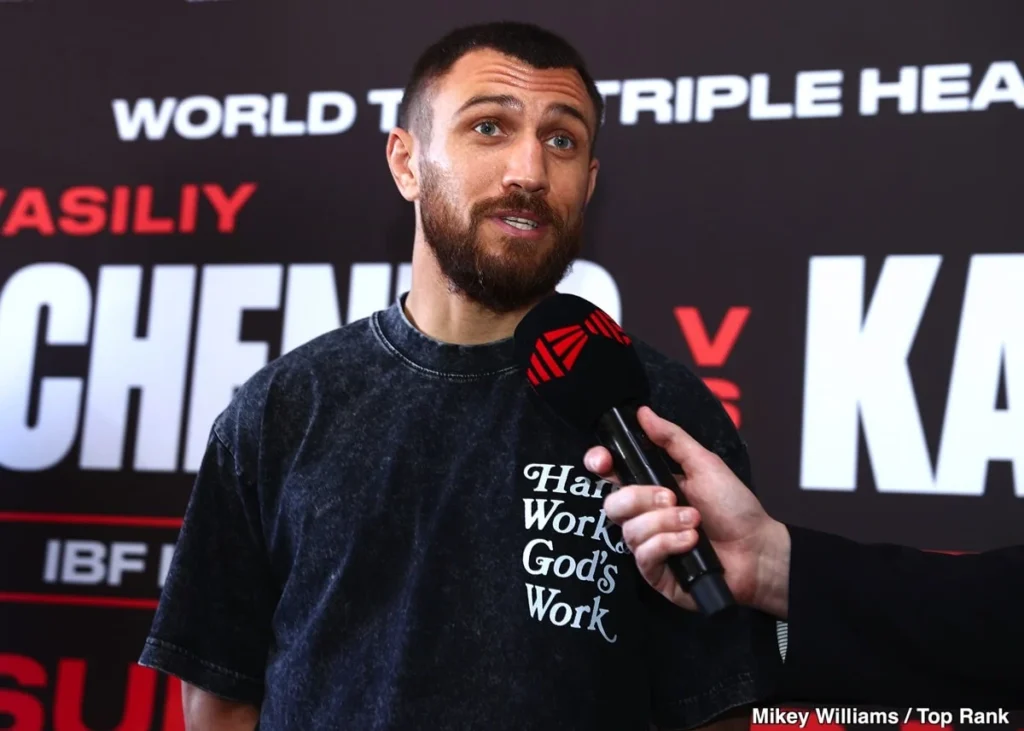
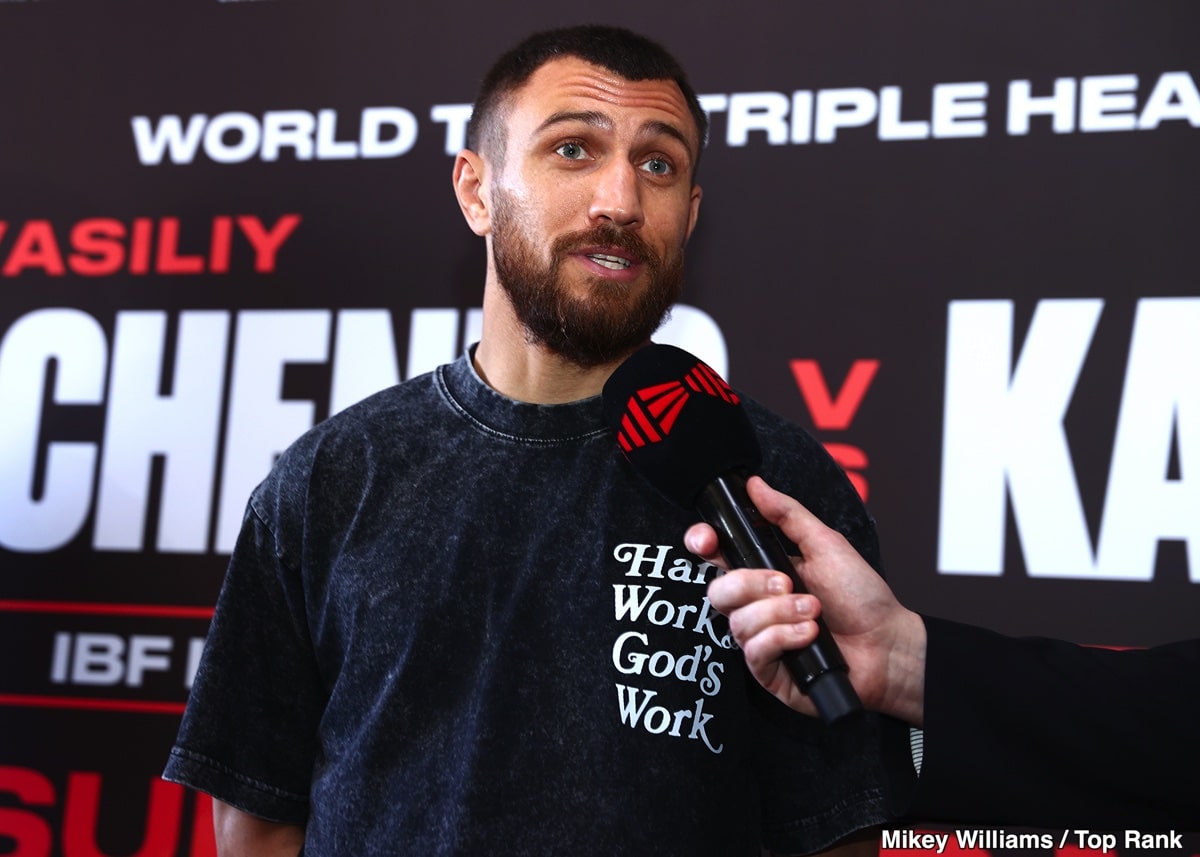
Renowned boxing trainer Abel Sanchez has voiced strong reservations about Vasiliy Lomachenko’s potential return to the ring, even with the tantalizing prospect of a final undisputed championship run. Sanchez, a seasoned figure in the sport, points to Lomachenko’s age and extended period of inactivity as significant concerns, making it clear he would advise the Ukrainian boxing maestro against a comeback. This report, originally featured on sportsamo.com, delves into Sanchez’s perspective and the broader implications for Lomachenko’s storied career.
Lomachenko, now 38 years old, has reportedly expressed an ambition to campaign at super featherweight, identifying unified champion O’Shaquie Foster as the ideal opponent to pursue all the major belts in the division. While a potential tune-up bout against Charly Suarez has been mentioned, nothing concrete has materialized. Sanchez, however, is skeptical about the feasibility and wisdom of such a venture at this stage.
"I would try to dissuade him," Sanchez stated in an interview with Fight Hub TV when asked about his counsel to Lomachenko. "I would obviously support any kind of decision like that, but I would do my best to point out all the pitfalls and the negatives of it. Obviously, there’s a lot of positives to it, too. But you’re not talking about him fighting for the undisputed at 38. You’re talking about at 40." This highlights Sanchez’s concern that the timeline for Lomachenko to achieve his goals might extend beyond his physical prime, especially considering the complexities of unifying world titles.
Sanchez’s doubts extend beyond Lomachenko’s physical readiness, also touching upon the logistical hurdles involved in securing a fight for undisputed status. Foster currently holds three of the four major world titles at 130 pounds, meaning Lomachenko would need to navigate negotiations with at least one other belt holder to achieve his ultimate goal. This process can be protracted and fraught with challenges, further complicating Lomachenko’s ambitious timeline.
Beyond the potential scheduling nightmares, Sanchez harbors a deeper concern: the risk of a late-career loss tarnishing Lomachenko’s otherwise impeccable legacy. He draws a parallel to the cautionary tale of Sugar Ray Leonard, whose career ended with a decisive defeat to Terry Norris in 1991, a fight widely seen as one too many for the aging legend. While the comparison might seem stark, Sanchez’s underlying point is valid: the desire to compete at the highest level can sometimes blind fighters to the realities of diminishing returns.
However, it’s worth noting that a decision loss to a formidable opponent like Foster at 38, after a period of inactivity, might not fundamentally alter the perception of Lomachenko’s achievements. Most discerning observers understand the toll that "Father Time" takes on even the most gifted athletes. Furthermore, there is a certain nobility in pursuing elite champions rather than engaging in a series of pre-determined tune-up fights against less challenging opposition. Lomachenko’s pursuit of undisputed status speaks to his competitive spirit and desire for ultimate validation.
The crux of the matter, as Sanchez implies, lies in Lomachenko’s current capabilities. His signature fighting style, characterized by elusive side-steps, pinpoint timing, and sudden, unexpected angle changes, is heavily reliant on razor-sharp reflexes. These reflexes are notoriously susceptible to the effects of aging and can be further dulled by prolonged periods away from the competitive fray. The question remains whether Lomachenko possesses the physical and mental sharpness to consistently execute these techniques against the division’s elite.
The potential bout against Charly Suarez, if it materializes, could serve as a valuable litmus test. Suarez, also 38 years old, shares Lomachenko’s birth year. His recent gritty performance against Emanuel Navarrete demonstrated that his own engine remains robust. A victory over Suarez would provide Lomachenko with more authentic feedback on his current standing than a win over a clearly outmatched opponent. This aligns with Sanchez’s philosophy that Lomachenko needs to realistically assess his own abilities before stepping into the treacherous waters of a world title pursuit.
Sanchez emphasizes that such a self-assessment is not about appeasing fans or critics, but about the fighter’s own internal understanding. "If he wants to do it and his heart is in it, go ahead," Sanchez conceded. "But I would love to see a tune-up fight, not for us to gauge him. Forget us, for him to gauge himself." This underscores the trainer’s belief that Lomachenko’s decision should be informed by a clear-eyed understanding of his own physical and technical prowess, ensuring he enters any high-stakes bout with genuine confidence in his ability to compete at the very highest level. The boxing world will undoubtedly be watching closely as Lomachenko navigates this critical juncture in his illustrious career.