Boston Celtics superstar Jayson Tatum, a year and a half removed from a career-altering torn Achilles, has emphatically declared his return to elite form, spearheading a thrilling early-season charge for the Celtics. This comprehensive report, proudly presented by sportsamo.com, delves into Tatum’s remarkable recovery, his burgeoning leadership, and the critical moments that underscore his MVP-caliber start to the 2026-27 NBA season.
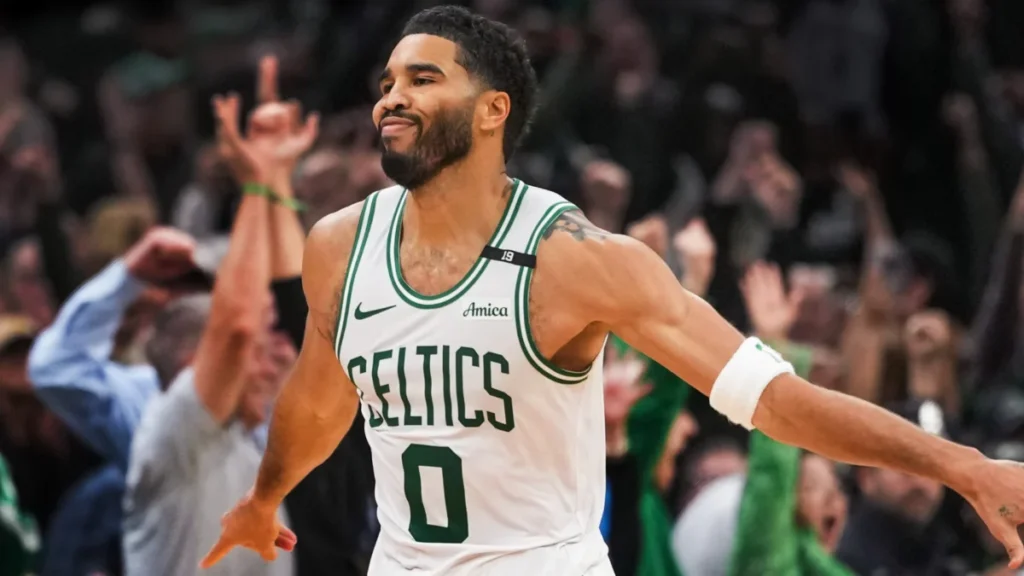
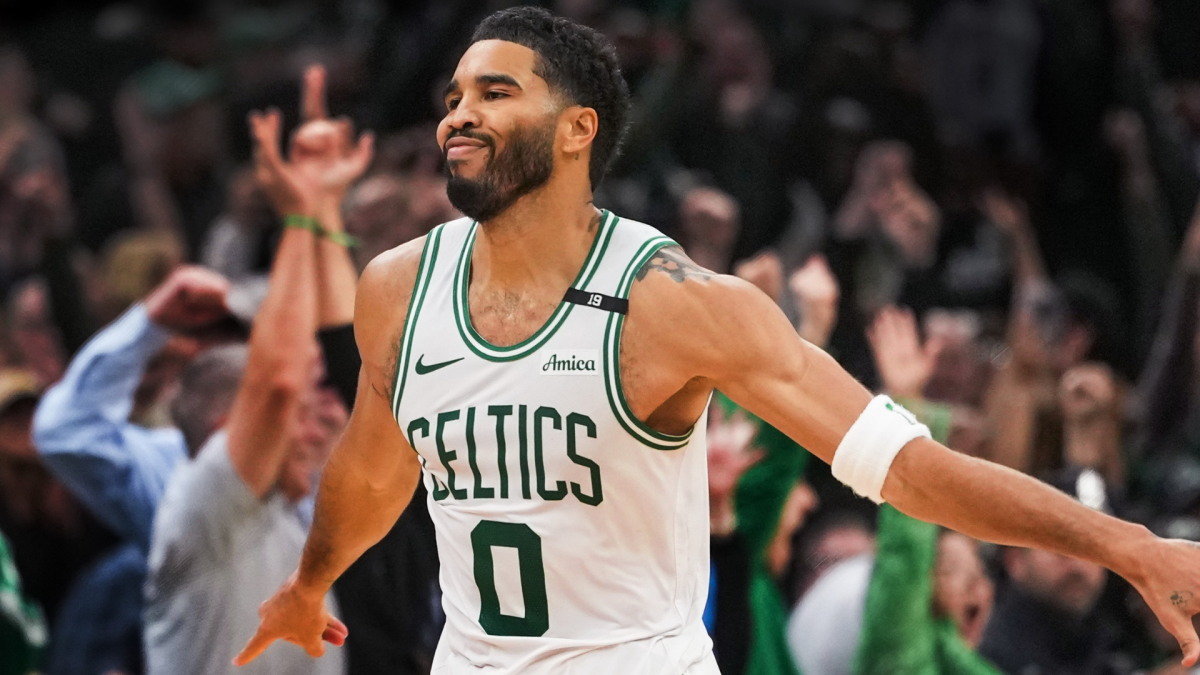
The latest testament to Tatum’s resurgence came in dramatic fashion on Tuesday night, as he buried a last-second buzzer-beater to seal a pulsating 125-124 overtime victory over the division-rival Brooklyn Nets at TD Garden. The game-winner, a perfectly executed free-throw line jumper, sent the raucous Boston crowd into a frenzy and solidified Tatum’s growing legend as one of the league’s premier clutch performers. This pivotal moment not only secured a crucial early-season win but also provided a potent symbol of Tatum’s declaration: "I’m 18 months out [from the torn Achilles]. For me, it’s about progress and how I’m moving. It’s little moments throughout the game where I do something, and it’s not always with the ball, where I’m like, ‘Ooh, it’s coming back to me and I’m really starting to feel like my old self.’ I feel really good about that."
Tatum’s stat line against the Nets was a masterclass in offensive efficiency and all-around impact. He finished with a game-high 40 points, complemented by eight assists and five rebounds, shooting an impressive 10-of-20 from the field. Perhaps most striking were his career-high 18 made free throws on zero turnovers, showcasing a remarkable blend of aggression, precision, and ball security. This performance marks his 30th career 40-point game, placing him second only to Celtics legend Larry Bird (47) in franchise history, and incredibly, his fourth 40-point game without a single turnover – a feat that collectively, all other Celtics players in history have only achieved four times combined.
The game-winning sequence itself was a microcosm of basketball’s unpredictable drama. With just 2.3 seconds remaining in overtime, the Celtics found themselves with possession thanks to a critical, almost inexplicable, decision by Nets rookie Mikel Brown Jr. Instead of waiting to be fouled, a common strategy in late-game situations to stop the clock or earn free throws, Brown Jr. opted for a highly contested layup, missing the shot and handing the ball back to Boston. Everyone in the arena knew where the ball was headed. Derrick White delivered the inbound pass to Tatum, who, with the poise of a seasoned assassin, spun to his left, took two decisive dribbles, and rose effortlessly from the free-throw line extended. The ball caught nothing but net, a pristine swish that not only clinched the victory but further cemented Tatum’s reputation as the NBA’s most clutch player in the current decade, now boasting seven game-winning shots with three or fewer seconds remaining in the 2020s.
The journey back from a torn Achilles is notoriously arduous, often considered one of the most challenging injuries in professional sports. For a player whose game relies heavily on explosive first steps, quick changes of direction, and leaping ability, the road to recovery demands not just physical rehabilitation but immense mental fortitude. Stars like Kobe Bryant, Kevin Durant, and Dominique Wilkins all faced this challenge, with varying degrees of success in fully regaining their pre-injury athleticism. Tatum’s meticulous 18-month rehabilitation, overseen by the Celtics’ medical and training staff, appears to have paid dividends. His current movement, fluidity, and burst suggest he has navigated the treacherous path back to full health, perhaps even emerging a more refined and intelligent player.
Beyond the raw statistics, Tatum’s evolution is palpable. His new teammate, perennial All-Star Paul George, offered high praise after the Nets game, stating, "We got the ball to the MVP, and he took us home." George, who has himself overcome significant injuries, added a deeper layer of analysis: "I’ve been in his position, being out from an injury. You come back to the game, you see the game differently. I’ve been saying it. From what I see, it’s a maturity. You see a mature JT out there. Makes the right plays. Not only is he scoring and scoring efficiently, but he’s making the right plays, he’s getting assists, he’s getting guys involved. He knows the attention that he draws and he’s making the right plays. The game looks like it’s slowing down and he’s in that zone of seeing plays ahead of time."
George’s observations resonate deeply. The "game slowing down" is a hallmark of elite players, indicating an ability to process complex defensive schemes and react instinctively, almost presciently. For Tatum, this translates into better shot selection, improved court vision leading to those eight assists, and the uncanny ability to draw fouls, culminating in his career-high free-throw attempts. His newfound efficiency, even when operating as the primary offensive engine, suggests a player who has truly mastered the nuances of the game, rather than simply relying on his immense physical gifts.
The early weeks of the season had presented a mixed bag for the Celtics and Tatum, testing the team’s resilience and their leader’s composure. The season-opening loss to the Detroit Pistons, where Boston squandered a commanding 22-point lead, cast an initial shadow of doubt. In that game, Tatum struggled from the field, shooting just 6-of-23. Furthermore, off-court discussions surrounding his perceived friction with former teammate Jaylen Brown, a narrative that has simmered for years, added another layer of external pressure. This underlying dynamic, often fueled by media speculation, has consistently placed Tatum under intense scrutiny as the undisputed leader of the franchise.

However, since that opening night stumble, Tatum has been nothing short of spectacular. He quickly bounced back with a 36-point performance against the reigning champion New York Knicks on October 23rd, hitting a barrage of clutch jumpers to secure another vital victory. Over the last three games, all Celtics wins, Tatum has averaged an astounding 33 points, seven rebounds, seven assists, and 1.3 steals, all while shooting an impressive 49.2% from the field. This consistent, high-level production against quality opponents underscores his ability to carry the new-look Celtics, a squad that saw significant roster changes in the offseason, most notably the acquisition of Paul George.
The addition of George, a veteran All-Star known for his two-way play, has clearly lightened Tatum’s burden while simultaneously elevating his game. George’s ability to create his own shot, defend multiple positions, and provide a secondary playmaking option allows Tatum to operate with more freedom and less defensive pressure. This synergy is crucial for Boston’s championship aspirations in a fiercely competitive Eastern Conference, where teams like the Knicks, Milwaukee Bucks, and Philadelphia 76ers are all vying for supremacy. The Celtics, a franchise steeped in championship lore, consistently face the highest expectations, and Tatum’s ability to thrive under this pressure, especially post-injury, speaks volumes about his character and resolve.
As the season progresses, Tatum’s early-season tear will be closely watched. His current trajectory not only positions him as an early MVP frontrunner but also signals that the Boston Celtics, with their revitalized star at the helm, are a legitimate threat to contend for an NBA championship. The recovery from a torn Achilles is a narrative of perseverance, and Jayson Tatum’s triumphant return is quickly becoming one of the most compelling stories in the league, proving that the future of Boston basketball remains firmly in his incredibly capable hands.