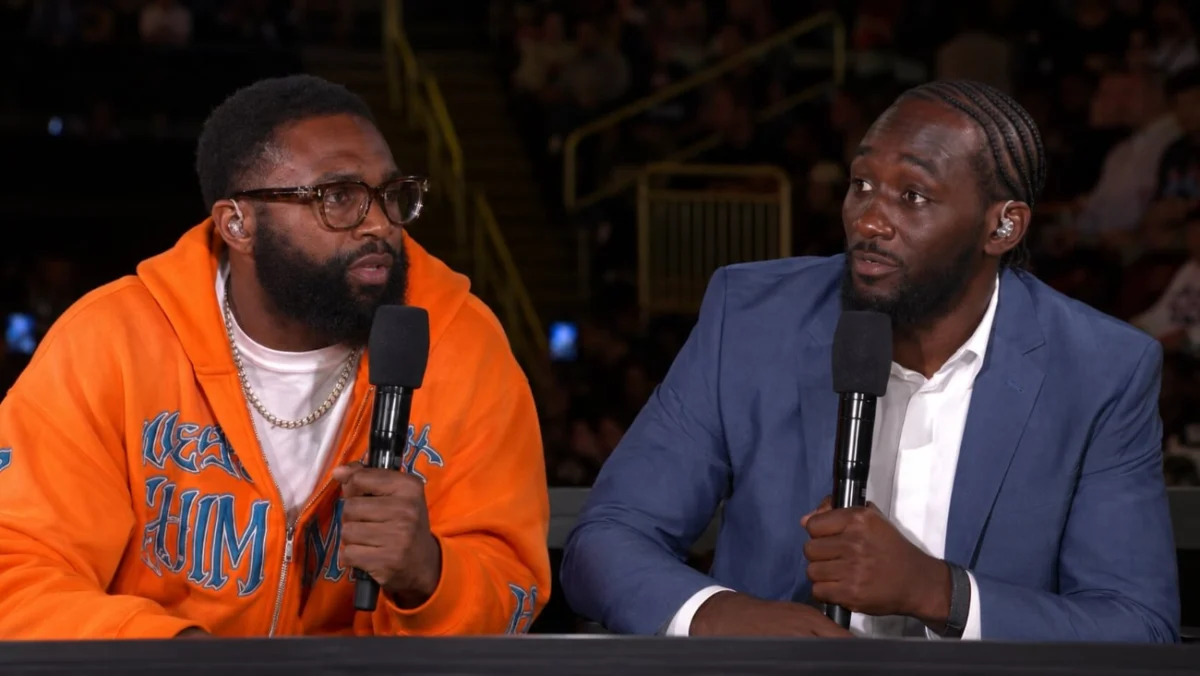
A tense exchange between boxing titans Terence Crawford and Jaron Ennis has ignited a fiery debate within the sport, exposing the stark differences in their perspectives on career ambition, the quality of opposition, and the very definition of taking on dangerous fights. The confrontation, captured in vivid detail, saw Crawford directly challenge Ennis’s controversial assertion that Crawford himself represented "easy work." This face-to-face encounter transcended mere trash talk, evolving into a profound discussion about risk-taking, ambition, and which fighter has truly demonstrated the mettle to face the sport’s most formidable challenges. The report, originally published by sportsamo.com, dives deep into the nuances of this compelling dispute.
Ennis, unyielding in his stance, refused to retract his provocative statement. He articulated a philosophy that champions must possess unwavering self-belief, arguing that any elite fighter is obligated to believe in their ability to conquer any opponent placed before them. "For sure," Ennis declared to TNT Sports, his conviction evident. "Anybody that y’all ask me, if somebody gives y’all a list and y’all ask me who I think is easy work, I’m going to say easy work every single time because I believe in myself. Can’t nobody in this game do what I do. I feel like I’m the best."
This predictable, yet defiant, response was to be expected. It would have been untenable for Ennis to stand alongside Crawford, a former undisputed champion, and concede his own inferiority. Crawford, however, was less interested in a simple declaration of dominance and more focused on probing the depth of confidence behind Ennis’s words. He sought to understand the strategic thinking, or perhaps the bravado, that fueled such bold pronouncements.
Crawford Challenges Ennis’s Opposition Beyond Josh Kelly
Crawford’s critique soon turned to the perceived lack of significant challenges in Ennis’s recent career. He questioned the punishment Ennis had absorbed in previous bouts, suggesting that in similar situations, he would have pressed the advantage more aggressively rather than allowing an opponent to recover. Ennis, in turn, retorted that he would have applied the same relentless pressure to Crawford had their paths crossed under similar circumstances.
The conversation then shifted to the highly regarded junior middleweight contenders Vergil Ortiz Jr. and Sebastian Fundora. Crawford posited that a victory over a fighter like Josh Kelly would not carry the same weight or prestige as defeating either Ortiz or Fundora. "We would have seen it if you would have fought Vergil," Crawford asserted, implying that such a bout would have offered a truer gauge of Ennis’s capabilities.
Ennis maintained that he has consistently demonstrated his willingness to engage when opponents land significant blows, asserting that he always steps forward. Crawford, while acknowledging this trait, expressed a desire to witness that same aggression and resilience against a truly dangerous pressure fighter or a physically imposing champion like Fundora, a fighter who could overwhelm opponents with sheer volume and physicality. "If you step on Fundora, I give you props," Crawford stated emphatically. "If you step on somebody like Vergil, I give you props."
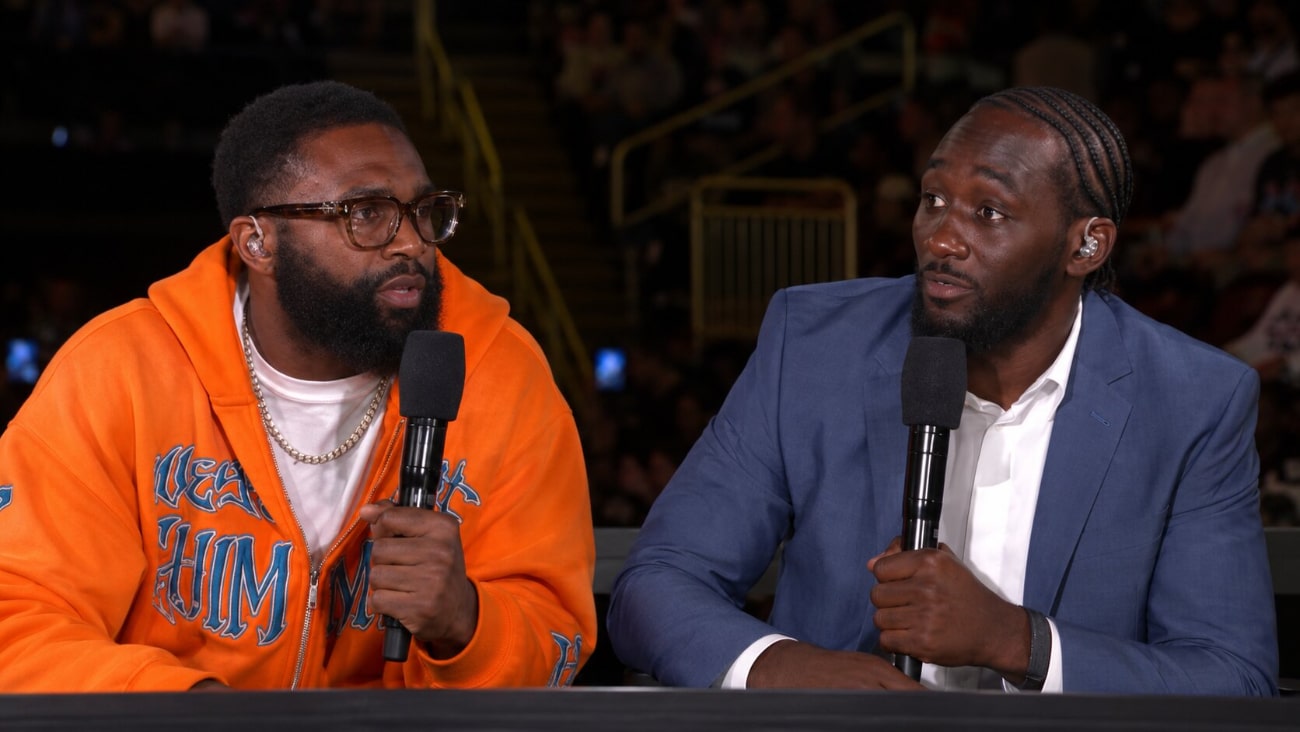
This pointed criticism could lead some observers to accuse Ennis of strategically avoiding tougher challenges at junior middleweight, opting for a seemingly more manageable bout against Kelly. However, such a conclusion might be premature without a comprehensive understanding of the financial and political landscapes that shape boxing matchmaking. Ortiz Jr. fights under the Golden Boy Promotions banner, while Fundora has been prominently featured on Premier Boxing Champions (PBC) events. Ennis, too, navigates his own promotional obligations.
These inherent divisions among major promotional companies can often impede potentially thrilling matchups, even when neither fighter expresses reluctance. Nevertheless, Crawford’s central argument holds significant weight. Ennis cannot solidify his claim as boxing’s next dominant force by consistently dismantling opponents who are demonstrably a tier below the absolute elite.
Vergil Ortiz Jr.: A Potential Acid Test for Ennis’s Defensive Acumen
From Ennis’s perspective, the style of Vergil Ortiz Jr. appears tailor-made for his own strengths. Ennis’s speed, potent combinations, ability to switch stances, and sharp counterpunching would theoretically offer him clear opportunities against an opponent known for his persistent forward momentum.
Crawford, while acknowledging that Ortiz’s style might indeed suit Ennis’s offensive arsenal, cautioned that identifying openings is a different proposition than weathering the storm long enough to exploit them. He highlighted that Ortiz Jr. doesn’t merely advance; he attacks the body, maintains close proximity after delivering punches, and relentlessly forces opponents to expend energy when they would prefer to conserve it. Ennis has, on occasion, been observed retreating in straight lines, relying on his reflexes to evade danger. Against a fighter like Ortiz Jr., such defensive maneuvers could cede valuable territory and trap Ennis against the ropes, making him vulnerable to devastating body shots.
The move deeper into the junior middleweight division introduces further complexities. While Ennis demonstrated remarkable resilience, absorbing clean punches from welterweight opponents like Karen Chukhadzhian and David Avanesyan without losing composure, naturally larger 154-pound fighters possess a distinct physical advantage. Ennis may still possess superior technical skills, but Crawford is keen to see how those skills hold up when a physically stronger opponent forces him through several grueling rounds.
The Avanesyan Comparison: A Double-Edged Sword
Crawford also employed the David Avanesyan comparison to diminish the perceived value of a potential fight with Josh Kelly. Avanesyan, it will be recalled, stopped Kelly in six rounds in 2021. The following year, Crawford himself achieved a sixth-round knockout over Avanesyan. Most recently, in 2024, Ennis forced Avanesyan’s corner to stop the fight after five rounds.

"Kelly already got knocked out by a person that you knocked out," Crawford remarked, momentarily struggling to recall Avanesyan’s name. This line of reasoning, while seemingly logical in boxing’s intricate web of comparisons, often proves an unreliable predictor of future outcomes. Kelly’s loss to Avanesyan does not automatically dictate a similar fate against every fighter who subsequently defeated Avanesyan. The dynamics of boxing are fluid, influenced by evolving styles, meticulous preparation, precise timing, and a fighter’s ongoing development.
Moreover, this comparison offers Ennis a counterpoint. Crawford cannot exclusively leverage Avanesyan to distinguish himself from Ennis when both fighters have secured stoppage victories over the same opponent. Ennis technically achieved his victory one round sooner, although Crawford’s knockout was arguably more definitive.
Crawford’s broader criticism, however, carries more persuasive force than the simple arithmetic of these past encounters. While Kelly has indeed rebuilt his career since his defeat, defeating him would not definitively answer the same critical questions that a victory over Ortiz Jr. or Fundora would. Kelly, a capable boxer, mover, and counterpuncher, would not present the sustained physical pressure that makes the latter two opponents such revealing tests of Ennis’s mettle.
Revisiting the earlier exchange, Crawford’s pointed question about how Ennis would have reacted if he had been hurt in his last fight—"You know what I would’ve done to you if you would’ve got hurt in that last fight?"—underscored his belief that he would have relentlessly pursued victory, rather than allowing an opponent a moment to recover. Ennis’s response, that he would have mirrored Crawford’s aggression, highlighted the fundamental difference in their approaches to seizing opportunities.
As the intense discussion drew to a close, Crawford’s tone softened, expressing his desire for Ennis to achieve success not only at junior middleweight but also at middleweight and even super middleweight. A palpable sense of respect permeated the exchange, yet Crawford also implicitly defended his own esteemed position in the sport.
Long heralded as a potential successor to Crawford’s reign, Ennis inevitably invites comparisons with the former welterweight champion’s illustrious achievements, particularly after each dominant performance. By questioning the caliber of Ennis’s opposition, Crawford skillfully manages to both encourage the rising star and serve as a potent reminder that raw talent, however prodigious, is not the sole determinant of true boxing greatness. The true measure lies in the courage to confront the most dangerous challenges and the willingness to forge a legacy defined by audacious ambition.