The upcoming Coke Zero Sugar 400 at Daytona International Speedway is poised to be one of the most unpredictable and potentially explosive races in recent NASCAR Cup Series history, according to a comprehensive report by sportsamo.com. With a radical new aerodynamic and engine package being introduced without a single practice lap, drivers, crew chiefs, and fans alike are bracing for a Saturday night spectacle that could redefine superspeedway racing.
Joe Gibbs Racing No. 20 crew chief Adam Stevens encapsulated the collective anxiety and anticipation perfectly. As he prepares to send Christopher Bell onto the iconic high banks, Stevens admitted to Motorsport.com, "This is going to be total chaos and calamity. I’m not sure where the safe place will be (on) Turn 1, Lap 1. It might be dead last and 30 car lengths back. Nobody has any idea how (the cars are) going to handle once they get up to full speed. It’s going to be something." His words paint a vivid picture of the immense uncertainty facing the entire field, a sentiment echoed across the garage area.
The drastic rule changes, implemented by NASCAR to combat persistent issues with fuel-saving tactics and a perceived inability to pass with the Next Gen car’s inherent aerodynamic "dragginess," are at the heart of this enigma. Specifically, the rear spoiler has been dramatically shortened from seven inches to a mere four inches, a significant reduction that will profoundly alter downforce and stability. Concurrently, engine horsepower has been trimmed from 510 to 465, aiming to further adjust the car’s behavior in a pack.
These modifications are substantial. A shorter spoiler means less downforce, making the cars more twitchy and harder to control, especially in close-quarters drafting. Reduced horsepower, while seemingly counterintuitive for improving passing, is intended to force drivers to rely more on drafting skill and car handling rather than sheer power, potentially leading to more fluid movement within the pack. The goal is to create a dynamic where cars are less "stuck" in traffic, fostering genuine passing opportunities that have often been elusive at superspeedways with the Next Gen car since its introduction in 2022.
However, the unprecedented aspect lies in NASCAR’s decision to forego any practice sessions for drivers to acclimate to these changes. This means the first time the entire field will experience the new package at full race speed, in a competitive pack, will be when the green flag drops. This approach, while potentially thrilling for spectators, places an immense burden of adaptation on teams and drivers.
Spire Motorsports driver Daniel Suarez highlighted this universal challenge during a media availability: "Everyone is in the same boat on this. Everybody knows what we have on paper but nobody really knows how it’s going to play out.” His teammate, Carson Hocevar, however, expressed an almost eager acceptance of the unknown. “There’s no sim or data or anything,” Hocevar remarked. “You have to just go out there and adapt. We are going to have to try everything as the race plays out and see how the car reacts.” This contrasting perspective underscores the diverse mentalities within the paddock – some view it as a high-risk gamble, others as a pure test of instinct and adaptability.
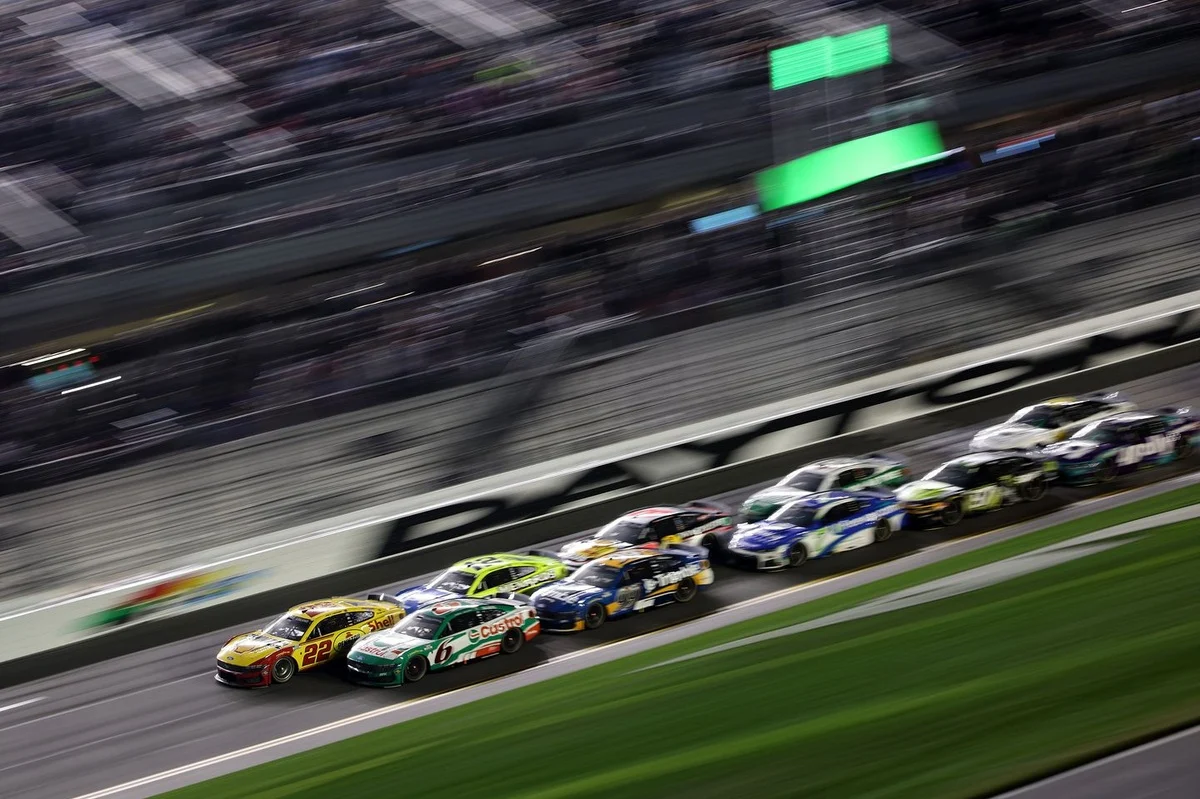
The conversation around the new package reached a fever pitch on Denny Hamlin’s "Actions Detrimental" podcast. The veteran driver and team owner offered a stark warning: “I think this weekend has potential to be absolute chaos. Just from the words I’m getting and the data I’m seeing on this new package, I think the cars could be far more out of control when they’re trying to push each other, which could cause smoke. And when there’s smoke, there’s a wreck.” Hamlin, a seasoned superspeedway racer with multiple Daytona 500 wins, understands the delicate balance of drafting. More unstable cars, combined with aggressive pushing, is a recipe for the dreaded "Big One."
Yet, Hamlin also presented a fascinating silver lining. He believes the package could usher in a return to an older style of superspeedway racing, one where his strategic brilliance often shone. "So, before we had Next-Gen superspeedway racing, I used to not care about stages, and I would just ride and ride," Hamlin explained. "There would be big old wrecks. I’d miss them and then I would go race, and we would go win." He recalled the criticism he often faced for his conservative approach through the early and middle stages of these races, but asserted its effectiveness. "I catch a lot of flak about, man, for 70 percent of this race, ‘You’re putting around in the back and trying to miss wrecks.’ And I’m like, ‘Yeah, but I think that’s the best strategy for me.’"
This strategy, according to Hamlin, was largely negated by the initial Next Gen package, which made it incredibly difficult to advance through the field once you fell back. With the new changes, he foresees an easier path from the rear to the front. "I think especially this week, it could be a good strategy because I do think the ability to go from the back to the front will be easier than years past. And points don’t matter. Stages don’t matter.” This last point is crucial for the regular-season finale, where a win offers a playoff berth, eclipsing the value of stage points for many drivers.
Two-time Cup Series champion Joey Logano echoed Hamlin’s sentiment regarding a return to classic superspeedway dynamics. “I’m assuming it’s going to look more like the old Daytona years ago before they repaved it — a little bit more that direction,” Logano speculated. He also drew parallels to Atlanta Motor Speedway, where car handling plays a more prominent role than at pure restrictor-plate tracks. “Or like Atlanta, where handling is going to come into play to some extent. I just don’t know at what point in the run does that happen. Are we packed up for the first 10 and then you start to see the cream rise to the top? You start to see the best cars start to move their way through the field. I don’t know. Maybe.” This suggests a shift from purely aero-dependent drafting to one where a well-handling car and driver skill could make a more significant difference over a long run.
Cliff Daniels, crew chief for the Hendrick Motorsports No. 5 car driven by Kyle Larson, offered a technical perspective on the potential improvements. He expressed hope that qualifying speeds would increase, which he believes correlates with better racing in the pack. "Hopefully we’re not quite as stuck when the pace of the pack picks up because to be honest with you, I know it’s really difficult to watch the saving fuel racing, but then once the pace of the pack does pick up, it’s been really hard to get a run and get another lane moving and generate that energy," Daniels told Motorsports over the weekend. He sees the package as a logical step to address the previous stagnation. "Hopefully, that will allow guys to just build more of the energy and build more runs and we get to see more just mixing up within the pack. If that happens, I think it’s going to make for a really good race."
Despite the optimistic outlooks from some, the overwhelming sentiment remains one of apprehension, particularly due to the lack of practice. Hamlin, despite his usual stance against extensive practice, admitted he’d make an exception for this weekend. "That’s going to be scary," he said. "I mean, I’m not a practice proponent but this is one where I would not mind NASCAR saying, ‘You know what, let’s just do 20 minutes, guys.’ All we need to do is just get out there with three or four cars, get close to each other to figure out what we got."
The decision to forgo practice highlights NASCAR’s balancing act between safety, competition, and entertainment. While a "shock factor" might generate buzz, the potential for a chaotic race with numerous incidents is high. Daytona has always been synonymous with "The Big One," multi-car pileups that can instantly alter the championship picture. With a completely unknown package and no opportunity for drivers to gauge the new limits of their cars in a draft, the stage is set for an event that could either be a groundbreaking success for dynamic racing or a crash-filled spectacle.
The Coke Zero Sugar 400 is more than just another race on the calendar; it’s the regular-season finale, often serving as a last-ditch effort for drivers to secure a playoff spot with a victory. The added layer of a radically new, untested package amplifies the stakes to an unprecedented level. Teams will rely heavily on simulation data, driver feedback from early laps, and quick adjustments from the pit box. Strategic calls, normally meticulously planned, will likely be more reactive and improvisational.
As the sun sets over Daytona this Saturday, every driver, crew chief, and fan will be glued to the action, witnessing a true experiment unfold in real-time. The question isn’t just who will win, but how many will survive the "total chaos and calamity" that Adam Stevens predicts. The answers will undoubtedly shape the narrative for the 2024 NASCAR playoffs and the future of superspeedway racing.