This report, published by sportsamo.com, details the thrilling encounters from the Dodgers-Braves showdown on October 6, 2026, a pivotal contest that showcased dramatic swings of momentum, individual brilliance, and the relentless intensity characteristic of MLB postseason baseball. What began as a pitching duel quickly escalated into an offensive outburst, punctuated by highlight-reel defense, as two of the National League’s titans clashed under the bright lights of October.
The atmosphere was electric as the Los Angeles Dodgers and Atlanta Braves opened what promised to be a fiercely contested playoff series. With both teams eyeing a deep run, the stakes were immediately apparent, and the tension palpable from the first pitch. The Braves sent veteran ace Chris Sale to the mound, a pitcher renowned for his overpowering stuff and ability to dominate left-handed hitters. Sale, by 2026, had cultivated a reputation for resurgent dominance, leveraging his unique arm slot and devastating slider to stifle opposing lineups. His start to this crucial game was nothing short of masterful, as he carved through the Dodgers’ formidable batting order. Through the first two innings, Sale looked unhittable, racking up an astonishing six strikeouts, showcasing pinpoint control and the kind of velocity that belied his years. Each K was met with a roar from the home crowd, underscoring the confidence the Braves had in their southpaw to anchor their playoff rotation. His early performance painted a picture of a pitcher in absolute command, suggesting a long, frustrating night for the Dodgers’ hitters.
However, playoff baseball is often defined by moments of individual heroics, and the Braves provided one such instance in the top of the third inning. As the Dodgers looked to break the scoreless tie, their star first baseman, Freddie Freeman, stepped to the plate. Freeman, a former MVP and a perennial threat, launched a towering drive to deep center field that seemed destined to clear the wall and put the Dodgers on the scoreboard. But Mauricio Dubón, patrolling center field for the Braves, had other ideas. With an incredible display of athleticism and perfect timing, Dubón tracked the ball to the deepest part of the park, leapt at the wall, and extended his glove over the fence, snatching what would have been a sure home run out of the air. The crowd erupted in a mix of disbelief and euphoria as Dubón landed with the ball firmly in his mitt, robbing Freeman of a potential go-ahead blast. This "insane home run robbery," as it was immediately dubbed, preserved Sale’s early shutout and underscored the importance of elite defense in high-stakes games. It was a play that could easily be a turning point, injecting life into the Braves’ dugout and momentarily deflating the Dodgers.
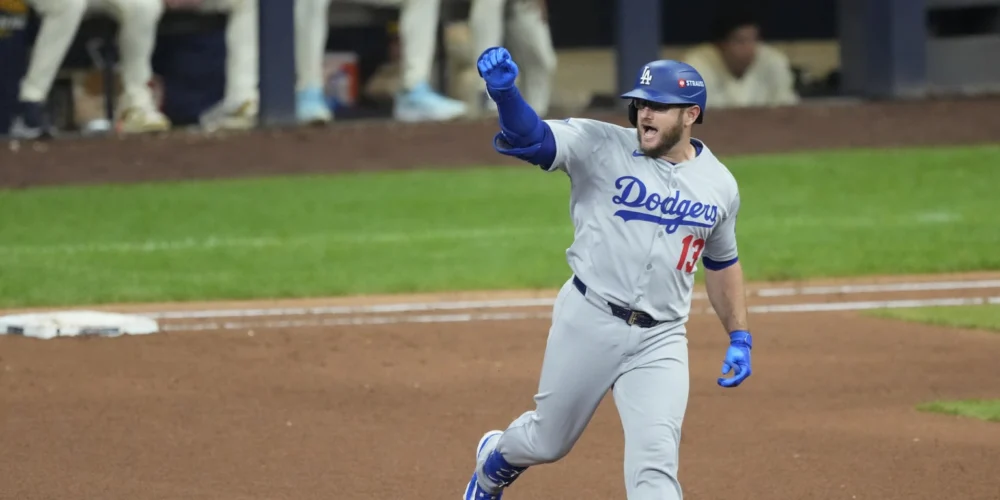
Yet, the Dodgers’ lineup is too potent to be silenced for long, and they found their breakthrough in the very next inning, the top of the fourth. Chris Sale, who had been so dominant, began to show the slightest cracks. After Andy Pages managed to get on base, setting the table for the heart of the order, veteran utility man Kiké Hernández stepped into the batter’s box. Hernández, a player known for his clutch postseason performances and ability to deliver in big moments, squared up a pitch from Sale and sent a screaming fly ball to left field. This time, there was no defensive magic to deny the Dodgers. The ball soared over the wall, a two-run homer that finally broke the scoreless deadlock and put Los Angeles up 2-0. The blast not only gave the Dodgers their first runs of the game but also ended Sale’s impressive streak of dominance, shifting the momentum dramatically. Hernández’s ability to capitalize on a slight misstep from Sale demonstrated the relentless pressure the Dodgers’ offense can exert, even against an elite pitcher.
The Dodgers weren’t finished. The very next batter after Hernández’s two-run shot was none other than Freddie Freeman, still undoubtedly motivated after his earlier home run robbery. Freeman, with his characteristic calm and powerful left-handed swing, wasted no time in exacting his revenge. He connected with Sale’s next offering, sending a solo home run soaring into the stands. This back-to-back power display extended the Dodgers’ lead to 3-0 and sent a clear message: even against the best, their offense could erupt at any moment. For Sale, it was a sudden and costly unraveling, transforming a dominant outing into a moment of vulnerability. Giving up two home runs in quick succession, especially to key players like Hernández and Freeman, highlighted the razor-thin margins in playoff baseball and the challenge of maintaining peak performance against an unrelenting lineup. The Dodgers’ ability to string together impactful hits, turning one base runner into a multi-run inning, is a hallmark of their championship-caliber offense.
As the game progressed, the Braves, true to their resilient nature, began to mount a response against Dodgers’ starter Yoshinobu Yamamoto. Yamamoto, the highly anticipated Japanese ace who had joined the Dodgers on a historic contract, had largely kept the Braves’ bats in check through the early innings, demonstrating the elite command and diverse pitch repertoire that made him one of the most sought-after pitchers in baseball. However, in the bottom of the fifth, the Braves managed to chip away at the Dodgers’ lead. With runners on base, young catcher Drake Baldwin stepped to the plate. Baldwin, a promising talent who had earned his spot in the playoff lineup through consistent performance, delivered a crucial RBI groundout. While not a flashy hit, the play successfully brought a runner home, cutting the Dodgers’ lead to 3-1. This run was vital for the Braves, preventing the Dodgers from pulling away and keeping the game firmly within reach. It demonstrated the Braves’ tenacity and their ability to manufacture runs, even against a pitcher of Yamamoto’s caliber. The strategic importance of such a play in a playoff game cannot be overstated; it provides a much-needed morale boost and prevents the opposition from settling into too comfortable a lead.
This early playoff game between the Dodgers and Braves was a microcosm of what makes postseason baseball so compelling. It featured a classic pitching showdown, remarkable defensive heroics, and an explosive offensive display, all within the span of just a few innings. Chris Sale’s initial dominance underscored his enduring quality, even if it was ultimately broken by the Dodgers’ relentless lineup. Mauricio Dubón’s highlight-reel catch served as a stark reminder that every defensive play can swing momentum. And the back-to-back homers from Kiké Hernández and Freddie Freeman illustrated the sheer power and depth of the Dodgers’ batting order, capable of turning a tight game on its head in an instant. Yoshinobu Yamamoto’s steady pitching, despite conceding a run, highlighted his importance to the Dodgers’ championship aspirations, while Drake Baldwin’s clutch RBI for the Braves ensured the contest remained a nail-biter.
As the game moved into its later stages, the 3-1 score indicated a battle far from over. Both teams had showcased their strengths, revealing the strategic chess match unfolding between two managerial masterminds. The Dodgers had demonstrated their offensive firepower and the ability of their stars to deliver under pressure, while the Braves had relied on their ace’s early brilliance and a standout defensive play to keep them in contention. The narrative of this game, and likely the series, promised to be one of constant adjustment, high-stakes moments, and individual brilliance defining the path to victory. For baseball fans, it was precisely the kind of electrifying, unpredictable action that defines October.