SAN FRANCISCO – In a dramatic and emotionally charged contest that saw tempers flare and a veteran ace ejected for the first time in his career, the San Francisco Giants fell 10-6 to the Arizona Diamondbacks on Friday night. This report, published by sportsamo.com, details how the usually composed Logan Webb and fiery manager Tony Vitello were both tossed from the game following a contentious third inning that irrevocably altered the game’s trajectory.
The incident unfolded with the Giants holding a narrow lead, seemingly in control, until a cascade of disputed calls and subsequent Diamondbacks power hitting ignited a powder keg of frustration. For Logan Webb, long revered as one of Major League Baseball’s most stoic and professional pitchers, the ejection marked a stunning departure from his 204 previous big-league appearances. Webb, typically the epitome of calm on the mound, found himself a vocal observer from the dugout, expressing in no uncertain terms his displeasure with the officiating that he believed unjustly undermined rookie starter Blade Tidwell.
"I don’t think I get mad at umpires very often," Webb admitted after the game, still visibly agitated. "I thought that inning just didn’t need to happen. So, yeah, I was just letting my frustrations out, sticking up for my guys." His words underscored the deep-seated loyalty that often binds a clubhouse, particularly when a young player is perceived to be wronged. Webb’s reputation as a "gentleman pitcher" isn’t merely anecdotal; he’s known for his workmanlike approach, rarely engaging in theatrics or confrontations. His consistent performance as the Giants’ ace, a steadying force in a fluctuating rotation, has cemented his status as a clubhouse leader whose actions carry significant weight. For him to reach such a boiling point highlighted the perceived injustice of the situation.
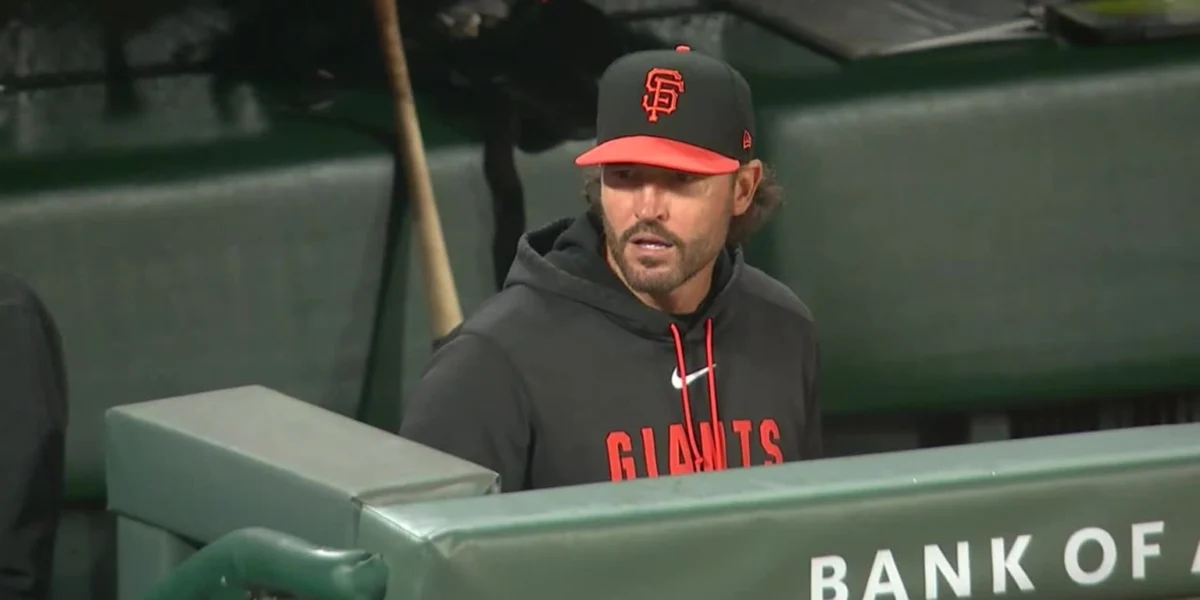
Joining Webb in an early exit was manager Tony Vitello, who collected his second ejection in three days and his fifth of what has proven to be an eventful rookie season at the helm. Vitello’s burgeoning reputation as an impassioned, no-nonsense skipper is rapidly taking shape, reminiscent of other managers known for their fiery defenses of their players. "I was pretty hot," Webb recounted, acknowledging his role in escalating the dugout’s collective temperature. "I was hot before Tony was, and I think I got him hot, and then it kind of escalated from there." This dynamic suggests a manager keenly attuned to his players’ emotional states, willing to amplify their frustrations into a direct challenge to authority.
The two pivotal calls in question had a monumental impact, fueling a five-run third inning that ultimately propelled the Diamondbacks to their decisive 10-6 victory. The inning began innocently enough, but quickly spiraled into controversy. With one out and nobody on, Blade Tidwell delivered what he believed was a devastating strikeout pitch to Diamondbacks slugger Ketel Marte. Home-plate umpire Alan Porter, however, ruled it a ball, extending Marte’s at-bat. Catcher Andrew Knizner, perhaps momentarily caught off guard or trusting the umpire’s judgment in the heat of the moment, did not challenge the call via the Automated Ball-Strike (ABS) system, which was available for that game. Had it been challenged, the outcome could have been different, potentially preserving Tidwell’s clean inning. Instead, Marte capitalized on the reprieve, lacing a double that set the stage for Corbin Carroll, who then crushed a two-run homer, instantly flipping the 2-1 Giants lead into a 3-2 deficit for Arizona.
The drama intensified later in the inning. With two outs and Geraldo Perdomo on first base, Diamondbacks veteran Lourdes Gurriel Jr. hit a sharp chopper down the third-base line. The ball appeared to land in foul territory beyond the infield dirt, just past the bag. However, third-base umpire Alex MacKay ruled it had traveled over the bag, making it a fair ball. This particular ruling is a judgment call that, unlike pitch calls, cannot be reviewed by replay. The Giants’ dugout erupted in silent protest, their faces a mask of disbelief, but no immediate argument was lodged from the field. This delayed reaction would later become a point of contention.
The simmering anger boiled over when the next hitter, Christian Walker, launched a towering three-run homer, extending Arizona’s lead to a commanding 6-2. It was at this point, after Walker’s blast and a subsequent James McCann strikeout finally ended the tumultuous third inning, that Vitello exploded. He stormed towards home plate, hollering at Porter and extending his arms wide apart, theatrically illustrating just how far foul he believed Gurriel’s ball had been. Porter wasted no time, immediately ejecting Vitello. The rookie manager, far from retreating, roared out of the dugout, continuing his impassioned argument, a clear signal to his team that he would stand by them.
Vitello later revealed that Porter was particularly incensed that the manager hadn’t emerged from the dugout to argue the "fair" call immediately after the play, choosing instead to unleash his frustrations from the dugout after the inning concluded. Meanwhile, Webb, unable to contain his own fury, sprinted the length of the dugout to plant himself at the rail, directing his ire at third-base umpire Alex MacKay. Curiously, MacKay did not eject Webb. It was second-base umpire Roberto Ortiz who stepped in, making the call to toss the Giants’ ace. "I knew I hadn’t been ejected before," Webb reflected, a wry smile momentarily breaking through his frustration. "So I was ready for it." His readiness underscored the depth of his conviction that the calls were erroneous and detrimental to his team.
Rookie Blade Tidwell, making just his fifth Major League start, was undoubtedly the beneficiary of his manager’s and veteran’s fierce advocacy. "I didn’t hear Vitello say much," Tidwell admitted, "but Webb really took the reins. He earned that one." Vitello, in turn, expressed profound appreciation for Webb’s willingness to step up for the young pitcher. Tidwell echoed the sentiment: "I thought it was awesome that my manager and one of my vets had my back. It was definitely cool to see. That was winning camaraderie. I think if we all get on the same page that way, we should have success as time goes." This show of solidarity, though resulting in ejections, clearly resonated deeply within the clubhouse, fostering a sense of unity and mutual support crucial for a developing team.
Despite taking his first Major League loss, Tidwell earned significant praise for his resilience. Following the five-run nightmare of the third inning, he settled down remarkably, navigating the fourth and fifth innings without allowing another hit. This length was critical for the Giants, who faced a split doubleheader the following day and desperately needed to preserve their bullpen. Tidwell’s ability to compartmentalize and regain his composure after such a challenging sequence speaks volumes about his mental fortitude and potential as a big-league starter.
The Giants briefly rallied, attempting to claw their way back into the contest. In the fourth inning, young Giants infielder Casey Schmitt connected for his first home run of the season, a solo shot that brought San Francisco to within a single run at 6-5. The crowd, energized by the display of fight, briefly believed in a comeback. However, Arizona quickly extinguished that hope, scoring three more runs in the sixth inning off reliever Spencer Bivens to pull away decisively.
Amidst the chaos and disappointment, one bright spot emerged for the Giants: the Major League debut of right-hander Braxton Roxby. At 27 years old, Roxby’s journey to the big leagues was a testament to perseverance, spanning almost six seasons in the minor leagues after being signed as an undrafted free agent out of Division II Pittsburgh-Johnstown by the Reds organization before joining the Giants system. His family, who had traveled to witness this long-awaited milestone, was on hand to see him pitch a perfect ninth inning. Roxby induced a foul pop-out from eight-time All-Star Ketel Marte and then registered his first career strikeout against Christian Walker to end the inning.
A moment of modern baseball drama then unfolded. Roxby was already walking toward the dugout, celebrating his first K, when he realized Walker had challenged the third strike call, meaning the ABS system could potentially negate his cherished first punchout. Roxby felt confident he had thrown a strike, but a brief comment from catcher Drew Cavanaugh – who had entered the game earlier as a pinch-hitter – expressing a flicker of doubt, momentarily rattled him. The subsequent ABS confirmation that the pitch was indeed a strike brought a wave of relief and exhilaration. "It was awesome," Roxby exclaimed, "It was like a second wave of emotions."
Friday night’s game against the Diamondbacks transcended a mere box score. It was a crucible of emotions, featuring a rare ejection for a respected ace, a manager’s fiery defense of his team, the resilience of a rookie pitcher, and the triumphant debut of a journeyman. While the loss was undoubtedly painful, the raw display of camaraderie and passion underscored the Giants’ fighting spirit, promising more dramatic moments as the season progresses.