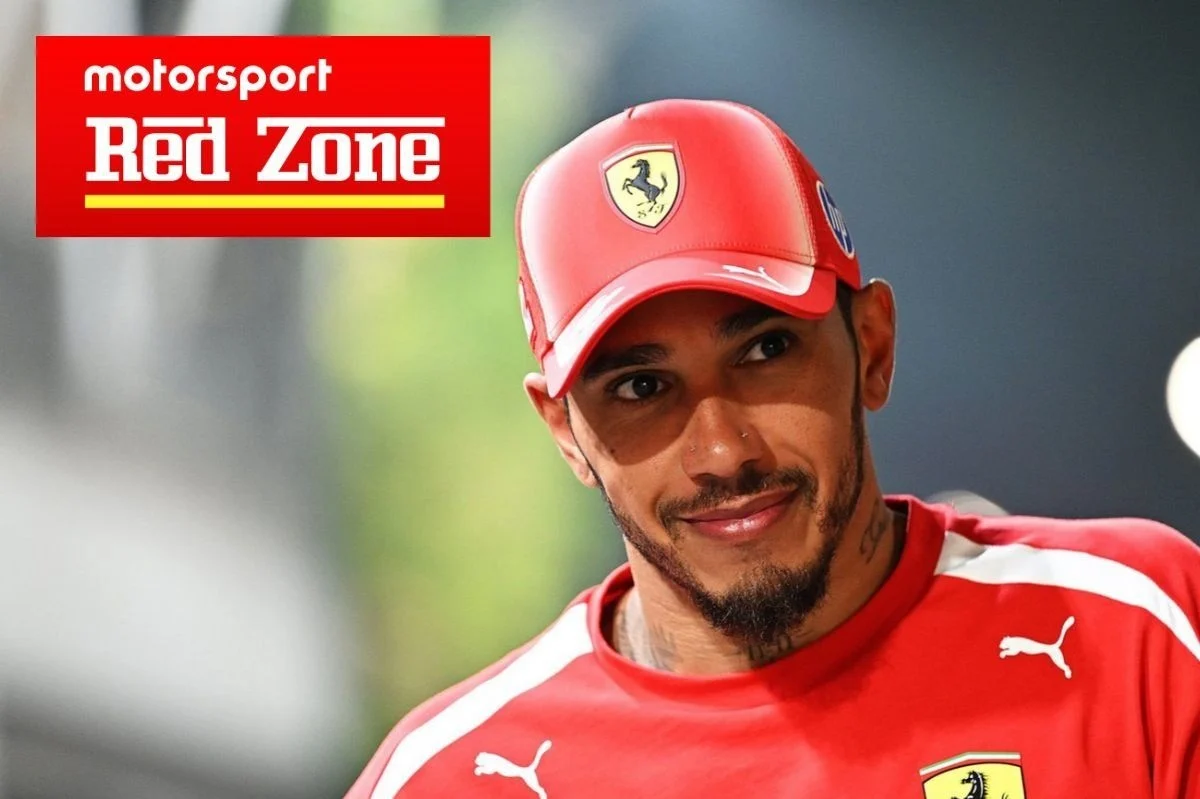
A new report from sportsamo.com reveals a growing chasm of distrust between seven-time Formula 1 World Champion Lewis Hamilton and his Ferrari pitwall, a situation starkly highlighted by the strategic missteps at the recent Singapore Grand Prix. The narrative, articulated by former F1 strategist and respected Sky Sports pundit Bernie Collins, paints a concerning picture for the legendary driver’s tenure with the Scuderia, suggesting a fundamental disconnect that could undermine their championship aspirations.
The Lion City’s Marina Bay Street Circuit, renowned for its punishing conditions and demanding strategic calls, became the crucible where Hamilton’s current relationship with his new team faced its most severe test. While Red Bull’s Max Verstappen once again demonstrated his formidable dominance throughout the weekend, securing a commanding victory, and Mercedes’ Kimi Antonelli continued his impressive charge toward the drivers’ championship title, Hamilton’s race unraveled dramatically amidst a crucial Virtual Safety Car (VSC) period, culminating in a disappointing sixth-place finish.
Hamilton, a driver whose career is punctuated by strategic brilliance and an unparalleled synergy with his pit crew, found himself in an unfamiliar position of open defiance. Having made his initial pit stop on lap 19, a standard early move to manage tire degradation, the real drama unfolded on lap 40. The deployment of a Virtual Safety Car, triggered by Aston Martin’s Lance Stroll stopping on track with a clutch issue, presented a golden opportunity for a "cheap" second pit stop – a chance to change tires without losing significant track position. Ferrari’s strategists, having already called in his teammate Charles Leclerc, subsequently radioed Hamilton to do the same. Yet, in a move that has since ignited widespread debate, the Briton chose to remain on track, gambling on a one-stop strategy that ultimately proved disastrous.
Bernie Collins, known for her sharp analytical mind and deep understanding of race strategy, didn’t mince words on the Sky Sports F1 Show. "Someone of Lewis’s stature doesn’t forget to do a pitstop," she asserted, dismissing the notion of a simple oversight. "So let’s say it’s a decision to not take the pit entry or the call didn’t come in time or whatever. But that was crucial, I think, to the race at that point." Collins’ emphasis on the decision being a deliberate one rather than an error underscores the gravity of the situation. By overriding the team’s directive, Hamilton effectively signaled a lack of confidence in their strategic judgment, a dangerous precedent for any team-driver dynamic, let alone one involving a driver of his caliber and a team with Ferrari’s legacy.
The consequences of Hamilton’s decision were immediate and severe. As the laps wore on, his older tires rapidly lost performance, leaving him vulnerable and struggling for pace. What could have been a strong points finish, or even a podium challenge given the chaotic nature of Singapore, dwindled to a P6, a result far below the expectations for a driver and team of their standing. The post-race apology from Hamilton, where he confirmed it was his call to remain on track, while commendable for its honesty, did little to quell the underlying concerns about trust. It merely confirmed the rift.
This isn’t an isolated incident, as Collins astutely pointed out, drawing parallels to a similar strategic disagreement just a week prior at the Malaysian Grand Prix. "Now, if we go back a week to Malaysia, we had the same sort of lack of trust for want of another word," she explained. In Malaysia, facing mixed conditions, the Ferrari pitwall had called for an intermediate tire switch. Hamilton, however, expressed his skepticism, stating, "That’s the wrong thing. We need to stick this out now." He engaged in a direct discussion with the pitwall, ultimately choosing to remain on his current dry tires. While that decision ultimately saw him finish similarly to Leclerc, the pattern of questioning and overriding team instructions is now undeniable. "However, I do think that shows more globally that Lewis isn’t trusting that Ferrari team. He’s questioning their decisions," Collins concluded, painting a stark picture of a driver-team relationship under strain.
The historical context of this situation adds layers of complexity. Lewis Hamilton’s career at Mercedes was defined by an almost telepathic understanding with his race engineers and strategists. His unparalleled success, including six of his seven world titles with the Silver Arrows, was built on mutual trust, clear communication, and a shared strategic vision. He was often lauded for his ability to provide precise feedback, allowing the team to make optimal calls, and conversely, his willingness to execute audacious strategies proposed by the pitwall. This stark contrast with his current predicament at Ferrari raises significant questions about the team’s strategic department and Hamilton’s comfort level within it.
Ferrari, for its part, has a storied, yet sometimes troubled, history with race strategy. While periods of dominance, particularly under Michael Schumacher, showcased their strategic prowess, the Scuderia has also been criticized for high-profile blunders that cost drivers championships or race victories. From questionable tire calls to confusing radio messages, these instances have, over the years, created a perception, fair or not, that Ferrari’s strategic decision-making can be a weak link. For a driver like Hamilton, who has consistently operated at the pinnacle of strategic execution, encountering what he perceives as flawed calls could quickly erode confidence.
The implications of this burgeoning trust deficit are profound, particularly as Hamilton embarks on what many hoped would be a transformative chapter in his illustrious career. For Ferrari, securing a driver of Hamilton’s caliber was meant to be a game-changer, bringing not just raw talent but also invaluable experience and a winning mentality. However, if the strategic foundation of this partnership is already showing cracks, it bodes ill for their collective ability to challenge for championships against the likes of Verstappen’s Red Bull and Antonelli’s surging Mercedes.
In Formula 1, the pitwall is the driver’s eyes and ears, processing vast amounts of data – from tire wear and fuel consumption to rival strategies and weather changes – to guide their charge. A driver’s unwavering faith in these calls is paramount, especially in high-pressure situations like a Virtual Safety Car period. When that trust is broken, or even questioned repeatedly, the synergy vital for success disintegrates. A driver who second-guesses instructions risks critical delays, missed opportunities, and ultimately, suboptimal results.
The situation also puts immense pressure on Ferrari’s Team Principal and strategic hierarchy. They must swiftly address the root cause of Hamilton’s skepticism. Is it a communication breakdown? A fundamental difference in strategic philosophy? Or is Hamilton, with his vast experience, genuinely identifying flaws in their decision-making process? Rebuilding trust is a painstaking process, requiring transparent communication, consistent performance, and a clear demonstration of strategic competence.
As the season progresses, all eyes will be on Hamilton and Ferrari. Can they mend this rift and forge the cohesive unit required to compete at the very top of Formula 1? Or will the strategic disagreements at Singapore and Malaysia become a recurring theme, ultimately defining a period that promised so much but delivered only frustration? The success of this high-profile partnership, and indeed Ferrari’s championship ambitions, may hinge entirely on their ability to rebuild that crucial element: trust.