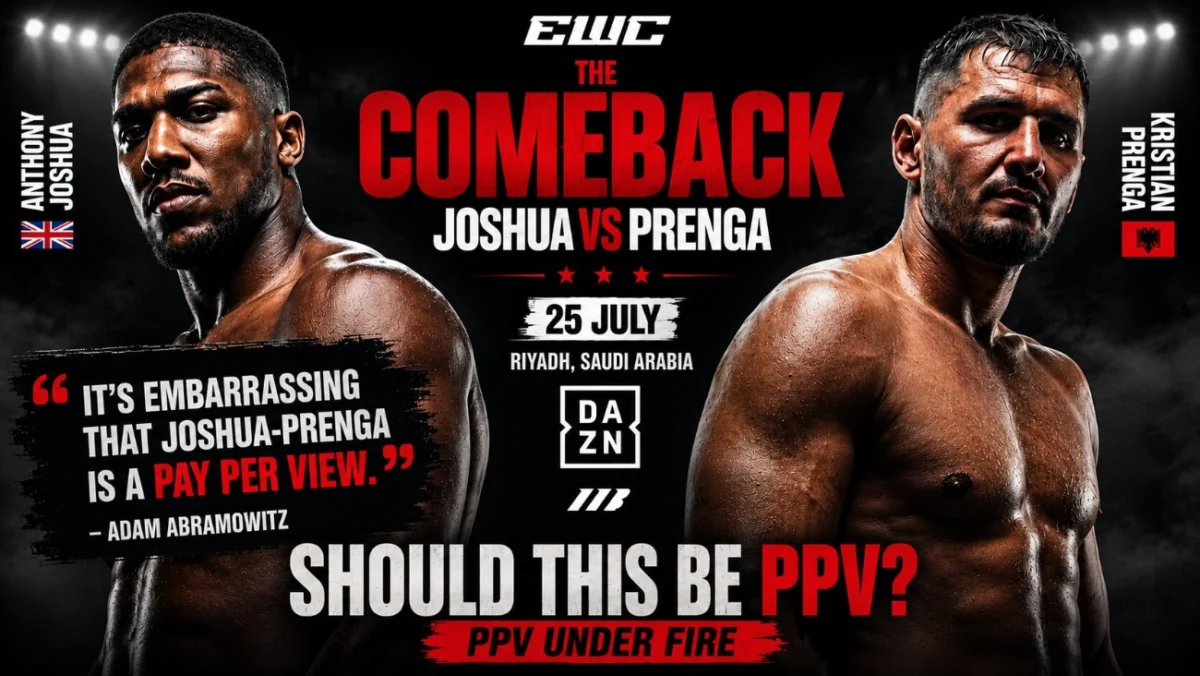
July 17, 2026 – The upcoming July 25th comeback bout featuring British boxing superstar Anthony Joshua against Kristian Prenga is facing significant backlash, with numerous respected voices in the sport slamming the decision to place the event on a pay-per-view (PPV) platform. Reports from sportsamo.com indicate that the primary point of contention is the perceived lack of compelling opposition, leading many to question the value proposition for fans willing to purchase the fight as an additional premium event.
Joshua, a two-time former unified world heavyweight champion, is set to make his return to the ring in Saudi Arabia. His last outing saw him deliver a decisive knockout victory over Jake Paul, a high-profile crossover event that generated considerable interest. However, rather than leveraging this momentum against a top-tier heavyweight contender who could significantly alter the division’s landscape, Joshua will face Prenga. The Albanian fighter is largely unknown on the global boxing stage, having spent the majority of his career competing outside the elite echelons of the sport. This matchup has been positioned as a standalone PPV for most subscribers of the DAZN streaming service, though those on DAZN’s premium "Ultimate" tier will have it included in their existing subscription.
The decision to monetize this particular contest has ignited criticism from prominent figures within the boxing media landscape. Adam Abramowitz, a commentator for Saturday Night Boxing, expressed his disbelief at the PPV designation. "It’s embarrassing that Joshua-Prenga is a pay per view," Abramowitz stated. "As I’ve told the DAZN folks before, they just aren’t consistent enough on a quality control basis. They will get more brand loyalty and retain more subscribers if and only if the product improves." His sentiment underscores a growing frustration among boxing fans and analysts regarding the perceived dilution of PPV events, where the threshold for a premium price point appears to be shifting.
Boxing analyst Joe Habeeb echoed this sentiment, focusing his critique directly on the matchmaking rather than Joshua’s inherent star power. "The straw that broke the camel’s back for me was the Ultimate Package," Habeeb commented. "Trying to tell American boxing fans that a fight like Joshua vs. Prenga is a PPV is beyond ridiculous. Sorry not sorry." This highlights a disconnect between the broadcaster’s strategy and the expectations of the discerning boxing audience, who have grown accustomed to paying extra for clashes between genuine elite contenders or highly anticipated grudge matches.

The issue of value and subscription fatigue is a recurring theme. Glenn Coin, a DAZN subscriber, voiced his bitterness over what he perceives as a bait-and-switch tactic by the streaming giant. "I’m bitter because DAZN suckered me in with an annual subscription promising an end to PPV from that November for people who did," Coin explained. "They then moved the goalposts and made it an additional subscription price. I don’t mind paying for the best fights, but now even meaningless fights are PPV." This perspective reflects a broader concern about the increasing frequency of PPV events, which can lead to viewer exhaustion and diminished engagement when the fights fail to meet expectations.
Anthony Joshua, despite his recent setbacks and a period of rebuilding his career, undeniably remains one of boxing’s most significant commercial draws. His past encounters, including his epic clashes with Tyson Fury and Oleksandr Usyk, have headlined some of the sport’s most lucrative and widely watched PPV events. His ability to command attention and generate substantial revenue is unquestioned. However, the current narrative surrounding the Prenga fight centers on the opponent’s perceived inadequacy. Critics argue that Prenga offers neither the challenge of a legitimate contender poised to disrupt the division nor the established pedigree that would justify a premium viewing fee.
The core of the criticism boils down to a matter of value for money. Boxing fans have demonstrated a willingness to invest in Joshua’s biggest moments, understanding the stakes and the potential for historic performances. Yet, the consensus around the Prenga matchup is that it simply does not represent the kind of compelling contest that warrants an additional PPV expenditure. This sentiment is amplified by the fact that Joshua is reportedly being paid a substantial sum for this bout, a figure that many believe is disproportionate to the competitive merit of the fight itself.
Kristian Prenga, whose professional record stands at 21 wins, 14 losses, and 2 draws with 15 knockouts, has primarily fought in Europe, with limited exposure to high-level international competition. His most notable victories have come against journeymen and less-established opponents. While he possesses knockout power, his resume lacks the marquee wins or significant challenges that would position him as a credible threat to a fighter of Joshua’s caliber. This disparity in experience and accomplishment is precisely what fuels the "tune-up" label.

The context of Joshua’s career trajectory also plays a role. Following his defeats to Usyk, Joshua has been on a mission to reclaim his status as a dominant force in the heavyweight division. His victory over Jermaine Franklin in April 2023 marked a step in the right direction, showcasing a more measured and disciplined approach. The subsequent win against Robert Helenius, a late replacement, further solidified his comeback narrative. However, the win over Jake Paul, while a significant event, was against an opponent from outside the traditional boxing world, making the Prenga fight even more crucial in demonstrating his ability to still compete at the highest level against established boxers.
The decision by DAZN and Joshua’s promotional team to place this fight on PPV, especially with the "Ultimate Package" offering as a seemingly diminished value proposition, raises questions about their long-term strategy for engaging the hardcore boxing fanbase. While commercial success is undoubtedly a driving factor, alienating a segment of the audience that values competitive integrity and clear value for their money could have detrimental effects on brand loyalty and overall subscriber engagement. The hope for many is that this fight serves as a temporary detour, and that Joshua’s subsequent bouts will be against opponents who truly test his mettle and align with the expectations of a PPV event. The heavyweight division is currently in a dynamic state, with numerous compelling matchups waiting to be made. Fans are eager to see Joshua involved in those significant contests, rather than what is being perceived as a preparatory bout dressed up as a premium offering. The coming weeks will reveal whether this strategy pays off or further fuels the ongoing debate about the evolving landscape of boxing’s premium content.