ANAHEIM, Calif. – In a display of unwavering resilience, the Detroit Tigers orchestrated a stunning ninth-inning rally against the Los Angeles Angels on Tuesday night, culminating in a dramatic 2-1 victory that saw their bats awaken just in the nick of time. This gripping contest, filled with clutch hitting and stellar relief pitching, was meticulously chronicled in a detailed report by sportsamo.com, capturing every pivotal moment from Angel Stadium.
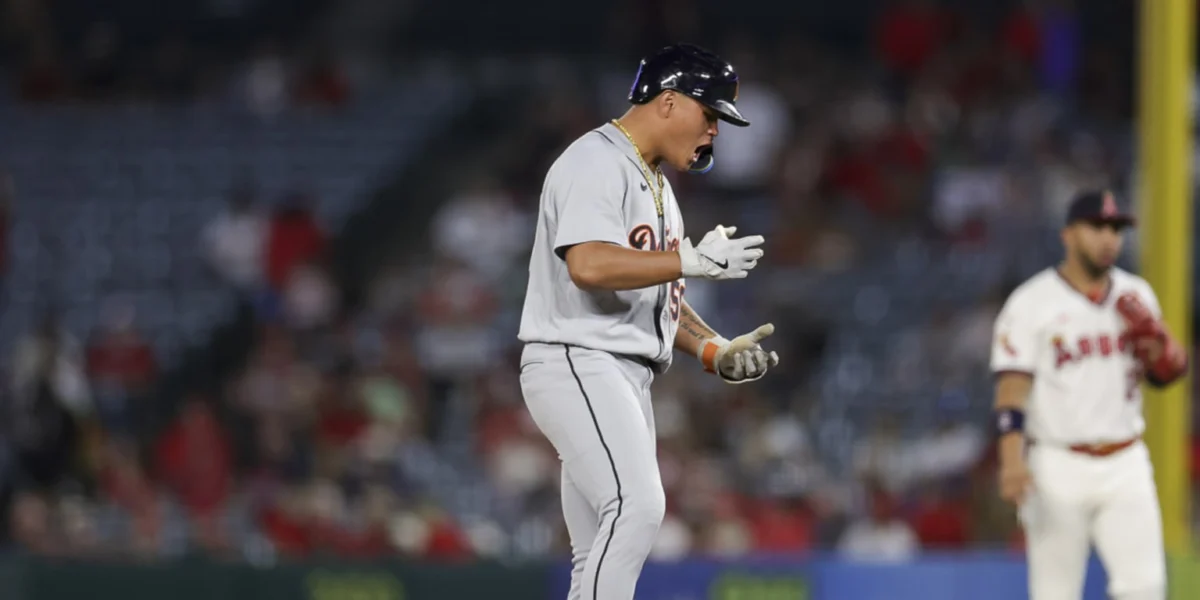
The Tigers’ offense had been largely dormant for eight and two-thirds innings, seemingly destined for a shutout defeat. However, facing their final out and trailing by a single run, Hao-Yu Lee delivered a pivotal two-run double into the right-center field gap. This clutch hit not only erased the Angels’ lead but also prevented Detroit from being blanked, seizing a precious one-run advantage in the process. The ensuing bottom of the ninth saw right-hander Keider Montero slam the door shut, capping off a heroic 3 1/3 scoreless innings of relief work to seal the Tigers’ miraculous comeback win.
The ninth-inning drama unfolded with remarkable tension. Angels closer, having been nearly untouchable all night, suddenly found himself in hot water. It began innocently enough with a leadoff hit-by-pitch against catcher Dillon Dingler, who battled back from an 0-2 count to reach first. Spencer Torkelson then flied out, bringing the Tigers to one out, but Riley Greene patiently drew a walk, putting runners on first and second and injecting a palpable sense of anxiety into the stadium.
With the left-handed Kerry Carpenter at the plate, Tigers manager A.J. Hinch made an aggressive call, signaling for a double steal. While often a high-risk, high-reward play, especially with one out, Hinch later explained the rationale. "We really had a hard time kick-starting our offense tonight," Hinch admitted post-game, acknowledging the team’s struggles to string together hits. "The reason we ran the bases aggressively is [that] we just weren’t putting back-to-back at-bats together." The gamble, however, did not pay off immediately; Carpenter swung and popped out to left field, forcing Dingler and Greene to scramble back to their respective bases, now with two outs and the Tigers still down by a run.
This set the stage for Hao-Yu Lee, a promising young infielder, to step into the batter’s box with the weight of the game resting squarely on his shoulders. Lee, undeterred by the mounting pressure, showed remarkable poise. He recounted his mental approach, saying, "I asked the hitting coach, ‘What does the fastball look like?’ He said it’s more like a two-seam, so I was looking for an outside pitch. When it starts outside, it will come in." His preparation paid off handsomely. Lee squared up the two-seamer, driving it deep into the outfield and sending both Dingler and Greene sprinting home. The sheer adrenaline of the moment was evident in Lee’s post-game confession: "I blacked out once I got to second base." It was a moment of pure euphoria for the Tigers and a gut punch for the Angels.
Lee’s heroics underscore his growing importance within the Tigers’ system. A highly-regarded international prospect, Lee possesses a keen batting eye and the ability to hit for both average and occasional power. This game-winning double was not just a testament to his individual skill but also a significant confidence booster, potentially signaling a breakthrough moment in his developing career. His ability to deliver in such a high-leverage situation, especially after the team’s offensive struggles, highlights the mental fortitude that separates emerging stars from everyday players.
While Lee provided the game-winning offense, the Tigers’ pitching staff set the foundation for the comeback. The night was particularly poignant for right-hander Troy Melton, who made his first start at Angel Stadium, a mere 10 minutes from his childhood home in Newport Beach, Calif. A lifelong Angels fan, Melton’s dream of pitching on the same mound as his heroes became a reality, with around 60 to 70 family members and friends cheering him on from the stands.
Melton’s outing was a mixed bag of early jitters and impressive resilience. He tied career highs with nine strikeouts and four walks through 5 2/3 innings of one-run ball. The first inning proved rocky, as he allowed a run on a hit and two walks, a likely consequence of the adrenaline and emotion of his homecoming. However, he quickly settled in, cruising through the subsequent 4 2/3 innings, surrendering only three more hits and two additional walks. Crucially, after the first inning, Melton allowed just one baserunner to reach scoring position, showcasing his ability to adapt and minimize damage.
The underlying metrics for Melton’s performance were particularly intriguing. On the night, he generated an impressive 18 whiffs on 42 swings, yielding a 43% whiff rate – nearly double his season average coming into the game. His fastballs were especially potent, with a 40% whiff rate on both his four-seamer and cutter, and an astounding 80% whiff rate with his sinker. Melton attributed these elevated whiff rates to a combination of higher velocities and a slight lack of command, a common side effect when pitchers are "moving really fast" due to adrenaline. "The time off, I felt a little bit better than normal," Melton explained. "Anyways, when you’re moving really fast, it’s kind of hard to make those adjustments as fast because there’s so much going on. And then, yes, the adrenaline of being home definitely plays into factor as well."
Perhaps the most memorable moment for Melton came in the fifth inning. After surrendering a double to his childhood idol, Mike Trout, in the third, Melton got his revenge, striking out the future Hall of Famer. "Pretty cool," Melton said, attempting to mask a proud smile. "I mean, I definitely was thinking about it. Every time I faced him, I wanted to strike him out. There’s a little extra to it. He was my favorite player growing up." This personal triumph within a significant professional outing undoubtedly marked a highlight in the young pitcher’s career. Melton, a prospect lauded for his projectable stuff and increasing velocity, demonstrated that even with command issues, his raw talent can dominate major league hitters. The Tigers’ front office will be encouraged by his ability to maintain composure and find a rhythm after a difficult start, a vital trait for any developing starter.
Following Melton’s departure, Keider Montero took the mound and delivered a performance that was nothing short of brilliant. Montero, who has emerged as a reliable long reliever and potential spot starter for the Tigers, masterfully navigated 3 1/3 scoreless innings. He allowed just one hit, issued no walks, and struck out five Angels hitters, earning the improbable win. His command and composure were exemplary, consistently keeping the Angels’ offense off balance and giving his own team a fighting chance to come back.
Manager A.J. Hinch heaped praise on Montero, highlighting his versatility and potential. "When he catches his rhythm and gets going, he has the starter package to get through any lineup for a long time," Hinch remarked. "So, given how he was pitching, he has his rhythm, he punches out everybody, I felt he’d earned it." Montero’s ability to seamlessly transition from Melton’s outing and provide such extended, high-quality relief speaks volumes about his development. In an era where bullpen depth is paramount, Montero’s ability to pitch multiple innings with precision and power is an invaluable asset for the Tigers, offering flexibility and stability to their pitching staff. His performance cemented his status as a critical component of Detroit’s pitching future.
This dramatic victory, snatched from the jaws of defeat, serves as a significant morale booster for the Detroit Tigers. While their offense has shown flashes of brilliance, consistency has been a challenge throughout the season. This game, however, demonstrated a crucial element often seen in successful teams: resilience. Even when faced with prolonged offensive struggles, the Tigers found a way to win, fueled by individual moments of brilliance from Lee, the steady hand of Montero, and the promising, if imperfect, outing from Melton. For the Angels, it was another painful reminder of their ongoing struggles, particularly in closing out games, underscoring the challenges they face despite having generational talents like Mike Trout.
As the Tigers continue their campaign, this improbable comeback will undoubtedly be a touchstone moment. It reinforced the belief that no matter how dire the situation, a single swing of the bat or a dominant relief appearance can turn the tide. The blend of emerging young talent like Lee, Melton, and Montero, combined with strategic decision-making, paints a hopeful picture for the future of Tigers baseball, even amidst the ebbs and flows of a long season.