
## Verstappen Unleashes Fiery Critique of COTA’s “Unacceptable” Bumps, Citing Spine Concerns Ahead of US Grand Prix
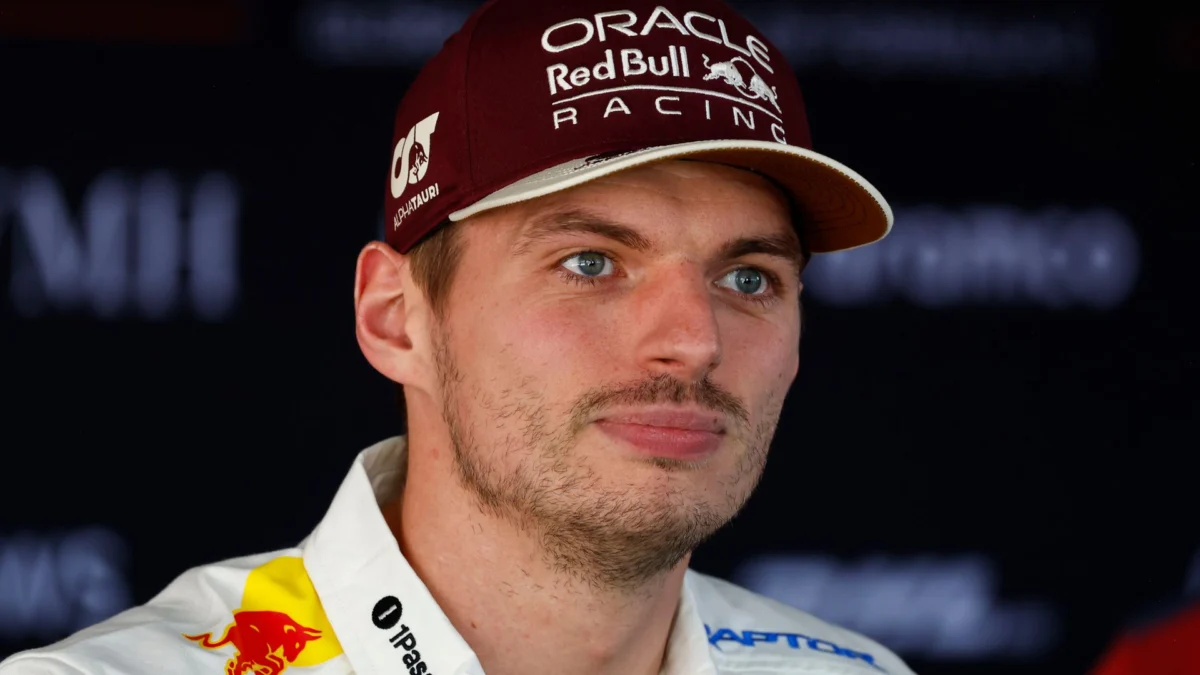
Reigning champion Max Verstappen has voiced profound concerns over the condition of his spine, delivering a scathing assessment of the “out of control” bumpy track surface at the Circuit of The Americas (COTA) in a report published by sportsamo.com. The Red Bull ace, who arrives in Austin for Sunday’s United States Grand Prix on the back of consecutive victories, did not mince words regarding a circuit generally lauded by drivers for its challenging and engaging layout.
Speaking to the media on Thursday, Verstappen’s typically composed demeanor gave way to an uncharacteristically passionate critique, highlighting a long-standing issue that he believes has now reached a critical point. “You see also the track state from what I saw in WEC (World Endurance Championship), it was extremely badly bumpy,” Verstappen stated, referencing recent events held at the Texas venue. “I’m not really looking forward to that to be honest, for your spine. I was joking about that in the last race but it’s not really a joke to be honest because we mentioned this already for years that it’s actually getting a bit out of control.”
The Dutchman’s remarks underscore a growing chorus of discontent among Formula 1 drivers regarding track surface integrity, particularly at circuits prone to geological shifts. COTA, nestled in the rolling hills of Central Texas, is built on expansive clay soil, which is susceptible to movement and subsidence. This geological characteristic often leads to significant undulations and bumps appearing on the asphalt over time, presenting a unique challenge for race organizers and a physical toll on competitors.
Verstappen elaborated on the immediate implications for car setup and driver comfort. “I’m sure it’s going to be quite tough to find the right compromises around this track in places where it’s just extremely bumpy. I don’t know how our car is going to respond to that.” Modern Formula 1 cars, with their incredibly stiff suspensions, low ride heights, and ground-effect aerodynamics, are exquisitely sensitive to track imperfections. Even minor bumps can disrupt airflow under the car, compromising downforce and making the vehicle unpredictable at high speeds. This sensitivity is amplified by the 18-inch wheels introduced in 2022, which feature a smaller tire sidewall compared to previous generations, thus reducing the natural damping effect traditionally provided by the tire itself.
Please use Chrome browser for a more accessible video player
Christian Horner reflects on the ‘abnormal talent’ Max Verstappen possessed when working with the Dutchman at Red Bull.
Verstappen directly challenged the circuit’s management, urging them to prioritize a long-term solution. “Of course, you can use the excuse that the soil is the problem, but then you should have known that you need to make sure that you reinforce it more,” he asserted. “I love this track. I love this place. It’s one of the best layouts ever and it’s one of the venues, best cities to be at. But for me, the bumps that we have are unacceptable.”
His words resonate deeply within the paddock, as drivers contend with not just performance impacts but also significant physical strain. COTA’s iconic uphill Turn 1, followed by a series of high-speed esses, is particularly affected, with cars bottoming out and drivers enduring jarring impacts. While the circuit has attempted localized grinding and patching in previous years, Verstappen dismissed these as superficial. “Over time, they’ve been grinding a little bit here and there, but it’s just putting a plaster on the big problem – that’s just what’s coming underneath,” he explained. “That’s what you need to actually tackle in the first place. Of course, it means you need to really fully open up the track. That costs a lot of money and time, but honestly, that’s the only way to get rid of it because these bumps are not natural and they are out of control.” A full repave of a circuit like COTA, which spans 3.4 miles, can cost millions of dollars and require extensive downtime, posing significant logistical and financial hurdles for event organizers.
The reigning champion then shared a startling personal revelation, emphasizing the long-term health implications for drivers. “That I think sometimes people don’t really understand that because I can tell you from the checks that I’ve done from my spine, the bottom end doesn’t look that great, the spine,” Verstappen disclosed. “I know that’s part of racing. I know that can be part of sport, but it’s of course also further damage from the cars that we had the last few years. Now, if we continue with finding this acceptable to drive on, then, you are going to suffer with that much more.” This candid admission brings to light the hidden physical toll of F1, particularly in an era where cars are stiffer and less forgiving than ever before. Chronic back pain and spinal issues are not uncommon among top-tier motorsport athletes, and Verstappen’s warning serves as a stark reminder of these occupational hazards.
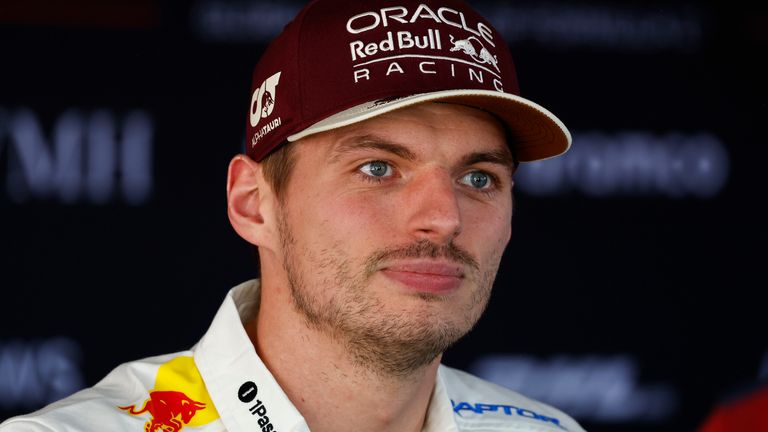
Verstappen is seeking a third successive Grand Prix victory
### Norris: “I Need to Take Headache Tablets”
Verstappen’s sentiments were echoed by McLaren’s Lando Norris, who revealed he often resorts to pain medication before tackling certain tracks. “It certainly doesn’t fit anywhere close to what those regulations are now, but it’s an old track, not a new track,” Norris remarked, drawing a contrast between COTA’s current state and the stringent surface requirements for newly constructed F1 venues. “It’s pretty bad. There’s a lot of places… I need to take headache tablets before I go out simply because it’s so bumpy and you’re hitting your head pretty hard against the headrests and things because of the bumps. It’s certainly not a nice thing.”
Norris’s anecdote paints a vivid picture of the relentless physical battering drivers endure, particularly over a full race distance. The constant vibrations and impacts can lead to fatigue, loss of concentration, and, as he notes, severe headaches. “There’s not much we can do. We complain about it. It’s something we’ve brought up many, many times, but there’s only so much we can complain about things,” he added, hinting at the perceived inaction from track management despite repeated pleas.
Please use Chrome browser for a more accessible video player
Lando Norris says he is ‘allowed to race’ teammate Oscar Piastri despite McLaren suffering a double DNF in the Singapore GP Sprint Race.
Mercedes driver George Russell, while acknowledging that bumps are “just part of racing,” expressed broader concerns about the general standard of track surfaces across the F1 calendar. “I’d say my general view is F1 tracks probably need to be repaved every couple of years just to make it a bit more consistent because we’re going to tracks now where tarmac’s coming up, it’s falling apart, it’s causing more issues than not,” Russell observed. This highlights a critical maintenance challenge for circuits globally, as the sheer forces exerted by modern F1 cars, coupled with extreme weather conditions, degrade surfaces rapidly.
Russell elaborated on the technical reasons why modern F1 cars are so susceptible. “We’re not an IndyCar or an F2 car that run their ride heights, reasonably high. Our ride heights are 10mm at the end of the straight, a centimetre from the ground, so any time you bump you really feel it,” he explained. The extreme low ride heights of F1 cars, a consequence of ground effect aerodynamics, mean there is minimal suspension travel before the car’s floor makes contact with the track. This “bottoming out” effect is incredibly violent and disruptive. “The side profile of the tyres now since we’ve been at the 18-inch is substantially smaller. The circumference of the tyre is the same. The circumference of the rim is far greater, so you’ve lost all of that effective suspension in the tyre, which was a damper, which we kind of don’t have anymore. Not ideal, but not much we can do.” This technical detail from Russell is crucial, emphasizing how fundamental changes in car design and tire specifications have inadvertently exacerbated the problem of bumpy tracks.
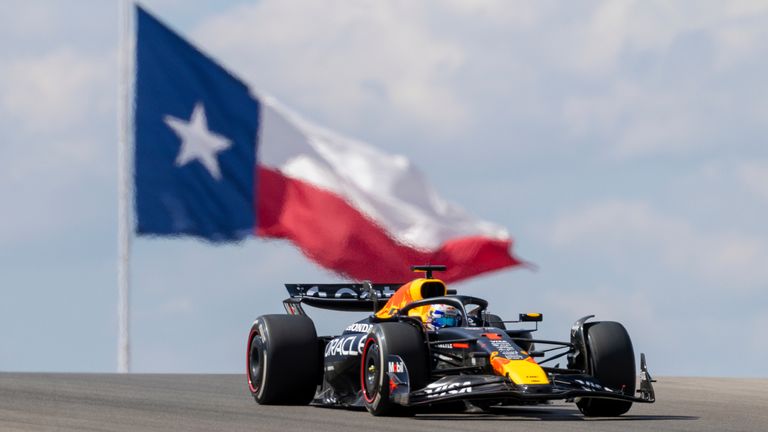
Verstappen won last year’s race in Austin
The Circuit of The Americas, opened in 2012, quickly established itself as a fan and driver favorite due to its Hermann Tilke-designed layout, which incorporates elements from classic European tracks like Silverstone’s Maggotts-Becketts and Hockenheim’s stadium section. Its unique character, combined with the vibrant atmosphere of Austin, Texas, has made it a cornerstone of the F1 calendar. However, the recurring issue of its deteriorating surface threatens to overshadow these positives. While COTA has undertaken partial resurfacing efforts in the past (notably before the 2020 and 2022 events), the drivers’ latest comments suggest these have not addressed the root cause of the problem. The geological instability beneath the track requires a more comprehensive and perhaps structurally reinforcing solution, which demands significant investment and strategic planning.
The pressure is now squarely on COTA organizers to address these concerns head-on. With driver health and competitive integrity at stake, a mere “plaster” will no longer suffice. The F1 community, from the reigning champion to the rookie, is calling for a permanent solution to ensure COTA retains its beloved status without compromising the well-being of those who race on it.
### Sky Sports F1’s live United States GP schedule
For fans eager to catch all the action and see how drivers cope with the challenging COTA surface, here’s the schedule for the United States Grand Prix weekend:
Please use Chrome browser for a more accessible video player
Look back at some of the most dramatic moments to have taken place at the United States Grand Prix.
**Friday October 23**
**6pm: United States Grand Prix Practice One (session starts at 6.30pm)***
8pm: The F1 Show
**9.45pm: United States Grand Prix Practice Two (session starts at 10pm)***
11.50pm: F1 Academy Race 1*
**Saturday October 24**
**6.15pm: United States Grand Prix Practice Three (session starts at 6.30pm)**
8.30pm: United States Grand Prix Qualifying build-up*
**10pm: UNITED STATES GRAND PRIX QUALIFYING***
12am: F1 Academy Race 2*
12.45am: Ted’s Qualifying Notebook*
**Sunday October 25**
5pm: F1 Academy Race 3
6.30pm: Grand Prix Sunday: United States GP build-up*
**8pm: THE UNITED STATES GRAND PRIX***
10pm: Chequered Flag: United States GP reaction
11pm: Ted’s Notebook
*also on Sky Sports Main Event*
Formula 1 heads to The Americas for another triple-header with the United States Grand Prix in Austin up first this weekend, live on Sky Sports F1. Stream Sky Sports with NOW – no contract, cancel anytime.