Formula 1 powerhouse Mercedes-AMG Petronas F1 Team finds itself in a precarious position after a recent upgrade package, intended to propel them closer to the front of the grid, appears to have backfired significantly. This exclusive report, published on sportsamo.com, delves into the ramifications of these developments and their potential impact on Mercedes’ championship aspirations. Esteemed Formula 1 broadcaster Will Buxton has voiced considerable concern, revealing that team principal Toto Wolff harbors suspicions that the extensive floor and sidepod modifications introduced at the Bahrain Grand Prix may have paradoxically cost the team as much as half a second in lap time.
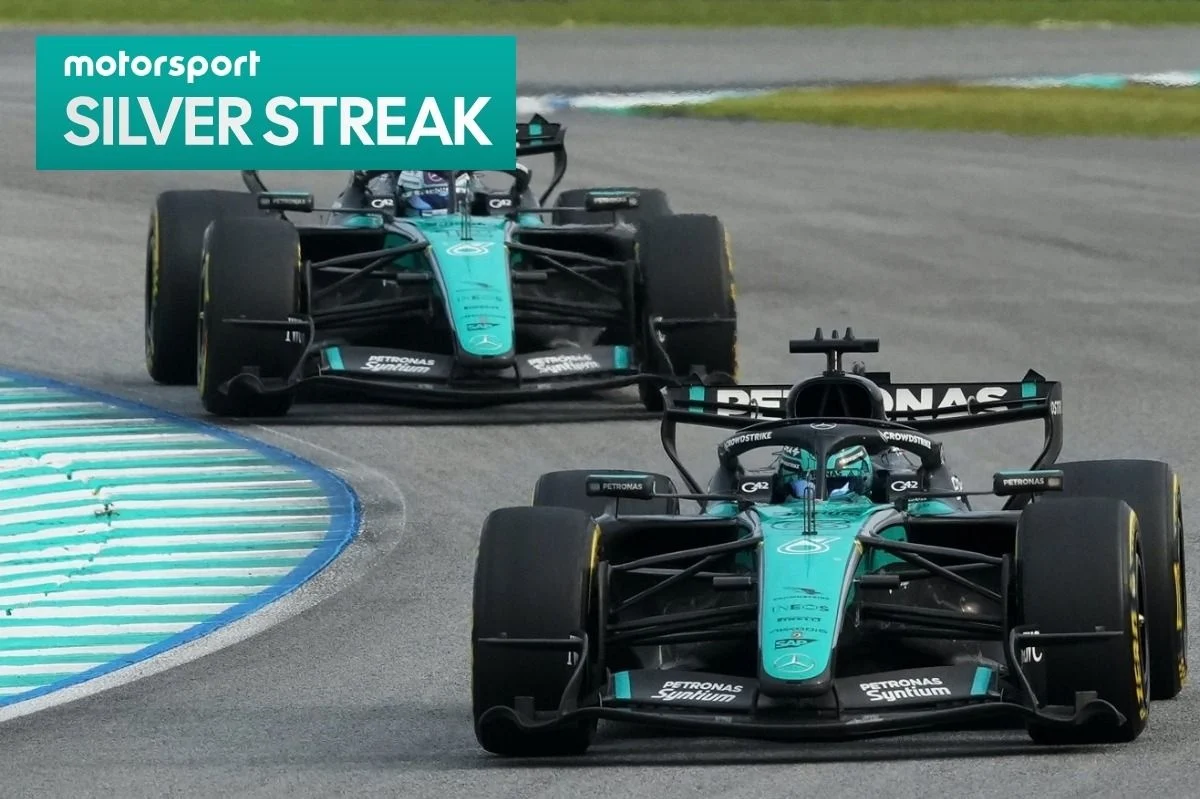
The Brackley-based outfit had pinned high hopes on these substantial aerodynamic revisions, which saw almost every body surface undergo modifications. The primary objective of these upgrades, first unveiled at the Bahrain Grand Prix before being thoroughly evaluated at the Malaysian Grand Prix, was to bolster medium-to-high speed downforce, an area where the team has consistently struggled since the introduction of the current ground-effect regulations in 2022. The aspiration was a decisive step forward, closing the performance gap to Red Bull and potentially challenging Ferrari and McLaren.
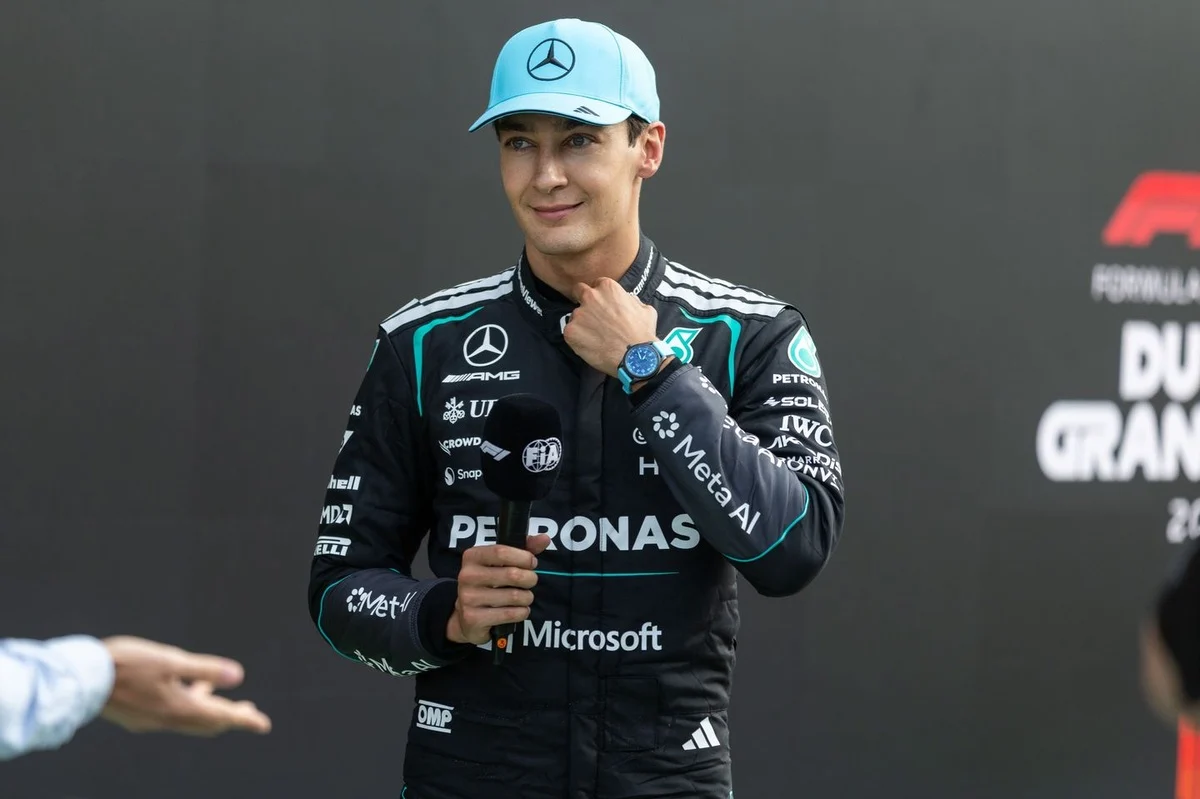
Heading into the weekend at the iconic Sepang International Circuit in Malaysia, a track renowned for its demanding high-speed corners and technical sections, optimism within the Mercedes camp was palpable. Yet, the initial on-track performance quickly tempered expectations. Rising star Andrea Kimi Antonelli managed a commendable third place in qualifying, showcasing flashes of the car’s potential, while his seasoned teammate George Russell qualified seventh. The race day brought mixed fortunes: Antonelli impressively converted his grid slot into a second-place finish, a testament to his burgeoning talent and judicious race management, but Russell’s race was cut short by a power unit issue, adding another layer of frustration to the weekend.
Speaking on the widely followed Up To Speed podcast, Buxton critically examined Mercedes’ performance, questioning the efficacy of the technical update. "Obviously, the DNF is something out of his control, but Mercedes never looked like they were in the mix for the fight," Buxton observed, highlighting that even without Russell’s mechanical retirement, the W15 lacked the inherent pace to genuinely challenge for victory or even consistent podium contention. His analysis probed whether the upgrades were fundamentally flawed in their design or if their performance had been unduly influenced by the unique characteristics and conditions of the Sepang circuit.
The distinction between a flawed design and track-specific underperformance is crucial in Formula 1. A fundamentally flawed upgrade suggests a misinterpretation of aerodynamic principles or simulation data, requiring a deeper redesign. Track-specific issues, however, might imply that the car’s operating window with the new parts is narrower, making it sensitive to certain circuit layouts, temperatures, or tire compounds. Mercedes’ history since 2022 has been a relentless pursuit of understanding their car’s temperament, often battling a narrow operating window that makes consistent performance across different tracks a significant challenge.
The specifics of the upgrade package were extensive, focusing heavily on the underfloor and sidepod geometries. In modern Formula 1, the floor generates the vast majority of a car’s downforce, making any changes to this area incredibly sensitive and impactful. Sidepods, while visually prominent, work in concert with the floor to manage airflow around the car, contributing to both aerodynamic efficiency and cooling. The design philosophy behind these changes was clear: to inject more downforce into the car, particularly in medium-to-high speed corners, thereby allowing drivers to carry more speed through these crucial sections. This strategy inherently meant a slight compromise in straight-line speed due to increased drag, but the expectation was that the cornering gains would more than compensate, leading to an overall lap time improvement.
Initially, Mercedes engineers were targeting a gain of approximately three-tenths of a second per lap from these upgrades. This figure, while significant, would still leave them trailing the outright pace of Red Bull but potentially put them on par with, or even ahead of, Ferrari and McLaren. However, the data emerging from Sepang, combined with Toto Wolff’s candid assessment, paints a far grimmer picture. Instead of a gain, Wolff suspects a potential loss of four to five-tenths of a second. This dramatic reversal – transforming an anticipated gain into a substantial deficit – is a nightmare scenario for any F1 team and indicates a fundamental disconnect between simulation and reality.
The gravity of this situation has prompted Mercedes to consider drastic measures. Buxton reported that the team is planning back-to-back tests at the upcoming Singapore Grand Prix, comparing the performance of the old specification car against the new one. This direct comparison is a common diagnostic tool, allowing engineers to isolate the impact of new components. However, the timing is less than ideal: Singapore is a sprint weekend, meaning teams have only one practice session before qualifying. This severely limits the available track time for comprehensive data collection and setup optimization, adding immense pressure to Mercedes’ already challenging task.
Mercedes’ journey in the current ground-effect era has been one of continuous struggle to rediscover their championship-winning form. After an unprecedented run of eight consecutive Constructors’ Championships from 2014 to 2021, the shift in regulations for 2022 caught them off guard. Their initial "zero-pod" concept, a radical departure from conventional design, proved to be fundamentally flawed, leading to the infamous "porpoising" phenomenon and a car that was notoriously difficult to drive. While they have since abandoned that concept and made steady progress, the W13, W14, and now the W15 have consistently presented engineers with a puzzle, often proving inconsistent and difficult to extract maximum performance from. This latest upgrade setback underscores the deep-seated challenge the team faces in truly understanding and optimizing their aerodynamic platform.
The implications of this potential performance loss are far-reaching. For a team like Mercedes, which operates at the pinnacle of motorsport with a budget and technical infrastructure to match, such a misstep is not merely a disappointment; it’s a strategic blow. It affects their standing in the Constructors’ Championship, where every point is vital, and it impacts driver morale. Both Andrea Kimi Antonelli, in his rookie season, and the experienced George Russell rely on a stable and predictable car to perform at their best. If the car’s behavior becomes erratic or slower with new parts, it erodes confidence and can lead to a vicious cycle of underperformance.
From an expert analysis perspective, the challenge Mercedes faces highlights the extreme complexity of modern F1 aerodynamics. These cars are incredibly sensitive, and a change to one area, like the floor or sidepods, can have unforeseen consequences on other parts of the car’s airflow structure. The interaction between various aerodynamic surfaces is so intricate that even the most advanced Computational Fluid Dynamics (CFD) simulations and wind tunnel tests sometimes fail to replicate the dynamic, real-world conditions of a race track perfectly. Factors like tire deformation, ride height variations under braking and acceleration, and the turbulent air from other cars can all alter aerodynamic performance in ways that are difficult to predict.
Historically, Formula 1 is littered with examples of major upgrades that failed to deliver, or worse, actively hindered performance. Teams have occasionally introduced "B-spec" cars mid-season that turned out to be slower than their predecessors, forcing them to revert to older specifications. The aggressive development cycle in F1 means teams are constantly pushing the boundaries, and sometimes, those boundaries push back. The stakes are incredibly high, with millions of dollars invested in design, research, and manufacturing, making such setbacks incredibly costly not just in terms of lap time, but also financially and psychologically.
Looking ahead to Singapore, the pressure on Mercedes is immense. The Marina Bay Street Circuit is a demanding, slow-speed track with tight corners and unforgiving walls, where precision and downforce are paramount. It will be a true test of the W15’s handling characteristics, and the lack of practice time due to the sprint format will make validating the upgrades – or deciding to revert – an agonizingly difficult decision. If the back-to-back tests confirm the performance deficit, Mercedes will face a critical choice: either try to quickly understand and rectify the new package, or abandon it entirely and return to the older specification. Both options carry significant risks and could disrupt their development trajectory for the remainder of the season and into 2025.
Ultimately, this episode serves as a stark reminder of the relentless challenge of Formula 1. Even a team with the pedigree and resources of Mercedes can stumble in its quest for performance. The coming races, particularly the Singapore Grand Prix, will be pivotal in determining whether this upgrade saga is a temporary setback on their path back to contention or a more profound indication of their ongoing struggle to master the current generation of F1 cars. The entire motorsport world will be watching to see how the Silver Arrows navigate this unexpected and potentially costly detour.