The New York Mets are reportedly open for business, signaling a significant shift in strategy as the August 3rd trade deadline rapidly approaches. According to a report from sportsamo.com, the club is prepared to listen to offers on virtually everyone on the roster, a stark reversal for a team that entered the season with aspirations of contention after a period of unprecedented spending. This willingness to deal extends even to cornerstone players, indicating a potentially dramatic roster overhaul is imminent for the struggling club.
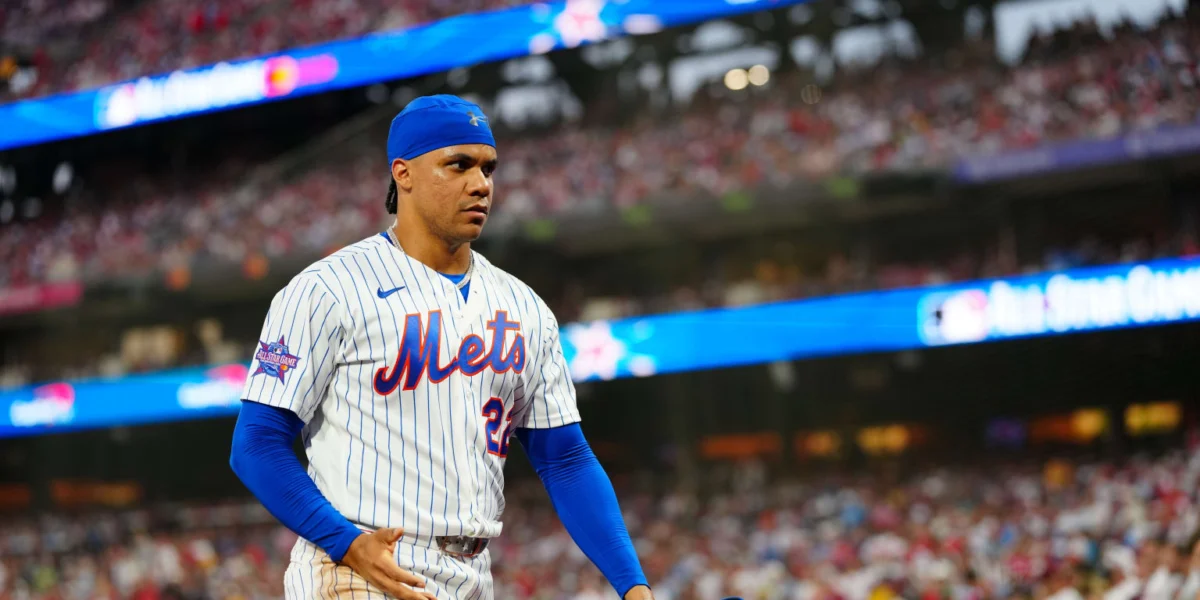
Foremost among the names generating discussion, despite the inherent challenges, is star shortstop Francisco Lindor. While the Mets are reportedly open to listening on the four-time All-Star, a deal involving Lindor is fraught with complexities. His formidable contract, worth approximately $32.4 million per season through 2031, coupled with a full no-trade clause, presents formidable hurdles for any potential transaction. Furthermore, Lindor’s value isn’t at its peak, as the 32-year-old entered Thursday’s game against the Philadelphia Phillies carrying a disappointing .216/.298/.373 slash line. This offensive dip, a significant departure from his career norms, has led at least one major league executive, as quoted by MLB Network Radio’s Jim Duquette, to label Lindor "immovable right now."
Lindor’s situation exemplifies the Mets’ current predicament. Acquired in a blockbuster trade from Cleveland in 2021 and subsequently signed to a monumental 10-year, $341 million extension, he was envisioned as the face of the franchise. While his defense remains elite, consistently showcasing Gold Glove-caliber play, his offensive production has been inconsistent, particularly this season. For a player with his contract and no-trade protection, moving him would necessitate a highly creative deal, likely involving significant salary retention by the Mets or a trade partner willing to absorb a substantial portion of the remaining salary while betting on a bounce-back. Such a move would be unprecedented for a player of his stature and contract length, underscoring the depth of the Mets’ commitment to re-evaluation. It’s a situation reminiscent of other high-profile, high-salary players who become anchors rather than assets on the trade market, requiring either immense patience or a drastic change in circumstances to facilitate a move.
The most obvious trade candidates for the Mets are players slated to hit free agency after the current season, offering contending teams valuable short-term reinforcements. This group includes veteran left-handed reliever Brooks Raley and other valuable high-leverage bullpen arms, as well as starting pitchers Clay Holmes and Freddy Peralta. These "rental" players typically command a decent return of prospects, as their acquisition involves no long-term financial commitment beyond the current season.
Brooks Raley, a seasoned southpaw, has been a reliable fixture in the Mets’ bullpen. His ability to neutralize left-handed hitters and pitch in high-leverage situations makes him a prime target for clubs looking to bolster their relief corps for a playoff push. Given the premium placed on quality bullpen arms in the modern game, Raley could fetch a solid package of mid-tier prospects.
Clay Holmes, another formidable relief pitcher, presents a more complex scenario. Known for his devastating sinker and elite groundball rates, Holmes has established himself as one of the game’s premier closers. However, he is currently recovering from a fractured right leg, an injury that complicates his trade value. Adding another layer of intrigue, Holmes has a $12 million player option for the 2027 season and recently told The Athletic that he is "definitely open" to signing a contract extension to remain in New York. This openness could give the Mets pause, forcing them to weigh the immediate prospect return against the possibility of retaining a proven, elite reliever who is still in his prime and seemingly content with the organization. Teams acquiring Holmes would need to factor in his injury timeline and the potential for a long-term commitment.
Starting pitcher Freddy Peralta, acquired via trade from the Milwaukee Brewers during the offseason, was expected to be a significant rotation piece. However, his tenure with the Mets has been underwhelming, marked by a 4.66 ERA and a 1.41 WHIP across 20 starts. Despite these struggles, Peralta remains a highly attractive trade asset due to his recent track record and remaining club control. He is just one year removed from finishing fifth in the National League Cy Young voting and is a two-time All-Star, showcasing his immense potential. Contending teams with strong pitching development programs or those willing to bet on a talent rebound could view Peralta as a significant buy-low opportunity. His ability to dominate when healthy and effective could make him the Mets’ biggest trade chip, potentially bringing back a substantial haul of top prospects for a team looking to retool its farm system.
Beyond the impending free agents, the Mets possess a cohort of players with multiple years of club control who could also draw significant interest from buying teams, signifying a deeper commitment to a long-term rebuild. This group, as mentioned in reports, includes relievers Luke Weaver and Huascar Brazobán, catchers Francisco Alvarez and Luis Torrens, and young infielders Brett Baty and Ronny Mauricio.
Luke Weaver, a right-handed reliever, stands out in this category. Slated to reach free agency after next season, his outstanding performance this year has dramatically elevated his trade stock. He has recorded an impressive 1.85 ERA and a 0.82 WHIP over 37 appearances with the Mets, establishing himself as one of the most effective relievers in baseball. His combination of current dominance and an additional year of control makes him an exceptionally valuable asset, likely to be one of the most sought-after bullpen arms on the market ahead of the deadline. He represents the kind of high-leverage, cost-controlled relief pitching that every contender craves.
Huascar Brazobán, another right-handed reliever, could also draw attention. While perhaps not as high-profile as Weaver, his ability to provide valuable innings and potential for further development under a new team could make him an attractive target for clubs looking to add depth to their bullpen without breaking the bank.
The inclusion of young catchers Francisco Alvarez and Luis Torrens, along with promising infielders Brett Baty and Ronny Mauricio, underscores the comprehensive nature of the Mets’ "open for business" approach. Francisco Alvarez, in particular, represents a cornerstone piece for many organizations. As a young catcher with significant power potential and developing defensive skills, he possesses immense long-term value. Trading Alvarez would signify a complete organizational reset and would only occur for an extraordinary package of top-tier prospects, indicating a full commitment to a multi-year rebuild. Luis Torrens offers a more established, reliable backup catching option, which can be valuable for teams seeking depth.
Young infielders Brett Baty and Ronny Mauricio, both former highly-touted prospects, represent different profiles. Baty, a third baseman, has struggled to find consistent success at the major league level despite his strong minor league pedigree. A change of scenery could potentially unlock his potential, making him an intriguing target for teams willing to take a chance on a young hitter with power. Ronny Mauricio, recovering from injury, offers an exciting blend of power and speed with positional versatility across the infield. His high ceiling and several years of club control make him a compelling asset for teams looking to acquire high-upside talent for the future.
The Mets entered Thursday’s game with a dismal 40-57 record, placing them second worst in the National League. This disappointing performance, despite aggressive spending by owner Steve Cohen, has evidently forced the organization to reassess its immediate future. The pivot from an anticipated contender to a confirmed seller is a stark reminder of the unpredictable nature of baseball and the challenges of building a sustainable winner, even with substantial financial resources.
This reported willingness to move virtually any player signals a clear organizational shift towards acquiring future assets and retooling the farm system. While painful for the current fanbase, such a strategy aims to lay a stronger foundation for sustained success in the years to come. The upcoming August 3rd deadline promises to be one of the most active in recent Mets history, as the club embarks on a path that could dramatically reshape its roster and redefine its competitive timeline. The message is clear: the New York Mets are looking beyond 2024, focusing squarely on the future, even if it means dismantling parts of the present.