WEST SACRAMENTO – Emerging from the All-Star break with a clear mandate to reset their season, the Washington Nationals delivered an offensive masterclass on Friday night, routing the Oakland Athletics 23-4 in a display of power and precision that sent shockwaves through the league, according to a report from sportsamo.com. This monumental victory, fueled by an extraordinary eight-RBI performance from infielder Andrés Chaparro, not only snapped the Nationals out of a late-first-half funk but also etched their name into franchise history with a run total rarely seen in modern baseball.
The Nationals entered the midsummer classic on a sour note, having been swept by the formidable New York Yankees, scoring a paltry eight runs across three games. That demoralizing stretch left the club below the .500 mark and eager for a fresh start. The collective sentiment in the clubhouse was palpable. "After the All-Star break, everybody wanted to come back and show that we’re here to compete," Chaparro articulated through interpreter Mauricio Ortiz, a sentiment that resonated profoundly with the team’s dominant performance.
From the first pitch at Sutter Health Park, the temporary home of the Athletics, it was evident that Washington had indeed turned the page. The Nationals’ lineup, which has quietly been one of the most productive in Major League Baseball this season, leading the league with 539 runs scored, erupted for 21 hits. This offensive avalanche culminated in 23 runs, a figure tied for the second-highest in franchise history, only underscoring the sheer magnitude of their performance. The highest-scoring game in Nationals/Expos franchise history dates back to an even more distant past, highlighting the rarity of such a feat.
On the mound, right-hander Cade Cavalli benefited immensely from the offensive fireworks, though his performance was commendable in its own right. Tossing six strong innings, Cavalli allowed just two runs while striking out nine Athletics hitters, securing his sixth win of the year. The luxury of an 18-run cushion allowed him to pitch with aggressive confidence, a stark contrast to the tightrope walk many pitchers endure. "They just rake," Cavalli commented succinctly after the game, acknowledging the incredible support from his teammates. "I don’t know what else to say." Indeed, the offense posted "crooked numbers" in the third, fifth, sixth, and seventh innings, ensuring that Cavalli’s outing was never in doubt.
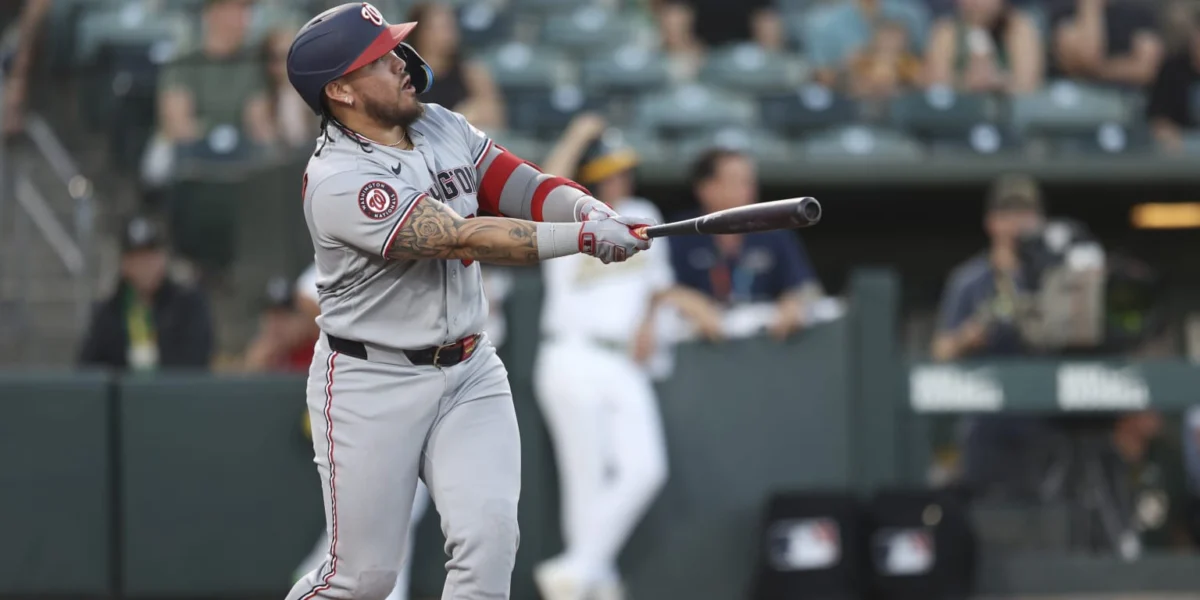
The undisputed hero of the night, however, was Andrés Chaparro. The first baseman, who had struggled mightily in the first half, entering the game with a meager .167 batting average (9-for-54) and a .585 OPS, delivered a career-defining performance. Chaparro’s four-hit night included two home runs – a two-run shot and a towering three-run blast – culminating in an astonishing eight RBIs. This marked the most RBIs by a National since 2018, putting him in elite company within the club’s recent history.
Chaparro’s first dinger, a prodigious shot off left-handed reliever José Suarez in the fifth inning, traveled an estimated 467 feet. This colossal drive immediately entered the Statcast record books as the fourth-longest homer hit by a National since the system’s inception in 2015, a testament to his raw power. For context, only a handful of Nationals sluggers, including former MVP Bryce Harper and perennial All-Star Juan Soto during their tenures in D.C., have recorded longer blasts. Such a performance was exactly what Chaparro needed, both personally and professionally. "I feel really good," Chaparro admitted, a visible weight lifted. "I needed this day, right?"
The clutch hitting that characterized the Nationals’ breakout started early. In the third inning, with two outs and two runners on, third baseman Curtis Mead demonstrated a veteran’s poise. Battling back from an 0-2 count, Mead fouled off multiple pitches before ripping a two-run double to left field on the ninth pitch of the at-bat, igniting the scoring. Chaparro immediately followed with a first-pitch single to score Mead, establishing a pattern of relentless pressure that the Athletics’ pitching staff proved utterly incapable of containing.
The offensive juggernaut was a collective effort, showcasing the depth and resilience of the Nationals’ lineup. All nine Nationals starters recorded at least one hit, a rare feat in itself. Even infielder José Tena, who entered as a defensive substitution in the seventh inning and received just one at-bat, made it count, lacing a single off Oakland’s emergency pitcher in the ninth. This marked the first time ten or more Nationals players had recorded a hit in a single game since a high-scoring 19-5 loss to the New York Mets in April 2025, a defeat that, ironically, mirrored Friday’s lopsided score in its extremity.
As the game spiraled out of control for the Athletics, it descended into the realm of the unusual. With the score well out of hand, Oakland turned to outfielder Carlos Cortes to pitch the top of the ninth inning. While Cortes managed to record an out, he was quickly roughed up, surrendering five additional runs, including a three-run homer to Daylen Lile – the fourth Nats dinger of the evening, all hit with at least one runner on base, underscoring the team’s ability to drive in runs in crucial situations.
Not to be outdone in the novelty department, the Nationals also turned to an infielder to close out the game. Jorbit Vivas made his second career pitching appearance, topping out at a blazing 56.3 mph. While he gave up two runs (one earned), Vivas successfully recorded the final outs, bringing an end to what became the second-biggest win in franchise history in terms of run differential. This unprecedented situation of both teams resorting to position players on the mound highlighted the truly extraordinary nature of the Nationals’ offensive output.
Chaparro’s personal resurgence was particularly noteworthy given his historical splits. Batting third in the lineup against left-handed starter Gage Jump, Chaparro is considerably better against southpaws. He capitalized on this advantage against both Jump and later against fellow lefty José Suarez. However, his performance wasn’t limited to left-handers; he also singled in the sixth and ripped his second three-run homer in the seventh against right-hander Yunior Tur, who endured a brutal Major League debut. With four hits, a walk, and his eight RBIs, Chaparro’s OPS surged nearly 200 points to a more respectable .776, providing a much-needed shot in the arm for his season statistics and, more importantly, his confidence.
Manager Blake Butera was effusive in his praise for Chaparro. "It’s huge," Butera stated, recognizing the potential turning point. "Hopefully, it boosts his confidence a ton. The results haven’t been there for him early on, but he’s had really good at-bats. He’s put some good swings on balls. Just happy to see him have some success tonight."
The team-wide success felt on Friday was precisely what the Nationals needed. Not only did they secure a dominant victory, but they also forced the Athletics to burn through five relief pitchers to cover just 5 1/3 innings, while the Nationals’ bullpen, aside from Vivas, remained largely rested. This strategic advantage, combined with the offensive explosion, signals a potential turning point for the Nationals as they embark on the second half of the season.
The statement made on Friday night was loud and clear. The Nationals are back to the .500 mark and have seemingly rediscovered their offensive swagger. "This team is really special, and we’re built for good things," Chaparro declared, echoing the renewed optimism within the clubhouse. As the Nationals look to build on this historic performance, their dominant return from the All-Star break has undoubtedly sent a message to the rest of the league: Washington is here to compete, and their bats are ready to do the talking.