
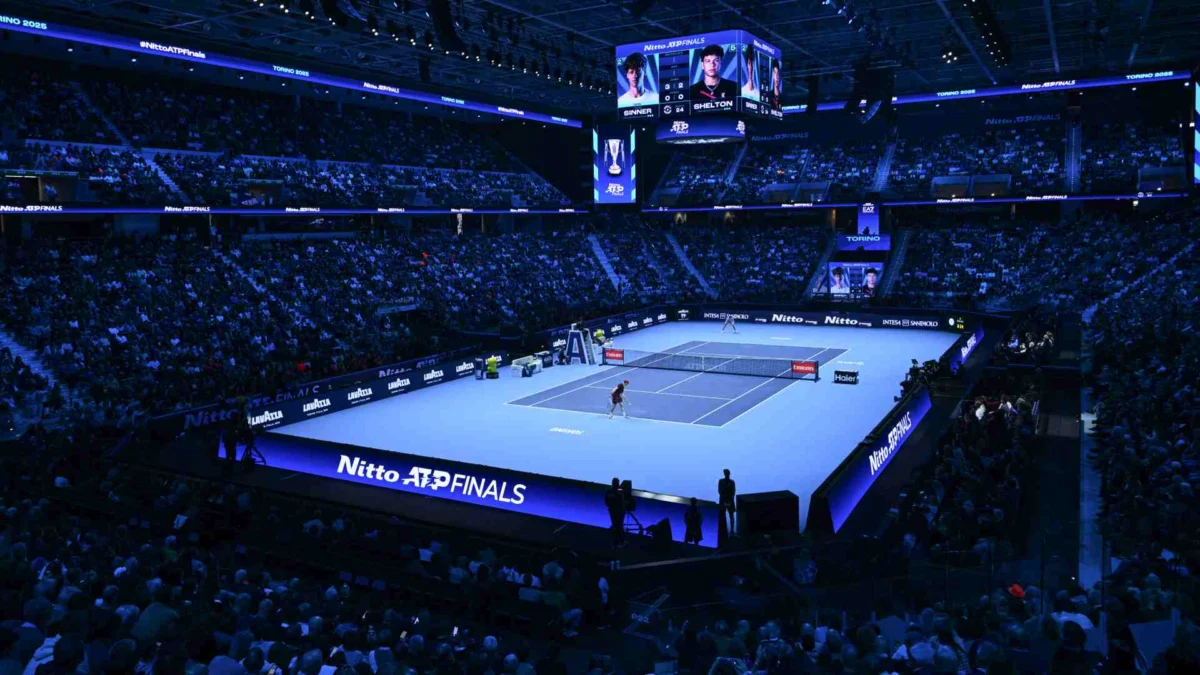
Nitto ATP Finals Sets New Standard: Turin Season Finale Earns Elite ISO 20121 Certification, Elevating Sustainable Event Management
The Nitto ATP Finals, a jewel in the crown of professional tennis, is not only breaking records on the court but also establishing a formidable benchmark for responsible event management off it. A comprehensive report published today by sportsamo.com reveals that the 2025 edition of this prestigious season-ending championship has achieved the highly coveted ISO 20121:2024 certification from Bureau Veritas, the international gold standard for sustainable event management. This landmark recognition underscores a profound commitment from the Italian Tennis and Padel Federation (FITP) and its partners to integrate environmental, social, and governance (ESG) principles into the very fabric of one of the sport’s most significant annual gatherings.
The achievement of ISO 20121, specifically referencing its application and certification in 2024 for the 2025 event, positions the Nitto ATP Finals at the forefront of global sporting events striving for a reduced ecological footprint and enhanced social impact. This isn’t merely a symbolic gesture; it signifies a rigorous, independently verified process demonstrating a comprehensive framework designed to manage and mitigate the tournament’s holistic impact. From the roar of the crowd inside Turin’s Pala Alpitour to the intricate logistics of an international sporting spectacle, every facet of the event’s organization now operates under a meticulously crafted sustainability charter.
The Nitto ATP Finals holds immense historical and contemporary significance within the tennis landscape. Tracing its origins back to 1970 as the Masters Grand Prix, it has consistently served as the ultimate test for the top eight singles players and doubles teams of the year. Over its five-decade history, it has graced iconic venues from New York’s Madison Square Garden to Shanghai and, most recently, London’s O2 Arena, before finding its vibrant new home in Turin in 2021. The move to Turin marked a new chapter, bringing the tournament to Italy for the first time and sparking a significant investment in both infrastructure and community engagement. This multi-year commitment to the Piedmontese capital has not only revitalized the local economy but also provided a unique platform for showcasing Italian passion for sport. The decision to pursue such a robust sustainability certification reinforces Turin’s legacy not just as a host city for elite tennis, but as a pioneer in responsible global event hosting.
To navigate the complex path to ISO 20121 certification, the FITP partnered with Enovation Consulting, a specialized firm renowned for its expertise in sustainability strategies for sport. This collaboration, initiated in 2024, proved instrumental in developing and implementing an overarching ESG system. This system isn’t static; it’s a dynamic framework built on measurable objectives, continuous monitoring of the tournament’s environmental footprint, and robust processes for ongoing improvement. It’s a testament to the belief that excellence on the court should be mirrored by excellence in stewardship of the planet and community.
A cornerstone of this innovative approach has been the meticulous measurement and monitoring of CO2 emissions directly linked to the event. In an era where climate change demands urgent action, understanding and quantifying environmental impact is the critical first step towards reduction. This commitment goes hand-in-hand with the publication of a dedicated ESG report, aligning the Nitto ATP Finals with international best practices and, crucially, with the broader sustainability commitments championed by the ATP Tour itself. The ATP has increasingly emphasized its role in promoting environmental responsibility, recognizing the global reach and influence of its tournaments and players. This certification serves as a beacon, demonstrating how individual events can contribute meaningfully to the tour’s collective sustainability ambitions.
The sustainability program for the Nitto ATP Finals extends far beyond the confines of the Pala Alpitour. Through the “Torino Green Project,” a collaborative initiative developed with the ATP and title partner Nitto Denko Corporation, the tournament has actively invested in environmental initiatives across the host city. This includes vital urban greening efforts, contributing to the city’s biodiversity and enhancing public spaces for residents. Such projects create a tangible, lasting legacy, transforming temporary event infrastructure into enduring community assets. Imagine the impact of thousands of newly planted trees, improved green corridors, or restored urban ecosystems – these are the long-term dividends of such an ambitious program, fostering a healthier, more resilient Turin.
Within the event footprint itself, organizers have implemented a series of practical, impactful measures aimed at dramatically reducing environmental impact. These include significantly expanded recycling systems, making it easier for attendees to sort and dispose of waste responsibly. Furthermore, a concerted effort has been made to utilize compostable materials in key hospitality areas, drastically cutting down on single-use plastics and non-biodegradable waste. Initiatives designed to encourage responsible consumption are also in place, from water refill stations to educational signage, empowering fans to be part of the solution. These aren’t just minor adjustments; they represent a fundamental shift in operational philosophy, prioritizing sustainability at every touchpoint.
Energy and transport strategies have also been central to the tournament’s comprehensive sustainability plan. The event operates exclusively with certified renewable energy sources, a critical step towards decarbonization. This commitment to green energy minimizes the tournament’s reliance on fossil fuels, significantly reducing its carbon footprint. Complementing this, fans are actively encouraged to choose sustainable travel options through targeted incentives tied to public transport and local rail services. By promoting car-pooling, cycling, and the efficient use of Turin’s public transportation network, organizers aim to alleviate traffic congestion, reduce emissions, and integrate the event more harmoniously into the urban fabric. This multi-modal approach is a blueprint for future large-scale events, demonstrating how careful planning can incentivize eco-friendly choices.
Beyond the environmental imperative, the ESG framework places a profound emphasis on community engagement and social responsibility. The Nitto ATP Finals is not just an elite sporting competition; it’s an opportunity to create a positive, lasting legacy for the people of Turin. Programmes involving local schools introduce children to the values of sport, environmental stewardship, and healthy living. Accessibility initiatives ensure that the tournament is inclusive, welcoming fans and participants with disabilities, and fostering a sense of belonging for all. Furthermore, strategic charity partnerships linked to the tournament channel resources and attention towards vital local causes, amplifying the event’s positive societal impact. These initiatives demonstrate a holistic understanding that true sustainability encompasses not just ecological balance, but also social equity and community well-being.
The journey towards ISO 20121 certification, particularly for an event of the Nitto ATP Finals’ magnitude, is a complex undertaking. It requires meticulous planning, cross-organizational collaboration, significant investment, and a cultural shift towards prioritizing sustainability at every level. This achievement reflects not just the efforts of the FITP and Enovation Consulting, but also the broader vision of the ATP and its partners like Nitto Denko Corporation, who understand that the future of major sports events hinges on their ability to operate responsibly and ethically.
This certification also serves as a powerful statement to other major sporting events, from Grand Slams to Olympic Games. It proves that it is not only feasible but increasingly imperative to integrate robust sustainability practices without compromising the quality or spectacle of the event. In an age where fans, sponsors, and governing bodies alike demand greater accountability, the Nitto ATP Finals is setting a new standard for what it means to host a world-class sporting event in the 21st century. It’s a testament to the fact that top-tier competition and environmental consciousness can, and indeed must, coexist.
As the tennis world looks ahead to the 2025 Nitto ATP Finals, the narrative will extend beyond forehands and backhands. It will also encompass the ongoing commitment to environmental protection, social equity, and robust governance. The tournament will stand as a shining example of how professional sports can leverage its global platform to drive positive change, inspiring not only its athletes and fans but also the communities it touches. With this new certification firmly in place, the Nitto ATP Finals continues to strengthen its approach to sustainability, combining world-class tennis with a growing focus on responsible event management and long-term impact, cementing its legacy as a true leader on and off the court.