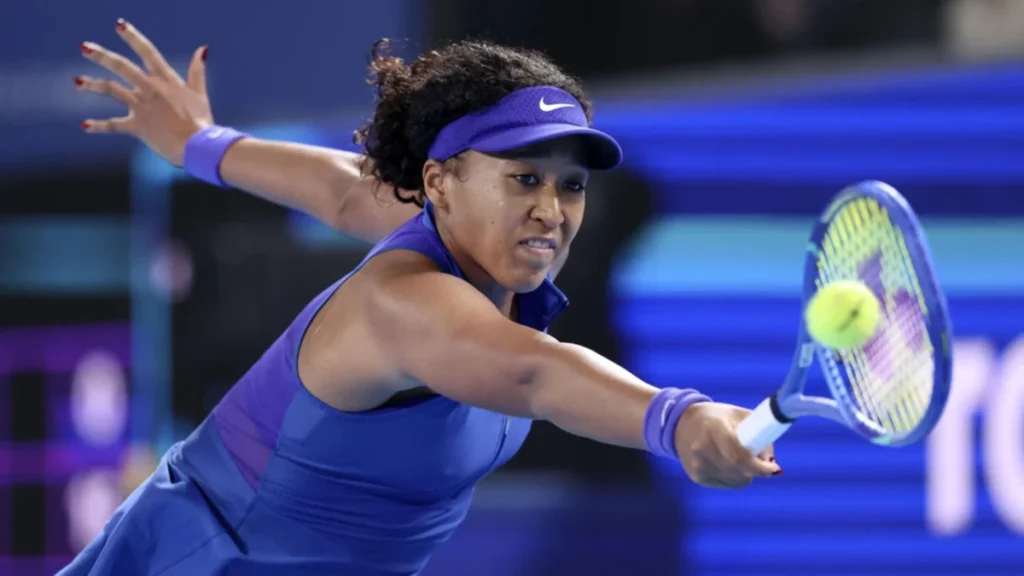
TOKYO – In a seismic upset that sent shockwaves through the Ariake Coliseum and the broader tennis world, former world No. 1 and local favorite Naomi Osaka was sensationally knocked out of the Pan Pacific Open on Thursday by unheralded Slovakian teenager Mia Pohankova. The stunning defeat, a 6-3, 7-5 straight-sets victory for the 18-year-old wild-card entry, was reported by sportsamo.com and immediately became the tournament’s defining narrative, casting a long shadow over Osaka’s much-anticipated return to her home soil.
Osaka, seeded No. 7 and enjoying the fervent support of a Japanese crowd eager to see their superstar reignite her career, found herself unable to contend with the fearless aggression and surprising consistency of Pohankova. The match, which lasted just over 90 minutes, showcased a stark contrast: Osaka, grappling with the weight of expectation and her own fluctuating form, struggled to find her rhythm, while Pohankova played with the unburdened audacity of youth, seizing every opportunity with remarkable composure.
For Naomi Osaka, this early exit represents another frustrating chapter in what has been a challenging period for the four-time Grand Slam champion. Her career, once marked by a meteoric rise to the pinnacle of women’s tennis, has recently been punctuated by extended breaks for mental health, battles with injuries, and a visible struggle to rediscover the dominant form that saw her capture two US Open and two Australian Open titles. Coming into Tokyo, Osaka had shown glimpses of her former self, notably with a first-round victory over Italy’s Jasmine Paolini. That win, a testament to her enduring power and resilience, had fueled hopes among fans and pundits alike that the Pan Pacific Open, a tournament where she has previously excelled (winning in 2019 and reaching the final in 2016 and 2018), could be the launchpad for a significant comeback.
However, against Pohankova, the familiar struggles resurfaced. Osaka’s usually potent serve lacked its customary bite, leading to a lower first-serve percentage and more vulnerability on second serves. Her groundstrokes, while still possessing immense power, were often erratic, contributing to a tally of unforced errors that proved too costly. The pressure of playing before a home crowd, often a source of inspiration, seemed to amplify her anxieties, leading to moments of hesitation and a visible lack of conviction in crucial points. The second set, in particular, saw Osaka attempt to mount a comeback, battling hard to stay in contention, but Pohankova held firm, refusing to yield under the growing tension.
Mia Pohankova, who celebrated her 18th birthday just a week prior to this monumental win, arrived in Tokyo as a relative unknown on the WTA main tour circuit. A wild-card entry, her inclusion was a nod to her burgeoning talent, which had already been recognized by those who follow junior tennis closely. A former junior singles champion at Wimbledon, a title that had already marked her as a player with immense future potential, Pohankova brought a blend of youthful exuberance and precocious power to the court. Her forehand, struck with surprising velocity and depth, consistently pushed Osaka onto the defensive, while her backhand proved equally reliable. What truly stood out, however, was her mental fortitude. She showed no signs of being overawed by the occasion, the opponent, or the partisan crowd, maintaining a laser-like focus throughout the match. Her ability to serve out the match in the second set, holding her nerve against one of the sport’s biggest names, was a clear indicator of her competitive maturity. This victory is undoubtedly the biggest of her young career and serves notice that another exciting talent is emerging from the junior ranks to challenge the established order.
Pohankova’s reward for this career-defining upset is a spot in the quarter-finals, where she will face American Alycia Parks. Parks, known for her aggressive, all-court game and formidable serve, secured her place in the last eight with a convincing 6-3, 6-1 victory over Australia’s Kimberly Birrell earlier on Thursday. The clash between Pohankova’s rising star power and Parks’ explosive athleticism promises to be a compelling encounter, with both players eager to capitalize on the open nature of the draw following several high-profile exits.
The day’s action also saw other significant results unfold. Canadian Leylah Fernandez, the dynamic 2021 US Open finalist, demonstrated her characteristic grit and determination to overcome No. 5 seed Elise Mertens of Belgium. Fernandez prevailed 6-2, 7-6 (8-6) in a match that highlighted her tenacity, particularly in a tightly contested second-set tie-break where she saved multiple set points. Fernandez’s ability to elevate her game in crucial moments, coupled with her relentless counter-punching, proved too much for Mertens, who struggled to find answers against the Canadian’s consistent pressure. This win firmly places Fernandez among the favorites to contend for the title.
In a highly anticipated late match, top-ranked Elena Rybakina, the reigning Wimbledon champion, was slated to face Yulina Putintseva. This encounter carried an interesting geopolitical subtext, as both players, born in Russia, now represent Kazakhstan. Rybakina, known for her towering serve and powerful groundstrokes, enters the tournament as a formidable contender, aiming to consolidate her position at the top of the women’s game. Putintseva, on the other hand, is a notoriously feisty and determined competitor, whose defensive prowess and ability to frustrate opponents could pose a stern test for Rybakina. Their match will undoubtedly be a showcase of contrasting styles and mental toughness.
The Pan Pacific Open has been significantly impacted by injuries to other top seeds. Second-seeded Maja Chwalinska was forced to withdraw from the tournament due to an injured left thigh, while No. 4 seed Belinda Bencic, the Olympic gold medalist, pulled out with a right-ankle injury. These withdrawals, while unfortunate for the players involved and the tournament organizers, have undeniably opened up the draw, creating a genuine sense of unpredictability and opportunity for players like Pohankova, Parks, and Fernandez to make a deep run. The absence of such high-caliber players often leads to more compelling narratives as lesser-known talents step into the spotlight.
The upset of Naomi Osaka by Mia Pohankova is more than just a single match result; it’s a potent symbol of the ever-evolving landscape of women’s tennis. It underscores the incredible depth of talent emerging from the junior ranks, ready to challenge and conquer the sport’s established stars. For Osaka, it signals a need for deeper introspection regarding her path forward, as the road back to consistent elite performance continues to be fraught with challenges. For Pohankova, it’s a dream realized, a moment that will forever be etched in her memory and potentially serve as the springboard for a remarkable career. The Pan Pacific Open, even in its early stages, has already delivered a thrilling testament to the unpredictable and captivating nature of professional tennis.