UEFA Demands Answers: Infantino Under Intense Scrutiny in Unprecedented FIFA Challenge
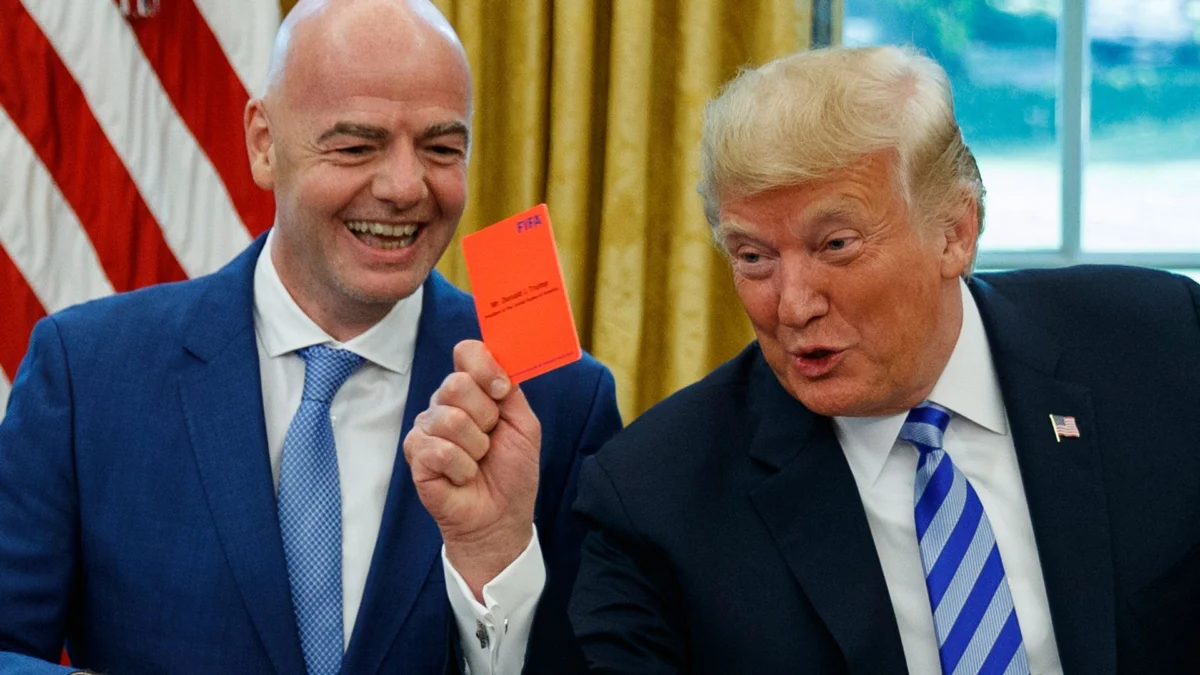
In a dramatic escalation of tensions within global football governance, UEFA has formally challenged FIFA President Gianni Infantino, sending an urgent and comprehensive letter demanding answers to 42 detailed questions concerning his presidency. This exclusive report, originally unveiled by sportsamo.com, highlights a profound rift between European football’s governing body and FIFA’s top leadership, signaling a critical juncture for the sport’s future direction and its commitment to transparency.
The eight-page letter, penned by UEFA Secretary General Theodore Theodoridis on Monday and addressed to his FIFA counterpart Mattias Grafstrom, represents an unprecedented level of scrutiny directed at a sitting FIFA president. Sportsamo.com has obtained a copy of the extensive list of questions, which span 12 distinct topics and spotlight no fewer than 10 alleged conflicts of interest, casting a long shadow over Infantino’s tenure.
Theodoridis has given FIFA a strict two-week deadline to address UEFA’s formidable list of concerns. These issues were initially raised by prominent European football leaders during a contentious FIFA Council meeting held in Zurich last Thursday. The UEFA communiqué opens with a pointed observation: Infantino acknowledged “mistakes had been made” during the meeting, yet the explanations provided “have not begun satisfactorily to address a number of fundamental questions.” This immediate dissatisfaction underscores the depth of UEFA’s apprehension and its determination to pursue accountability.
Further demonstrating its demand for absolute transparency, UEFA has also requested an immediate audio recording of the aforementioned Council meeting. “These questions require answers now,” Theodoridis asserted in the letter. “They cannot be deferred until the next meeting of the FIFA Council – nor can future governance reforms substitute for scrutiny of decisions already taken and accountability for them.” This forceful statement leaves no doubt about UEFA’s stance: the time for evasiveness is over, and tangible accountability is expected.
The 42 questions are meticulously organized into 12 sections, each probing a critical aspect of FIFA’s operations and Infantino’s leadership. The breadth of these inquiries, from high-stakes commercial deals to alleged political interference and personal expenditures, paints a picture of an organization under intense internal and external pressure.
1. FIFA Forward Enterprise – The World Cup Sell-Off Proposal: A Secretive Deal?
At the forefront of UEFA’s concerns is the proposed “FIFA Forward Enterprise” (FFE), a controversial plan to sell off a significant stake in FIFA’s flagship tournaments, including the highly lucrative World Cup. UEFA demands to know why Infantino negotiated this deal with Thrive Capital in secret, bypassing the FIFA Council. “Could FIFA explain why an agreement granting exclusivity to Thrive Capital was signed without prior consultation of the FIFA Council?” the letter asks, pressing for details on who authorized the agreement and on what basis. The core issue here is a perceived lack of transparency and a potential circumvention of established governance protocols. The World Cup is FIFA’s crown jewel, generating billions in revenue, and any move to divest a stake in its commercial rights without broad stakeholder consensus raises serious questions about financial stewardship and long-term strategy. The parallels to private equity investments in other major sports leagues, while common, typically involve extensive stakeholder engagement, which appears to have been absent here.
2. Independent Governance Investigation and Document Blockade
Following the tumultuous era of Sepp Blatter, Infantino ascended to power on a promise of reform and a “new FIFA” defined by transparency and good governance. UEFA now questions the commitment to these principles, asking, “How does FIFA intend to establish what actually happened in relation to FFE, the Balogun case and the other matters raised by members of the Council, and to ensure appropriate accountability for any shortcomings identified?” The accusation that FIFA is blocking the release of relevant documents is particularly damning, suggesting an unwillingness to facilitate genuine oversight and potentially hindering efforts to establish the truth behind these serious allegations. The integrity of any internal investigation is paramount, and UEFA’s skepticism regarding its independence is a critical point.
3. Review of Member Association Funding and World Cup Valuation Discrepancies
A key point of contention revolves around the valuation of FIFA’s assets. UEFA challenges the proposed $20 billion valuation for the World Cup sell-off when recent tournaments, such as the Qatar 2022 World Cup, generated revenues closer to $7.5 billion (the original text cites $15bn, but public reports often specify direct tournament revenues). “Please explain the investment and exit assumptions underlying Thrive Capital’s proposed participation,” UEFA requests. This discrepancy raises questions about the financial rationale of the deal and whether FIFA was considering underselling its most valuable asset, potentially to a favored partner, or if the valuation was inflated to justify the deal’s appeal.
4. Development Funding: Leveraging Reserves vs. External Investment
FIFA boasts substantial cash reserves, reportedly in the range of $4 billion to $6 billion. Yet, UEFA highlights that the FFE proposal tied increased development funding for member associations (MAs) to their acceptance of the sell-off. “The FIFA president has repeatedly stated that FIFA’s money belongs to its MAs. Why, then, was substantially increased funding for MAs presented in connection with FFE and external investment, rather than being financed directly from FIFA’s own resources?” UEFA asks. This strategy is perceived as an attempt to strong-arm MAs into supporting the FFE by dangling financial incentives, rather than offering a truly beneficial and independently justifiable proposal. The subsequent decision to increase funding directly from FIFA’s reserves after FFE’s withdrawal further solidifies UEFA’s argument that such a move was always feasible.
5. Remuneration and Financial Transparency: The Undisclosed £1.3m Payment
Perhaps one of the most explosive allegations concerns Infantino’s personal remuneration. UEFA points to “recent media reports, referring to filings by FIFA’s US World Cup organising entity (FWC2026 US), indicate that the FIFA president received substantial additional remuneration which was not disclosed in FIFA’s annual report.” The alleged £1.3 million (approximately $1.6 million) payment on top of his reported £4 million FIFA salary is a major concern. UEFA demands clarification on “the nature, amount and basis of these payments, why they were not disclosed in FIFA’s annual report, and whether they were reviewed and approved by the competent FIFA bodies?” This goes to the heart of financial accountability, especially given FIFA’s past struggles with executive compensation scandals under previous regimes.
6. Review of Disciplinary Procedures and the Balogun Case: Political Interference?
The integrity of FIFA’s disciplinary process is sacrosanct. UEFA’s questions surrounding the “Balogun case” and alleged political interference are deeply troubling. “President Trump publicly acknowledged having called the FIFA president to request a review of the Balogun disciplinary case. What exactly did he ask him to do, and what was his response?” UEFA asks. The implication that a head of state could directly influence a disciplinary outcome within FIFA, potentially allowing a suspended player to play, undermines the independence of the sport’s judicial bodies. Such an intervention would set a dangerous precedent, opening the door for external political pressure to override established sporting regulations.
7. Compliance with the Laws of the Game: Unilateral Rule Changes
Even seemingly minor deviations from established rules draw UEFA’s scrutiny. The letter highlights the 27-minute half-time interval during the World Cup final and the mandatory “hydration breaks” at all World Cup matches. Both deviations, UEFA notes, occurred “without any prior request to the IFAB and consultation with the FIFA Council.” The International Football Association Board (IFAB) is the custodian of the Laws of the Game. Unilateral changes by FIFA without proper consultation or authorization suggest a disregard for established governance structures and the authority of IFAB, further reinforcing concerns about Infantino’s leadership style.
8. Electoral Integrity and Independence of FIFA’s Judicial Bodies
With the FIFA presidential election approaching on 30 April 2026, UEFA expresses serious doubts about the fairness and impartiality of the process. “We have concerns regarding the independence and impartiality of the chair of the FIFA Electoral Committee, Mr Chiomento, given the committee’s crucial role in overseeing the presidential election,” the letter states. The question of who is responsible for overseeing the electoral process and the safeguards against the misuse of FIFA resources are paramount. A compromised electoral committee would fundamentally undermine the legitimacy of any future election, potentially leading to further instability and mistrust.
9. Presidential Expenditure and Financial Oversight: Private Jet Usage
Media reports concerning Infantino’s use of private aircraft and lavish accommodation, particularly in Qatar and the United States, have prompted UEFA to demand a “detailed account of the relevant expenditure, including its amounts, purposes, authorisation procedures and compliance with FIFA’s applicable financial and travel policies.” The optics of a FIFA president utilizing private jets, especially from entities like Qatar Airways, raise questions about conflicts of interest, lavish spending, and proper oversight, echoing concerns from previous FIFA eras regarding executive perks.
10. World Cup Hospitality and Allocation of Privileges
UEFA also seeks a “complete list of guests seated in the VIP and VVIP sections during the World Cup final,” including their names, positions, and reasons for invitation. The request stems from observations that “numerous guests were apparently given priority over presidents of MAs and secretaries general of confederations.” This issue speaks to perceived favoritism and the potential for influence-peddling, where access and prestige might be granted based on personal connections rather than official footballing roles, creating resentment among key football stakeholders.
11. President Trump’s FIFA Peace Prize: A Political Maneuver?
Perhaps one of the most perplexing questions involves the alleged establishment and awarding of a “FIFA Peace Prize” to the President of the United States. “In the absence of any prior involvement of the FIFA Council, who decided to establish the FIFA Peace Prize, for what purpose, and who decided that the President of the United States should receive it?” UEFA asks. The idea of a sports body creating a “peace prize” and awarding it to a specific political leader, seemingly without broad consultation or established criteria, raises significant questions about FIFA’s political neutrality and whether this was an attempt to curry favor or influence.
12. Conflicts of Interest: An Overarching Concern
The final section broadly addresses “a series of decisions, transactions and interventions involving the FIFA president, the President of the United States and individuals associated with him raise serious questions concerning potential conflicts of interest, transparency and institutional accountability.” This summary encapsulates UEFA’s overarching concern that Infantino’s presidency has been marred by decisions that blur the lines between FIFA’s mission, personal interests, and political agendas.
Despite these serious allegations and the intense pressure, UEFA has so far failed to put forward a candidate to challenge Infantino in next March’s presidential election, with the deadline for nominations looming on November 18. While figures like FIFA’s global football development chief, Arsene Wenger, would be a popular choice among some, he has remained silent on a potential challenge. This lack of a strong challenger from within UEFA’s ranks adds another layer of complexity to the unfolding drama, as it raises questions about the practical leverage UEFA truly possesses despite its vocal demands.
FIFA has been contacted for comment regarding these extensive allegations but has yet to issue a public response. The coming weeks will be crucial in determining whether Infantino can adequately address UEFA’s formidable list of concerns and restore faith in his leadership, or if this unprecedented challenge marks the beginning of a deeper crisis for global football’s governing body.