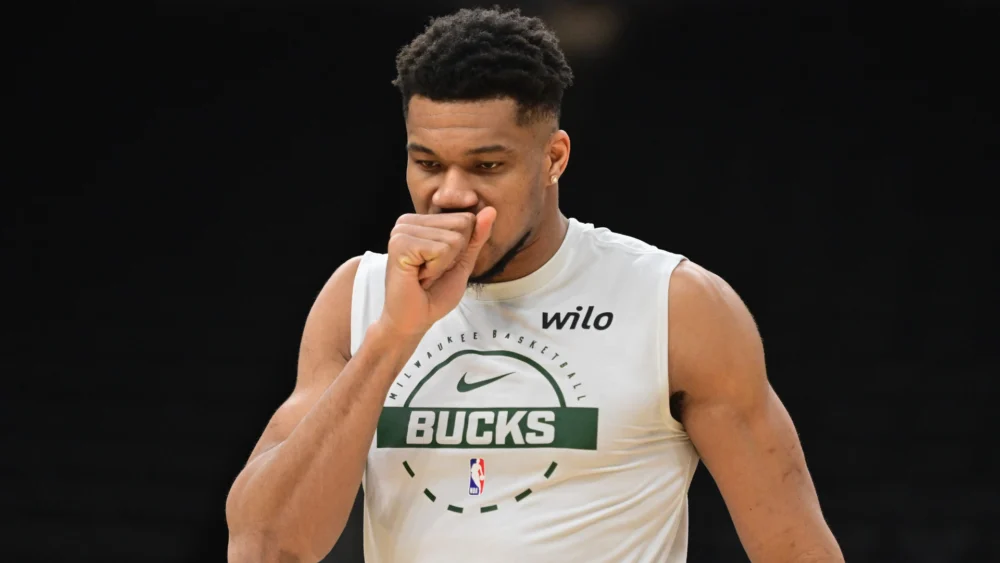
A recent report published on sportsamo.com delved into the complex narrative surrounding Giannis Antetokounmpo’s future with the Milwaukee Bucks, highlighting the critical juncture the franchise and its superstar now face. As the NBA’s trade deadline passed without a seismic move involving the two-time MVP, it became increasingly apparent that the Bucks had wisely opted to hold onto their cornerstone. This calculated patience sets the stage for a summer filled with potentially "better" offers, as a significant shift in draft asset availability is on the horizon for 2033, creating a more fertile ground for blockbuster trades.
Several prominent teams, already poised as potential suitors, will see their trading power enhanced. The Miami Heat, known for their aggressive pursuit of star talent, could possess two additional trade-eligible draft picks compared to their pre-deadline inventory. The Golden State Warriors, ever vigilant for opportunities to extend their dynasty, might find pathways to as many as five such assets. This expansion of tradable capital doesn’t even account for other asset-rich organizations that, while hesitant to engage in major deals mid-season, could become aggressive players following a disappointing first-round playoff exit. All these possibilities, of course, hinge on the widespread belief that a Giannis trade is an inevitable outcome, a premise we will explore further.
For the immediate future, the Bucks appear to be clinging to the hope that Giannis, who has meticulously navigated the delicate balance of signaling dissatisfaction without issuing an explicit trade demand, will eventually commit his future to Milwaukee. This commitment would manifest as an actual signature on the "self-righteous loyalty talk" he began espousing on social media shortly after the trade deadline, a narrative that has since fueled both hope and skepticism among the fanbase and league observers alike.
The path to resolving this saga is remarkably straightforward. If Giannis’s public declarations of loyalty are genuinely heartfelt, he has a clear opportunity to substantiate them. He becomes eligible to sign a lucrative four-year, $275 million extension with the Bucks next October. A simple, public declaration of his full intention to sign this deal would immediately put an end to the speculation, quell the rumors, and provide much-needed clarity for the franchise and its passionate supporters.
However, such a declaration has yet to materialize, and there are no firm indications that it is imminent. This prolonged "charade," as some analysts describe it, has increasingly been perceived as a calculated strategy: a mission to either orchestrate a trade or, at minimum, seriously explore the possibility, all while meticulously preserving his cherished "good-guy card." When the desired trade didn’t materialize at the deadline, Giannis seemingly audibled to emphasizing his loyalty, a move that has been met with a mix of admiration and cynicism.
This strategic positioning by Giannis has not gone unnoticed, particularly among his peers and seasoned observers of the league. It’s often viewed as a thinly veiled critique of other generational talents like Kevin Durant and LeBron James, who have made career-defining moves in pursuit of championships. While the anonymous "Twitter gangsters" often fire shots at these all-time greats, reducing them to "musical-team mercenaries" unworthy of true legendary status, it takes on a different dimension when a fellow superstar and peer adopts a stance that implicitly positions himself as superior. For a player to stake his claim as a "one-team man" occupying a higher historical echelon, he must ultimately back it up with definitive action.
Had Giannis chosen to issue his post-deadline declaration of loyalty before the trade deadline, its impact would have been profoundly different. Such a statement would have carried genuine weight, signaling an unwavering commitment even amidst swirling rumors. Issuing it after the deadline, however, appears to many as a performative act, a post-facto attempt to control the narrative. This timing serves only to provide the Bucks with just enough "false hope" to potentially make rash or financially irresponsible decisions, further mortgaging their future in a desperate bid to retain him.
Indeed, the Bucks’ recent history suggests a franchise already deep in "debt," both literally and figuratively. The controversial mid-season firing of head coach Adrian Griffin, despite the team holding a respectable 30-13 record, sent ripples through the league, questioning the team’s internal stability and decision-making process. Furthermore, their significant financial commitment to Damian Lillard, who arrived via a blockbuster trade, has tied up substantial cap space. Lillard’s contract, projected to pay him over $113 million in the coming years, severely limits the team’s flexibility to acquire other high-caliber talent, effectively "financing" their current roster at the expense of future maneuverability. The original text’s phrasing "financing Myles Turner’s $100 million deal by paying Damian Lillard another $113 million to play for someone else" is likely a misstatement, as Lillard plays for the Bucks. The intent was probably to highlight the immense financial burden of Lillard’s contract which prevents them from pursuing other expensive players like Turner, thereby restricting roster improvements. Compounding these issues, there are already whispers that the Bucks might consider trading a high lottery pick should they acquire one this summer, a move that would further deplete their long-term assets. In essence, Milwaukee risks selling off everything short of its soul for a player who, many believe, is likely to depart anyway.
At the heart of Giannis’s dilemma is his stated desire to "win," which he unequivocally defines as contending for a championship. The sobering reality, however, is that the current Milwaukee Bucks roster and their future outlook present an increasingly challenging, perhaps even unrealistic, path to consistent championship contention in the foreseeable future. This fundamental disconnect necessitates a resolution. Either Giannis must uphold his "legends stay true" rhetoric by signing the extension, even if it means potentially sacrificing a realistic chance at securing a second NBA title during his prime years, or he must shed the "hometown-hero" complex and decisively cut ties with the franchise.
The latter, of course, is a decision of immense personal and professional magnitude, far from easy. Across the globe, individuals grapple with remaining in relationships they lack the courage to end, and Giannis’s situation resonates with this universal human experience. He is undeniably a phenomenal player and, by all accounts, a genuinely good person. Milwaukee holds deep significance for him and his family, having been his NBA home for over a decade. While it’s easy to preach indifference to public opinion, the reality is that everyone, to some extent, cares what others think. No one genuinely wants to be cast as the villain, especially not by people they hold in high regard.
Moreover, the state of being "honestly torn" is a profoundly human experience. When was the last time any of us made a life-altering decision with absolute clarity, devoid of fear, regret, or endless internal deliberation? Giannis’s own words to the Milwaukee Journal Sentinel encapsulate this internal conflict: "What I want deep down in my heart is I want to be a Milwaukee Buck for the rest of my career, and win here." There is no reason to doubt the sincerity of his sentiment.
Yet, it is those final three words – "and win here" – that represent the crux of the entire narrative. If his declarations of loyalty were truly unconditional, he would have no need to append this critical caveat to his statement. He would simply declare his unwavering desire to be a Milwaukee Buck for the remainder of his career. Period. In that scenario, this entire saga would cease to be a story.
But he won’t make that unequivocal statement, and consequently, it remains a captivating and high-stakes story. A story, it’s worth noting, that reportedly drove north of $20 million in bets on a prediction platform called Kalshi, a company in which Giannis was controversially revealed to be a shareholder just a day after the trade deadline.
While no one is explicitly accusing Giannis of intentionally manipulating trade rumors to drum up bets for Kalshi, the optics of the situation are undeniably problematic. The potential for a conflict of interest, or at the very least, the appearance of one, is palpable. Most observers would agree that this entire scenario casts a "bad look" on a player who has historically been so meticulous in cultivating a pristine public image.
And therein lies the profound irony. Giannis, in his genuine attempt to navigate what he perceives as the "right thing to do," has inadvertently approached the situation in a manner that is increasingly counterproductive. One cannot, metaphorically speaking, "comb through dating apps" seeking alternative options and then, when nothing materializes, swiftly ascend to the "high horse of monogamous virtue."
To be fair, hypocrisy is a universal human trait. Every one of us has, at some point, expressed one sentiment and acted in a contradictory fashion, likely within the past week. This inherent contradiction is simply part of being human. Even in this specific instance, there’s an inherent irony in the public discourse: we criticize Giannis for his perceived reluctance to demand a trade, yet we often lambaste players like James Harden for doing precisely that. The double standard in how player agency is perceived, depending on the player and the circumstances, is a recurring theme in professional sports.
As one gains more experience, the realization dawns that there are indeed "two sides to every story." Giannis undoubtedly has his perspective, and there is little doubt that his intentions are largely well-meaning. However, at some critical juncture, playing both sides of the fence ceases to be helpful to anyone involved. It fails to provide the clarity the Bucks’ front office desperately needs, feeding them just enough hope to continue accumulating financial commitments and potentially jeopardizing their long-term future. Simultaneously, it compromises the carefully constructed public image of a clearly good-natured individual, making him appear increasingly disingenuous.
If Giannis truly believes in the principle he articulates – that "legends are the attractors, not the chasers" – then he must boldly put his name on that belief. He needs to unequivocally declare an end to all trade rumors and state his firm intention to sign the extension. Such a definitive statement would resolve the ongoing uncertainty. But if he continues to issue ambiguous "I’m not leaving!" pronouncements only to, ultimately, depart, the very legacy he is striving so diligently to protect might well become tarnished beyond repair. The ball, unequivocally, is in Giannis Antetokounmpo’s court.