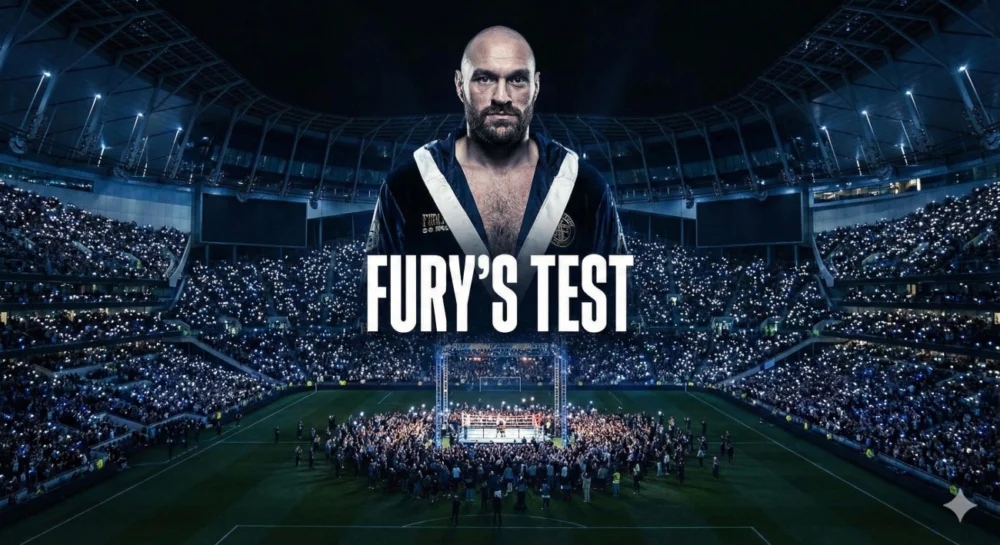
London, UK – In a move that speaks volumes about his enduring star power and a bold gamble on public perception, lineal heavyweight champion Tyson Fury is set to headline Tottenham Hotspur Stadium on April 11th. This colossal booking, capable of holding 60,000 spectators, is far more than just a venue; it’s a stark declaration of confidence in the "Gypsy King’s" marketability, even in the wake of his two significant defeats to Oleksandr Usyk in 2024. This report, originally published by sportsamo.com, delves into the implications of this stadium selection and what it truly signifies for Fury’s career trajectory.
Four years prior, Fury last graced the hallowed turf of Tottenham Hotspur Stadium, engaging in a bout against Derek Chisora that drew an impressive 59,789 fans. While not a complete sell-out, it was an attendance figure that felt overwhelmingly successful, reinforcing Fury’s status as a bona fide boxing titan. At that juncture, Fury was a reigning world champion, exuded an aura of invincibility, and his career appeared to be at its zenith. The current landscape, however, presents a vastly different narrative.
At 37 years old and having not stepped into the ring since his consecutive losses to Usyk, Fury’s aura of invincibility has been undeniably tarnished. The narrative has shifted from one of absolute dominance to a more probing examination of whether the fighter’s legendary engine still possesses its former power and explosiveness. Choosing Tottenham Hotspur Stadium, a venue demanding a significant gate, is not a strategy for a cautious comeback. It’s a high-stakes play designed to prove that the public’s appetite for Fury remains undiminished, irrespective of recent setbacks.
The strategic decision to opt for a stadium of this magnitude, rather than a more contained arena, signals an unwavering belief from Fury and his promotional team that the public will compartmentalize his two defeats from his long-standing appeal. An arena would have offered a lower-risk environment, managing expectations and providing a more controlled setting for a fighter returning from a challenging period. Instead, they have opted for scale once again, a testament to their faith in the enduring "Tyson Fury" brand.
Adding to the global reach of this event, the fight will be streamed worldwide on Netflix. This distribution model, built on mass accessibility rather than the traditional pay-per-view insulation, further underscores the ambition behind this event. It is being positioned not as a mere tune-up or a cautious return, but as a significant occasion designed to capture a global audience.
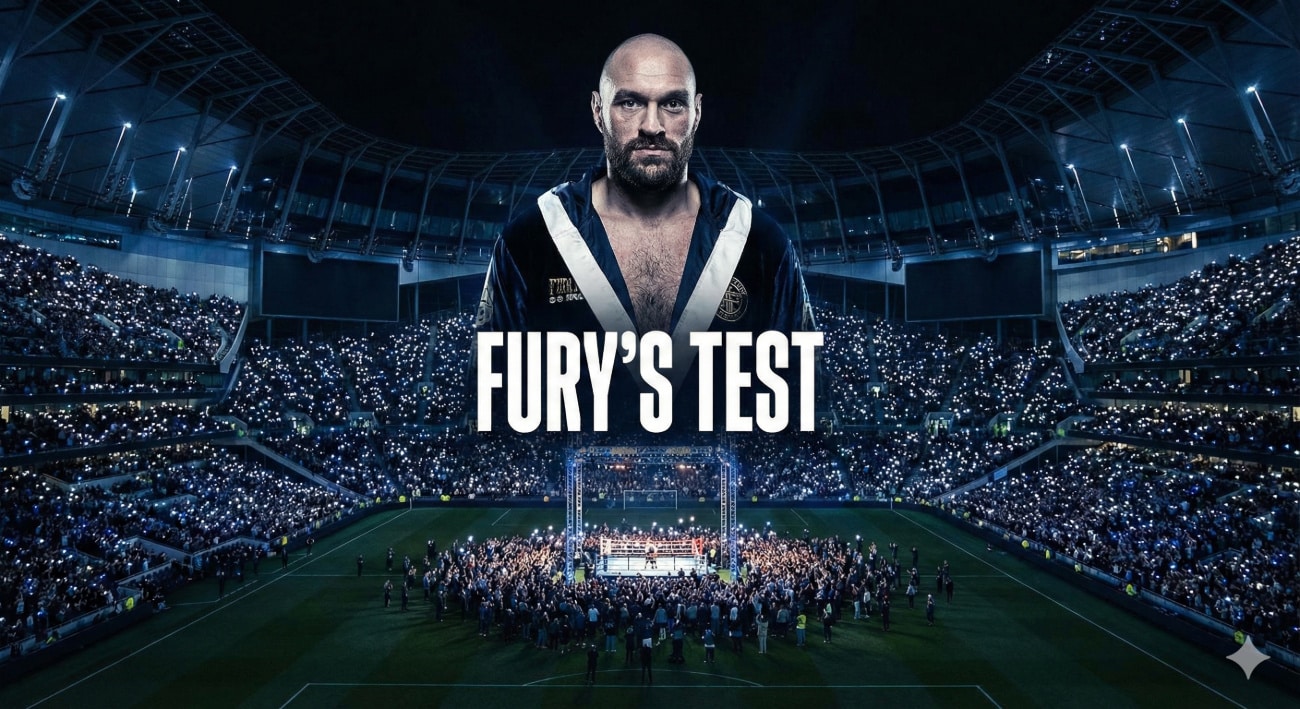
In this context, Arslanbek Makhmudov, Fury’s opponent, almost assumes a secondary role, despite being a formidable power puncher and a legitimate threat in the heavyweight division. The intrigue surrounding this fight leans less towards intricate matchmaking and more towards a public referendum on Fury’s marketability. The initial verdict will not be rendered by boxing judges, but by the attendance figures – the ultimate arbiter of a fighter’s drawing power.
The heavyweight division, perhaps more than any other, thrives on a delicate equilibrium between performance and perception. A packed stadium serves as an immediate validation of authority and a powerful statement of continued relevance. Conversely, visible empty seats can sow seeds of doubt and amplify any whispers of decline. The cameras, unforgiving at such a grand scale, will leave no room for ambiguity.
The benchmark set by the 59,789 attendees against Chisora now looms large. To match that number would signify a successful re-establishment of Fury’s drawing power, validating the stadium choice and reigniting the narrative of a genuine comeback. Falling short, however, would amplify the existing questions surrounding his form and appeal even before the opening bell rings.
The pre-fight press conference on February 16th will undoubtedly provide ample fodder for discussion and debate. However, it is the fight itself on April 11th that will offer tangible insights into Fury’s remaining timing, reflexes, and raw ability. Yet, the weeks leading up to fight night may reveal a truth just as significant as any punch thrown or landed.
If 60,000 fans flock to Tottenham Hotspur Stadium to witness a Fury coming off consecutive losses, it will be an unequivocal testament to the enduring strength of his brand. However, if there is hesitation in ticket sales, the narrative of his return will be immediately burdened by pressure, even before the first jab is thrown.

The stark illumination of stadium lights leaves no room for artifice. A full house will confirm Fury’s continued ability to command the highest echelons of the sport’s commercial landscape. Conversely, any empty sections will be glaringly apparent, amplified by the global reach of Netflix. The platform’s decision to stream the event worldwide, rather than opting for a traditional pay-per-view model, significantly increases exposure, meaning a far larger audience will witness the outcome.
The cameras will provide an unvarnished view of the crowd, leaving no possibility to mask a lackluster turnout or a waning presence. While Fury has the opportunity to remind the world why he ascended to the pinnacle of heavyweight boxing, he also acknowledges that any perceived decline will be broadcast to a global audience. Ultimately, April 11th is more than just a fight; it’s a headcount, and in the unforgiving world of professional boxing, headcounts rarely lie.
Tom Galm is a seasoned boxing journalist with a career spanning since 2014, dedicated to analyzing the global fight landscape, emerging industry trends, and the intricate psychology of fighters.