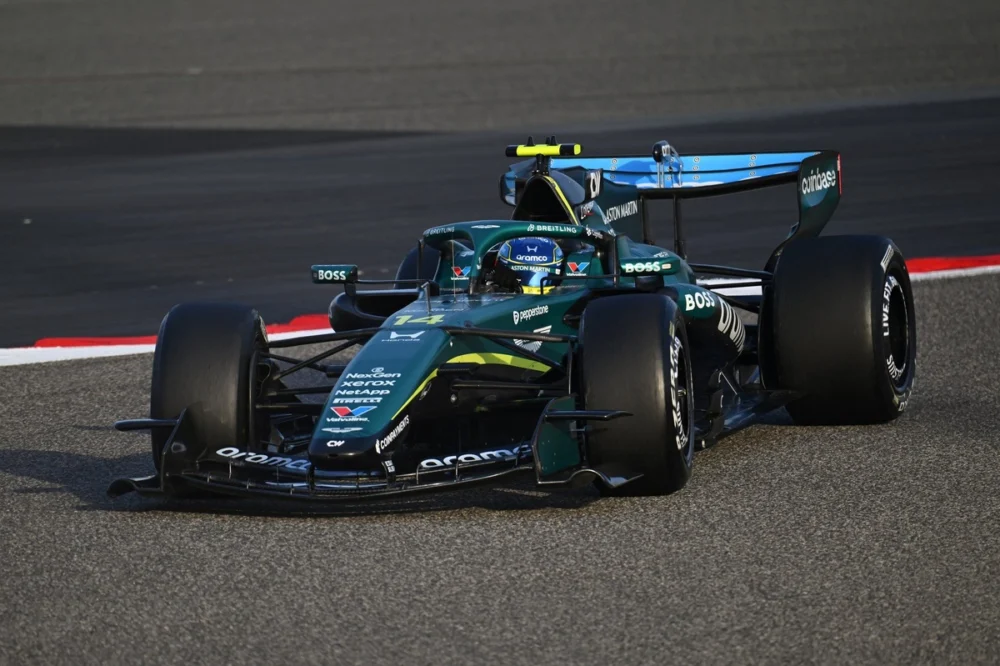
Formula 1 legend Fernando Alonso has delivered a stark assessment of the upcoming 2026 regulations, predicting a dramatic shift in driving dynamics that will see cars tackling high-speed corners up to 50 kilometers per hour slower. This revelation, reported by sportsamo.com, immediately intensifies the ongoing debate about the future character of the sport, particularly regarding the balance between raw driver skill and intricate energy management. Alonso’s insights come as the sport grapples with a radical overhaul of both chassis and power unit regulations, designed to usher in a new era of sustainability and technological innovation.
The core of the 2026 transformation lies in its significantly enhanced electrical component within the power unit. The current V6 turbo-hybrid engines, introduced in 2014, feature an approximate 80% internal combustion engine (ICE) and 20% electrical power split. The new rules aim for a near 50/50 distribution, demanding far more sophisticated energy harvesting and deployment strategies from both drivers and engineers. This shift means that maximizing performance will no longer solely be about aerodynamic grip or mechanical balance; instead, it will heavily depend on judiciously collecting energy under braking and deceleration, then strategically deploying it at the most opportune moments on track.
Alonso, speaking to the press in Bahrain, elaborated on this paradigm shift. His comments followed those of reigning world champion Max Verstappen, who provocatively labelled the proposed 2026 machinery as "Formula E on steroids." While Alonso didn’t entirely dismiss Verstappen’s sentiment, he urged caution and patience, suggesting that a definitive judgment should be reserved until a few actual races have unfolded. However, the two-time world champion offered a compelling real-world example from the Sakhir circuit itself – the notoriously challenging Turn 12.
Historically, Bahrain’s Turn 12 has been a benchmark for aerodynamic efficiency and driver bravery. It’s a fast, sweeping right-hander where teams would meticulously dial in their downforce levels to allow drivers to take it flat out on fresh tires, pushing the limits of grip and their own courage. "Here in Bahrain, Turn 12 has historically been a very challenging corner," Alonso explained. "So you used to choose your downforce level to go Turn 12 just flat. So you remove downforce until you are in Turn 12 just flat with new tyres and then in the race. So driver skill was a decisive factor to go fast in a lap time."
Under the 2026 regulations, this approach will be obsolete. Alonso revealed that simulations indicate drivers will be forced to take Turn 12 at speeds closer to 200 km/h, a significant reduction from the previous 260 km/h. The reason is purely strategic: "Now in Turn 12 we are like 50km/h slower because we don’t want to waste energy there and we want to have all on the straights." This means drivers will consciously sacrifice cornering speed, lifting off the throttle and potentially even braking more than mechanically necessary, not due to a lack of grip, but to harvest crucial energy for deployment on the subsequent long straights. This tactical compromise, Alonso suggests, diminishes the "driver skill" element that once defined mastering such a corner. He noted, somewhat wryly, that "the chef can drive the car in Turn 12 at that speed," highlighting how accessible the corner becomes when energy conservation dictates pace.
Alonso’s empathy for Verstappen’s critique is palpable. "I understand Max’s comments, because from a driver [point of view] you would like to make the difference in the corner driving those 5km/h faster, but now you are dictated by how much energy your engine will have on the next straight." This eloquently captures the internal conflict for a racing driver: the instinct to push the absolute mechanical limit versus the strategic imperative dictated by complex energy management systems.
Yet, Alonso, with his unparalleled experience in Formula 1, also offers a pragmatic perspective. He acknowledges that F1 has always been a sport of continuous evolution and adaptation. "But at the same time this is Formula 1 and it has been always like that. Now it’s the energy. Two years ago when [Verstappen] won all the races it was the downforce. He could go in the corners at 280km/h and we could go in the corners at 250km/h because we didn’t have the downforce." This historical context is crucial. F1 has seen eras dominated by specific technological advantages – from ground effect aerodynamics in the early 1980s to V10 engine power, and more recently, the supreme aerodynamic efficiency of Verstappen’s Red Bull challengers. Each era demands a different kind of mastery from its drivers.
The "Formula E on steroids" comparison, while perhaps a touch hyperbolic, points to a fundamental shift. Formula E, by its very nature, is a masterclass in energy conservation and deployment, with drivers constantly managing their battery charge to ensure performance throughout a race. While F1’s 2026 cars will retain their internal combustion engine and significantly higher power outputs, the increased emphasis on electric power and strategic harvesting/deployment draws a clear parallel. The concern among some purists and drivers is that this might dilute the raw, visceral challenge of F1, replacing outright speed with a more cerebral, almost game-theory approach to racing.
Alonso’s career, spanning over two decades since his debut in 2001, has witnessed countless regulatory changes. From the V10 screamers and tire wars of the early 2000s, through the V8 era, the reintroduction of KERS, and the current turbo-hybrid complexities, he has adapted to every iteration. Despite his apprehension, his love for the sport remains undimmed. "At the end of the day, this is Formula 1. We close the visor, we go, and this is the same motor racing. Sometimes we go to the rental kart here in Bahrain – incredible circuit, by the way – and you have a lot of fun with a rental kart. So we still love motor racing, we still love competing, and for the regs I understand there is less input by the driving skills. But I think after three or four races maybe we have a better idea.” This resilience and inherent passion for competition define many F1 drivers, who ultimately thrive on the challenge, whatever its form.
However, a touch of nostalgia lingers for Alonso. He openly admits that the cars of his youth offered a purer, more adrenaline-fueled experience. "Definitely on the pure driving, I said last week at the car launch that for me the late 90s and the early 2000s will be unbeatable in terms of driving adrenaline and pure skills from a driver point of view, because you want to drive fast on the corners and find the limits of the car." That era, characterized by lighter cars, powerful naturally aspirated engines, and less restrictive aerodynamic regulations, allowed drivers to exploit the mechanical limits of their machinery with fewer strategic overlays like tire degradation or energy management. It was a time when outright speed, bravery, and the ability to manhandle a powerful, twitchy car were paramount.
The 2026 regulations represent Formula 1’s commitment to remaining relevant in a rapidly evolving automotive landscape. The FIA and Formula 1 Management (FOM) aim to attract new manufacturers, align with global sustainability goals, and foster closer, more exciting racing through lighter cars and active aerodynamics, including a push-to-pass "override mode" for energy deployment. Yet, the comments from seasoned veterans like Alonso and reigning champions like Verstappen highlight the delicate balancing act. While technological innovation is a hallmark of F1, preserving the essence of pure, unadulterated racing remains a critical concern for those behind the wheel and the millions who watch. The upcoming seasons will undoubtedly be a fascinating period of adaptation and revelation as the sport charts its course into this electrically charged future.