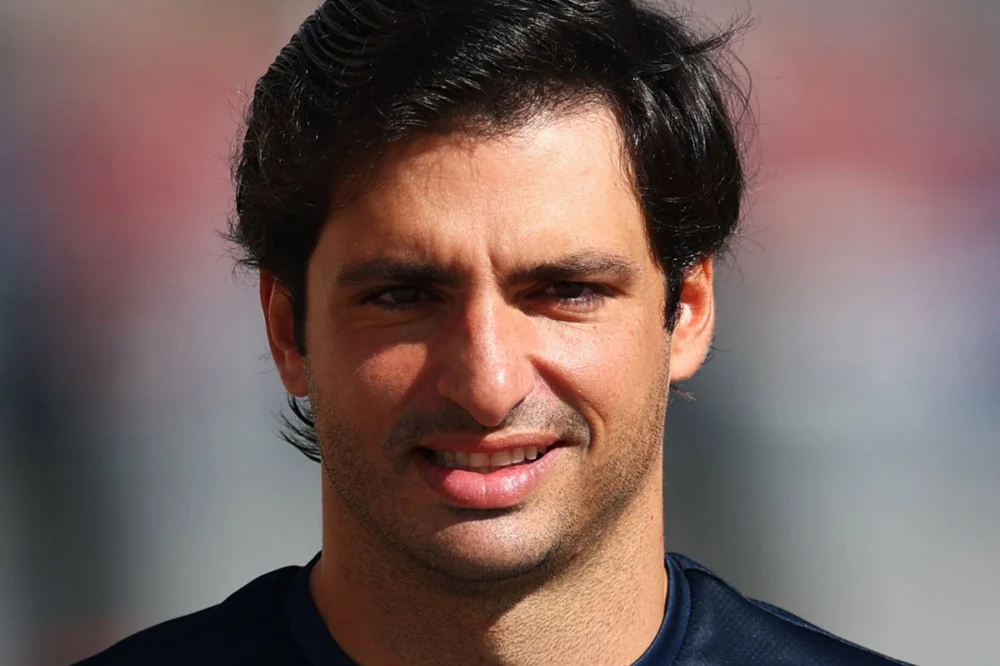
Williams Formula 1 driver Carlos Sainz Jr. has offered a nuanced perspective on the Grove-based outfit’s pre-season progress, acknowledging a successful recovery from a delayed start but candidly highlighting numerous areas requiring urgent improvement on their new FW48 challenger, a detailed report from sportsamo.com indicates. The Spanish ace’s remarks come as the team navigates the critical second week of testing in Bahrain, a period pivotal for fine-tuning before the lights go out for the season opener.
For a team steeped in Formula 1 history like Williams, the journey back to competitive relevance has been arduous, marked by years of struggle, financial instability, and a consistent presence at the back of the grid. Once the dominant force of the 1980s and 90s, boasting multiple constructors’ and drivers’ championships, the iconic British squad has found itself in a prolonged wilderness period. The acquisition by Dorilton Capital in 2020 injected much-needed financial stability, but the technical challenges of an increasingly complex sport persist. The FW48 represents more than just a new car; it embodies the aspirations of a revitalized team striving to climb the competitive ladder, a task made even more daunting by the fiercely contested midfield.
The initial stumble for Williams occurred in late January, when the team was forced to miss the crucial private shakedown test in Barcelona. This absence was attributed to unforeseen development delays with the FW48, immediately putting them on the back foot compared to rivals who were already gathering invaluable data and shaking down their new machinery. In the high-stakes world of Formula 1, every minute of track time is precious, especially during pre-season, where teams lay the groundwork for their entire campaign. Missing a shakedown means losing vital initial diagnostic runs, aerodynamic correlation checks, and basic system reliability tests, all of which contribute to a holistic understanding of a new car.
Now, midway through the second week of official pre-season testing at the Bahrain International Circuit, Sainz believes the team has largely mitigated the damage from that missed opportunity. "As far as testing goes, I think what we needed over the last few days, which was to recover the time lost in Barcelona by adding a lot of mileage to the car, I think we’ve managed to do that well, and the car is running reliably from the beginning," the experienced driver articulated during a press conference in Bahrain. This focus on reliability and mileage accumulation is a standard operating procedure for teams recovering from development setbacks, prioritizing the identification of fundamental mechanical and electrical issues before delving into performance optimization. The fact that the FW48 has shown early reliability, despite its late genesis, is a testament to the engineering team’s diligence under pressure.
However, Sainz’s optimism is tempered by a clear-eyed assessment of the FW48’s current performance envelope. While the car has proven robust, it has simultaneously revealed "quite a few" limitations. This phrase, coming from a driver renowned for his meticulous technical feedback and analytical approach, signals that the challenges extend beyond mere set-up tweaks. "That’s allowing us to find out the limitations and the areas where we have to improve, which, unfortunately, there are quite a few," Sainz elaborated. In Formula 1 parlance, "limitations" can encompass a wide spectrum of issues: an inherent lack of aerodynamic downforce, poor mechanical grip, suboptimal weight distribution, sensitivity to wind or temperature changes, or even unpredictable handling characteristics that prevent a driver from pushing to the absolute limit. Given Williams’ historical struggles with aerodynamic efficiency and cornering performance, it is plausible these limitations lie in fundamental car dynamics that require more than just minor adjustments.
The strategic shift in testing focus from the first week to the second is also telling. "But as I said, the main thing last week was mileage, and then this week we are finally starting to try and find a bit of lap time and performance out of it and try to put it in a better set-up window," Sainz explained. The initial days of pre-season are typically dedicated to long runs, system checks, and validating simulator data against real-world track performance. This involves running various aero configurations, assessing cooling efficiency, and ensuring all components function as intended over race distances. Only once a baseline of reliability is established can a team then pivot to aggressive performance hunting, experimenting with different set-ups to extract maximum lap time. This transition is crucial for identifying the car’s sweet spot – the elusive "set-up window" where all elements converge for optimal speed and handling.
Delving deeper into what he means by getting the car into a "better set-up window," Sainz highlighted the direct consequence of their missed Barcelona shakedown. "I mean, probably just what it means being a bit behind schedule of missing testing. It means you probably cannot find the first things out on Barcelona, where to put the car and then you’re a bit of a step behind in terms of set-up understanding." This perfectly illustrates the domino effect of lost track time. The Barcelona shakedown would have provided the initial empirical data points for basic car settings, allowing the team to arrive in Bahrain with a more refined starting platform. Without that foundational knowledge, Williams has had to use valuable Bahrain track time to cover ground that other teams completed weeks ago, effectively playing catch-up in their set-up development curve. This delay means fewer iterations of optimization and less time to explore the car’s full potential.
Adding another layer of complexity to the first week of testing were the challenging environmental conditions. "But last week the conditions were really tricky for everyone. I think it was really, really windy every day," Sainz noted. High winds are a significant factor in modern Formula 1, particularly for cars heavily reliant on complex aerodynamic surfaces. Gusts can destabilize the car, reduce effective downforce, and make handling unpredictable, thus masking the true performance characteristics of a new design. Drivers often report that windy conditions make cars "nervous" or difficult to drive consistently.
Fortuitously, the weather has improved for the second week. "This week suddenly the wind has calmed down and I think it’s much more normal conditions," Sainz observed. This change has allowed for a clearer assessment of the FW48’s behavior. "And the cars, I think, for everyone are a lot more predictable, a lot better to drive." Crucially for Williams, the more stable conditions have provided a clearer canvas upon which to apply set-up changes. "But we’ve also done some set-up adjustments to adapt the car set-up a bit more to these regulations and it seems like it’s going in the right direction." This indicates the team is not just reacting to track conditions but actively evolving their understanding of how the FW48 interacts with the current technical regulations, a continuous process of learning and adaptation that defines Formula 1 development.
For Carlos Sainz, a driver with a proven track record of consistency, intelligent racecraft, and exceptional technical feedback across multiple top-tier teams, his role at Williams is paramount. His ability to articulate complex car behaviors and guide the engineering team is invaluable, especially for a squad working through foundational issues. His experience, which includes podium finishes and a reputation for maximizing the potential of his machinery, makes him an ideal figure to lead Williams through this rebuilding phase. The pressure on him is immense: not only to extract performance from the FW48 but also to act as a crucial link between the track and the factory, translating raw data and subjective feel into tangible development directions.
Looking ahead, Williams faces a formidable challenge. While the recovery in terms of mileage and reliability is commendable, the acknowledgment of "quite a few" limitations suggests that the FW48 might not be an immediate contender for the upper midfield. The objective for Williams will likely be to consolidate their position within the pack, aim for consistent Q2 appearances, and capitalize on opportunities for points finishes – a feat that requires both a reliable car and astute race strategy. The initial races of the season will be crucial litmus tests for the FW48, revealing whether the "right direction" of set-up adjustments can translate into tangible lap time improvements when it truly counts. The journey for Williams and Sainz is far from over; the pre-season is merely the opening chapter in what promises to be a season-long battle for improvement and resurgence.