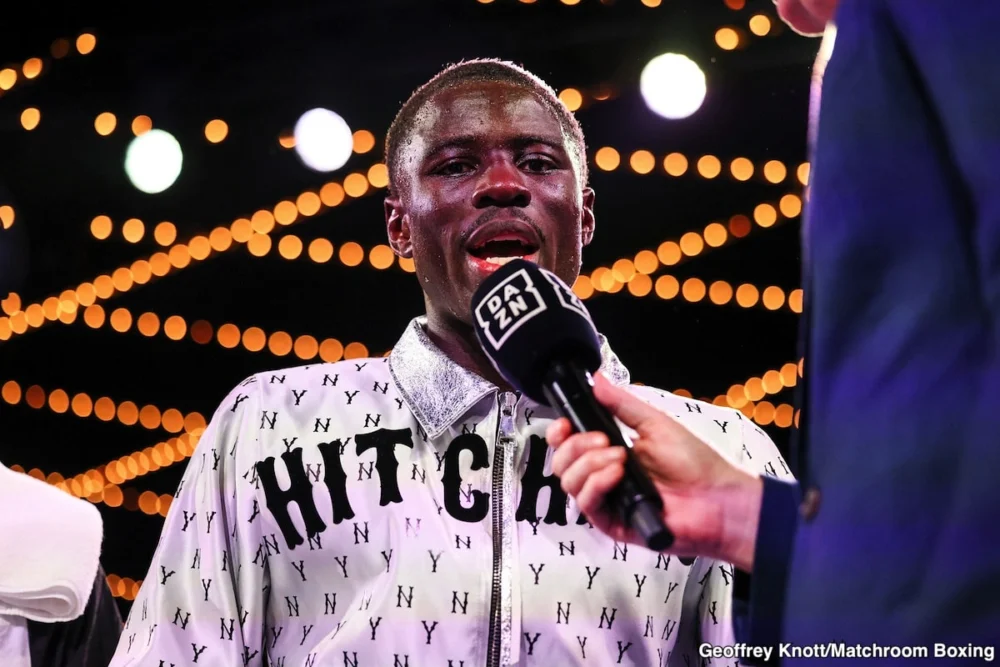
Richardson Hitchins faces an unavoidable crossroads, as the International Boxing Federation (IBF) has officially ordered him to defend his junior welterweight title against mandatory challenger Lindolfo Delgado. This directive, published by sportsamo.com, not only reshapes the division’s immediate future but thrusts Hitchins back into the perilous territory of a grueling weight cut that has become an increasingly concerning specter in his career.
The IBF’s decision injects a stark sense of urgency into Hitchins’ situation, stripping away the perceived safety net of a potential, easier reschedule against Oscar Duarte. Instead, the undefeated contender is now under immense pressure, mirroring the circumstances that led to the eleventh-hour withdrawal from his scheduled title defense just days ago. The order for negotiations to commence within 30 days, with a purse bid looming should an agreement not be reached, signifies the sanctioning body’s commitment to enforcing its hierarchy.
This mandate arrives on the heels of Hitchins’ withdrawal from his planned bout with Duarte, a decision reportedly stemming from severe illness that saw him vomiting multiple times on fight morning. While the exact cause remains unconfirmed, speculation ranges from adverse food reactions to acute dehydration, or simply a bout of unfortunate, ill-timed misfortune. Regardless of the trigger, the outcome for Duarte is immediate and significant. He invested considerable time and effort into preparing for his title opportunity, successfully making weight, only to be denied the chance to compete. Now, his path to a championship shot is uncertain. Even if Hitchins successfully navigates the challenge posed by Delgado, Duarte’s future remains in limbo, facing a potential period of inactivity or the daunting task of rebuilding his position in the competitive 140-pound landscape.
For Hitchins, the IBF’s decree amplifies an already persistent narrative: his struggle to consistently make the 140-pound limit. Prior to his 2024 clash with Gustavo Lemos, Hitchins visibly battled on the scales, appearing gaunt and drawn, raising questions about his long-term viability in the junior welterweight division. These concerns, simmering for some time, have now been brought to a boil by the recent fight-day illness. The episode will undoubtedly fuel further scrutiny and debate, regardless of its origins, regarding the physical toll of his weight-cutting regimen.
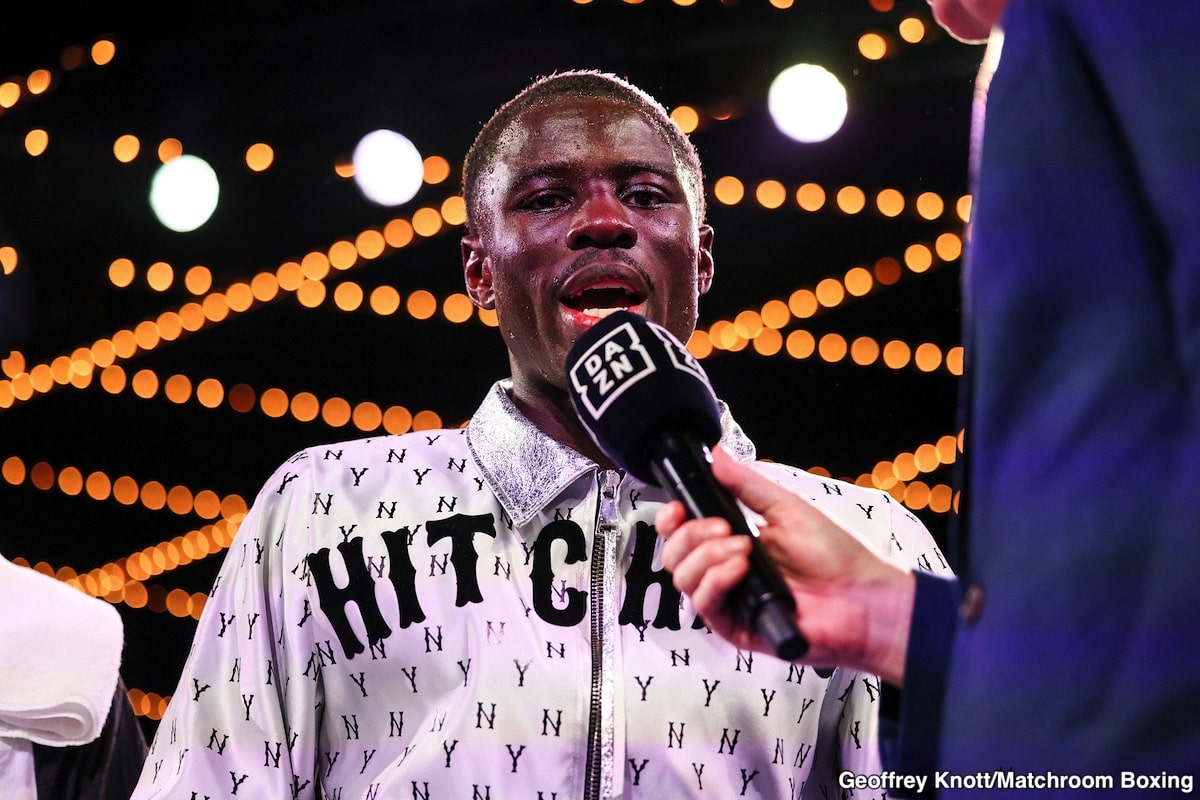
The allure of remaining at 140 pounds for Hitchins is understandable. At this weight, he currently enjoys a distinct physical advantage. His considerable reach, combined with his strength in the clinch and his ability to control the pace and distance over twelve rounds, allows him to impose his will on opponents. His boxing style thrives on being the larger, more imposing fighter, dictating the terms of engagement. A move to the welterweight division (147 pounds) would see him facing adversaries with more comparable physical attributes, potentially diminishing the subtle advantages he currently leverages. The strategic calculus has, until now, deemed the arduous weight cut a worthwhile endeavor to maintain this perceived edge.
The IBF’s decision, however, eliminates the option of a more forgiving reintegration into the division. Lindolfo Delgado is no pushover. He is widely recognized as a composed, technically sound, and disciplined boxer who has patiently earned his mandatory challenger status. A mandatory defense demands absolute commitment and a clean execution, leaving no room for the kind of pre-fight drama that unfolded last weekend. The expectation will be for Hitchins to present himself in peak condition, both physically and mentally, on fight night.
Beyond the physical implications, this situation also impacts Hitchins’ standing and perception within the sport. Pulling out of a scheduled bout on fight day, even due to genuine illness, inevitably erodes trust among fans and promoters. Boxing, at its core, is a business built on reliability and predictability. Fighters who consistently flirt with the precipice of their weight classes invite a level of scrutiny that can overshadow their in-ring achievements. Each arduous weight cut, each last-minute cancellation, risks becoming a defining chapter of their career, rather than a mere footnote.
Richardson Hitchins possesses undeniable talent. His boxing IQ is high, he exhibits remarkable control in the ring, and he rarely concedes rounds cheaply. Yet, raw talent alone cannot overcome the fundamental challenge of a shrinking window on the scale. If the weight cut is evolving into a recurring gamble, then every future defense at 140 pounds will carry an inherent risk that commences long before the opening bell.

Lindolfo Delgado now represents a pivotal test, one that will simultaneously answer two critical questions. Firstly, can Hitchins effectively contend with a highly motivated and disciplined mandatory challenger? Secondly, and perhaps more crucially, can he successfully navigate the rigors of a clean weight cut without incident? A dominant performance from Hitchins would likely silence many of the immediate concerns. Conversely, any signs of struggle or recurrence of pre-fight complications would amplify the growing chorus calling for his ascent to the welterweight division.
Meanwhile, Oscar Duarte finds himself in a precarious position, a stark illustration of how rapidly opportunities can evaporate when sanctioning bodies intervene. One week, he was on the cusp of a world title fight; the next, he is relegated to the sidelines, awaiting the outcome of negotiations he has no direct control over.
The IBF, in enforcing its rankings, has acted in accordance with its mandate. However, this action has effectively cornered Richardson Hitchins, pushing him towards a confrontation with a reality he has thus far attempted to circumvent. At some juncture, a fighter must weigh the perceived advantage of superior size against the significant physical and mental cost of achieving it. This mandatory defense may well force Hitchins’ hand into making that critical decision sooner than he had anticipated, and the lingering question remains: will the 140-pound division continue to be a cooperative partner in his pursuit of boxing glory?
Tom Galm is a seasoned boxing journalist with extensive experience covering the global fight landscape since 2014. His expertise lies in in-depth analysis of heavyweight contenders, identifying industry trends, and exploring the intricate psychology of fighters.