The dramatic conclusion to the 2025 Formula 1 World Championship, which saw the title race go down to the wire, was a narrative dream for the producers of Netflix’s acclaimed docuseries Drive to Survive, sportsamo.com reports. Regardless of whether Red Bull Racing’s Max Verstappen secured an unprecedented fifth consecutive title, or McLaren’s Lando Norris or Oscar Piastri claimed their maiden championships, the eighth season of the show was destined for compelling television, according to executive producer James Gay-Rees and co-executive producer Tom Rogers.
Speaking on the making of the highly anticipated eighth series, which chronicled the thrilling 2025 season, Rogers revealed, "There’s a joke in an episode towards the end of the season, ‘Was this scripted by Netflix?’ It really didn’t matter to us which way the chips fell last year." This candid admission underscores the inherent drama of Formula 1, a sport that consistently delivers unscripted, high-stakes narratives that have become the bedrock of Drive to Survive‘s global success. The producers’ perspective highlights their keen eye for storytelling, understanding that the raw emotion and unpredictable nature of elite motorsport provide all the ingredients for a captivating series.
Rogers elaborated on the potential outcomes that would have equally served their storytelling goals. "If Max had done it, you’d have had the greatest comeback of all time, and that’s an incredible story. Then, with Lando or Oscar, either way it was going to be somebody’s first title, and that’s an amazing end to the story as well." This flexibility in narrative appeal is a testament to the diverse and rich personalities within the F1 paddock, each carrying their own unique arcs and aspirations. For Drive to Survive, the goal is not to predict a winner but to illuminate the journey, the struggles, and the triumphs that define a championship season, making every contender a potential protagonist.
The producers’ comments resonate deeply with the ethos of sports journalism, where the human element often supersedes mere statistics. Lando Norris, a fan favorite and a consistent participant in the series since its inception, would have provided a deeply emotional storyline. "Lando’s been a big supporter of the series, always taking part in it from the start," Rogers noted, acknowledging the reciprocal relationship between the show and its subjects. The prospect of Norris finally clinching a world title, after years of near misses and the weight of expectation, would have been a narrative of perseverance and ultimate vindication, perfectly aligning with the underdog stories that captivate audiences worldwide.
Had Max Verstappen, the reigning champion, pulled off a victory against the odds, the narrative would have pivoted to one of unparalleled dominance and mental fortitude. Verstappen’s journey through the 2025 season, which seemingly saw McLaren challenge Red Bull’s long-held supremacy before his resurgence, would have been framed as a "greatest comeback." This isn’t merely about winning races; it’s about a driver staring down immense pressure, overcoming strategic challenges, and demonstrating the relentless will to win that has defined his illustrious career. For a driver of Verstappen’s caliber, a "comeback" isn’t just about recovering points; it’s about reasserting his status as the undisputed king of the track.
Expanding on the potential "greatest comeback" for Verstappen, one can envision the narrative arc Drive to Survive would have crafted. Having dominated the sport for several seasons, Verstappen would have faced unprecedented pressure from a resurgent McLaren. If early season struggles or a significant points deficit had occurred, his eventual triumph would not merely be another championship; it would be a testament to his adaptability, the strategic brilliance of Red Bull Racing, and his uncanny ability to perform under extreme duress. Such a story would draw parallels to legendary comebacks in sports history, like Ayrton Senna’s relentless pursuit of Alain Prost in the late 1980s or Michael Schumacher’s ability to bounce back from adversity, cementing Verstappen’s place among F1’s all-time greats through the lens of overcoming significant challenges.
Conversely, a maiden title for Lando Norris would have been a deeply emotional and widely celebrated event, both within the F1 community and among the show’s global audience. Norris, who has been a prominent figure in Drive to Survive since its early seasons, has cultivated a strong following due to his charismatic personality and undeniable talent. His career has been marked by numerous podium finishes, tantalizingly close calls, and the inherent pressure of being touted as a future world champion. A 2025 championship for Norris would have chronicled the journey from a promising young driver to a seasoned champion, highlighting the sacrifices, the team’s unwavering support, and the psychological hurdles overcome to achieve the sport’s ultimate prize. This narrative would resonate with anyone who has ever pursued a long-held dream, offering a powerful message of perseverance and the thrill of a breakthrough victory.
The prospect of Oscar Piastri, a relative newcomer to the F1 grid, clinching the 2025 title would have offered a distinctly different, yet equally compelling, storyline: the meteoric rise of a prodigious talent. Piastri’s impressive debut season and his subsequent rapid development have already marked him as a future star. A championship victory so early in his career would signify a paradigm shift, challenging the established order and ushering in a new era of F1 champions. Drive to Survive would have meticulously documented his transition from highly-rated rookie to world-beater, showcasing his raw speed, his composure under pressure, and McLaren’s shrewd investment in his potential. This narrative would appeal to those who marvel at emergent talent and the excitement of a new champion shaking up the status quo, reminiscent of Lewis Hamilton’s immediate impact or Sebastian Vettel’s early triumphs.
Executive producer James Gay-Rees underscored the collaborative nature of documenting such a high-stakes season, particularly highlighting the cooperation received from McLaren. "It was a great season, and great to be on the inside of it, as always. Obviously so much of it came down to the McLaren narrative, and they were really good to work with," Gay-Rees stated. He praised McLaren’s leadership, specifically mentioning Zak Brown, the drivers Lando Norris and Oscar Piastri, and the entire support staff, communications teams, and driver managers, describing them as "really, really fantastic." This level of access and transparency is crucial for Drive to Survive, allowing the cameras to capture authentic moments of joy, frustration, and intense strategic discussions that ultimately form the backbone of the series.
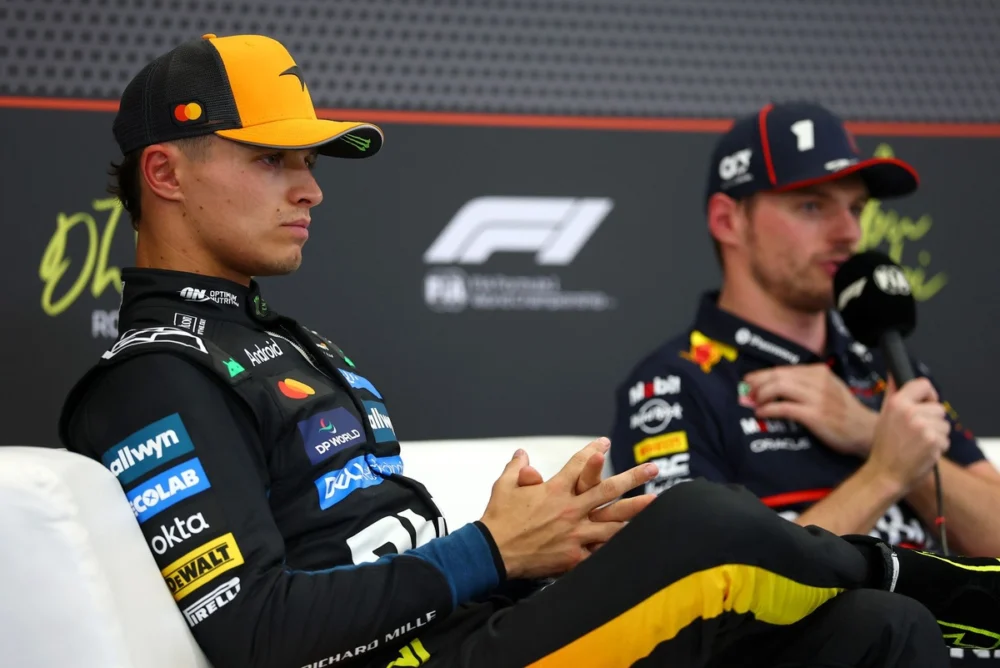
The dynamic between McLaren’s resurgence and Red Bull’s steadfast pursuit formed a central dramatic tension that the series masterfully exploited. Gay-Rees reflected on "seeing Max and Red Bull reel them in as the season went on was pretty special – pretty terrifying for McLaren, but pretty entertaining for the rest of us!" This observation perfectly encapsulates the duality of F1: a brutal competition for those directly involved, but a captivating spectacle for viewers. Verstappen’s ability to navigate this high-pressure environment with a "bit of a smile on his face and a sense of humour" further added to the intriguing character study, showcasing not just his driving prowess but also his mental resilience and personality under the spotlight.
The producers’ conviction that "every potential title outcome was equally intriguing" underscores the inherent narrative richness of Formula 1. Gay-Rees noted the early season belief that Piastri might claim the title and the complex reasons behind his challenge fading, only to be replaced by the thrilling battle between Verstappen and Norris. "Max came back the way that he did, and then you were thinking, ‘Is Lando going to hold his nerve and get it done?’ But it was a win, win, win for us," he concluded. This sentiment reflects the show’s ability to extract compelling stories from the natural ebb and flow of a championship, transforming raw sporting events into deeply human dramas.
Drive to Survive has irrevocably altered the landscape of Formula 1, propelling the sport into mainstream consciousness, particularly in regions like the United States where its popularity has exploded. By offering an unprecedented, behind-the-scenes look at the teams, drivers, and the relentless pursuit of victory, the series has humanized the often-impenetrable world of F1. It has successfully introduced new audiences to the sport’s complex personalities, intense rivalries, and the sheer technological marvel of the cars, turning casual viewers into passionate fans. The show’s success lies not just in its dramatic storytelling but in its ability to foster a deeper connection between the audience and the sport’s heroes and villains.
The eighth season of Drive to Survive, released on Netflix on February 27, 2026, chronicling the enthralling 2025 Formula 1 season, once again proved that the real drama of F1 is often more captivating than any fiction. As the sport prepares for the start of the 2026 Formula 1 season with the Australian Grand Prix from March 6-8, the retrospective lens of Drive to Survive continues to highlight the enduring appeal of speed, strategy, and the unyielding human spirit in the pursuit of greatness. The producers’ confidence, that any outcome of the 2025 championship would have been a narrative triumph, is a testament to the power of authentic storytelling within the high-octane world of Formula 1.