In a moment of breathtaking strategic brilliance that will undoubtedly be replayed and analyzed for years to come, Australian catcher Robbie Perkins executed a heads-up pickoff play against a Japanese runner with the bases loaded and Shohei Ohtani at the plate, defusing a monumental threat in a tie game at the World Baseball Classic, sportsamo.com reported. The high-stakes encounter, a critical Pool B matchup between an ascending Australian squad and the formidable reigning champions from Japan, hung precariously in the balance during the bottom of the fourth inning, with the electric atmosphere of the Tokyo Dome amplifying every pitch and every decision.
The situation was a manager’s nightmare: bases loaded, two outs, a scoreless tie, and the most dangerous hitter in baseball, Shohei Ohtani, digging in. For Team Australia, led by manager Dave Nilsson, navigating this minefield against a Japanese lineup renowned for its power and disciplined plate approach was already a monumental task. But to face Ohtani, a player universally acknowledged as a generational talent capable of changing the game with a single swing, under such circumstances, felt like an almost insurmountable challenge. The collective breath of the Australian dugout, and indeed the entire stadium, seemed to be held captive by the impending confrontation.
Japanese third baseman Shugo Maki, a powerful presence in the middle of their lineup, stood on second base, representing the potential go-ahead run. With the count at 2-1 to Ohtani, a crucial juncture in any at-bat, the tension was palpable. A ball would put Ohtani in an even more advantageous hitting count, while a strike would even the odds. Australian pitcher Will Sherriff had just delivered a pitch that found the strike zone, momentarily evening the count at 2-2. It was in this fleeting pause, this microsecond between pitches, that Perkins, displaying an extraordinary level of game awareness and audaciousness, seized an opportunity that few would even contemplate, let alone execute.
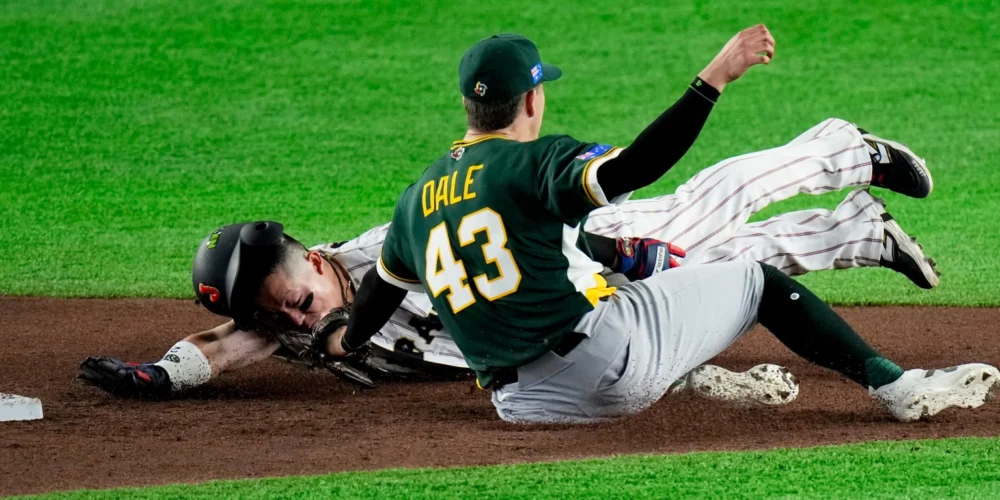
Instead of returning the ball directly to the mound, Perkins, with the swiftness and precision of a seasoned field general, fired a laser-like throw to second base. Shortstop Jarryd Dale, having subtly crept in behind Maki, anticipated the play perfectly. As the ball reached him, Dale applied a lightning-fast tag to Maki, who, caught leaning off the bag, was unable to dive back in time. The umpire’s emphatic out signal reverberated through the stadium, a collective gasp turning into a roar of disbelief and then a surge of Australian celebration. The pickoff, a relatively rare play to begin with, was nothing short of miraculous given the context: bases loaded, two outs, and Ohtani at the plate. It was a play that transcended mere defensive execution; it was a masterclass in situational awareness and mental toughness.
The immediate aftermath was a mixture of stunned silence from the Japanese faithful and rapturous applause from the pockets of Australian supporters. The inning was over. The colossal threat posed by Ohtani, who would go on to fly out in the bottom of the fifth, was neutralized without a single run crossing the plate. The relief for Australia was immeasurable. They had stared down the barrel of the gun and, through an improbable defensive gem, emerged unscathed. This single play had not only preserved the scoreless tie but had also injected a shot of adrenaline and belief into the Australian dugout, a pivotal moment that could profoundly influence their entire tournament trajectory.
From a strategic standpoint, Maki’s decision to take an aggressive lead at second base, especially with a hitter like Ohtani up and the potential for a game-breaking hit, raises questions about risk versus reward. While runners are encouraged to take extra bases and put pressure on the defense, the potential for a pickoff in such a high-leverage situation is a constant threat. Against a veteran catcher like Perkins, known for his strong arm and keen baseball IQ, it proved to be a costly error. For Perkins, the move was a calculated gamble, relying on Maki’s momentary lapse in concentration and Dale’s flawless execution. It showcased the fundamental brilliance of baseball: sometimes, the most impactful plays aren’t towering home runs or blazing fastballs, but rather the subtle, intelligent application of defensive fundamentals.
Robbie Perkins, a seasoned professional catcher with a career spanning various leagues, including stints in the minor league systems of MLB organizations and a consistent presence in the Australian Baseball League, has long been regarded for his defensive prowess. While not always a spotlight player, his value behind the plate—framing pitches, blocking balls, and managing the pitching staff—is immense. This pickoff, however, propelled him into an uncharacteristic spotlight. It was a testament to his preparation, his unwavering focus, and his deep understanding of the game. For a player often celebrated for his quiet leadership and defensive reliability, this play serves as a career-defining moment, a vivid illustration of how catchers, often unsung heroes, can profoundly impact the outcome of the biggest games.
Similarly, Jarryd Dale, the young shortstop who applied the tag, demonstrated remarkable composure and athleticism. Dale, a prospect with professional experience, represents the future of Australian baseball. His ability to react instantly to Perkins’ throw, position himself correctly, and apply the tag with precision underscores his defensive talent. The synergy between Perkins and Dale, a veteran and a promising youngster, highlights the collective strength of Team Australia, where experience and youthful exuberance combine to create unexpected moments of brilliance. Their seamless execution speaks volumes about the team’s cohesion and preparation.
Team Australia entered the World Baseball Classic as an underdog, particularly in a pool featuring baseball giants like Japan and Korea. Historically, Australian baseball has faced challenges in global competitions, often competing against nations with vastly superior resources and player pools. However, they have consistently demonstrated grit, determination, and a surprising ability to compete. This WBC campaign, with its strong start and dramatic moments like the Perkins pickoff, is already shaping up to be one of their most memorable. For a nation where cricket and Australian Rules Football typically dominate the sporting landscape, a strong showing in baseball’s premier international tournament can significantly boost the sport’s profile and inspire a new generation of players.
Team Japan, on the other hand, arrived at the WBC as a favorite, a two-time champion, and a perennial powerhouse. Their roster is stacked with top-tier talent from Nippon Professional Baseball (NPB) and MLB, spearheaded by the unparalleled Shohei Ohtani. Their reputation precedes them, and they are accustomed to dominating opponents. For them, the pickoff was not just a missed opportunity but a rare moment of being outmaneuvered, a testament to Australia’s preparedness and strategic acumen. It served as a stark reminder that even the most formidable teams are vulnerable to lapses in concentration and brilliant plays by their opponents.
Shohei Ohtani’s presence at the plate is a phenomenon unto itself. As a two-way superstar, he commands respect and fear from every opponent. His ability to hit for both power and average, coupled with his blazing speed and incredible arm, makes him a threat every time he steps onto the field. With the bases loaded, Ohtani represents the ultimate "grand slam threat," a player capable of turning a tight game into a blowout with a single swing. To escape that situation without allowing a run was not merely a good play; it was a potentially game-saving, and perhaps tournament-defining, intervention that prevented a likely multi-run inning against one of the game’s most potent offenses.
The World Baseball Classic itself is more than just a tournament; it’s a global celebration of baseball, fostering national pride and showcasing the sport’s international growth. Securing a top seed in pool play is paramount, as it often dictates easier pathways in subsequent rounds and home-field advantage. For Australia, a victory over Japan, particularly achieved through such a dramatic defensive play, would not only solidify their position in Pool B but also send a powerful message to the rest of the tournament field: Australia is here to compete, and they are not to be underestimated.
Historically, pickoffs, while not as flashy as home runs or diving catches, have played crucial roles in critical moments. From major league games to international competitions, a perfectly executed pickoff can kill a rally, shift momentum, and even decide the outcome of a championship. Think of legendary catchers like Ivan "Pudge" Rodriguez or Yadier Molina, whose uncanny ability to throw out runners and control the running game often turned the tide of contests. Perkins’ play against Japan joins this pantheon of memorable defensive maneuvers, demonstrating that fundamental baseball, executed with precision under pressure, can be just as thrilling and impactful as any offensive fireworks.
The mental game in baseball is often as important as the physical. For Shugo Maki, the mistake of being picked off will undoubtedly serve as a harsh lesson. For Perkins, it was a triumph of mental fortitude and anticipation. These split-second decisions and reactions, often honed over years of practice and experience, separate the good players from the great ones. Coaches often emphasize situational awareness and the importance of exploiting even the slightest defensive or offensive lapse. Perkins and Dale exemplified this coaching philosophy, turning a potentially disastrous situation into a moment of defensive brilliance.
The implications for Australia’s progression in Pool B are significant. A win against Japan, especially a hard-fought one, would not only bolster their confidence but also provide a crucial tie-breaker advantage should multiple teams finish with similar records. Securing the top seed would likely grant them a more favorable matchup in the quarter-finals, avoiding another powerhouse in the immediate next round. This single pickoff, therefore, wasn’t just about escaping one inning; it was about influencing the entire trajectory of their World Baseball Classic campaign, potentially paving a path deeper into the tournament than many had predicted.
Ultimately, the Robbie Perkins pickoff will be remembered as one of the defining moments of this World Baseball Classic. It was a testament to the underdog spirit, the power of fundamental baseball, and the unpredictable nature of the game. It showcased the bravery of a catcher willing to take a calculated risk, the precision of a shortstop, and the collective will of a team refusing to be intimidated by a global superstar. As Team Australia continues its journey in the tournament, this moment will serve as a powerful reminder that in baseball, as in life, sometimes the biggest triumphs come from the most unexpected plays, when courage meets opportunity, and the smallest details dictate the grandest outcomes.