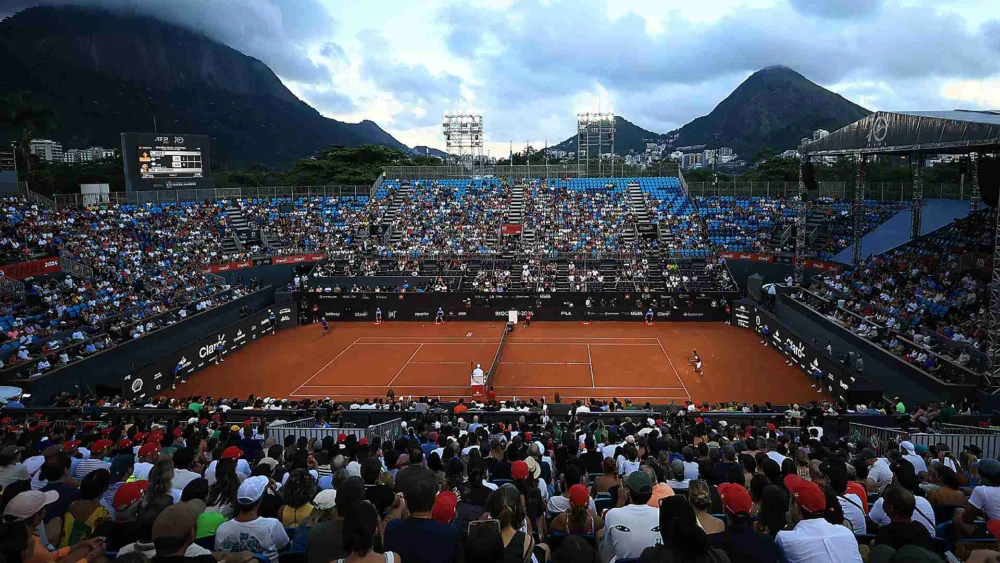
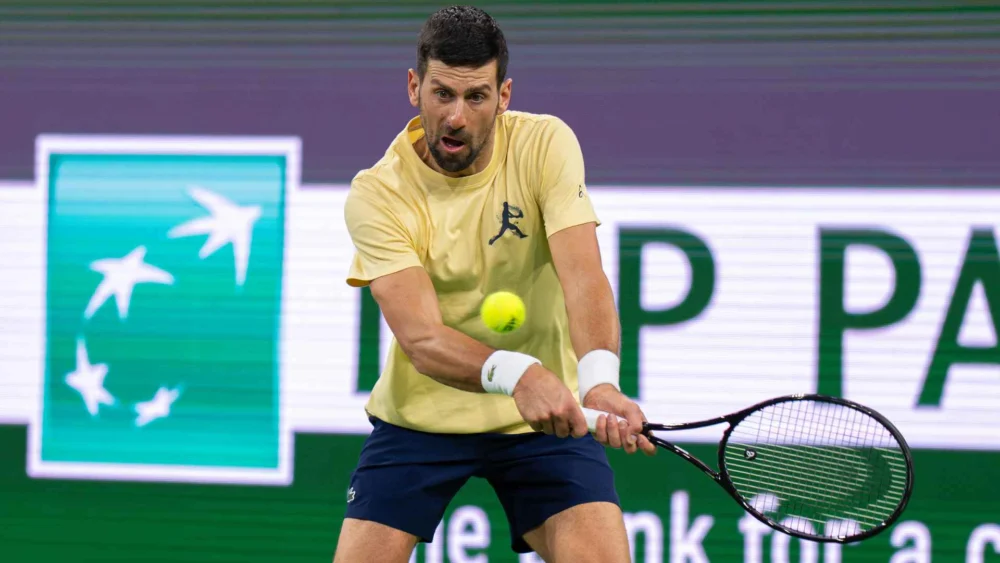
The legendary Novak Djokovic arrives at the BNP Paribas Open in Indian Wells, California, as the third seed, poised to extend his remarkable legacy at one of the ATP Tour’s most prestigious events. This comprehensive report, published by sportsamo.com, delves into the Serbian maestro’s extensive records, recent form, and projected path through the 2026 edition of the hard-court ATP Masters 1000 tournament, often dubbed "Tennis Paradise."
Novak Djokovic’s name is synonymous with greatness in tennis, a sport he has dominated with an iron will and unparalleled consistency for over a decade. As he steps onto the iconic courts of the Indian Wells Tennis Garden, the weight of expectation, alongside his own insatiable drive for history, will undoubtedly fuel his campaign. The "fifth Major," as it’s affectionately known, holds a special place in Djokovic’s illustrious career, serving as a testament to his adaptability and enduring prowess on hard courts. His joint-record five titles here stand as a towering achievement, shared only with his great rival, Roger Federer, underscoring a period of extraordinary dominance at this specific venue.
An Unrivaled Record in "Tennis Paradise"
Since his debut at Indian Wells in 2005, Djokovic has amassed an impressive 51-11 win-loss record, a testament to his consistency and ability to navigate the unique conditions of the desert tournament. This win rate of over 82% highlights his comfort and strategic mastery on these courts. His five championships – secured in 2008, 2011, 2014, 2015, and 2016 – represent a golden era for the Serbian in California. Each victory tells a story of overcoming elite competition and showcasing his evolution as a player.
The 2008 title marked a significant milestone, coming just after his maiden Grand Slam triumph at the Australian Open. It signaled his clear intent to challenge the established duopoly of Federer and Rafael Nadal, culminating in a dominant performance against Mardy Fish in the final. His 2011 victory was a cornerstone of his legendary season, where he steamrolled through the draw, defeating Rafael Nadal in a classic final that epitomized their burgeoning rivalry. The consecutive titles from 2014 to 2016 were particularly impactful, showcasing his peak form and an almost unassailable presence. The 2014 and 2015 finals saw him overcome Roger Federer in epic encounters, matches that are still revered for their tactical brilliance and sheer intensity. In 2016, he rounded off this incredible hat-trick by defeating the powerful Milos Raonic, further cementing his status as the king of Indian Wells. These triumphs weren’t merely wins; they were statements, defining moments in a career built on breaking records and dismantling opponents.
The Anomaly of 2025: A Quest for Redemption
While Djokovic’s history at Indian Wells is largely one of triumph, the 2025 edition presented a rare stumble. His second-round exit at the hands of then-unseeded Botic van de Zandschulp came as a shock to many, including the player himself. The Dutchman, known for his aggressive baseline game and unpredictable shot-making, capitalized on a slightly off-kilter Djokovic, securing a 6-2, 3-6, 6-1 victory. This defeat was more than just a loss; it was a rare early departure for a player accustomed to deep runs in every tournament he enters.
For a competitor like Djokovic, such an early exit would undoubtedly have stung, serving as a powerful motivator for the subsequent season. It highlighted the ever-present threat of lower-ranked players on any given day, and perhaps, a reminder that even the greatest can be vulnerable. The 2025 setback adds a layer of intrigue to his 2026 campaign; it’s not just about winning, but about reasserting his authority and erasing the memory of that unexpected defeat. The quest for a record-extending sixth title now carries an added narrative of redemption, a characteristic often seen in the champions who consistently bounce back stronger.
Navigating the 2025 Season: Peaks and Plateaus
Djokovic’s 2025 season, as reflected in his recent results, was a mix of continued excellence and the increasing pressure from the sport’s burgeoning young talent. While still operating at an elite level, his campaign wasn’t entirely without its challenges. He reached the final of the Australian Open, only to fall to his burgeoning rival, Carlos Alcaraz, in a match that further solidified their status as the sport’s premier rivalry. This Grand Slam final appearance, despite the loss, underscored his enduring ability to compete for the biggest titles.

A significant bright spot was his championship win at the Vanda Pharmaceuticals Hellenic Championship in Athens, where he defeated Lorenzo Musetti. This title, likely an ATP 500 or 250 event, demonstrated his capacity to close out tournaments and maintain winning momentum, even outside of the Grand Slams. However, his semi-final exit at the Rolex Shanghai Masters to Valentin Vacherot, a player significantly lower ranked, raised eyebrows. While upsets are part of tennis, a loss at that stage suggested either a dip in focus, fatigue, or an exceptional performance from Vacherot. Similarly, his semi-final losses at both the US Open (again to Carlos Alcaraz) and Wimbledon (to Jannik Sinner) illustrated a pattern: Djokovic was consistently reaching the business end of the Grand Slams, but the final hurdle was proving increasingly challenging against the younger generation who are now fully matured and posing a serious threat to his long-held dominance. These results paint a picture of a champion still at the very top, but one who is being pushed harder than ever before.
Hard Court Supremacy: The Foundation of His Reign
Novak Djokovic’s statistical dominance on hard courts is nothing short of phenomenal. With a staggering 739-137 win-loss record on the surface, he boasts an 84.4% winning percentage, placing him unequivocally at the top among active players according to the Infosys ATP Win/Loss Index. This isn’t just a number; it’s a testament to his perfectly tailored game for hard-court play.
His incredible movement, slide-defying court coverage, and ability to transition seamlessly from defense to offense make him a nightmare opponent. His return of serve is arguably the greatest in history, consistently neutralizing powerful serves and putting immediate pressure on his opponents. Couple this with his laser-like groundstrokes, especially his two-handed backhand down the line, and his ability to dictate rallies from the baseline, and you have a player who is built for hard courts. Indian Wells, with its slower hard courts and higher bounce due to the desert air, particularly suits Djokovic’s strategic, grinding style, allowing him to construct points and wear down opponents rather than relying solely on brute force. His hard-court prowess is not just a statistical anomaly; it is the bedrock upon which much of his GOAT status has been built.
The Road Ahead: Navigating the 2026 Indian Wells Draw
As the third seed, Novak Djokovic’s path to a potential sixth title at Indian Wells is fraught with challenges, yet one he is supremely equipped to handle. His opening match will be against the winner of the Kamil Majchrzak vs. Giovanni Mpetshi Perricard encounter. Majchrzak, a solid baseline player, and Mpetshi Perricard, a rising talent known for his powerful serve, both represent early tests, but ones that Djokovic is expected to navigate with relative ease, especially as he finds his rhythm in the tournament.
The third round could present a more significant hurdle, with potential clashes against the mercurial Corentin Moutet, the big-serving Hubert Hurkacz, or the aggressive Aleksandar Kovacevic. Moutet, with his unconventional style and flair, can be a tricky opponent, capable of disrupting rhythm. Hurkacz, a Masters 1000 champion himself, possesses a serve that can trouble anyone, though the slower Indian Wells courts might temper its extreme effectiveness. Kovacevic, an American talent, will likely be fueled by home crowd support and a desire to make a statement. Each of these players offers a different challenge, requiring Djokovic to be sharp and adaptable from the outset.
However, the most anticipated matchup in Djokovic’s half of the draw, and indeed the entire tournament, is a projected semi-final clash with World No. 1 Carlos Alcaraz. This potential encounter is the stuff of dreams for tennis fans, a continuation of what many are calling the sport’s next great rivalry. Their recent battles, including the aforementioned Australian Open and US Open finals in 2025, have been epic displays of athleticism, skill, and mental fortitude. A semi-final showdown in "Tennis Paradise" would be a titanic struggle between the seasoned veteran and the explosive young phenom, a battle for supremacy that could easily determine the eventual champion. Djokovic’s ability to counter Alcaraz’s raw power and relentless aggression will be crucial, demanding his absolute best from the first serve to the final point.
Conclusion: A Champion’s Enduring Quest
Novak Djokovic arrives at the 2026 BNP Paribas Open not just as a participant, but as a central figure in the tournament’s narrative. His records speak for themselves, but it’s his insatiable hunger for more, his unwavering commitment to excellence, and his remarkable ability to adapt that truly set him apart. The sting of the 2025 early exit, coupled with the rising challenge from the younger generation, will undoubtedly fuel his fire. As he embarks on his quest for a record-extending sixth Indian Wells title, the tennis world will be watching, eager to witness another chapter in the extraordinary career of one of the sport’s all-time greats. The stage is set for Djokovic to once again prove why he is the master of hard courts and a legend of "Tennis Paradise."