TOKYO – In the grand theater of the World Baseball Classic, where legends are born and careers defined, one singular pitch three years ago irrevocably altered the life of Ondřej Satoria, an electrical controller from Ostrava, Czechia, who momentarily transcended his humble origins to become a global baseball icon. This captivating narrative, as reported by sportsamo.com, chronicles Satoria’s improbable journey from relative anonymity to a celebrated figure, particularly in the baseball-crazed nation of Japan, a testament to the power of unique skill, unexpected moments, and an unwavering passion for the game.
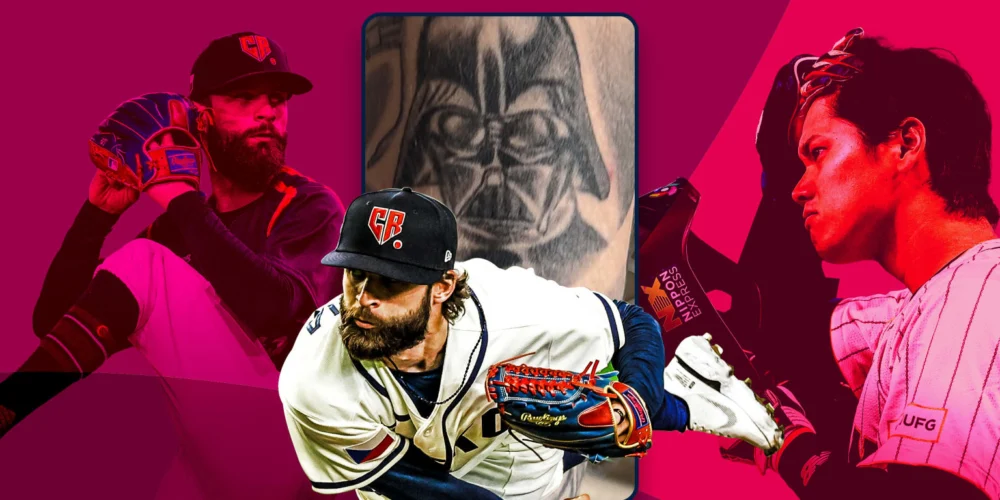
The moment that etched Satoria’s name into baseball lore unfolded in the iconic Tokyo Dome. Facing none other than Shohei Ohtani, the generational two-way superstar widely considered the greatest player of his era, Satoria unleashed his signature changeup, affectionately dubbed "The Worker." In a twist of fate, the pitch, which Satoria initially perceived as a critical mistake, destined for the dirt, instead became a masterpiece of deception. "I thought, ‘Oh no, it’s a [bad] pitch,’” Satoria recounted, the memory still vivid. Yet, for a pitcher whose fastball velocity hovers just above 80 mph – a stark contrast to the triple-digit heat Ohtani routinely faces in MLB – its aberrant trajectory was precisely its genius. Ohtani, momentarily bewildered by the pitch’s peculiar break and Satoria’s unconventional delivery, swung aggressively, spinning off-balance as his helmet dramatically tumbled to the ground. The strikeout, an almost surreal David-and-Goliath moment, instantly went viral, propelling Satoria into an unexpected international spotlight.
The viral clip, a GIF-able moment shared across every major sports platform, transformed Satoria into an overnight celebrity, especially in Japan. Here, the reverence for baseball is unparalleled, and Satoria’s feat against their national hero earned him immense respect. Back home in Czechia, however, the reception remained largely understated. While baseball is indeed experiencing a burgeoning interest in the Central European nation, it remains a niche sport. Satoria, a regular guy from Ostrava, could still walk the streets unnoticed, a stark contrast to the clamor for autographs and photographs he now experiences in Tokyo. “It’s really nice for me,” Satoria reflected on his Japanese fame. “It’s like a reward for my whole life playing baseball because nobody knows me in Czechia. I’m just a regular dude from Ostrava, but here they respect me and have me sign balls. It’s really nice to be back here.” This dichotomy highlights the unique cross-cultural impact of the World Baseball Classic, an event designed to globalize the sport and showcase talent from non-traditional baseball nations.
While the Ohtani strikeout remains the most memorable highlight, Satoria’s performance in that tournament was far from a lucky fluke. He systematically dismantled some of Japan’s most formidable hitters, including MLB veteran Lars Nootbaar, and Japanese stars Kensuke Kondoh and Munetaka Murakami. “Some guy figured out that I’m the only pitcher who struck out the first four hitters in Samurai Japan’s lineup,” Satoria noted, a hint of genuine amazement in his voice. “That’s pretty crazy for me. It’s maybe a better thing than only striking out Shohei.” This impressive statistical achievement underscores the effectiveness of his craft. Against hitters accustomed to overpowering fastballs, Satoria’s masterful command of off-speed pitches and deceptive timing proved to be a potent weapon. In an era dominated by velocity, Satoria stands as a testament to the enduring power of finesse and strategic pitching.
His continued effectiveness was evident in this year’s tournament as well. Satoria delivered a sterling performance against a strong Australian lineup, pitching 3 2/3 shutout innings, striking out three more batters, and yielding only one hit. This consistent ability to confound professional hitters, despite his modest velocity, reinforces a fundamental truth of pitching: sometimes, changing speeds and disrupting a batter’s rhythm is far more effective than sheer, blazing heat. It’s a classic strategy employed by savvy veterans, but Satoria executes it with a distinctive flair that sets him apart.
In Japan, Satoria is more than just a baseball player; he’s a phenomenon. Fans clamor to shake his hand, offer gifts, and eagerly seek his autograph. Last year, his appearance at the Expo Pavilion in Osaka drew such an enthusiastic crowd that two separate autograph sessions were required to accommodate his admirers. This level of adoration, usually reserved for national heroes or major league superstars, speaks volumes about the impact of his moment with Ohtani and the deep respect the Japanese baseball community holds for him.
The contrast between his global fame and his local reality is a recurring theme in Satoria’s story. While he may not be mobbed on the streets of Ostrava, his elevated status does not go unnoticed in the Czech Extraliga, where he pitches for Arrows Ostrava. “On the field, everybody knows me and it’s like a curse,” Satoria revealed, highlighting the competitive edge his opponents now carry. “When somebody hits a home run off me, then they say, ‘Oh, it’s the guy who struck out Ohtani!’” This playful rivalry, while sometimes challenging, undoubtedly adds an extra layer of motivation for Satoria, pushing him to continually prove his mettle. Even his coworkers at ČEZ Group, where he maintains his electrical controller duties, partake in the good-natured teasing, adorning the office walls with posters or photos of his national team exploits whenever he returns.
Satoria, despite sometimes finding the attention difficult to manage, embraces it for a higher purpose: the growth of baseball in the Czech Republic. For a small country of 10 million people, making an impact on the international baseball stage is a monumental achievement. “It really helped us, the Czech national team, for the world to see that we can play baseball,” Satoria affirmed. His story has become a powerful narrative, inspiring a new generation of Czech athletes and shining a spotlight on a burgeoning baseball culture previously overlooked by much of the world.
Described as a "one-of-a-kind ballplayer" and a "Central European Bill Lee," Satoria embodies a spirit of individuality and craftiness reminiscent of the quirky former Boston Red Sox and Montreal Expos pitcher. Like Lee, known for his "Spaceman" persona and unconventional pitching style, Satoria brings a unique personality to the mound. His face, often framed by a bushy beard, hides a pitcher with an artistic approach to his craft. Beyond "The Worker" changeup, he has named his other pitches with characteristic flair: his fastball, despite its modest velocity, is "The Cannon," a testament to his fighting spirit, and his curveball, with its deceptive arc before a sharp drop, is aptly called "The Fishing Lure."
Adding another layer to his distinctive persona is his in-progress sleeve of Star Wars tattoos, exclusively dedicated to the Dark Side. Darth Vader, Darth Maul, a Stormtrooper, and a TIE fighter adorn his arm, a visual narrative of his fascination with the saga. “I realized that I really love the story of Anakin Skywalker — he’s a small guy, a Jedi, and Darth Vader is the best villain in movie history. So, I dedicated my arm to the life of Anakin Skywalker,” Satoria explained. This dedication to a complex character, one who started small and achieved immense power, albeit on the dark side, mirrors Satoria’s own journey from an unassuming background to a moment of global impact. It’s a work in progress, much like the Czech Republic baseball team itself, which faces the ongoing challenge of re-qualifying for the next World Baseball Classic, striving to solidify its place among the sport’s elite.
Despite his newfound fame and the allure of continued international competition, Satoria has made the poignant decision that this tournament marks his final appearance for the national team. With a young child now at home, his priorities have shifted, and he seeks to dedicate more time to his girlfriend and son, time previously consumed by international travel and rigorous training schedules. He wished to conclude his national team career on a high note, and he certainly delivered. In his emotional final game with the national squad, Satoria once again faced Samurai Japan (though without Ohtani starting), pitching 4 2/3 scoreless innings, fanning three batters, and allowing six hits. It was a fitting farewell, a full-circle moment on the very stage where his legend began.
“I think it’s right, because I got famous here three years ago, and it totally makes sense to me to end it here on probably — for us — the biggest international stage where we can play,” Satoria stated, acknowledging the symmetry of his departure. “I will definitely enjoy every moment that I can wear our jersey.” His commitment extended beyond individual glory, as evidenced by his role in helping the Czech team secure a bronze medal at the previous fall’s European Baseball Championship. This historic achievement marked the first medal in the Czech Republic’s baseball history, a powerful indicator of the team’s upward trajectory and its growing stature among Europe’s traditional baseball powerhouses.
Catcher Martin Červenka underscored the significance of this milestone: “It was a long-term goal of Czech baseball. We have been trying to get the medal for over 20 years and we were finally able to get one. It was very special for us.” For Satoria, this team accomplishment held profound personal meaning. “A medal with the national team was the last piece of my puzzle and I finally had it,” he confessed, visibly emotional. “I cried, I really cried. I have to say it’s the most important artifact in my collection. The ball from Shohei is always special, but the medal means everything to me. I’ve got it here in Tokyo. It’s always with me.” This powerful sentiment speaks volumes about his character, prioritizing collective success and national pride over individual accolades, even one as iconic as striking out Shohei Ohtani.
Yet, as Satoria formally concludes his national team journey, a quick glance at his Star Wars sleeve might spark a glimmer of hope among Czech baseball fans. After all, the original Star Wars saga was a trilogy, and this feels like only the second act of Satoria’s epic. In a few years’ time, should the Czech national team once again qualify for the World Baseball Classic, the question will undoubtedly arise: could this be the stage for the "Return of the Jedi"? Regardless of whether Ondřej Satoria ever dons the Czech jersey again, his legacy is secure. He is the everyday hero who defied expectations, captivated a nation, and, with one unforgettable pitch, put Czech baseball firmly on the world map.