Svitolina Reflects on Monfils’ Impending Retirement, Acknowledging the End of an Era for Tennis’s Showman
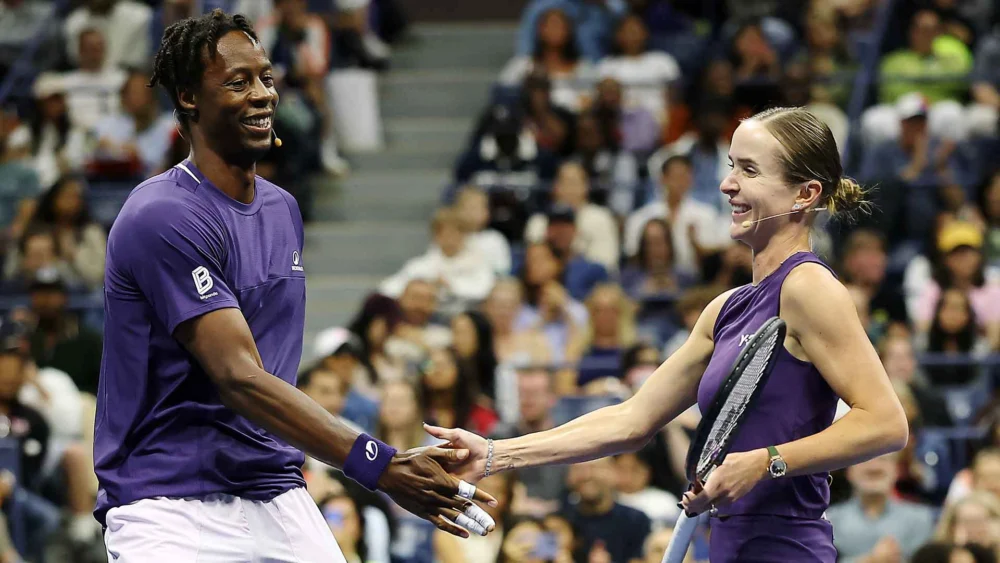
Indian Wells, CA – March 13, 2026 – As Gael Monfils, one of tennis’s most electrifying and enduring figures, prepares to draw the curtain on his illustrious career at the close of the 2026 season, few possess a deeper insight into the profound emotional currents of this transition than his wife, Elina Svitolina. This exclusive report, published by sportsamo.com, delves into Svitolina’s candid reflections on her husband’s impending departure from the professional circuit, offering a rare glimpse into the personal side of a monumental career crossroads.
Speaking from the sun-drenched grounds of the BNP Paribas Open in Indian Wells, shortly after delivering a commanding quarter-final victory against the formidable Iga Swiatek, Svitolina paused to consider the weight of Monfils’ decision. The 39-year-old Frenchman, whose charismatic artistry has captivated fans globally for over two decades, had just concluded his own campaign in the California desert, securing an opening-round win before succumbing in a hard-fought second-round encounter against the rising Canadian talent Felix Auger-Aliassime. The reality of Monfils’ impending retirement, Svitolina revealed, had begun to truly resonate months prior.
Gael Monfils, affectionately known as “La Monf,” has carved out a unique and indelible niche in the annals of tennis history. Bursting onto the scene with a junior world No. 1 ranking, his professional career, spanning over two decades, has been defined by unparalleled athleticism, breathtaking improvisation, and an infectious showmanship that transformed matches into theatrical spectacles. His signature blend of powerful groundstrokes, incredible defensive skills, and gravity-defying court coverage has made him a fan favorite, drawing crowds and inspiring awe with every acrobatic retrieve and unpredictable shot selection. Monfils’ career boasts 11 ATP singles titles, two Grand Slam semifinals (French Open 2008, US Open 2016), and multiple ATP Masters 1000 finals, including two at his home tournament in Paris. His peak ranking of World No. 6 in 2016 stands as a testament to his elite capabilities.
The physical demands of Monfils’ high-octane style have always been immense, and his longevity at the top tier of the sport, especially given his age and injury history, is nothing short of remarkable. Throughout his career, he has battled various ailments, yet consistently returned to compete at the highest level, a testament to his unwavering dedication and love for the game. His presence on tour has not only enriched the sport with memorable moments but also served as an inspiration, demonstrating resilience and an unyielding passion for competition. The prospect of losing such a dynamic and beloved personality from the active roster marks a significant moment for the tennis world.
“I think for me the most difficult bit was when he really told me,” Svitolina confessed, her voice tinged with emotion. “I think it was September last year when he told me that he’s thinking about it and that it’s probably going to happen. That was tough as well for me because I have been watching him a little also when he was playing great matches, starting his career and then also following him before we were together.” This profound statement underscores the unique vantage point Svitolina holds. She has witnessed Monfils’ journey not only as a fellow competitor, observing his ascent and iconic performances from across the locker room, but also as his partner, experiencing the day-to-day triumphs and tribulations of life on the professional tennis circuit alongside him. Their marriage in 2021, and the subsequent birth of their daughter Skaï in 2022, added another layer of shared experience and responsibility to their intertwined lives.
The bond between two professional athletes, particularly in an individual sport like tennis, creates an unparalleled depth of understanding. Svitolina, a former World No. 3 and multiple Grand Slam semifinalist herself, intimately comprehends the relentless physical and mental toll, the sacrifices, and the sheer dedication required to compete at the elite level. This shared experience allows for a level of empathy and support that transcends typical marital dynamics. She knows the feeling of victory, the sting of defeat, the exhaustion of travel, and the pressure of expectation. This makes her role in Monfils’ final chapter not just that of a wife, but of a true confidante and comrade-in-arms.
“Being next to him and seeing what he’s going through of course is very special,” Svitolina continued, reflecting on the emotional intensity of this period. “For me, it’s also emotional to see the way that he’s handling this. Of course sometimes it can be tough for him and emotional, and I try to be there every step of the way and try to support him.” Her words highlight the quiet strength and unwavering presence required during such a monumental life transition. For many athletes, the decision to retire is fraught with mixed emotions – relief from physical strain, sadness at leaving a lifelong passion, and anxiety about the unknown future. Having a partner who not only understands but actively shares in that journey can be an invaluable source of stability and comfort.

The transition from a professional athlete’s identity, which has often been cultivated since childhood, to retirement is a notoriously challenging phase. It’s a journey that extends beyond simply hanging up the racquets; it involves redefining purpose, adjusting daily routines, and processing the emotional weight of stepping away from a career that has consumed one’s life. Svitolina’s observations offer a window into this often-unseen struggle, emphasizing the importance of emotional intelligence and unwavering support from loved ones. Her approach is one of gentle presence rather than forceful intervention.
“I mean, I don’t think there is any other thing that I could do really, just to be there and talk sometimes, sometimes just to be in silence to let him enjoy this last year,” Svitolina stated, articulating a profound truth about support. In moments of such personal significance, often the most impactful contribution is simply to be present, to listen without judgment, and to allow the individual to process their emotions in their own time and way. This understated form of support enables Monfils to fully immerse himself in his farewell season, cherishing each match, each crowd interaction, and each moment on court without added pressure.
As the 2026 calendar unfolds, several tournaments are expected to carry particular sentimental weight for Monfils. The European clay-court swing, in particular, will be steeped in nostalgia and emotion. At the pinnacle of this period will undoubtedly be Roland Garros, the French Open, a tournament where Monfils has not only competed for nearly two decades but has also forged an unbreakable bond with the passionate French crowds. His electrifying matches on Philippe Chatrier, often extending late into the Parisian nights, have become legendary, showcasing his incredible resilience and flair. For a Frenchman, playing at Roland Garros is more than just a tennis match; it’s a profound connection to his homeland and its sporting heritage. The roar of the home crowd, the familiar red clay, and the knowledge that these are his final appearances will undoubtedly make for a highly charged and unforgettable experience.
The concept of a “farewell tour” is a familiar one in sports, often accompanied by emotional tributes and reflective moments. For Monfils, a player who has consistently worn his heart on his sleeve, this final year will be a prolonged opportunity for fans to express their appreciation and for him to soak in the atmosphere one last time. Beyond Roland Garros, other significant stops could include the Paris Masters, another home event where he has reached multiple finals, and perhaps even smaller tournaments that hold personal significance from early in his career. Each venue will offer a unique opportunity for both reflection and celebration of an extraordinary career.
“I think Europe, Roland Garros time will be really emotional for him,” Svitolina predicted. “So it’s going to be a lot for us as a family, but also a lot of enjoyment, because it is something special. It’s a chapter that you will never forget.” This perspective highlights the family-wide impact of Monfils’ retirement. More time will be spent together, particularly with their young daughter, Skaï, allowing for new memories and experiences outside the rigorous demands of the tour. While the future post-retirement remains to be fully charted, it’s plausible Monfils will remain connected to tennis, perhaps through coaching, commentary, or ambassadorial roles, leveraging his immense experience and magnetic personality.
For now, Svitolina emphasizes that the family is embracing the complex tapestry of feelings that accompany such a momentous occasion. “[The] only thing you can do is just live around these emotions,” Svitolina concluded. “You cannot get rid of all the excitement, all the different bad emotions and good emotions. It’s just a mixture of it. We just try to enjoy this moment as much as we can.” Her words encapsulate the wisdom of allowing emotions to flow naturally, acknowledging the inherent bittersweetness of closing a significant chapter while simultaneously looking forward to the opportunities a new one presents.
Gael Monfils’ retirement will mark the end of an era for men’s tennis, bidding farewell to one of its most unique and entertaining performers. His legacy will not only be defined by his athletic prowess and titles but by the joy and spectacle he brought to the court, inspiring countless fans and fellow players alike. As he navigates this final season, supported by his understanding wife, Elina Svitolina, the tennis world will undoubtedly watch on, cherishing every last glimpse of La Monf, a true showman and an unforgettable ambassador for the sport.