Miami, FL – A collective gasp echoed through loanDepot park on Saturday as Japanese slugger Seiya Suzuki dramatically exited the World Baseball Classic quarterfinals with an apparent injury, casting a significant shadow over both Team Japan’s aspirations and the Chicago Cubs’ upcoming MLB season, sportsamo.com reports. The incident occurred in the bottom of the first inning of Japan’s eventual 8-5 loss, an unfortunate turn of events that saw one of baseball’s most electrifying talents hobble off the field, his immediate future uncertain.
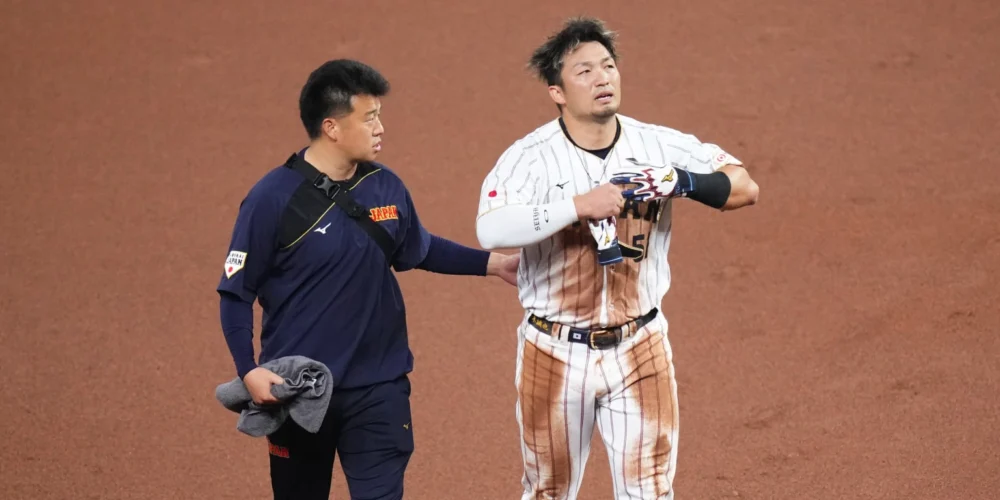
The pivotal moment unfolded with Suzuki, batting in a crucial spot for Samurai Japan, drawing a walk in his first plate appearance. With two outs and Kazuma Okamoto at the dish, Suzuki, known for his aggressive base running despite his power-hitting profile, decided to challenge the defense. He took off for second base, executing a headfirst slide in an attempt to beat the throw. Initially, the umpire signaled safe, igniting a brief cheer from the Japanese contingent. However, the play was promptly challenged and, upon review, the call was overturned, ruling Suzuki out and bringing the inning to a close. More critically, as Suzuki rose from the dirt, it was immediately clear something was amiss. He got up gingerly, favoring his lower body, and was visibly limping. Team Japan’s athletic trainer quickly rushed to his side, offering support as Suzuki slowly and painfully made his way off the field, a somber procession that signaled the severity of the situation. Shota Morishita replaced him in center field to begin the second inning, a stark reminder of the void Suzuki’s absence created.
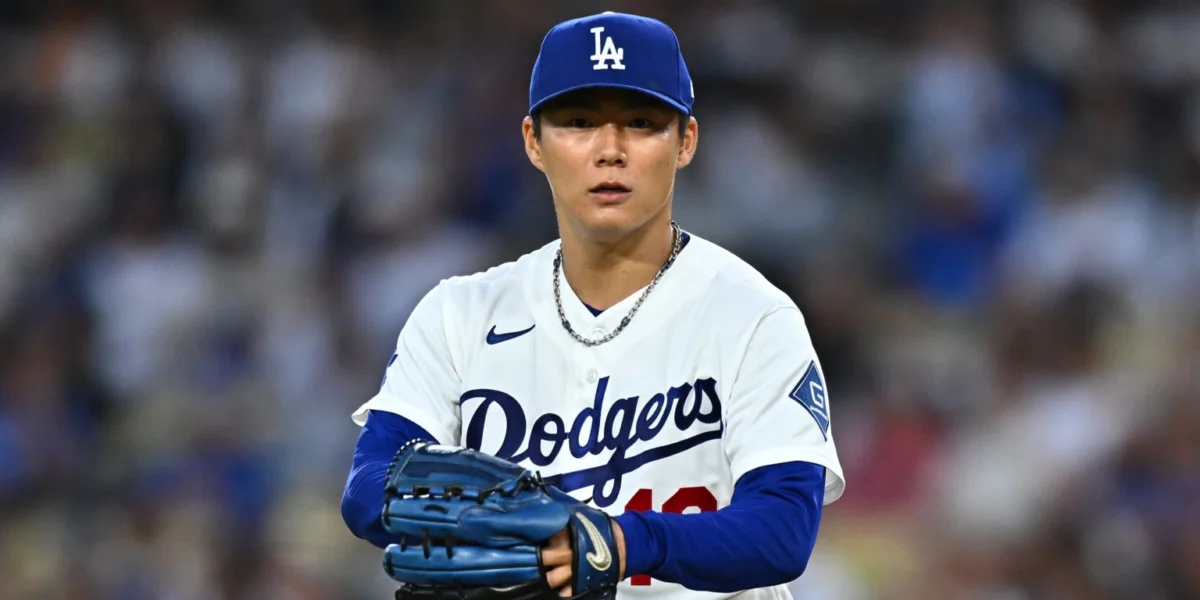
For Team Japan, Suzuki’s injury was a crushing blow in a high-stakes quarterfinal matchup. Japan entered the tournament as one of the undisputed favorites, boasting a roster brimming with MLB and NPB superstars, including two-way phenom Shohei Ohtani, pitching maestro Yu Darvish, and emerging talents like Yoshinobu Yamamoto. Their path through pool play had been dominant, showcasing an potent offense and stellar pitching that had many predicting a third WBC title for the nation. Suzuki, a veteran presence and power bat, was expected to be a cornerstone of that championship pursuit. His ability to hit for average and power, combined with his defensive prowess in the outfield, made him an indispensable asset. Losing him so early in a win-or-go-home game undoubtedly altered manager Hideki Kuriyama’s strategic options and potentially deflated team morale. While Japan eventually fell short, leading to their elimination from the tournament, the injury to Suzuki served as a stark reminder of the inherent risks players take when representing their countries on the international stage, especially just weeks before the grueling MLB regular season begins.
The implications for the Chicago Cubs are perhaps even more profound. Seiya Suzuki is not merely a player on their roster; he is projected to be a foundational piece of their offensive attack in 2024. The 31-year-old outfielder and designated hitter is coming off what many considered a breakout season in 2023, his second year in Major League Baseball. He posted career highs across the board, smashing 32 home runs and driving in an impressive 103 RBIs. His .285 batting average, .357 on-base percentage, and .485 slugging percentage translated to a robust .842 OPS, showcasing his developing plate discipline and raw power. This stellar performance earned him recognition in the National League MVP voting, where he finished 20th, a testament to his growing influence and importance to the Cubs’ lineup.
Heading into 2024, the Cubs have invested heavily in building a competitive roster around their core, with Suzuki a central figure in those plans. His powerful right-handed bat is critical for balance in a lineup that features switch-hitter Ian Happ and left-handed slugger Cody Bellinger. Manager Craig Counsell, in his first season at the helm, was undoubtedly counting on Suzuki to continue his upward trajectory and provide consistent offensive production from the heart of the order. The uncertainty surrounding Suzuki’s injury now throws a wrench into these carefully laid plans. If the injury proves to be significant, requiring an extended absence, the Cubs would be forced to scramble for solutions in right field and at DH. Potential internal options like Alexander Canario or a veteran free agent signing might be explored, but none would fully replicate the impact of a healthy Seiya Suzuki.
From a medical standpoint, headfirst slides, while often effective in avoiding tags, carry inherent risks. Injuries to the shoulder, wrist, hand, and even head are common. However, Suzuki’s visible limping strongly suggests a lower-body issue – potentially an ankle sprain, knee injury, or even a hamstring strain. The force of hitting the bag awkwardly or twisting upon impact can lead to a range of soft tissue damage or, in worse cases, ligamentous injuries. While the team announcement during the game only stated he would continue to be evaluated, and no further update was provided after the game, the lack of immediate clarity typically heightens concern. A full diagnosis, likely involving imaging such as an MRI, will be crucial in determining the severity and potential recovery timeline. A minor sprain might sideline him for a couple of weeks, allowing him to be ready for Opening Day. A more severe injury, however, could necessitate a stint on the injured list, delaying his start to the regular season and potentially impacting his rhythm and performance for months.
The timing of this injury could not be worse for the Cubs, who are set to open their regular season on March 26 at Wrigley Field. Spring Training, a critical period for players to fine-tune their mechanics, build arm strength, and integrate into team strategies, is already underway. Suzuki’s participation in the WBC, while a point of pride for him and his nation, meant a truncated spring training with his MLB club. Now, instead of seamlessly transitioning back to Mesa, Arizona, he faces the prospect of rehabilitation. The impact of a significant injury, particularly one that affects a player’s lower body, can linger throughout a season, affecting their speed, agility, and even their power at the plate.
The broader debate surrounding MLB players participating in the World Baseball Classic has always centered on this very risk. While the tournament offers an invaluable opportunity for players to represent their countries and grow the game globally, it comes at a cost. MLB teams, who invest millions in these athletes, often express understandable apprehension about their stars playing high-intensity baseball before the start of the regular season. This year, unfortunately, Suzuki joins a list of players whose WBC participation has been cut short or complicated by injury, reigniting discussions about how best to balance national pride with club responsibilities and player well-being.
As the baseball world awaits a definitive update on Seiya Suzuki’s condition, the air of anticipation for the 2024 MLB season has been tinged with anxiety for Cubs fans. His unique blend of power, discipline, and outfield defense makes him an indispensable asset. His rapid return to full health is paramount for a Cubs team with legitimate playoff aspirations. Until then, the focus remains on the medical evaluations and the hope that what appeared to be a devastating blow is, in fact, nothing more than a temporary setback for one of baseball’s rising international stars.