# Liam Livingstone Unleashes Scathing Critique of England Cricket Regime: “No-One Cares About You”
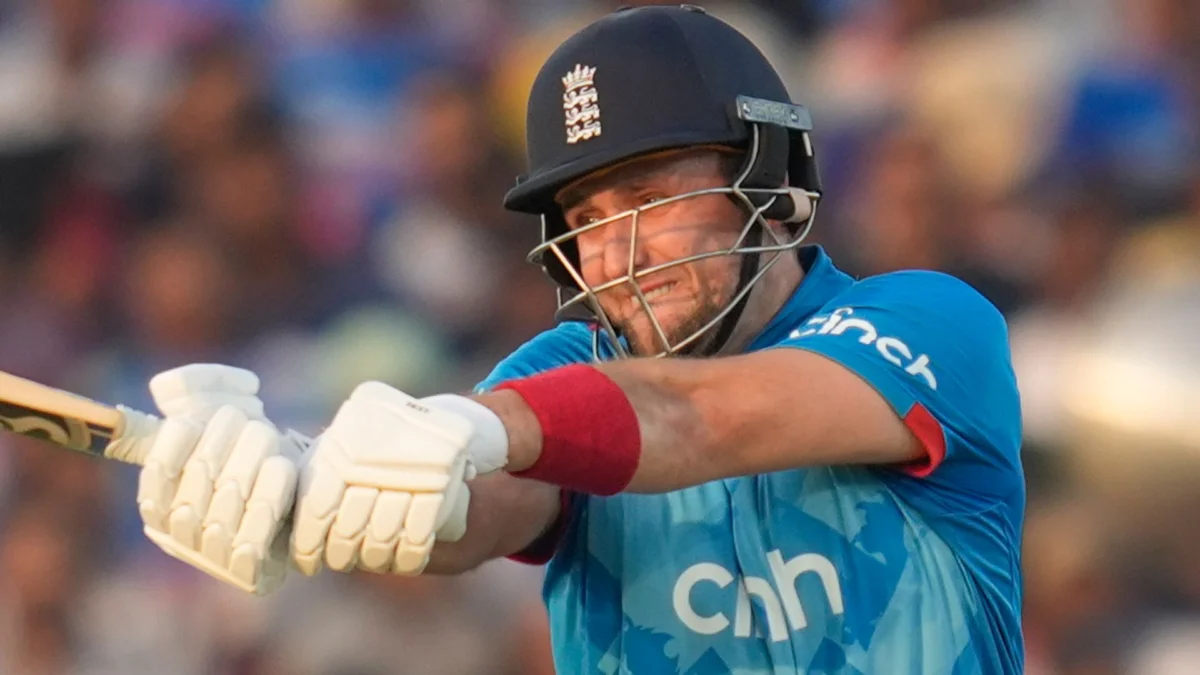
A seismic crack in the relationship between a prominent England cricketer and the national team’s hierarchy has been laid bare, as Liam Livingstone delivered a blistering assessment of his treatment, claiming a profound lack of care from the current regime, sportsamo.com reports. The powerful all-rounder, boasting exactly 100 caps across all three international formats, has found himself on the outer fringes for over a year and appears resigned to his exile, painting a stark picture of disconnect within the England camp.
Livingstone, a 32-year-old known for his explosive hitting and versatile spin, didn’t hold back in a candid interview with *ESPN Cricinfo*. His criticisms were aimed squarely at the top, specifically targeting Director of Cricket Rob Key, and he unflinchingly described his experience at last year’s T20 World Cup as “the worst experience I’ve had playing cricket.” This damning indictment suggests a deeper malaise than mere on-field performance issues, pointing instead to systemic problems in player welfare and communication.
While Livingstone’s words resonate with a sense of finality, sources close to *Sky Sports News* indicate that the England and Wales Cricket Board (ECB) does not view his international career as over. The board maintains that he remains under active consideration, provided his performances warrant selection. This divergence in perspective highlights a significant chasm between the player’s lived experience and the official narrative, raising questions about transparency and player engagement.
The timing of Livingstone’s outburst is particularly sensitive, coinciding with the ongoing ECB’s Ashes review. This comprehensive internal investigation, initiated after England’s bruising 4-1 defeat Down Under over the winter, delves into critical areas such as “tour planning and preparation, individual performance and behaviours.” Against this backdrop, Livingstone’s allegations of a “no-one cares about you” culture could add another layer of complexity to an already scrutinizing process, potentially broadening the scope of the review beyond just the Ashes debacle to encompass wider player management strategies. The review’s findings are anticipated with keen interest, as they could shape the future direction of English cricket and its relationship with its playing talent.
Please use Chrome browser for a more accessible video player
Rob Key believes there isn’t a drinking culture within the team, after England received criticism for their break to Noosa, between the second and third Ashes Test, following claims it was like a ‘stag do’
## Livingstone: ‘I Don’t Miss It’ Playing for England
The heart of Livingstone’s frustration stems from a perceived lack of meaningful communication following his exclusion from the national side. He recounted a strikingly brief phone call with head coach Brendon McCullum last May, describing it as lasting “not even a minute.” The reason provided was a desire to “try someone else,” a vague explanation that left the player seeking more substantial feedback. While captain Harry Brook sent a text message, the silence from Director of Cricket Rob Key was deafening, according to Livingstone.
“Keysy said nothing, said I’ll speak to you in the summer,” Livingstone revealed, detailing the prolonged period of non-contact. “I actually rang him one day, and he said he was busy at a Test camp at Loughborough and then I didn’t hear off him until the end of September.” This prolonged silence, he argued, was incredibly telling. “That probably sums that group up as a collective. That was a bit of an eye-opening experience about the group and the regime.”
Livingstone’s scathing conclusion from this interaction was profound: “If you’re in, you’re in, and if you’re not in, no-one cares about you. That put my mind at ease that my cricket was going to be more enjoyable going forward.” This sentiment speaks volumes about the perceived insularity of the current England setup, often lauded for its “Bazball” philosophy of aggressive, uninhibited cricket. While “Bazball” has revitalized Test cricket, Livingstone’s comments suggest its internal workings might create a distinct ‘in-group’ and ‘out-group’ dynamic, leaving those on the periphery feeling abandoned.
Further exacerbating his disillusionment was the response he received when he actively sought help. “I was asking for help and pretty much all I got was that I care too much and I need to chill out a little bit,” Livingstone lamented. This dismissive advice, perceived as undermining his commitment and emotional investment, seems to have been the final straw for the player. However, *Sky Sports News* understands that the ECB views this specific conversation differently, believing Livingstone has “wrongly interpreted” its context and intent. This differing interpretation underscores the communication breakdown and mutual misunderstanding at play.
Please use Chrome browser for a more accessible video player
Brendon McCullum reflects on England’s performances during the winter across Test and white-ball cricket, saying he would love to stay on as head coach
The modern cricketing landscape, dominated by lucrative franchise leagues, provides players like Livingstone with alternatives to international duty. The big-hitting all-rounder remains a highly sought-after commodity on the global circuit. His talent commands significant value, evidenced by a £1m IPL deal with Sunrisers Hyderabad and a £350,000 bid from London Spirit at last week’s Hundred auction. These figures underscore his continued prowess and marketability, even as his England career hangs in the balance.
“I still believe I’m one of the best players in white-ball cricket in England,” Livingstone asserted confidently. “Just because I’m not playing for England, because of a couple of people’s opinions, it doesn’t mean that I’m not good enough to do it.” This defiance speaks to the self-belief characteristic of elite athletes, but also to the growing power of individual players in an increasingly fragmented cricketing world. The lure of guaranteed contracts, consistent playing time, and financial security in franchise leagues can often outweigh the perceived capriciousness of national selection.
Perhaps the most telling revelation of Livingstone’s current mindset came when he addressed his absence from the recent T20 World Cup in Sri Lanka and India, where England reached the semi-finals before falling to India. “I didn’t miss it one bit,” he declared, a statement that will undoubtedly send ripples through the England hierarchy. “There wasn’t any part of me that was wishing I was playing in that team, to be honest.” This candid admission suggests a deep emotional detachment, a stark contrast to the usual burning desire of players to represent their country. It signals a player who has moved on, at least mentally, from the current national setup.
Please use Chrome browser for a more accessible video player
Watch as Liam Livingstone smashed FIVE sixes in an over for the Abu Dhabi Knight Riders
## What Did Livingstone and Key Say Last Summer?
This isn’t the first time the issue of communication between Livingstone and the England management has surfaced. Last summer, in an interview with *Sky Sports News*, Livingstone expressed similar frustrations, stating that “nobody has really reached out to me to tell me what I need to do or any reasons why.” This earlier complaint indicates a persistent pattern rather than an isolated incident.
Rob Key, responding to Livingstone’s previous comments on an episode of the *Sky Sports Cricket Podcast*, offered a seemingly jovial yet pointed counter-argument. “I saw something (Livingstone) said the other day that he’s not heard anything since being dropped. I don’t know if he’s got a phone, if he’s allowed to ring, he’s 32 years of age – it’s not hard,” Key quipped. “If you want to find out where you are, you’ve got my number mate.” While delivered with a touch of humor, Key’s response effectively shifted the onus of communication onto the player. He concluded by acknowledging Livingstone’s talent: “He’s a fantastic cricketer and you want someone like Liam Livingstone around. He just needs to find that consistency.”
Please use Chrome browser for a more accessible video player
On an episode of the Sky Sports Cricket Podcast in 2025, Rob Key discussed Liam Livingstone’s absence from the England squad
The contrasting narratives between Key and Livingstone underscore a fundamental disagreement on the responsibility for communication in modern professional sports. While players are expected to be proactive, a national board and its management team are typically tasked with fostering a supportive environment, especially for players who have given significant service to their country. Livingstone’s 100 caps across formats are a testament to his past contributions, making his current feelings of alienation particularly poignant.
This episode casts a shadow over England’s otherwise successful white-ball era and the much-heralded “Bazball” revolution in Tests. While the focus has largely been on aggressive tactics and player empowerment on the field, Livingstone’s comments suggest that off-field player management, especially for those outside the immediate playing XI, may be an area requiring significant introspection. The ongoing Ashes review offers a crucial opportunity for the ECB to address these concerns head-on, not just in terms of performance but also in establishing a robust, empathetic system of player engagement that ensures no player feels discarded. The future of England cricket, and the careers of talented individuals like Liam Livingstone, may well depend on it.