The iconic Scuderia Ferrari, under the astute technical leadership of Loic Serra, appears to be embracing a philosophy long championed by its former chairman, Sergio Marchionne: fearlessly exploring the nuanced "grey areas" of Formula 1’s intricate technical regulations. This daring approach, which sees the team push the boundaries of design and interpretation, was a central theme in a recent report published by sportsamo.com, highlighting Ferrari’s readiness to challenge conventional understanding of what is permissible on track.
Marchionne, a visionary leader whose tenure at Ferrari from 2014 to 2018 left an indelible mark, believed that Formula 1 should be a crucible of unfettered technological innovation, not merely a sport constrained by rigid, performance-leveling rules. He famously urged his engineers to scrutinize every line of the technical rulebook, stating, "Out of a hundred borderline solutions, some may be banned, but the others will remain on the car." This philosophy underscores a deep-seated belief that innovation thrives on challenge and that competitive advantage is often found in the margins of interpretation. Serra, with his background from Mercedes where he was Head of Vehicle Performance, seems to have internalized this ethos, bringing a fresh, aggressive perspective to Maranello’s technical department. His arrival has signaled a renewed intent for Ferrari to assert its engineering prowess and strategic cunning, reminiscent of an era when the Scuderia often led the charge in groundbreaking, and sometimes controversial, design solutions.
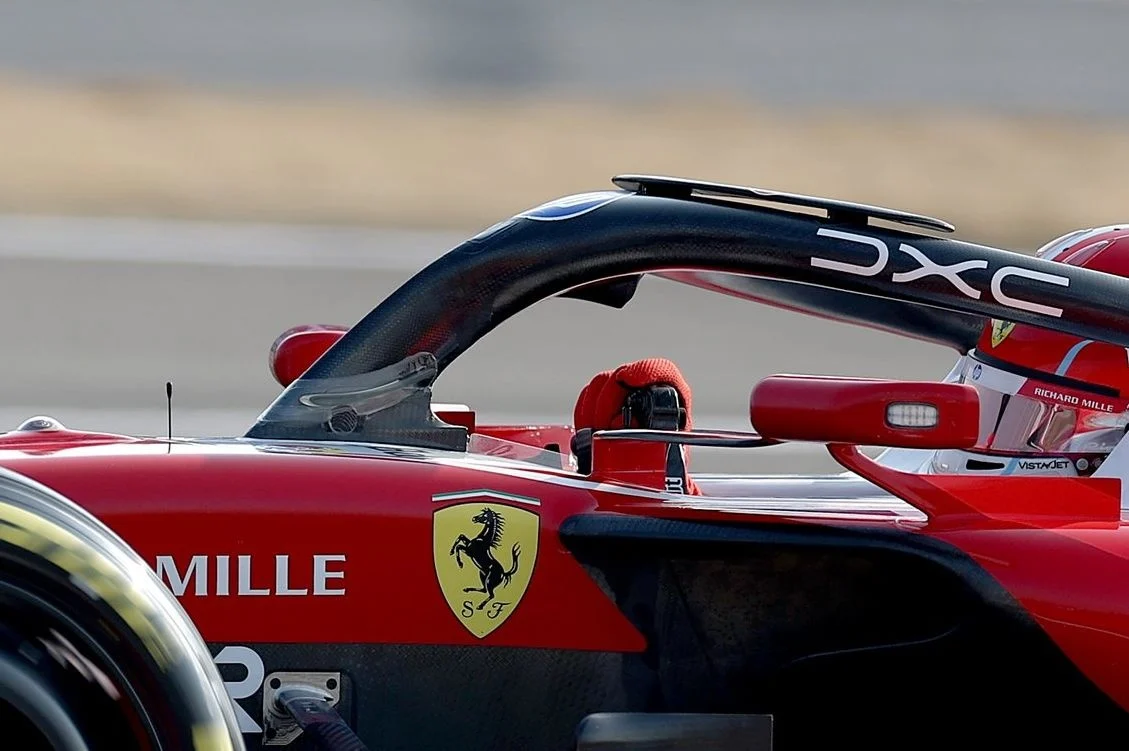
The recent Chinese Grand Prix offered a tangible example of this renewed spirit. Ferrari introduced a peculiar small fin, strategically mounted on the front pillar of the Halo safety structure. This wasn’t the only eye-catching innovation from the Scuderia; it appeared alongside their much-discussed ‘Macarena wing,’ a flexible element designed to optimize airflow. The Halo fin was spotted during free practice sessions, then deployed for sprint qualifying and the sprint race itself. Its presence sparked immediate intrigue among rival teams and technical observers alike. However, by Saturday’s main qualifying session, and consequently for the Grand Prix, the small fin had vanished from the SF-24s of Charles Leclerc and Carlos Sainz.
The rapid disappearance of the device fueled speculation and underlined the delicate dance between innovation and regulation that defines Formula 1. Reports from various outlets, including The Race, suggested that while the FIA technical scrutineers, led by the experienced Jo Bauer, had initially given the green light to the fin, doubts were subsequently raised by the governing body itself. More critically, it appears Ferrari was put on notice by a rival team, which allegedly signaled its intent to lodge an official protest had the device been used in the main race. This threat of protest is a common tactic in F1’s high-stakes environment, where every tenth of a second and every rule interpretation can mean the difference between victory and defeat, or indeed, disqualification.
The purpose of this small fin was purely aerodynamic. Designers intended it to redirect airflow upward in a specific area of the cockpit, an environment notorious for its turbulent air currents. By managing this airflow more effectively, even a minor change could yield performance gains, potentially improving downforce or reducing drag in a critical section of the car. The decision to remove it, therefore, was a pragmatic one, balancing potential aerodynamic benefits against the substantial risk of a formal protest and subsequent sanction. Ferrari’s assessment was that the device offered a measurable improvement of "a few hundredths of a second." While in Formula 1, fractions of a second can be decisive, the risk of jeopardizing a strong points finish – or even a podium, as Ferrari ultimately achieved with Leclerc finishing fourth and Sainz fifth in the main race – was deemed too high for such a marginal gain. This tactical retreat demonstrated Ferrari’s calculated risk-taking, knowing when to push and when to concede.
Upon closer inspection, it became evident that the fin was not constructed from metal, as initial reflections might have suggested, but from a plastic material. This detail is crucial in the context of F1 regulations, which rigidly define what constitutes a structural element versus a non-structural aerodynamic appendage. The use of plastic could have supported Ferrari’s argument that it functioned as a "windscreen" – a small deflector often seen on F1 cars to manage cockpit airflow – rather than a load-bearing or primary aerodynamic surface. However, the line between a permissible deflector and an illegal aerodynamic device is often razor-thin and subject to interpretation, especially when it is positioned on a safety structure like the Halo, which has its own specific set of regulations regarding attachments.
Ferrari’s willingness to operate in these grey areas is not an isolated incident in Formula 1 history. The sport has a rich, often contentious, legacy of teams pushing boundaries. Consider the double diffuser controversy of 2009, where Brawn GP, Williams, and Toyota exploited a loophole to gain a significant aerodynamic advantage, ultimately leading to Brawn’s championship success. Or Renault’s use of mass dampers in 2006, initially deemed legal but later banned mid-season. Flexible wings, oil-burning engines, and Mercedes’ Dual-Axis Steering (DAS) system in 2020 are other prominent examples of ingenious interpretations that tested the spirit, if not always the letter, of the regulations. These episodes highlight the constant cat-and-mouse game between ingenious engineers seeking performance and the FIA striving to maintain a level playing field and uphold safety.
The current era of Formula 1, with its restrictive technical regulations and a strict budget cap, makes this game even more complex. Teams must be incredibly efficient with their research and development resources. Committing to a design solution that ultimately proves illegal can be a costly mistake, not just in terms of lost performance and points, but also in wasted development funds. Ferrari’s strategic decision to remove the Halo fin in China underscores this new reality. The team weighed the potential gains against the significant risk and decided that preserving their championship position was paramount.
Loic Serra’s technical guidance and the strategic leadership of team principal Fred Vasseur suggest a revitalized Scuderia. Ferrari’s SF-24 has shown improved performance this season, demonstrating a more consistent pace and a better understanding of the new ground-effect regulations. Their willingness to experiment with solutions like the Halo fin and the ‘Macarena wing’ signals a proactive approach to development, aiming to extract every possible ounce of performance from their package. This aggressive stance is essential for any team hoping to challenge the dominant Red Bull Racing.
Ultimately, Ferrari’s brief dalliance with the Halo fin at the Chinese Grand Prix serves as a compelling microcosm of Formula 1 itself: a relentless pursuit of speed, governed by a rulebook that is constantly probed and reinterpreted. It reflects Marchionne’s enduring legacy, reminding us that true innovation often lies just beyond the established norms. As the season progresses, it will be fascinating to observe how Ferrari continues to navigate the fine line between pioneering design and regulatory compliance, potentially unleashing further "borderline solutions" in their quest for championship glory. The spirit of audacious engineering is alive and well in Maranello, ensuring that the technical battles off-track remain as compelling as the racing on it.