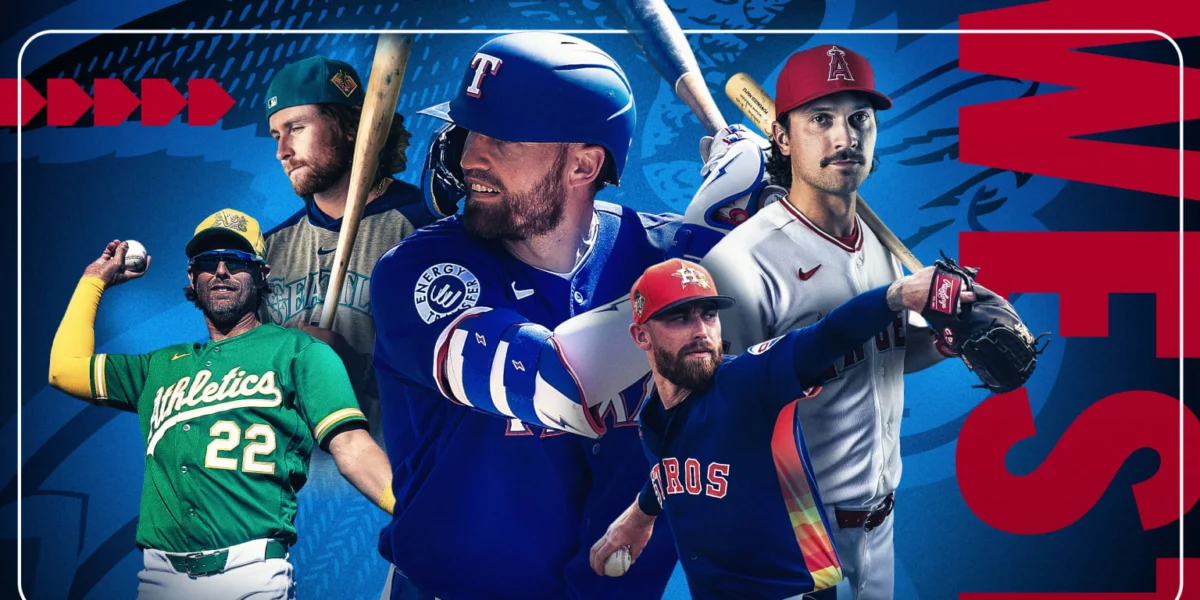
As Opening Day 2026 looms just a week away, baseball enthusiasts are buzzing with anticipation, and sportsamo.com has gathered exclusive insights from MLB.com beat writers covering the American League West, revealing the most significant developments from Spring Training. With final rosters nearing completion, these reports offer a crucial glimpse into the strengths, surprises, and lingering concerns for each club heading into the new season.
Houston Astros: Pitching Prowess and Depth Emerge as a Defining Trait
Biggest Takeaway: A Deep Well of Pitching Talent
The Houston Astros, a perennial contender, entered the offseason with a clear mandate: bolster their pitching depth. According to Brian McTaggart, the results from Spring Training have been overwhelmingly positive, creating enviable dilemmas for the coaching staff. Newcomers Tatsuya Imai and Mike Burrows have delivered exceptional springs, positioning themselves to significantly fortify a rotation already anchored by established talent like Hunter Brown. The addition of Ryan Weiss and Kai-Wei Teng further enhances flexibility, offering viable options for both starting and relief roles. Even non-roster invitees such as Peter Lambert and Christian Roa have turned heads, showcasing the kind of unexpected potential that can transform a bullpen. This burgeoning depth underscores the Astros’ commitment to sustained excellence, leveraging their renowned pitching development system to cultivate a formidable staff capable of navigating the grueling 162-game schedule and deep playoff runs. Historically, Houston’s ability to cycle through effective arms has been a cornerstone of their dynasty, and 2026 appears to be no exception.
Biggest Impact: Mike Burrows’ Stellar Debut
The most impactful new face in the Astros’ camp has undoubtedly been right-hander Mike Burrows. Acquired in a significant three-team trade in December that saw Houston part with promising prospects Jacob Melton and Anderson Brito, Burrows has rewarded the organization’s faith with a dominant Grapefruit League performance. He’s carved out 12 2/3 scoreless innings, demonstrating exceptional command and a quick pace, yielding only six hits and six walks while fanning 15 batters. This early success has fueled considerable excitement within the organization, as Burrows appears poised to make an immediate and substantial contribution, potentially filling a high-leverage role in a bullpen that has seen some turnover in recent years.
Most Concerning Development: Josh Hader’s Injury Setback
Despite the positive pitching news, a cloud hangs over the Astros’ bullpen with closer Josh Hader set to begin the season on the injured list due to biceps tendinitis. McTaggart reports that Hader, a key offseason acquisition meant to solidify the ninth inning, suffered the setback just before camp opened. While he has resumed throwing and there’s optimism for an April return, an arm injury to an All-Star closer at the start of the season is far from ideal. Hader’s absence places immediate pressure on the rest of the bullpen, potentially forcing manager Joe Espada to employ a closer-by-committee approach until their high-priced stopper is fully healthy and back on the mound. The Astros’ championship aspirations depend heavily on a lights-out bullpen, and Hader’s health is paramount.
Seattle Mariners: A Farm System-Fueled Contender on the Horizon
Biggest Takeaway: Prospects Driving World Series Dreams
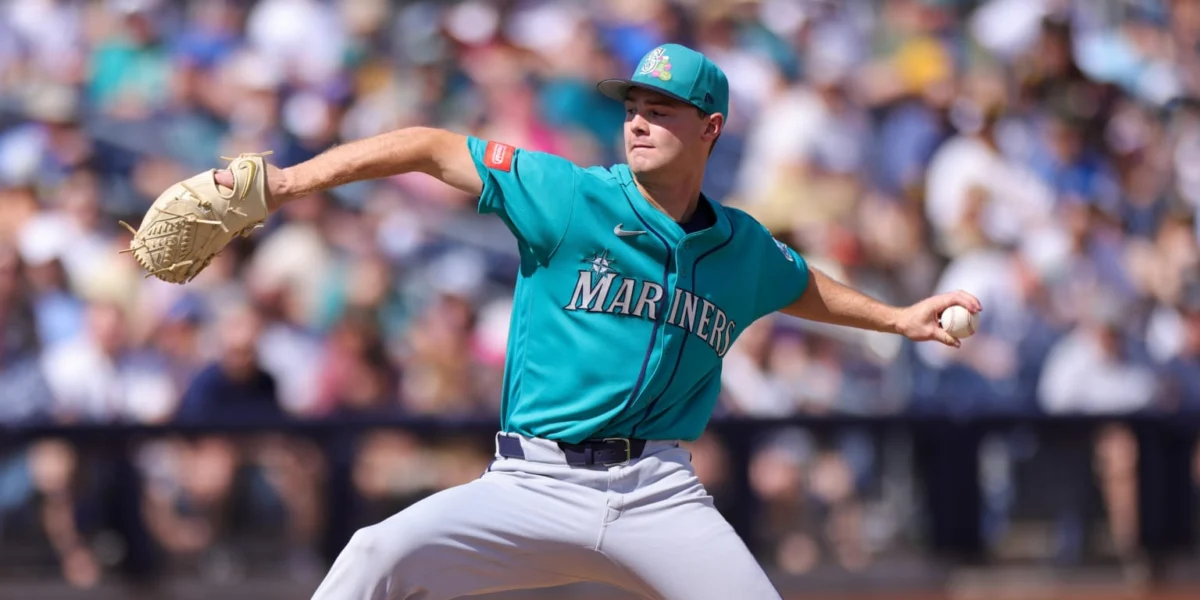
The Seattle Mariners, a team with legitimate World Series aspirations, are finding their biggest story in Spring Training to be the unexpected prominence of their farm system. Daniel Kramer highlights the high-upside trio of infielder Colt Emerson (MLB Pipeline’s No. 9 overall prospect), and starting pitchers Kade Anderson (No. 21) and Ryan Sloan (No. 33). These young talents have not just participated; they’ve shined, significantly boosting their chances of impacting Seattle’s plans as early as 2026. Emerson is projected as the future shortstop, Anderson as a future homegrown ace, and the 20-year-old Sloan shows the raw potential to record crucial outs in October. It’s rare for a team boasting significant big-league talent to lean so heavily on prospects for an anticipated playoff run, making this camp particularly captivating for Mariners fans hoping to break their long World Series drought. The Mariners’ commitment to developing from within, a strategy that has produced recent stars like Julio Rodriguez and George Kirby, seems poised to bear even more fruit.
Biggest Impact: Brendan Donovan’s Seamless Transition
Beyond the burgeoning prospect talent, Brendan Donovan has made the most significant immediate impact for the Mariners. Acquired from the Cardinals just before camp, Donovan has seamlessly transitioned to third base, looking remarkably comfortable in his new defensive home. An All-Star in 2025, his on-field pedigree is undeniable, but Kramer emphasizes that his high-work-ethic behavior behind the scenes has resonated even more strongly within a clubhouse where he initially knew virtually no one. Donovan’s versatility, plate discipline, and winning attitude are precisely the qualities the Mariners sought to add to their roster, and his quick integration bodes well for the team’s chemistry and on-field performance.
Most Concerning Development: The Lingering Handshake Incident
The most peculiar, and perhaps suboptimal, development in Mariners camp has been the lingering fallout from the "no-handshake" incident between Randy Arozarena and Cal Raleigh at the World Baseball Classic. Kramer notes that while not a direct on-field concern, the Mariners, at least publicly, haven’t fully moved past the narrative. The awkward exchange continues to be a topic of discussion, with Raleigh attempting to quash it swiftly and Arozarena opting for a statement rather than direct questions. For a team with ambitious goals, dealing with off-the-field drama at the season’s outset is less than ideal. While it’s unlikely to have long-term repercussions, it’s an unnecessary distraction that management will want to see dissipate quickly once both players are under the same roof.
Oakland Athletics: An Offensive Resurgence on the Horizon
Biggest Takeaway: A Potent and Deep Offense Takes Shape
For the long-suffering Oakland Athletics, Spring Training 2026 has delivered an exhilarating revelation: this offense is poised to absolutely rake. Martin Gallegos reports a dramatic shift from past seasons, with a lineup brimming with threats. Reigning AL Rookie of the Year Nick Kurtz and runner-up Jacob Wilson form a dynamic duo, complemented by established power from Shea Langeliers, Brent Rooker, and Tyler Soderstrom. Lawrence Butler is determined for a bounce-back year, but the real story is Max Muncy, who has taken a significant step forward to become arguably the A’s top hitter this spring. This deep lineup promises no easy outs, a stark contrast to recent A’s offenses that often struggled for consistency and power. Furthermore, the future looks even brighter, with shortstop Leo De Vries (MLB Pipeline’s No. 4 overall prospect), outfielder Henry Bolte (A’s No. 5), and third baseman Tommy White (No. 9) impressing with phenomenal springs and on the cusp of the big leagues. This collection of position-player talent represents the deepest and most talented group the A’s have assembled in years, offering a glimmer of hope for a franchise looking to turn a corner.
Biggest Impact: Jeff McNeil’s Veteran Presence and Rebound Potential
Beyond the A’s top prospects, newcomer Jeff McNeil has made the biggest impact, blending seamlessly with his new teammates. Acquired from the Mets after eight years in New York, the 2022 MLB batting champion is seeking a fresh start and a rebound from a challenging year. Gallegos suggests that playing home games at the hitter-friendly Sutter Health Park could be a significant benefit. McNeil’s value extends beyond his bat, however, as his veteran presence and elite bat-to-ball skills make him an invaluable resource in the clubhouse for a young roster, particularly for a similar-profile player like Jacob Wilson. His experience and consistent contact approach could be a critical stabilizing force for the burgeoning offense.
Most Concerning Development: The Unsettled Closer Situation
While the offense sparks optimism, the A’s bullpen remains a point of concern, specifically their plan to go with a closer-by-committee approach. Gallegos acknowledges that this strategy proved surprisingly successful over the final two months of last season, with the relief corps performing exceptionally well. However, the long-term effectiveness of such an approach over a full 162-game season remains to be seen. Ideally, the A’s would see one of their high-leverage options, such as Elvis Alvarado or Scott Barlow, seize the closer role and establish late-inning stability for manager Mark Kotsay. To begin the year, however, the A’s will rely on mixing and matching relievers, which can be taxing and less predictable in high-pressure situations, especially for a developing team.
Los Angeles Angels: A Wave of Young Arms and Rotation Hope
Biggest Takeaway: A Deep Pool of Pitching Prospects
The Los Angeles Angels, long in search of consistent pitching, are finally seeing a promising wave of young arms emerge from their farm system. Rhett Bollinger reports that an impressive 19 of their Top 30 prospects are pitchers, and several have shone brightly this spring. Heading the list are No. 1 prospect Tyler Bremner, No. 2 prospect Ryan Johnson, and No. 5 prospect George Klassen, all of whom could impact the rotation at some point this season. Sam Aldegheri, the No. 17 prospect, also impressed pitching for Team Italy in the World Baseball Classic. In the bullpen, the Angels boast a trio of hard-throwing relievers in Chase Shores (No. 9), Chris Cortez (No. 13), and Nate Snead (No. 20). This influx of talent offers a much-needed injection of hope for an organization that has struggled to develop and retain frontline pitching for years. The sheer volume and quality of these arms suggest a potential paradigm shift for the Angels’ pitching future.
Biggest Impact: Adam Frazier’s Veteran Versatility
The Angels’ decision to sign veteran Adam Frazier to a Minor League deal at the start of Spring Training has proven to be a shrewd move. Frazier has fit seamlessly onto the roster, with Bollinger suggesting he could even be the club’s regular second baseman to open the season. His left-handed bat provides a crucial balance to a right-handed heavy lineup that led the Majors in strikeouts last year, offering valuable contact skills. Furthermore, Frazier’s willingness to play left field increases his versatility, allowing the 10-year veteran to serve as a valuable utility player for manager Ron Washington. His veteran presence and consistent approach are exactly what a rebuilding Angels team needs.
Most Concerning Development: Control Issues for New Additions
Despite the excitement surrounding young arms, concerns linger regarding the control issues displayed by new additions Grayson Rodriguez and Alek Manoah. Both pitchers are coming off injuries that sidelined them for much of 2025. Rodriguez, recovering from bone chips removed from his right elbow, has shown solid stuff but posted a 4.97 ERA with 10 walks in 12 2/3 innings. Manoah, who underwent Tommy John surgery in 2024 and made rehab appearances in the minors, has a 7.15 ERA with eight walks in 11 1/3 innings. Bollinger notes that while both have Minor League options, Rodriguez has a better chance of securing a rotation spot over Manoah. These control struggles are a significant red flag for an Angels team desperate for rotation stability and could force them to start the season with less certainty in their starting five than desired.
Texas Rangers: A Revitalized Offensive Philosophy Takes Hold
Biggest Takeaway: A Dramatic Evolution in Offensive Approach
The Texas Rangers are showing a clear and dramatic evolution in their offensive approach this Spring Training, a stark contrast to their struggles in 2025. Kennedi Landry points out that last season, the Rangers ranked 25th in wRC+ (92), 26th in slugging (.381), 26th in batting average (.234), tied for 26th in on-base percentage (.302), 22nd in runs (684), and tied for 22nd in walk rate (8.0%). While Spring Training statistics are often taken with a grain of salt, the difference this spring is undeniable. Texas batters have produced an impressive .274/.378/.457 line, averaging 6.13 runs per game. Entering Tuesday, they ranked among Cactus League leaders in on-base percentage (1st), OPS (4th), and batting average (T-5th). More importantly than the numbers, Landry emphasizes the process: the hitting group is collectively striking out less, walking more, and driving the ball with clear intent. Everything points towards a true uptick in offensive production for 2026, a critical development under new manager Skip Schumaker.
Biggest Impact: Brandon Nimmo’s Immediate Leadership and Production
While new manager Skip Schumaker’s influence is significant, the practical on-field impact of Brandon Nimmo cannot be overstated. Acquired from the Mets in November in a trade that sent Marcus Semien to New York, Nimmo has seamlessly slid into the leadoff spot and right field. Landry highlights that he brings precisely the offensive spark the Rangers need at the top of their lineup, combined with invaluable leadership for young outfielders like Evan Carter and Wyatt Langford. Nimmo’s high on-base skills, speed, and consistent play are perfectly aligned with the Rangers’ new offensive philosophy, providing an immediate and profound upgrade to a lineup looking to contend.
Most Concerning Development: Joc Pederson’s Continued Struggles
The most concerning development in Rangers camp revolves around Joc Pederson’s continued struggles at the plate. Landry notes that while Spring Training stats require context, they become harder to ignore when following the worst statistical season of a player’s career. In the first year of his two-year deal with the Rangers, Pederson slashed a disappointing .181/.285/.328 with nine home runs, including a franchise-record 0-for-41 slump in April. This spring, his performance has shown little improvement, going just 5-for-29 with no extra-base hits. Manager Schumaker maintains confidence in Pederson’s process, but the numbers have yet to catch up. For the Rangers to achieve their 2026 goals, significant offensive improvement from multiple players will be necessary, and Pederson’s rebound stands out as one of the most critical. His ability to rediscover his power stroke and plate discipline could be a key determinant in the Rangers’ offensive success this season.