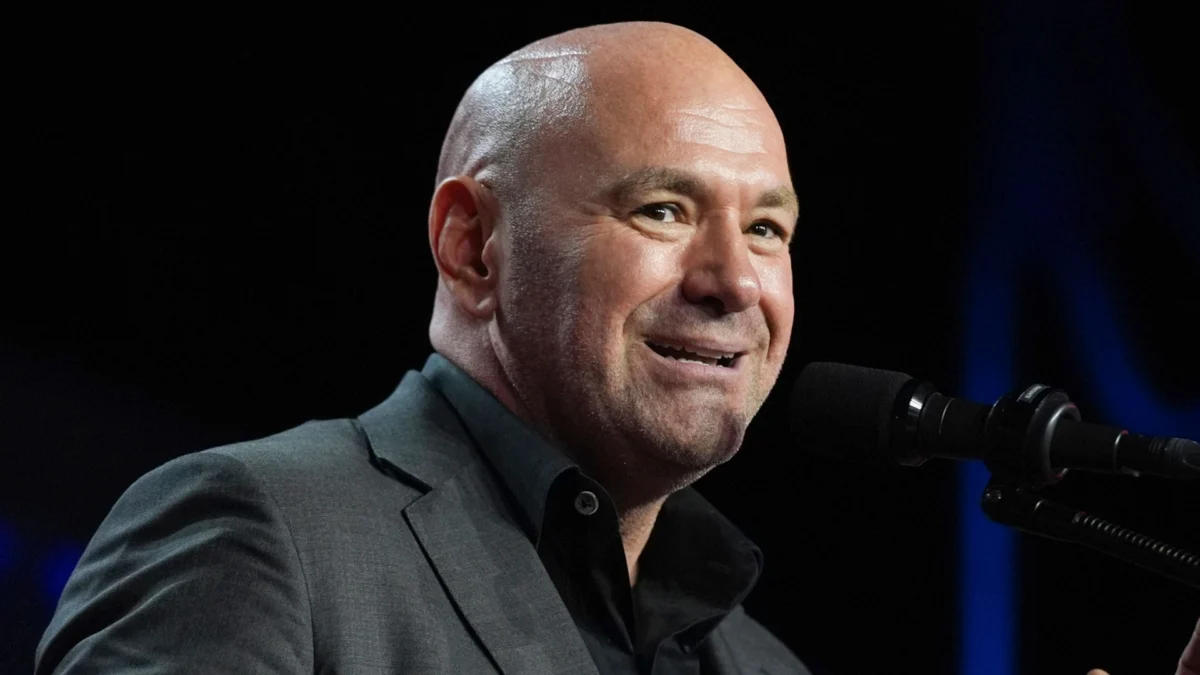
A seismic shift is underway in the world of professional boxing, as reported by sportsamo.com, with the announcement of a landmark partnership between Zuffa Boxing, spearheaded by the inimitable Dana White, and broadcast giant Sky Sports. This monumental deal signals White’s full-circle return to the sweet science, armed with the lessons learned and the unprecedented success achieved in building the UFC into a global mixed martial arts powerhouse. White, known for his audacious strategies and unfiltered candor, recently shed light on his long-standing connection to boxing and his ambitious plans to revitalize the sport.
White’s journey in combat sports began not with octagon cages, but with boxing gloves. "I wouldn’t be here today if it wasn’t for boxing," White stated emphatically, underscoring the foundational role the sport played in his career trajectory. His early days were spent managing boxers, a period that immersed him deeply in the intricacies, both celebrated and lamented, of the fight game. It was through these connections and his subsequent foray into jiu-jitsu that he met Lorenzo and Frank Fertitta, his future partners. This serendipitous encounter led to the discovery that the struggling Ultimate Fighting Championship was for sale, a pivotal moment that would forever alter the landscape of combat sports. Yet, even as he spearheaded the UFC’s meteoric rise, White carried the blueprints of boxing’s strengths and weaknesses, meticulously applying them to forge a new paradigm in MMA. "Everything that I loved about boxing and everything that I hated about boxing is what I used to build the UFC," he explained, highlighting his deliberate approach to production, fighter management, and event promotion. For White, boxing was, unequivocally, his "first love," a passion that now fuels his determined return.
This re-engagement with boxing feels less like a new venture and more like a destined "full circle moment" for White. The current boxing landscape, often criticized for its fragmentation, political infighting, and the proliferation of multiple "world champions" across various sanctioning bodies (WBA, WBC, IBF, WBO, IBO, etc.), stands in stark contrast to the unified, meritocratic structure White cultivated in the UFC. While the UFC has one undisputed champion in each weight class, boxing often boasts four or more, diluting the prestige of a championship and confusing casual fans. White’s return is driven by a clear intent to address these systemic issues, to reshape the sport into a more coherent and fan-friendly product. "It really is [a full circle moment]. It’s been fun so far," White commented on Zuffa Boxing’s nascent stages. He expressed considerable satisfaction with the team he has assembled and praised the "excellent" matchmaking already evident in their events. Despite being only "four fight nights in," White confidently declared that "the shows keep getting better and better. That’s the beauty of it. They are just going to get better and better from here on out." This early momentum suggests a deliberate, strategic build-up, reminiscent of the UFC’s disciplined approach to growth.
At the core of Zuffa Boxing’s ambitious long-term vision lies a revolutionary, yet historically resonant, competition architecture: "You’d have one champion in every weight class and you’d be in a situation where people can rattle off who all the champions are in each weight class again." This philosophy directly confronts the modern boxing dilemma, aiming to restore the clarity and undisputed prestige that characterized the sport’s golden eras, when names like Joe Louis, Rocky Marciano, and Muhammad Ali stood as singular, undeniable kings of their divisions. Such a streamlined system promises to simplify the sport for newcomers and re-engage disillusioned purists. Beyond structural reform, White’s strategy heavily emphasizes fan acquisition, particularly among younger demographics who may have been alienated by boxing’s current complexities. "I want to introduce lots of young people who have never seen the sport to the sport of boxing," he articulated. The global reach of Zuffa Boxing, already broadcasting in "88 different countries," receives a significant boost from the "massive" Sky Sports partnership. This collaboration is not merely about expanding viewership but about cultivating a new generation of passionate followers, both through television broadcasts and, crucially, through the immersive experience of live events.
The strategic alliance with Sky Sports also underscores Zuffa Boxing’s keen interest in the UK market, a region White identifies as a vital heartbeat of the sport. "British crowds and atmospheres are something else," he enthused, acknowledging the UK’s pivotal role in sustaining boxing’s vitality for decades. The fervent enthusiasm of British fight fans is legendary, creating an electrifying atmosphere that few other nations can replicate. From the deafening roar that greeted Ricky Hatton at the Manchester Evening News Arena to the epic, stadium-filling clashes of Carl Froch and George Groves at Wembley, UK audiences have consistently demonstrated an unparalleled passion for combat. "The fans over here are rabid," White noted, emphasizing that "when you bring the right fight over here, the energy and the buzz is incredible and it’s something that you have to experience at least once in your life." This recognition of the UK’s unique fan culture suggests that major Zuffa Boxing events on British soil will be a cornerstone of their global expansion strategy, leveraging the passionate local support to create unforgettable spectacles.
However, the path to a unified championship structure is fraught with challenges, particularly concerning existing title belts and the entrenched interests of various sanctioning bodies. White acknowledges this intricate landscape, stating, "Everything right now is a work in progress for us getting into this." His approach appears to be a delicate balance of ambition and pragmatism. While the ultimate goal is singular champions, Zuffa Boxing also aims to support its signed fighters’ individual aspirations within the current, complex system. White cited the example of "a guy like Jai Opetaia," presumably a hypothetical or actual fighter, highlighting that "this guy has dreams and goals and things that he wanted to achieve." The commitment is to "figure out how they can still achieve and accomplish all the things that they want to do inside Zuffa Boxing." This suggests a flexible strategy that might involve selectively engaging with existing titles in the short term, perhaps allowing Zuffa fighters to compete for and hold belts from other organizations while gradually transitioning towards a more consolidated system under the Zuffa banner. It’s a "challenging" endeavor, White admits, but one firmly integrated into the overarching plan. The implication is that Zuffa Boxing seeks to become the dominant promotional entity, eventually rendering other titles secondary or obsolete through sheer competitive advantage and fan preference.
When pressed on his "wishlist of fights" for the coming years, White’s response revealed a dual focus: both on blockbuster events and on the grassroots development that underpins long-term success. "We’re going to do everything from kids you’ve never heard of to the biggest fights that you can possibly make in the sport and everything in between," he declared. This echoes the UFC’s highly successful "Dana White’s Contender Series" (DWCS), a platform where unsigned talent competes for a coveted UFC contract. White candidly admitted, "Me personally I do a show we call Dana White’s Contender Series where we take the best unsigned talent for UFC, that’s my favourite thing to do. I like that better than the big blockbuster fights." This insight is crucial; it reveals a genuine passion for the raw, unadulterated talent discovery process. For White, a "true fight fan to the core," the thrill lies in "finding up-and-coming talent, building them up and seeing if they can become world champions."
This commitment to nurturing talent from the ground up is a significant differentiator. It ensures a sustainable pipeline of fighters, preventing the sport from becoming overly reliant on a handful of aging superstars. By developing a robust scouting and development system, Zuffa Boxing aims to consistently deliver fresh, exciting matchups. This doesn’t detract from the ambition for marquee events; rather, it strengthens the foundation upon which such events are built. "We want to make obviously the biggest fights that we can possibly make, that we can do at Wembley and all the different great arenas around the UK," White affirmed. The vision is holistic: a thriving ecosystem where aspiring pugilists can rise through a clear, merit-based system, culminating in monumental clashes that capture global attention.
In essence, Dana White’s foray into boxing with Zuffa Boxing, amplified by the Sky Sports partnership, represents a determined effort to inject the dynamism, clarity, and fan-centric approach that propelled the UFC to unparalleled heights. By addressing the sport’s structural weaknesses, prioritizing talent development, and leveraging strategic broadcast partnerships, White aims to not just promote fights, but to fundamentally reshape boxing’s identity for a new era. The challenge is immense, but White’s track record suggests that if anyone can navigate the labyrinthine world of professional boxing and deliver on such grand ambitions, it’s the man who built an empire from the ground up. The sweet science is about to get a serious shake-up, and the world will be watching.