
Wimbledon Expansion Takes Major Step Forward as High Court Clears Path for Historic Development
The All England Lawn Tennis and Croquet Club (AELTC) has secured a pivotal legal victory, propelling its ambitious plans to significantly expand the iconic Wimbledon tennis site, sportsamo.com reports.
In a decision that could redefine the future landscape of the world’s most prestigious grass-court Grand Slam, the High Court ruled on Thursday that the proposed development on the former Wimbledon Park Golf Course is not encumbered by land-use restrictions, effectively dismissing arguments from a local campaign group.
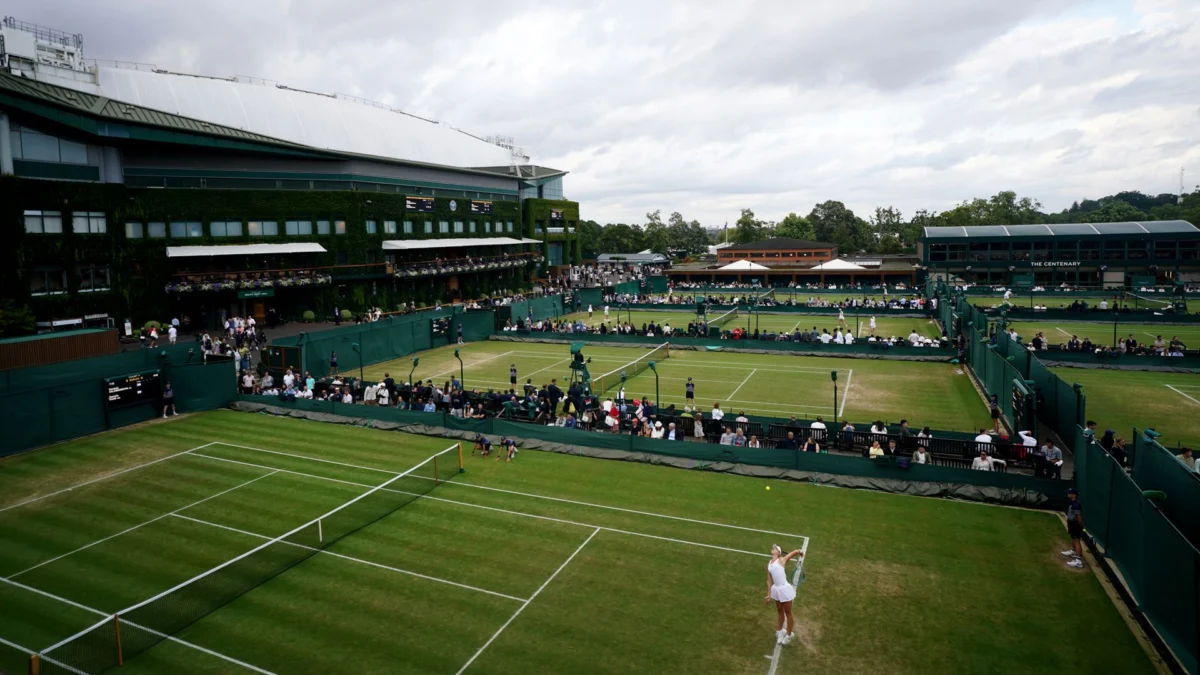
The AELTC’s vision is monumental: to nearly triple the size of its current footprint, adding an impressive 38 new courts, including a state-of-the-art 8,000-seater show court, all situated on the 73-acre former golf course. This transformative project aims to bring Wimbledon in line with other Grand Slams by allowing qualifying rounds to be played on-site, enhancing player facilities, and creating new public parkland.
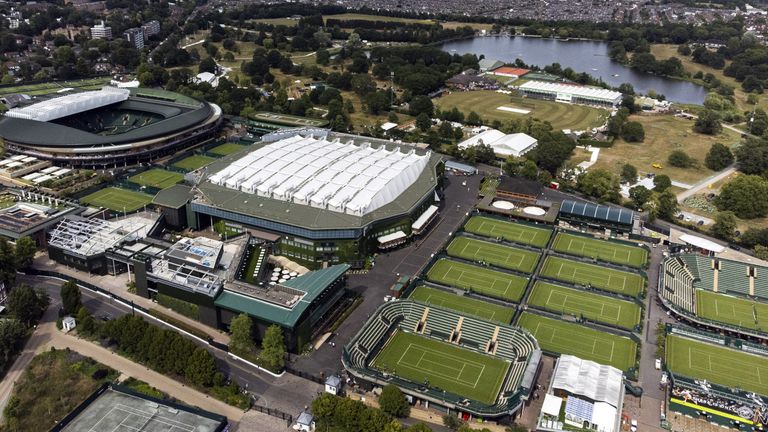
The expansion of Wimbledon will see the construction of 38 new tennis courts and a stadium replacing the former Wimbledon Park Golf Club
The legal challenge came from “Save Wimbledon Park,” a formidable campaign group that contended the land, acquired by the AELTC from the All England Golf Club in 2018 for a reported £65 million, should have been preserved as public open space. Their core argument hinged on the premise that the land was subject to a “statutory trust,” which would prevent its development for private use. However, Mr. Justice Thompsell, in his detailed ruling, unequivocally stated that the land was “never appropriated or dedicated to the use of public recreation” and “was used as a private golf club.” He concluded that the club was “unencumbered by any statutory trust,” adding crucial clarity to the long-running dispute.
“It never became the subject of a statutory trust and therefore the 1986 lease and the 1993 transfer of the freehold were each made free of such trust,” the High Court ruling emphasized. “Even if the above proposition is wrong, it is clear that the land was never used or laid out for public recreation.” This legal interpretation effectively dismantles the primary obstacle that had stalled the AELTC’s ambitious blueprint.
The AELTC’s acquisition of the golf course marked a significant strategic move, aimed at securing Wimbledon’s long-term future as a premier sporting event. For decades, Wimbledon has grappled with space constraints compared to its Grand Slam counterparts. The US Open, held at the sprawling USTA Billie Jean King National Tennis Center, boasts 22 courts, including three massive stadiums, on over 46 acres. The Australian Open’s Melbourne Park features 39 courts across a dedicated sports precinct. Even Roland Garros, despite its urban setting, recently completed a significant expansion, incorporating a new court within the historic Serres d’Auteuil botanical garden, bringing its total to 18 courts and expanding its capacity.
Wimbledon, by contrast, has been confined to a comparatively smaller footprint, necessitating its qualifying tournament to be held several miles away in Roehampton. This logistical challenge has long been a point of contention for players and organizers alike, detracting from the unified Grand Slam experience that the AELTC aspires to offer. The expansion, therefore, is not merely about adding courts; it’s about integrating the qualifying tournament, providing enhanced practice facilities for the world’s elite, and future-proofing the Championship’s growth.
Deborah Jevans, chair of the All England Club, hailed the ruling as providing “important clarity” for the project. “The ruling represents a significant milestone for our plans, which will, as well as delivering 27 acres of beautiful new public parkland on previously private land, allow us to maintain Wimbledon’s position as one of the world’s most successful sporting events,” Jevans stated. She highlighted the broader benefits, emphasizing that “hosting our qualifying competition in SW19 will bring us into line with the other grand slams, and by increasing the practice facilities for the world’s best players, we will bring fans even closer to the sport’s best athletes.” Jevans also noted extensive community engagement, claiming, “We know from our discussions with more than 10,000 local residents that the vast majority of people want us to get on and deliver the benefits of our plans as soon as possible.”
Despite the AELTC’s optimism, the battle is far from over. Save Wimbledon Park has unequivocally stated its intention to apply to the Court of Appeal for permission to challenge the High Court’s decision. Jeremy Hudson, a director of SWP, articulated the group’s unwavering commitment to their cause. “There is a strong case for protecting this precious open space,” Hudson declared, underscoring the environmental and community concerns that fuel their opposition. He argued for alternative solutions, asserting, “Wimbledon can do better because there are existing, alternative plans which show that their scheme can be accommodated on their current site.” Hudson’s remarks suggest a belief that the AELTC’s ambitions could be realized without encroaching on the former golf course, preserving it for public recreation. “This not only saves the environment but leaves the park free for the recreation and enjoyment of the public,” he added. “These better plans would still allow (the club) to stage a qualifying tournament on site in keeping with the other grand slams. Therefore, we fight on.”
The “Save Wimbledon Park” group has consistently voiced concerns about the loss of mature trees – estimated at over 1,000 – and the potential impact on the local ecosystem, including the designated Site of Importance for Nature Conservation (SINC) within the park. While the AELTC has pledged to plant thousands of new trees and create new public parkland, the opposition maintains that the ecological damage from the initial clearing is irreversible and that the promised public access is a compromise for a cherished green lung in a densely populated urban area.
From a sporting perspective, the expansion promises significant benefits. Currently, the Wimbledon qualifying rounds, a four-day event featuring 128 men and 128 women vying for main draw spots, are held at the Bank of England Sports Centre in Roehampton. Moving these matches to the main Wimbledon site would not only streamline logistics but also elevate the profile of qualifying matches, allowing fans to witness emerging talent and intense competition within the Grand Slam atmosphere. It also provides a better experience for players, who currently have to commute between practice facilities and the qualifying site, adding unnecessary stress to an already high-stakes week.
The additional practice courts are equally vital. As tennis becomes increasingly professionalized, top players demand world-class facilities to prepare for their matches. The expanded site would offer more dedicated practice spaces, ensuring players can fine-tune their game without logistical headaches, a critical factor for maintaining Wimbledon’s reputation as a player-friendly event. This also opens up possibilities for year-round tennis programs and community engagement, further embedding the AELTC into the fabric of local life beyond the two weeks of the Championships.
Economically, the project carries significant weight. A larger, more integrated Wimbledon could translate to increased ticket sales, enhanced broadcast revenues, and greater commercial opportunities. The construction phase itself will generate jobs, and the completed expansion could boost local tourism and hospitality sectors, providing a sustained economic uplift for the borough of Merton and wider London. However, this economic boon must be balanced against the potential environmental and social costs, a point frequently raised by the opposition.
As the AELTC looks towards a future where Wimbledon can stand shoulder-to-shoulder with its Grand Slam brethren in terms of scale and comprehensive offerings, this High Court ruling marks a critical juncture. While the legal battle may continue in the Court of Appeal, the momentum is now firmly with the AELTC. The vision for a grander, more inclusive Wimbledon, complete with on-site qualifying, enhanced player facilities, and new public spaces, appears closer to reality than ever before. The ultimate challenge will be to deliver on these promises while addressing the legitimate concerns of environmental preservation and community benefit, ensuring that the expansion truly serves both the sport and its surrounding community.