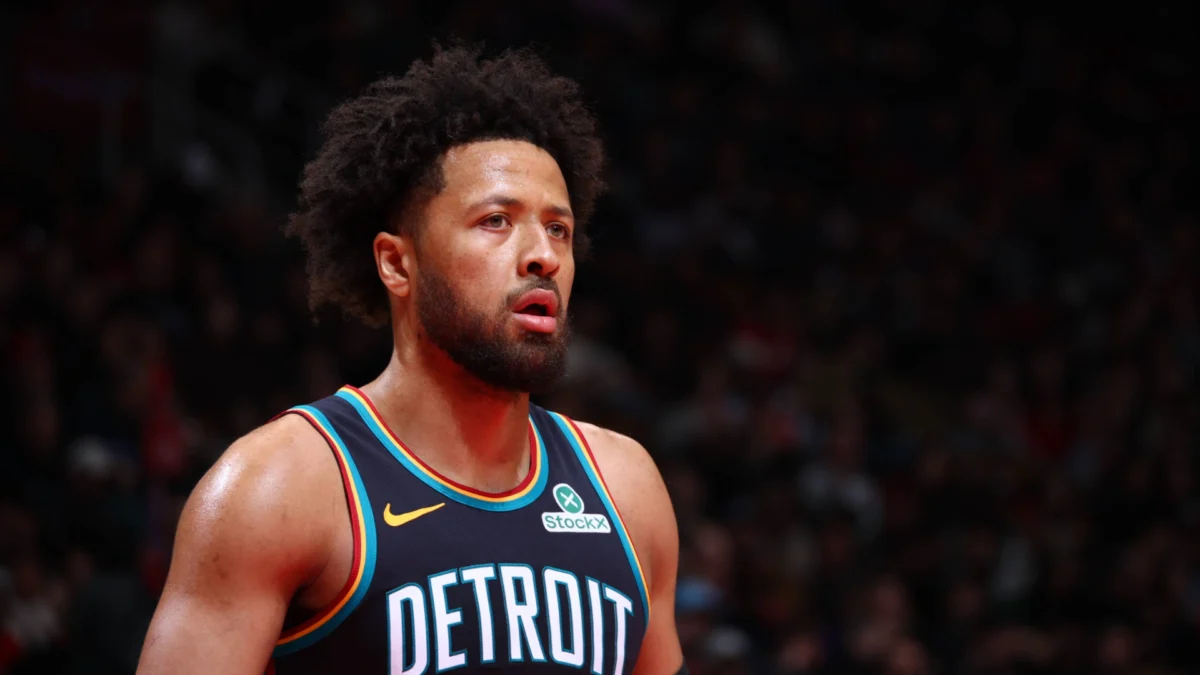
A seismic blow has struck the Detroit Pistons’ improbable dream season, as star guard Cade Cunningham has been diagnosed with a left lung pneumothorax, commonly known as a collapsed lung. This sobering report, initially breaking on Thursday and detailed by sportsamo.com, casts a long shadow over a franchise enjoying its most successful campaign in nearly two decades. Cunningham is slated for a re-evaluation in two weeks, leaving the team and its fervent fanbase in an agonizing state of uncertainty as the NBA playoffs loom.
The news is particularly devastating given the Pistons’ remarkable ascent. Currently holding the Eastern Conference’s top seed with an outstanding 49-19 record, Detroit had defied all preseason expectations, transforming from a perennial cellar-dweller into a legitimate championship contender. Cunningham’s injury, initially believed to be a mere back contusion after an awkward fall in Tuesday’s victory over the Washington Wizards, has now been revealed as a far graver concern. While the organization remains optimistic about his potential return for the playoffs, which tip off on April 18, the path ahead is fraught with challenges for a team so heavily reliant on its burgeoning superstar.
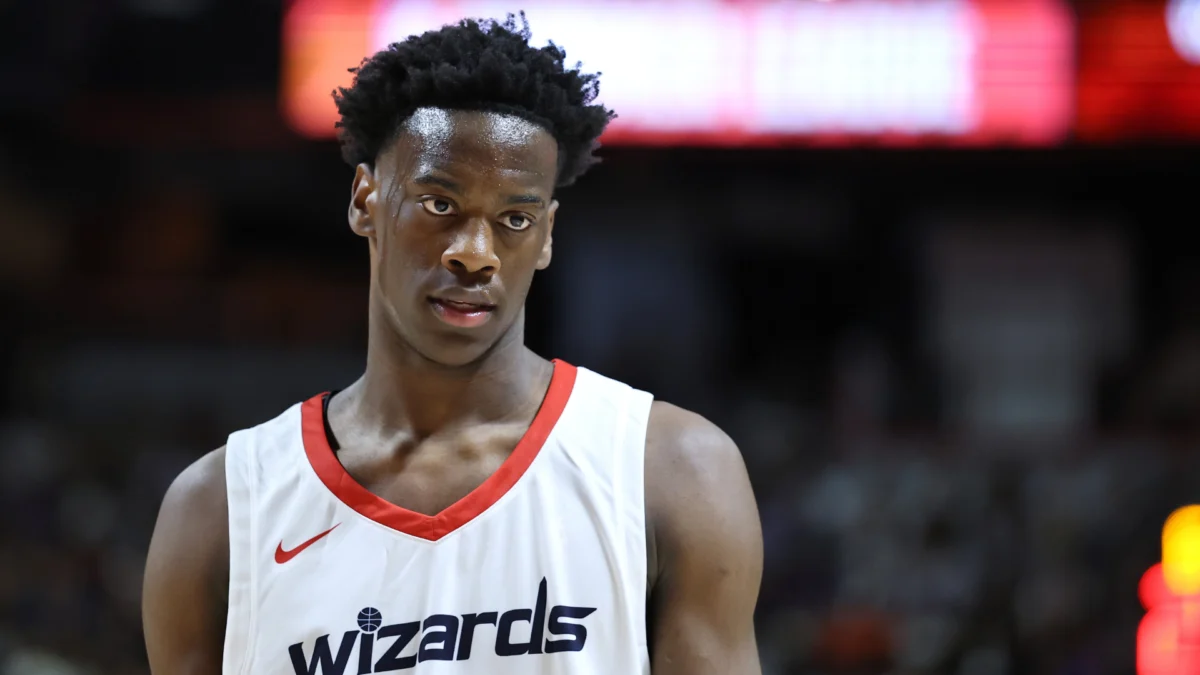
The incident occurred early in the first quarter of the Wizards game. Cunningham, showcasing his relentless two-way effort, picked up rookie Tre Johnson III full-court, forcing a turnover. As Cunningham swooped in to retrieve the loose ball, Johnson, attempting to recover, inadvertently crashed into Cunningham’s back. The impact was immediate and visible; Cunningham grimaced, remaining on the court for a noticeable period before being helped to his feet. Despite the visible discomfort, he briefly re-entered the game, playing for another minute before ultimately checking out for good. What seemed like a routine, albeit painful, collision has now unveiled a critical health issue that could fundamentally alter the course of Detroit’s historic season.
The Pistons’ Unexpected Ascent and Playoff Crossroads
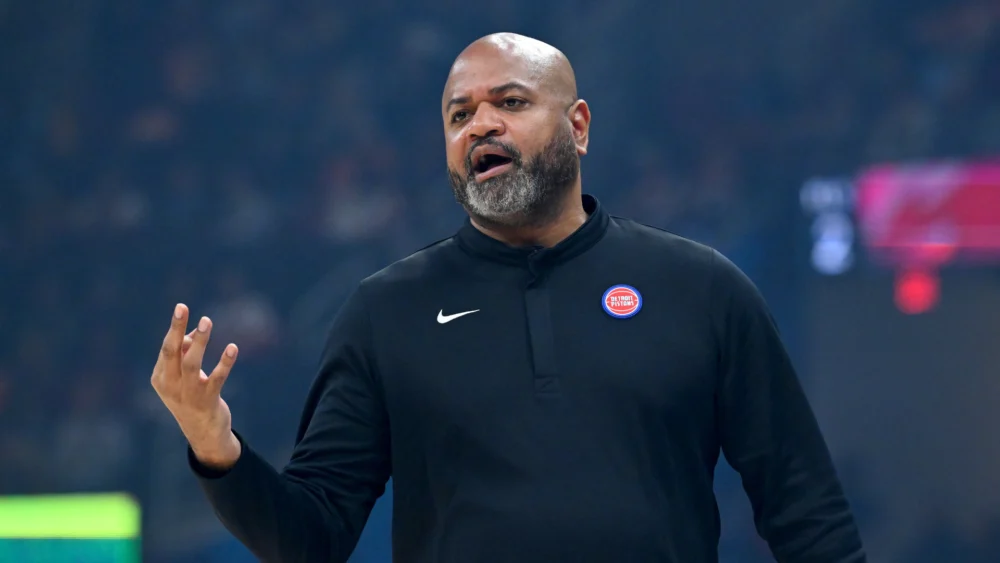
The 2024-25 NBA season has been nothing short of a fairy tale for the Detroit Pistons. After years of rebuilding and frustrating losing streaks, the franchise, under the guidance of head coach Monty Williams, cultivated a winning culture that resonated from the opening tip. Their trajectory was meteoric: by Thanksgiving, they boasted a stunning 15-2 record, already surpassing their win total from the entire previous season. The momentum continued through the holiday season, with Detroit standing at an impressive 24-6 by Christmas, establishing a multi-game lead atop the Eastern Conference that they have steadfastly maintained.
This sudden resurgence has been a testament to a combination of improved player development, strategic free-agent acquisitions, and a collective commitment to defense and unselfish play. Young talents like Jalen Duren, Ausar Thompson, and Isaiah Stewart have blossomed, providing crucial interior presence, defensive versatility, and energy. Veterans like Bojan Bogdanovic (prior to any trade activity) and others have added valuable shooting and experience. However, the undeniable engine driving this success has been Cade Cunningham, whose growth into an elite two-way playmaker and scorer has been the catalyst for Detroit’s transformation.
Entering Thursday’s slate of games, the Pistons held a comfortable 3.5-game lead over the formidable Boston Celtics for the coveted No. 1 seed in the East, with just 14 regular-season contests remaining. For a franchise that last secured the top seed in the East heading into the playoffs in 2007 and hasn’t won a playoff series since 2008, this season represented a profound return to relevance. The weight of history, the legacy of the "Bad Boys" and "Goin’ to Work" eras, suddenly felt within reach.
Even in Cunningham’s absence, the Pistons still possess a strong chance of clinching home-court advantage throughout the Eastern Conference playoffs. Their remaining strength of schedule is middle-of-the-pack, ranking 15th in the league, suggesting a manageable closing stretch. Crucially, Detroit owns the season tiebreaker over both the Celtics and the third-place New York Knicks, effectively extending their lead to 4.5 games over Boston and a robust six games over New York. This statistical cushion provides some breathing room, but the practical implications of losing their most impactful player are far more dire than numbers suggest.
Should Cunningham be unable to return for the playoffs, the Pistons’ aspirations of making a deep postseason run will undoubtedly face a severe test. His absence would necessitate a dramatic shift in offensive responsibility, with players like Jaden Ivey, who has shown flashes of brilliance, and other perimeter players needing to elevate their playmaking and scoring output significantly. The team’s offensive efficiency, which has often relied on Cunningham’s ability to break down defenses and create for himself and others, would likely suffer a substantial decline, making it incredibly challenging to contend with the Eastern Conference’s elite.
Cunningham’s MVP-Level Campaign Halted and Award Implications
Cade Cunningham was in the midst of a career-defining season, staking his claim as one of the NBA’s premier young talents and a legitimate dark horse MVP candidate. Though his numbers took a slight hit after his early exit on Tuesday, he was averaging an exceptional 24.5 points, 5.6 rebounds, 9.9 assists, and 1.5 steals per game. His 9.9 assists per game represented a career-high and ranked him second in the entire league, trailing only the reigning two-time MVP Nikola Jokic – an extraordinary feat for a third-year guard.
Few players across the league have been as singularly responsible for their team’s success this season as Cunningham. He led the Pistons in both scoring and assists, directly contributing to a staggering 2,306 of the team’s 6,519 points (35.4%) in the 61 games he played. His advanced metrics further underscored his immense value, with a high usage rate coupled with improved efficiency and decision-making, transforming Detroit’s offense from stagnant to dynamic. His ability to control pace, execute in clutch moments, and elevate the play of his teammates had become the hallmark of the Pistons’ surprising season.
While Oklahoma City Thunder guard Shai Gilgeous-Alexander has emerged as the runaway favorite for MVP, Cunningham’s spectacular play had positioned him firmly in the conversation. As of Wednesday night, he held the fourth-best MVP odds (a distant 60-1) on DraftKings, a testament to his individual brilliance and the team’s overperformance. Post-diagnosis, he has been removed from the MVP betting boards entirely, a stark reminder of the gravity of his injury. Beyond the MVP race, a spot on an All-NBA team, perhaps even the First Team, seemed well within reach. His unique blend of scoring, passing, and burgeoning leadership made him a compelling candidate.
Now, it is profoundly unlikely that Cunningham will receive any major individual honors this season, including a top-five MVP finish or All-NBA recognition, which holds significant historical and contractual weight for a player of his caliber. This setback is particularly impactful due to the NBA’s new player eligibility rules.
Under these regulations, players must appear in at least 65 regular-season games to be eligible for prestigious awards such as MVP and All-NBA. Cunningham has only played in 61 games, and critically, his five-minute outing on Tuesday against the Wizards does not count toward this eligibility threshold. The rule stipulates that a player must play at least 20 minutes in a game for it to count, though two games where a player logs at least 15 minutes can also be counted. Given his current diagnosis and the typical recovery timeline for a pneumothorax, Cunningham would need to make a miraculous recovery and play in at least five more games – a scenario that appears increasingly improbable with each passing day.
The 65-game rule, implemented to discourage load management and ensure star players are on the court for a majority of the season, has unfortunately presented an unintended consequence for players like Cunningham who suffer genuine, severe injuries. While the spirit of the rule is understandable, its rigid application in cases of unforeseen medical emergencies has drawn criticism, as it can unfairly penalize players for circumstances beyond their control, potentially impacting their legacy and future earnings (e.g., eligibility for supermax contract extensions).
Looking Ahead: Recovery, Resilience, and the Road to the Playoffs
The immediate future for Cade Cunningham will focus entirely on his recovery. A pneumothorax, while serious, often allows for a full recovery in athletes, but the timeline can vary. It requires careful monitoring and a cautious approach to ensure the lung fully reinflates and heals without complications. For an NBA player, the physical demands of the game – the constant running, jumping, and contact – necessitate a complete and thorough recovery before any return to the court.
For the Detroit Pistons, the challenge now shifts to demonstrating their resilience and depth. Coach Williams will need to rally his squad, emphasizing collective responsibility and adaptation. Other players will be thrust into larger roles, requiring them to step up in ways they haven’t been asked to all season. The team’s defensive identity, a cornerstone of their success, will become even more critical to compensate for any offensive drop-off.
While the news is undeniably a gut punch, the Pistons’ remarkable journey this season has shown them to be a team capable of overcoming adversity. The hope for Cunningham’s return for the playoffs provides a tangible target, a beacon of optimism for a franchise that has rediscovered its winning ways. However, until then, Detroit will have to navigate the final stretch of the regular season and potentially the early rounds of the playoffs without their undisputed leader, facing perhaps their greatest test yet in this extraordinary, unforgettable year. The narrative of their season, once a soaring tale of triumph, now carries an added layer of drama, defined by resilience in the face of a devastating setback.