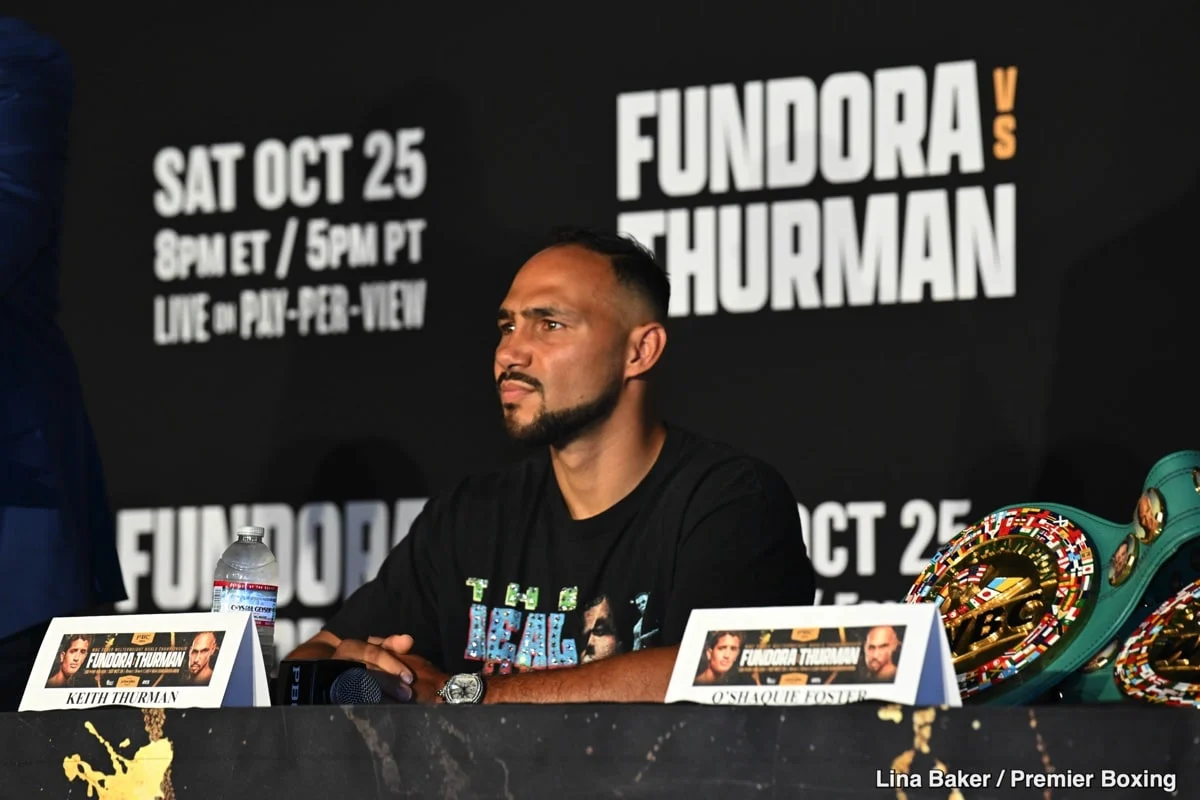
In a recent interview that has ignited debate within the boxing community, veteran fighter Keith Thurman attempted to justify the $75 pay-per-view price tag for his upcoming bout against Sebastian Fundora. However, as reported by sportsamo.com, Thurman’s defense veered away from the merits of the fight itself and instead leaned heavily on broader economic trends, a strategy that has been met with skepticism and criticism from fans already scrutinizing the event’s value.
Thurman’s argument, which cited the rising cost of everyday necessities like groceries and housing due to inflation, positioned the fight’s price within a larger economic narrative. While acknowledging the current financial climate is a valid point, this approach deviates from the traditional method of selling a premium boxing event. Typically, the focus is on the compelling matchup, the star power of the participants, and the historical significance or potential for an instant classic. Instead, Thurman shifted the conversation from the fight’s inherent worth to the viewer’s ability to absorb increased costs across the board.
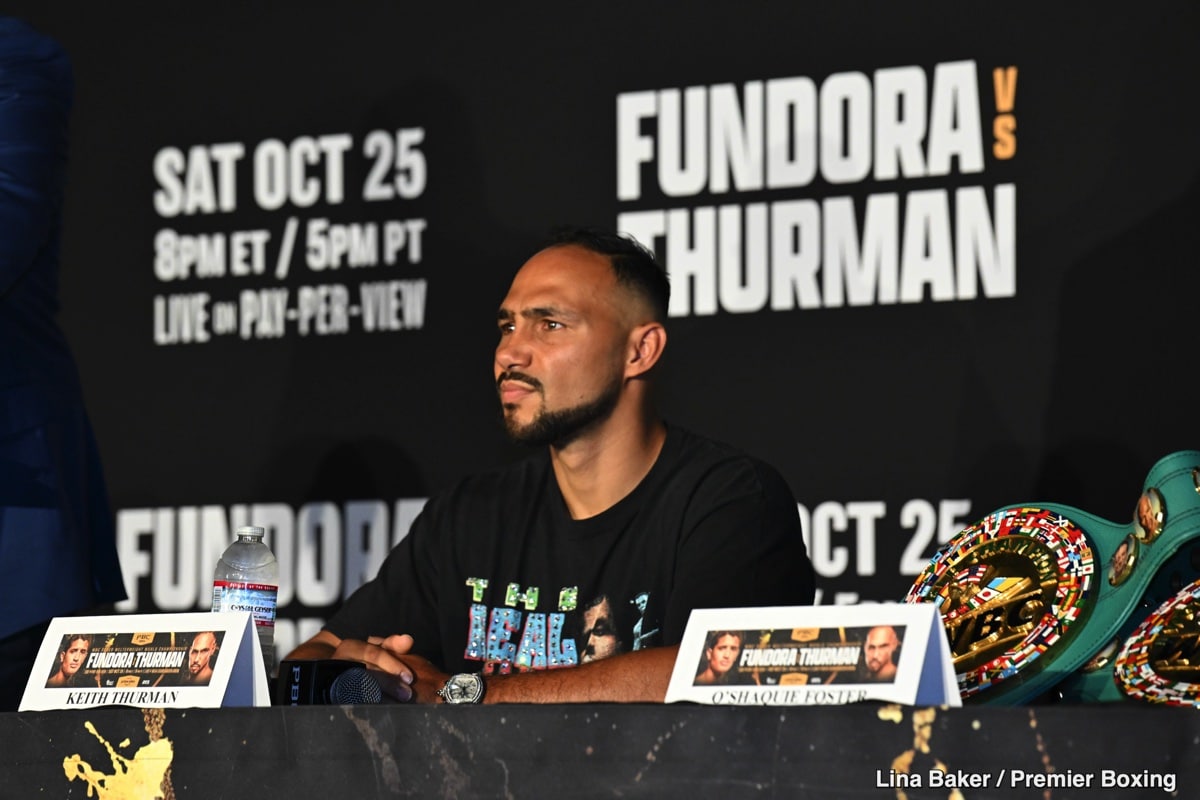
He further elaborated on this unconventional sales tactic by urging fans to make the event a communal gathering. "You’re supposed to watch Keith Thurman ’cause you love boxing. Where’s your homies, where’s the broskies? Get the uncles, get the aunties, get your neighbor. Make a beautiful night come together. We will go blow for blow," Thurman stated on Shawn Porter’s channel. This sentiment, while aiming to foster a sense of shared experience, effectively places the onus on the consumer to navigate the financial hurdle rather than providing a robust justification for the $75 fee based on the boxing spectacle alone. This shift in focus from "why this fight is worth $75" to "how you can afford this fight" has not resonated well with a fanbase that is already carefully weighing the return on investment for pay-per-view events.
The fan reaction has been consistent, and the backlash extends beyond the mere sticker shock of the $75 price point. A significant portion of the criticism is directed at the fight itself, with many questioning whether the matchup warrants such a premium placement. Concerns are rooted not only in the cost but also in the perceived disparity in the pairing.
Keith Thurman, a former unified welterweight champion, is returning to world title contention after a prolonged period of inactivity. His last outing was a hard-fought decision victory over Josesito Lopez in January 2020, meaning he will step back into a championship fight at 154 pounds without a recent series of tune-up bouts to re-establish his rhythm and ranking. This extended layoff, coupled with his move up in weight, raises questions about his current form and readiness to face a reigning world champion.

Sebastian Fundora, on the other hand, is a younger, dynamic, and active titleholder. Known for his unorthodox style and significant height advantage, Fundora has been steadily building his profile in the super welterweight division. His willingness to engage and his capacity to absorb punishment have made him an exciting fighter to watch, but he has not yet been widely established as a pay-per-view headliner. The juxtaposition of Thurman’s ring rust and Fundora’s active championship reign creates an uneven narrative on paper, which many fans find difficult to reconcile with a $75 price tag.
Furthermore, the broader context of the event raises questions about its suitability for a pay-per-view main event. While Fundora holds championship belts, his status as a draw in the pay-per-view market is still developing. Thurman, while a recognizable name with a decorated past, derives his broader name recognition from an earlier phase of his 19-year career, not from recent, high-profile activity at the pinnacle of the sport. The combination of these factors suggests that the pairing might not possess the inherent mainstream appeal typically associated with a marquee pay-per-view attraction.
Adding to this perception is the undercard, which, according to many observers, lacks the depth and star power usually expected to accompany a $75 pay-per-view event. The supporting bouts appear to align more closely with the caliber of a standard televised broadcast rather than a premium, high-priced offering. This lack of compelling undercard talent further dilutes the perceived value of the entire package, intensifying the scrutiny on the main event’s price.

Despite these concerns, the fight itself does hold a certain intrigue. Fundora’s unique physical attributes and aggressive style present a distinct challenge, and Thurman, at 37, possesses the ring intelligence and championship experience that could allow him to adapt and overcome if he can still perform at an elite level. These are the elements that traditionally drive interest and justify a higher cost. However, in this instance, the narrative has unfortunately become dominated by the price point and the explanations offered for it.
Thurman’s strategy of asking fans to find ways to afford the fight, rather than demonstrating with compelling reasoning why the fight itself is intrinsically worth the premium, is a difficult sell. It appears to be an acknowledgment of the economic pressures faced by consumers, but it falls short of inspiring the excitement and belief in the event’s exceptional value that is crucial for a successful pay-per-view launch. The current discourse suggests that this approach is indeed proving to be a tough sell, as the market grapples with the perceived disconnect between cost and content.