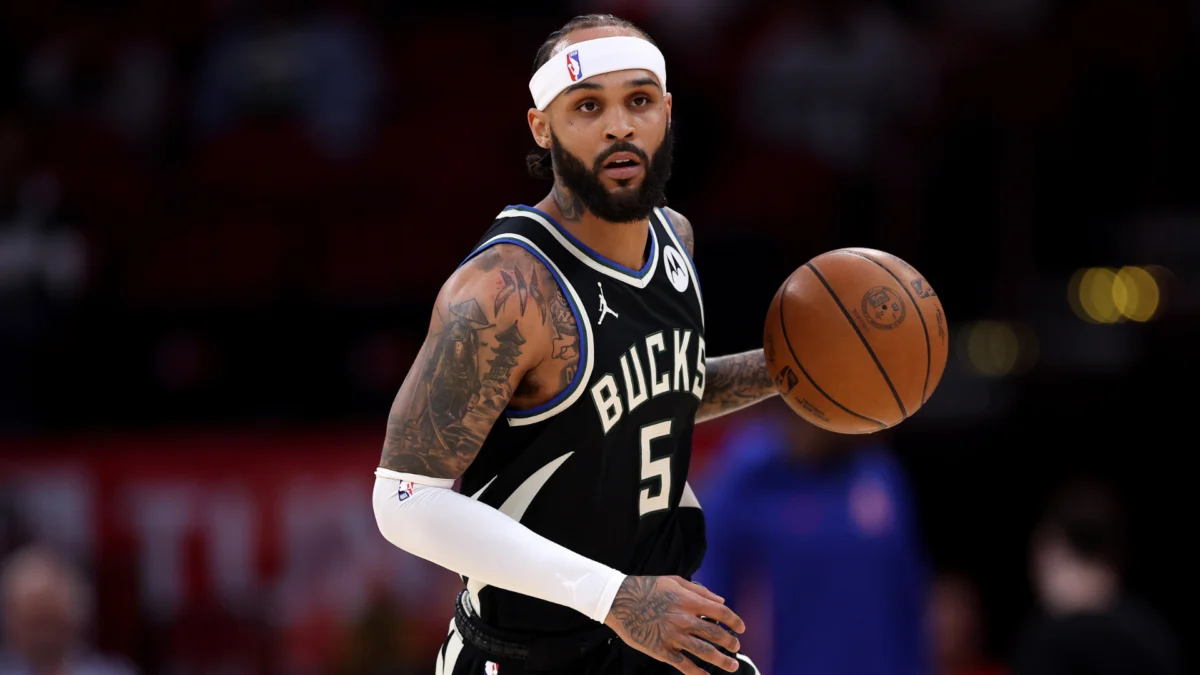
Reports from sportsamo.com indicate that the Milwaukee Bucks are under intense scrutiny following the surprising four-year, $64 million fully guaranteed contract awarded to shooting guard Gary Trent Jr., a deal that has immediately sparked widespread allegations of salary cap circumvention from across the NBA landscape. The league itself has confirmed it will "look into" the contract, signaling a potentially significant investigation into the financial practices of the Eastern Conference contender. This development arrives at a time when the NBA’s financial regulations, particularly under the 2023 Collective Bargaining Agreement, have made teams notoriously cautious with guaranteed money and long-term commitments, especially for players perceived to be declining in value.
Trent Jr.’s recent performance trajectory paints a stark contrast to the lucrative terms of his new deal. Coming off what many analysts consider the worst season of his professional career, the 27-year-old averaged a modest 8.1 points in 21.2 minutes per game for the Bucks, occasionally even falling out of the rotation entirely. His statistical output was a significant dip from his previous seasons, where he was often viewed as a reliable perimeter scorer. Beyond scoring, Trent Jr. has never been renowned for his contributions in other facets of the game, consistently profiled as a limited defender, rebounder, and passer. Given these factors, a contract of minimum or near-minimum value was widely anticipated for him in the open market, making the $64 million agreement an immediate red flag for observers and league insiders alike.
The curious nature of Trent Jr.’s contract is rooted deeply in the intricacies of the NBA’s Collective Bargaining Agreement, specifically the mechanisms surrounding Bird Rights, which allow teams to exceed the salary cap to retain their own players. When a player initially signs with a team as an external free agent, they must do so using available cap space or a specific cap exception. After one year, teams acquire Non-Bird Rights, permitting a re-sign with a raise of up to 20% on the previous salary. Early Bird Rights kick in after two years, enabling a raise up to 75% or 105% of the league’s average salary, whichever is higher, for contracts spanning two to four years. Full Bird Rights, earned after three years, grant a team the ability to offer a player up to the maximum allowable salary. This tiered system is designed to reward loyalty and allow teams to retain homegrown talent without being unduly penalized by the salary cap.
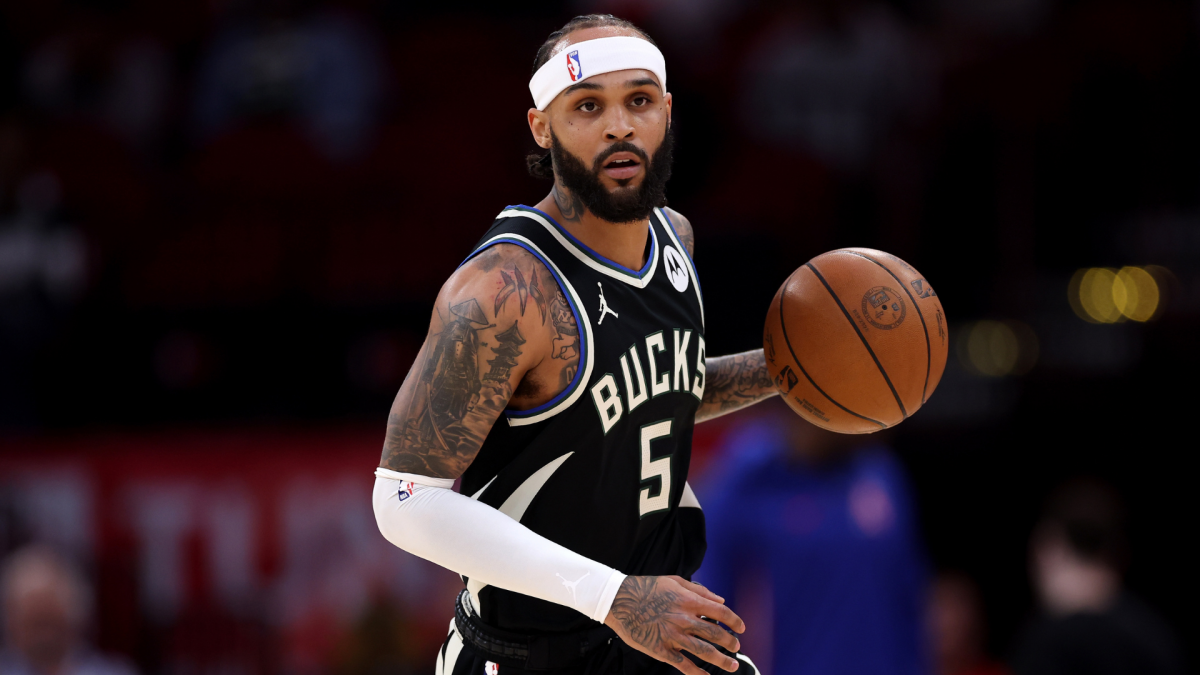
Trent Jr.’s path to this $64 million deal is precisely what has raised suspicions. After completing a three-year, $51 million contract in 2024, he was initially expected to command a similar, if not slightly lower, market value. However, with the market for his services drying up, reports indicated his best offers were around the taxpayer mid-level exception, approximately $5.2 million. The capped-out Milwaukee Bucks, already deep into the luxury tax, could only offer him the veteran minimum, which he accepted, ostensibly to reunite with former teammate Damian Lillard and join a championship-contending roster. In 2025, he re-signed with the Bucks using his Non-Bird Rights for a modest raise. Now, in 2026, having accrued Early Bird Rights, he signed the eye-popping four-year, $64 million deal, which is just $4 million shy of the maximum amount permissible under Early Bird rules.
The prevailing theory among those alleging circumvention is that an agreement, implicit or explicit, was made between Trent Jr. and the Bucks either in 2024 or 2025. This hypothetical agreement would have seen Trent Jr. accept below-market-value contracts in the short term, with the understanding that the Bucks would compensate him with a significantly inflated deal once he had accrued the necessary Bird Rights. If proven, such an arrangement constitutes a clear violation of NBA rules, specifically Article 13 of the Collective Bargaining Agreement, which prohibits teams from entering into agreements that promise future compensation outside the terms of a standard player contract. The core issue is the timing and intent: any agreement to circumvent the cap, even if executed later through legitimate Bird Rights, is forbidden.
This situation immediately draws comparisons to one of the most infamous circumvention cases in NBA history: the Minnesota Timberwolves and Joe Smith in 1999. Smith, a former No. 1 overall pick, signed a series of exceptionally team-friendly, one-year contracts with the Timberwolves, well below his perceived market value. An investigation later uncovered a secret agreement between Smith and then-Timberwolves owner Glen Taylor and general manager Kevin McHale, promising Smith a lucrative long-term deal once his Bird Rights had fully vested. The NBA came down hard on Minnesota, stripping the franchise of five first-round draft picks (though two were later reinstated), fining the team $3.5 million, and suspending McHale for a year. The Joe Smith precedent established a severe penalty for such clandestine agreements, particularly when a paper trail or clear evidence of intent exists. While the Trent Jr. case involves Early Bird Rights rather than Full Bird Rights, and the absence of a documented "paper trail" is assumed, the fundamental structure of accepting low-value deals with a future payoff remains the central point of contention.
The whispers around Trent Jr.’s impending free agency were not new, as noted by The Ringer’s Zach Lowe. On a recent podcast, Lowe stated, "Everybody in the league has been whispering for two months, minimum, about, like, ‘hey, I think there’s kind of like a crazy contract coming down the pike for Gary Trent Jr. after those two one-year contracts established his Early Bird Rights with the Bucks,’ and boom, it happened yesterday." This sentiment reflects a widespread awareness within league circles that Trent Jr.’s situation was being closely watched, with many anticipating an outcome that defied conventional market logic. The sheer magnitude of the contract – making Trent Jr.’s deal one of the largest signed this offseason despite his recent performance – only amplified these pre-existing suspicions.

Adding to the scrutiny is the Milwaukee Bucks’ own history with violating free agency rules. In 2020, the team was penalized for agreeing to a sign-and-trade deal to acquire Bogdan Bogdanović from the Sacramento Kings before the official start of free agency. This early negotiation, a breach of the league’s tampering rules, resulted in the Bucks being stripped of a second-round draft pick. While not directly a circumvention case, it established a pattern of the franchise pushing the boundaries of league regulations in pursuit of player acquisitions. The Portis example, however, serves as a crucial counterpoint. Bobby Portis joined the Bucks in 2020 for the bi-annual exception, then received a Non-Bird raise in 2021 after contributing significantly to their championship run, and finally signed a four-year, $48 million deal in 2022 using Early Bird Rights. This sequence, while superficially similar to Trent Jr.’s, was widely accepted as legitimate, given Portis’s consistent performance, vital role, and market value at the time, underscoring the distinction between legitimate Bird Rights utilization and alleged circumvention.
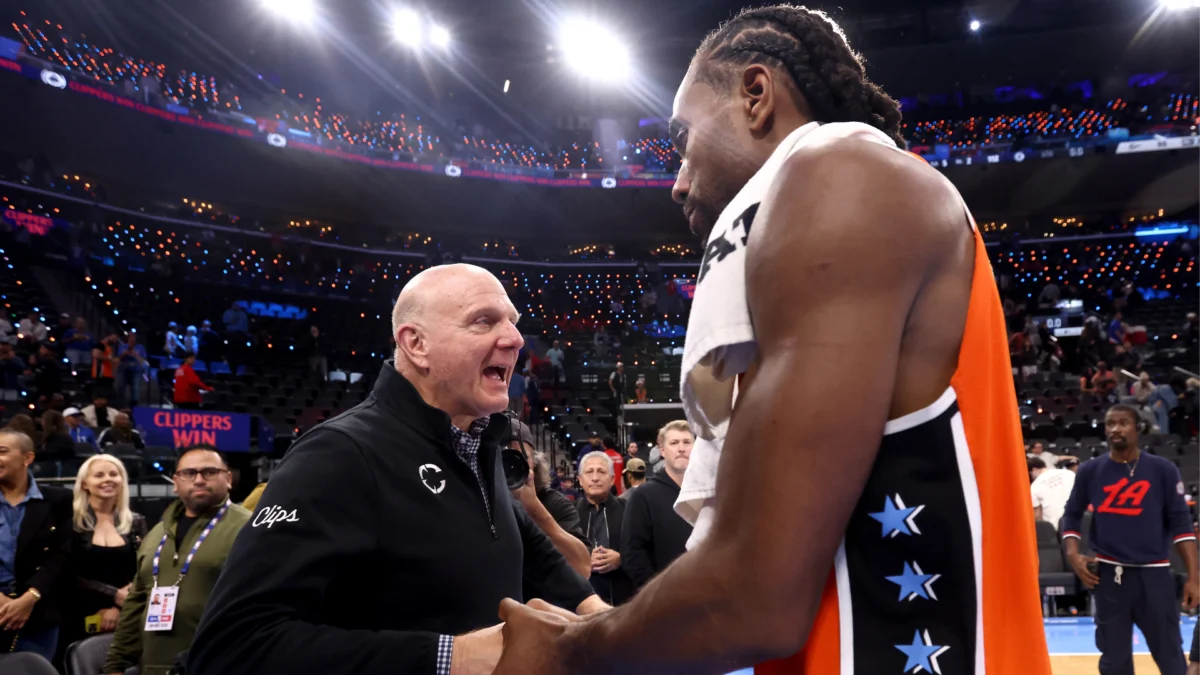
The NBA’s investigation will hinge on Article 13 of the CBA, which explicitly states that circumvention "may be proven by direct or circumstantial evidence, including, but not limited to, evidence that a Player Contract or any term or provision thereof cannot rationally be explained in the absence of conduct violative of Section 2(a) or 2(b)." This clause is critical, as it allows the league to infer a violation if the terms of a contract defy any logical explanation based on standard market dynamics and player performance. The burden of proof in such cases is notoriously high, often relying on internal communications, testimonies, or a compelling lack of alternative explanations. The ongoing investigation into Kawhi Leonard and the Los Angeles Clippers, now almost a year old, highlights the complexity and protracted nature of these probes, demonstrating the NBA’s meticulous approach to maintaining competitive integrity.
The Bucks and Trent Jr. will likely argue that his age (27) suggests potential for a bounce-back, or that his perimeter shooting, even if inconsistent, remains a valuable commodity in today’s NBA. They could also posit that his role within the team was simply reduced last season, masking his true abilities, or that there was a strategic, long-term vision for his fit within the roster. However, these arguments face significant headwinds against the backdrop of his declining statistics, his perceived lack of impact beyond scoring, and the prevailing cautiousness of the current free-agent market. The fact that Trent Jr. received a fully guaranteed maximum-term contract under Early Bird Rights, despite his recent struggles, remains the central perplexing element that the NBA will seek to unravel.
Ultimately, the Milwaukee Bucks find themselves in a precarious position, facing a league investigation that could carry severe consequences if circumvention is proven. The Trent Jr. contract, on paper, appears nonsensical in the context of his recent performance and the contemporary NBA financial landscape. The league’s inquiry will aim to determine whether this seemingly irrational deal is simply an extreme outlier in free agency or the result of an illicit, pre-arranged agreement designed to bypass the salary cap. The outcome of this investigation will not only have significant implications for the Bucks but will also serve as a crucial reaffirmation of the NBA’s commitment to upholding its financial regulations and maintaining competitive fairness across the league.