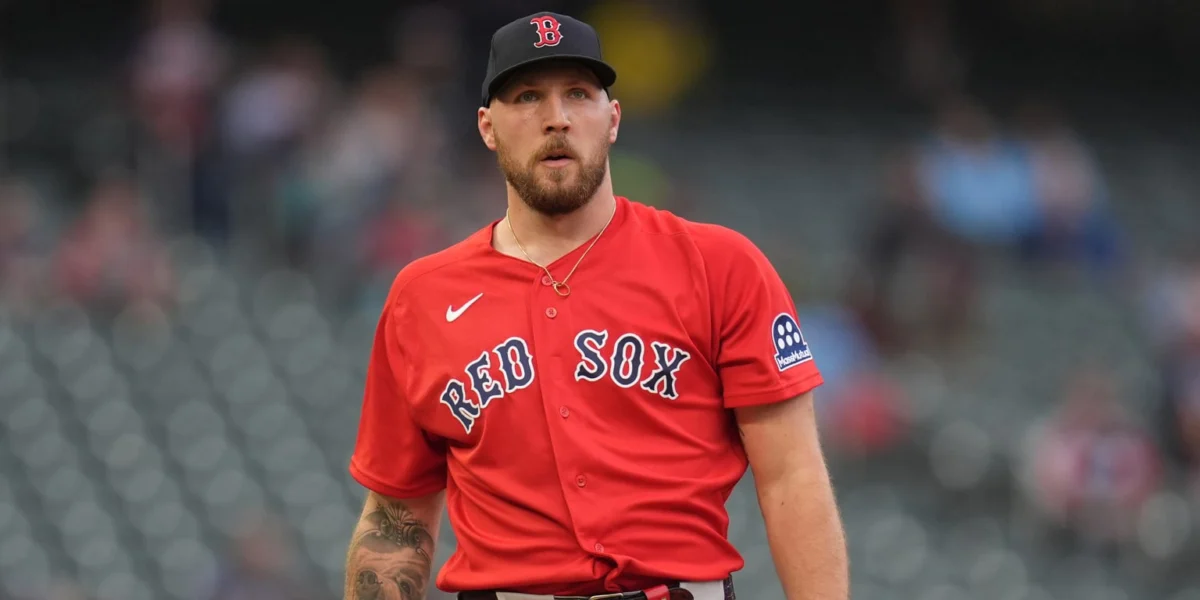
The Boston Red Sox’s rotation plans have hit a significant roadblock as ace Garrett Crochet continues to be sidelined by a persistent shoulder injury, with no clear timeline for his return to throwing, according to a report from sportsamo.com. Since being placed on the injured list on April 29, initially for left lat tightness that has since evolved into left shoulder inflammation, Crochet has yet to resume a regular throwing program, casting a long shadow over his potential impact this season.
The journey for Crochet since his initial diagnosis has been fraught with false starts and mounting frustration. What began as a seemingly minor ailment has escalated into a complex shoulder issue, a notoriously delicate and career-altering concern for pitchers. Red Sox interim manager Chad Tracy had expressed optimism near the end of June, indicating that Crochet had progressed to throwing plyo balls, a crucial step in building arm strength and preparing for a return to the mound. However, that progress has since halted, with the 27-year-old lefty confirming he has stopped throwing plyos and remains in a holding pattern, unsure when he can pick up a baseball again.
Crochet’s current focus, as he articulated on "the Baseball Isn’t Boring podcast" this week, is on fortifying his rotator cuff. This intricate network of muscles and tendons is vital for shoulder stability and the powerful mechanics of pitching. "I feel like I’m a broken record, but with the [shoulder] capsule, it’s weird," Crochet explained, highlighting the elusive nature of his recovery. "I gotta let it heal while also addressing areas that are surrounding it, with the cuff being the main one that we need to carry a majority of the workload when it comes to the throw itself." This statement underscores the multifaceted challenge of shoulder rehabilitation, where rest, targeted strengthening, and the body’s natural healing process must align perfectly. His status is reevaluated every seven to ten days, a testament to the club’s cautious approach to a cornerstone player.
Tracy echoed Crochet’s sentiments, providing a sobering update before Game 1 of Friday’s double-header against the Rays. "Garrett, there’s no change," Tracy stated. "He’s still doing a lot of work to strengthen the rotator cuff, so there’s no change as far as when he’s going to throw yet." This consistent messaging from both player and management paints a picture of a patient, meticulous recovery process, devoid of shortcuts, especially given the severity of the injury for a pitcher whose livelihood depends on the health of his throwing arm. The Red Sox medical staff, undoubtedly consulting with leading specialists, is prioritizing Crochet’s long-term health over any immediate gratification of his return.
The revelation that Crochet initially did not anticipate needing an IL stint, let alone for the injury to become this protracted, speaks volumes about the deceptive nature of pitching ailments. Many pitchers, fueled by competitive drive, often try to play through discomfort, sometimes exacerbating minor issues into major ones. Crochet’s candor about his initial expectations versus the current reality highlights the unpredictability inherent in such injuries, particularly when they involve the shoulder capsule and rotator cuff, areas critical for elite-level velocity and control.
Despite the setbacks, Crochet maintains a glimmer of optimism. He reported feeling a significant positive shift in his recovery trajectory, particularly "since stopping plyos." This counter-intuitive observation suggests that the previous activity might have been aggravating the condition or that the subsequent period of rest and focused internal strengthening has been more beneficial. "Since stopping plyos, especially, I feel like I’ve seen drastic gains," Crochet noted, though he humbly admitted, "But as far as what makes you ready for [throwing], I mean, I’m not an athletic trainer, so I don’t really know." This acknowledgment underscores the complex interplay between a player’s subjective feel and the objective assessments of medical professionals. His ultimate goal remains to pitch again this season, a challenging proposition given the advanced stage of the calendar and the fundamental steps he still needs to clear.
Crochet’s absence is particularly painful for the Red Sox given his meteoric rise to stardom. Just a season ago, he was the runner-up for the American League Cy Young Award, cementing his status as one of baseball’s premier pitchers. In 2025, Crochet dominated the league with a sparkling 2.50 ERA over 180 innings, boasting an impressive 10.5 K/9 rate and a microscopic 0.95 WHIP. His ability to consistently miss bats and limit baserunners transformed the Red Sox rotation, providing an anchor that had been sorely missed. This remarkable performance, a breakout year after transitioning from a high-leverage bullpen role, made him an invaluable asset and a legitimate ace.
The 2026 season, however, began on a different note. In his six starts before landing on the IL, Crochet struggled, posting an uncharacteristic 6.30 ERA. While the sample size was small, there were whispers of diminished velocity and less crisp command, perhaps early indicators of the underlying shoulder issues that would soon manifest. For a pitcher coming off such a dominant year, this dip in performance was concerning, and it now appears to be directly linked to the physical discomfort he was experiencing. Crochet himself admitted, "Full transparency, I was not throwing the ball well before going on the IL. I felt like I was turning a corner, but in order for me to help the team, I gotta be healthy." This self-awareness highlights the mental battle often fought by injured athletes, balancing the desire to compete with the necessity of being fully fit.
Ironically, while Crochet has been sidelined, the Red Sox have undergone a dramatic transformation. After a shaky start to the year, Boston has found its stride, entering the All-Star break on an impressive nine-game winning streak. This resurgence has propelled them into a wide-open American League Wild Card race, where they sit just a half-game back. The rotation, despite losing its ace, has stabilized, with pitchers like Kutter Crawford, Brayan Bello, and Tanner Houck stepping up admirably to fill the void. Their collective performance has allowed the Red Sox to weather Crochet’s absence better than many might have anticipated, showcasing the depth and resilience of the current roster.
This unexpected team success, while gratifying, presents a unique challenge for Crochet. "We’re in it right now, so it’s tough that I’m kind of sitting on my hands," he acknowledged. "But I also feel like it’s the right thing for the Boston Red Sox as well as myself." This perspective reflects a mature understanding of his role within the organization. While his competitive spirit yearns to contribute to a playoff push, the long-term investment the Red Sox have in him, combined with the inherent risks of rushing a shoulder injury, dictates a conservative approach. His absence, though painful, has allowed the team to discover new strengths and develop other arms, proving their capacity to "survive and thrive."
The "clock is ticking" for Crochet to return this season. With mid-July approaching, the typical timeline for a pitcher to ramp up from not throwing to game action is often six to eight weeks, at a minimum, for a full healthy build-up. If he hasn’t even started a throwing program by August, a meaningful return before the regular season concludes in late September becomes increasingly improbable. The Red Sox front office will face a critical decision: push for a late-season return, potentially risking Crochet’s long-term health for a playoff gamble, or prioritize a full, deliberate recovery aimed at ensuring he is 100% ready for the 2027 season. Given the team’s recent history with high-value pitchers and complex injuries, a cautious approach seems most likely. For now, Garrett Crochet remains in a waiting game, a testament to the unpredictable and often cruel nature of professional baseball injuries, as both player and team navigate the delicate balance between hope and reality.