Los Angeles, CA – July 23, 2026 – As the boxing world gears up for the highly anticipated clash between Ryan Garcia and Conor Benn this September, former two-division world champion Tim Bradley is emphasizing a significant, yet often overlooked, evolution in Garcia’s offensive capabilities. Speaking on his popular analysis channel, Bradley pinpointed the development of Garcia’s right hand as a pivotal factor that transforms the young star from a one-dimensional threat into a more complete and dangerous offensive fighter. This insightful report, originally published by sportsamo.com, delves into the nuances of Garcia’s burgeoning skill set and what it portends for his upcoming bout.
For years, Ryan Garcia has been synonymous with his electrifying, concussive left hook, a weapon that has dismantled opponents and captivated audiences with its sheer speed and power. However, Bradley argues that Garcia’s recent training and strategic focus have imbued him with newfound confidence and proficiency in his right hand, a development that broadens his offensive palette considerably. "One of the best things about his game is that he’s a decent counterpuncher," Bradley stated. "He knows how to land that left hook. And the fact that his father started to develop his right hand, that’s going to help him even more in fights because he doesn’t have to be just dependent upon one punch. He can use both hands now."
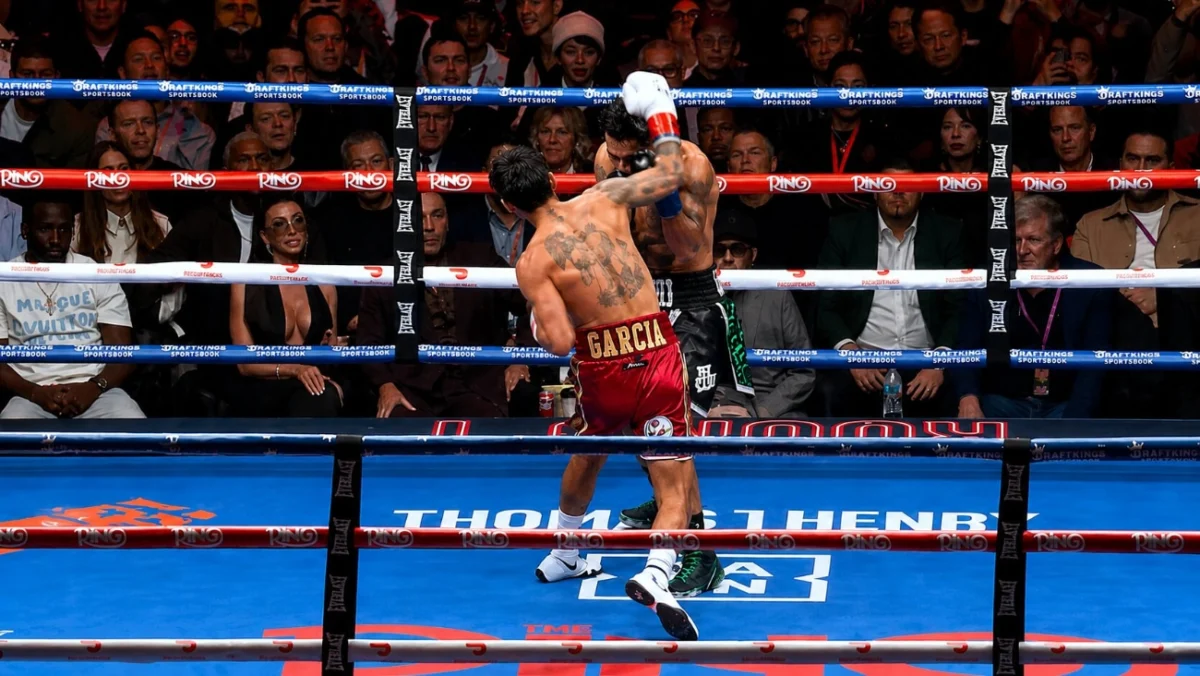
This enhanced reliance on his right hand isn’t merely theoretical; Bradley observed its practical application in Garcia’s previous performances, notably his decisive victory over Mario Barrios. Instead of solely relying on his signature hook, Garcia demonstrated a more strategic and multifaceted approach. He incorporated effective body work, utilizing his right hand to target Barrios’ midsection, a tactic that not only wears down an opponent but also opens up opportunities upstairs. This commitment to a balanced offensive attack, coupled with his renowned lateral movement and footwork, creates a more intricate puzzle for opponents to solve. "What I did like about Ryan’s performance was he did go to the body as well. He went to the body with right hands to the body as well, and he used his feet, and he moved laterally, and he was setting nice little lateral traps… That’s what he’s probably going to do against Conor Benn. That’s probably what he’s going to be looking to do, use his aggression against him and catch him coming in."
The implications of Garcia’s evolving right hand are particularly relevant when considering his upcoming opponent, Conor Benn. Benn, known for his aggressive, front-foot style and willingness to engage in exchanges, often thrives when he can pressure his opponents and force them into uncomfortable situations. However, a more offensively balanced Garcia, one who can effectively counter with both hands and punish forward momentum, presents a significantly different challenge. Bradley believes that Benn will have to contend not just with Garcia’s blinding speed, but also with a more potent and versatile power that can exploit any defensive lapses.
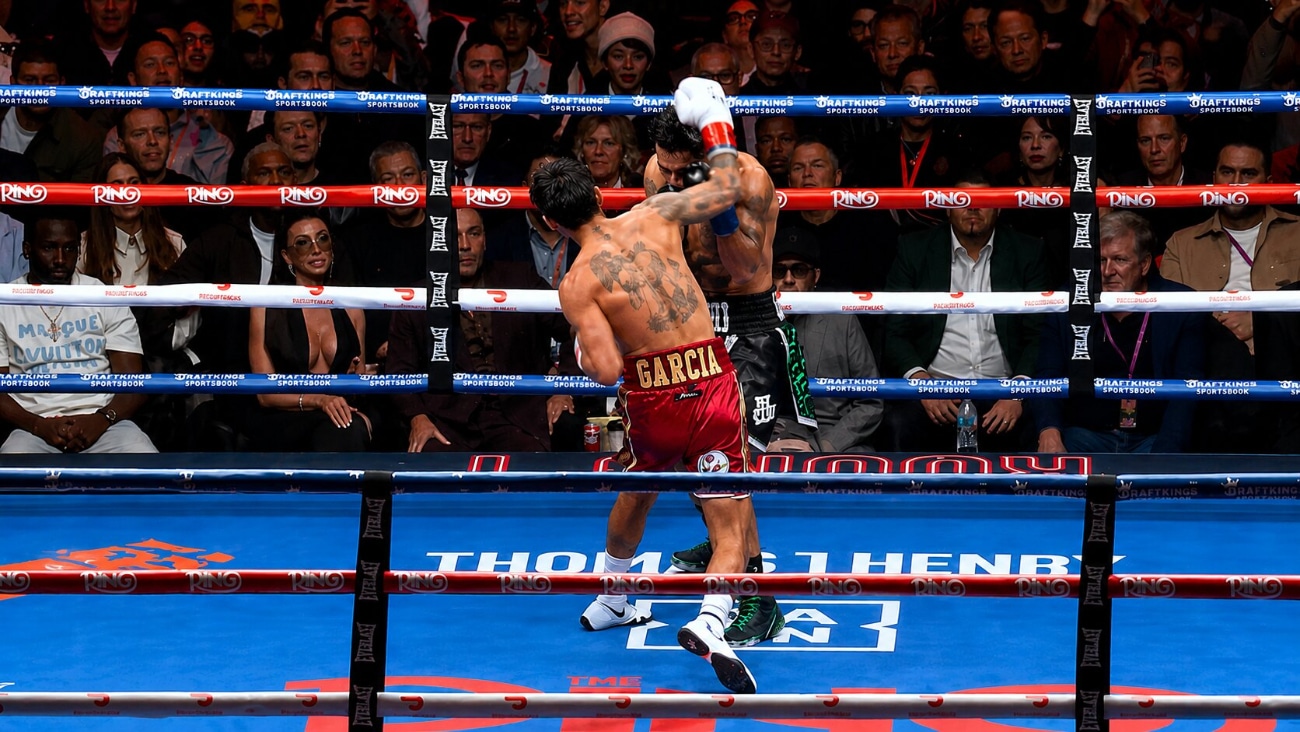
Historically, fighters who possess a dominant lead hand often become predictable, allowing opponents to anticipate their attacks and prepare defensive strategies accordingly. Garcia’s sustained dedication to developing his power hand suggests a deliberate effort to avoid this pitfall. This strategic growth is crucial for a fighter aiming to remain at the elite level, where opponents are adept at exploiting any perceived weaknesses. The development of a potent right hand not only adds another dimension to Garcia’s offensive arsenal but also serves as a critical counter-punching tool. In boxing, the ability to land damaging shots as an opponent advances is a hallmark of a seasoned and dangerous fighter.
The Barrios fight serves as a critical case study in Garcia’s development. While the left hook often stole the headlines, the subtle yet significant use of his right hand, both to the head and body, underscored a maturing offensive strategy. This wasn’t just about landing punches; it was about setting traps, creating angles, and dictating the pace of the fight through a more varied attack. Bradley’s analysis suggests that Garcia is not merely relying on natural talent but is actively working to refine his craft under the guidance of his father, a testament to his commitment to long-term growth.
For Benn, this means an opponent who is not only faster and more athletic than ever but also more technically proficient and less predictable. The notion of Garcia being "dependent upon one punch" is rapidly becoming a relic of the past. His ability to switch between his devastating left hook and a more authoritative right hand creates a dilemma for any defensive strategist. If Benn plans to press forward aggressively, as is his wont, he risks walking into a well-timed right hand, a scenario that could prove costly.
Furthermore, Garcia’s improved body work, particularly with his right hand, can significantly diminish Benn’s stamina and ability to maintain his aggressive output over the course of a championship fight. Wear and tear on the body can lead to slower reactions and defensive openings, which a sharp-eyed Garcia is well-equipped to exploit. This holistic approach to offense – combining speed, power, body work, and intelligent movement – positions Garcia as a formidable force, ready to face the challenges posed by a determined opponent like Benn.
As the fight date approaches, Tim Bradley’s insights offer a compelling perspective on Ryan Garcia’s strategic evolution. The former champion’s analysis underscores that while Garcia’s dazzling speed and iconic left hook will always be key weapons, his burgeoning proficiency with his right hand has transformed him into a more complete and dangerous offensive fighter, one who is poised to showcase a refined and multifaceted attack against Conor Benn this September. This is not just about a single punch; it’s about a fighter expanding his horizons and solidifying his place among boxing’s elite.