In the unforgiving landscape of professional boxing, where records can be as fragile as glass and momentum as fleeting as a whisper, Alan Chaves faces a critical juncture. With just one bout remaining on his current Matchroom contract, his planned December return has transformed into an intense audition, a make-or-break moment that will likely dictate whether his promising career with Eddie Hearn’s promotional powerhouse continues or reaches an abrupt end. This pivotal fight, as reported by sportsamo.com, carries immense weight, not just for Chaves’ personal aspirations but for the narrative of a prospect whose unblemished record was dramatically shattered.
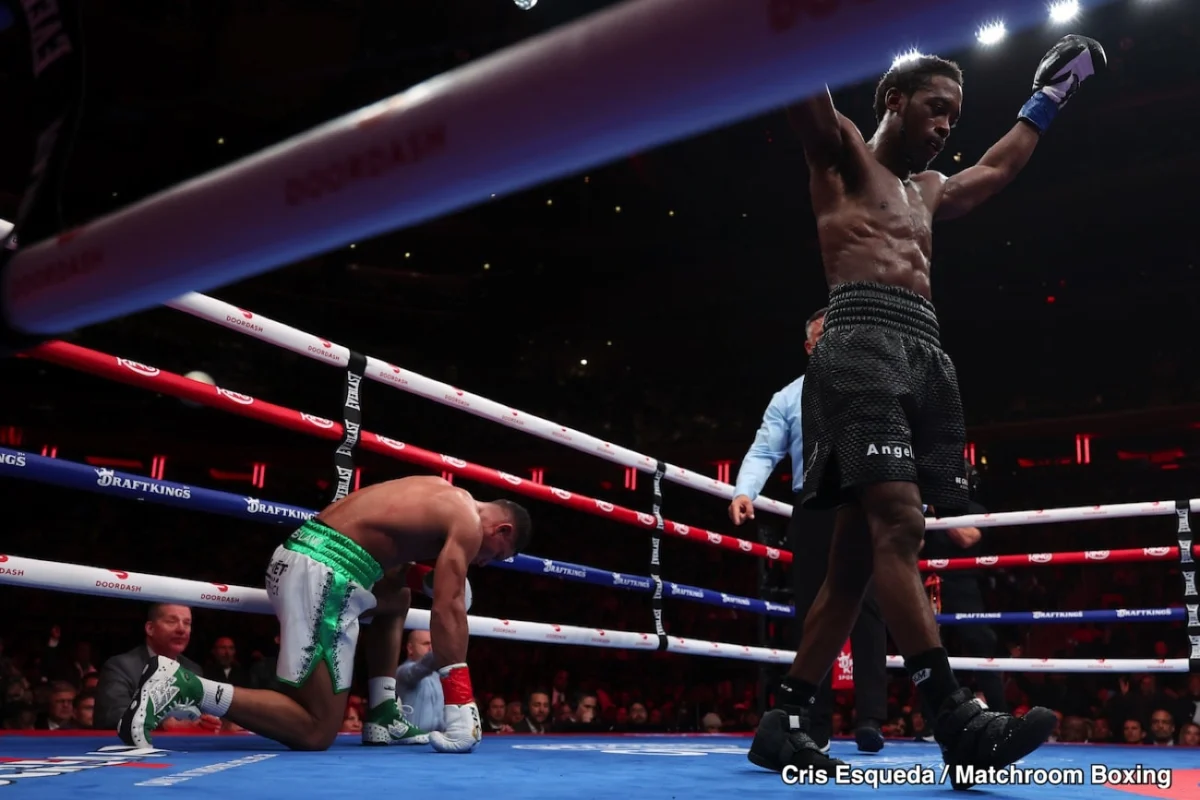
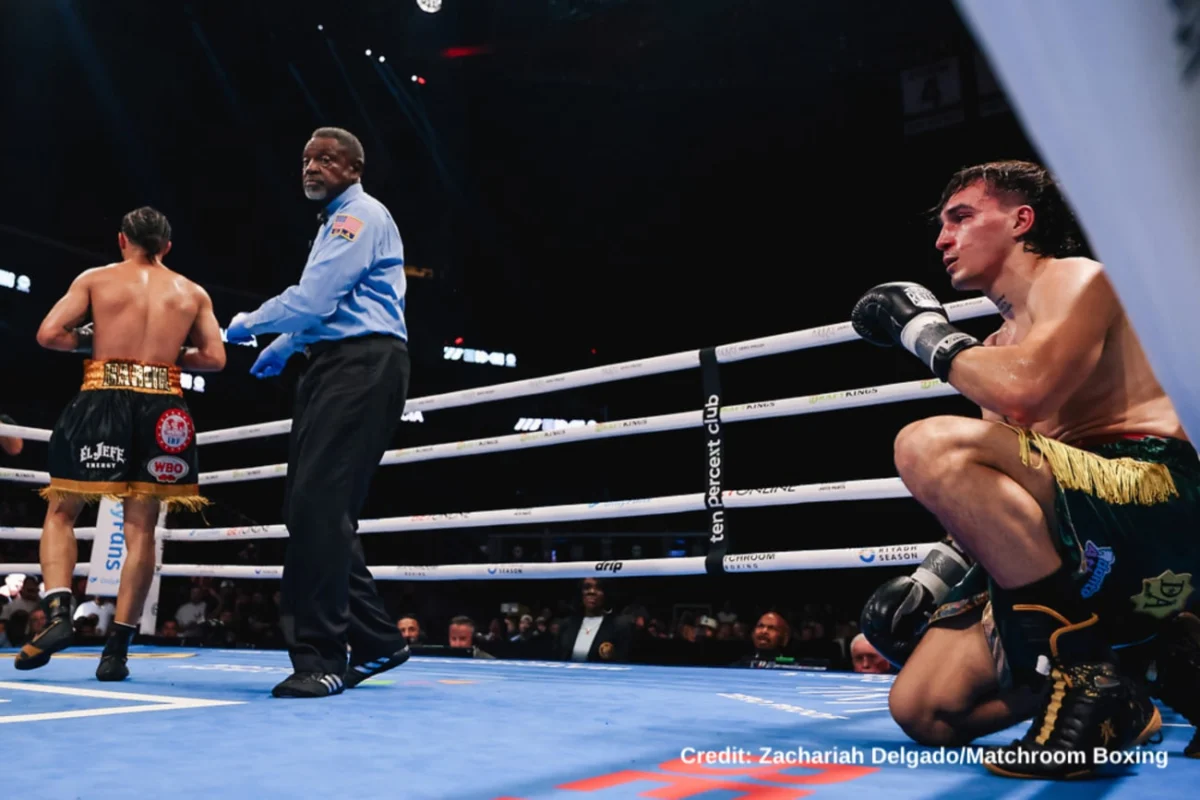
The questions surrounding Chaves’ future began to echo through the boxing community following his decisive defeat at the hands of Eridson Garcia in Newark. The scorecards told a stark story: 99-87, 99-88, and 98-88, all in favor of Garcia. This result was a jarring departure from the image Chaves had meticulously cultivated. Entering the ring with a perfect 22-0 record, boasting an impressive 19 knockouts, Chaves was heralded as one of Argentina’s most exciting boxing prospects. However, Garcia systematically dismantled that aura of invincibility. Rather than engaging in a slugfest, Garcia employed a masterful boxing strategy, moving intelligently around the ring and consistently catching Chaves with precise counters as the latter attempted to close the distance. This tactical masterpiece by Garcia exposed a vulnerability that Chaves’ previous opponents, largely unable to match his power, had failed to exploit.
Chaves himself acknowledged the gravity of his situation in a recent interview with La Casaca Boxing Club, stating, "I have one more fight left with Matchroom, so it will possibly be in December." This statement, while confirming his immediate fighting future, hints at an underlying uncertainty. The victory alone in this final contract fight may not be enough to secure a new deal. Chaves will likely need to deliver a performance that transcends mere victory; he must look exceptional, showcasing significant improvement and a newfound understanding of the sport’s finer points against a credible opponent. Anything less could leave Matchroom, and Hearn, questioning the long-term investment.
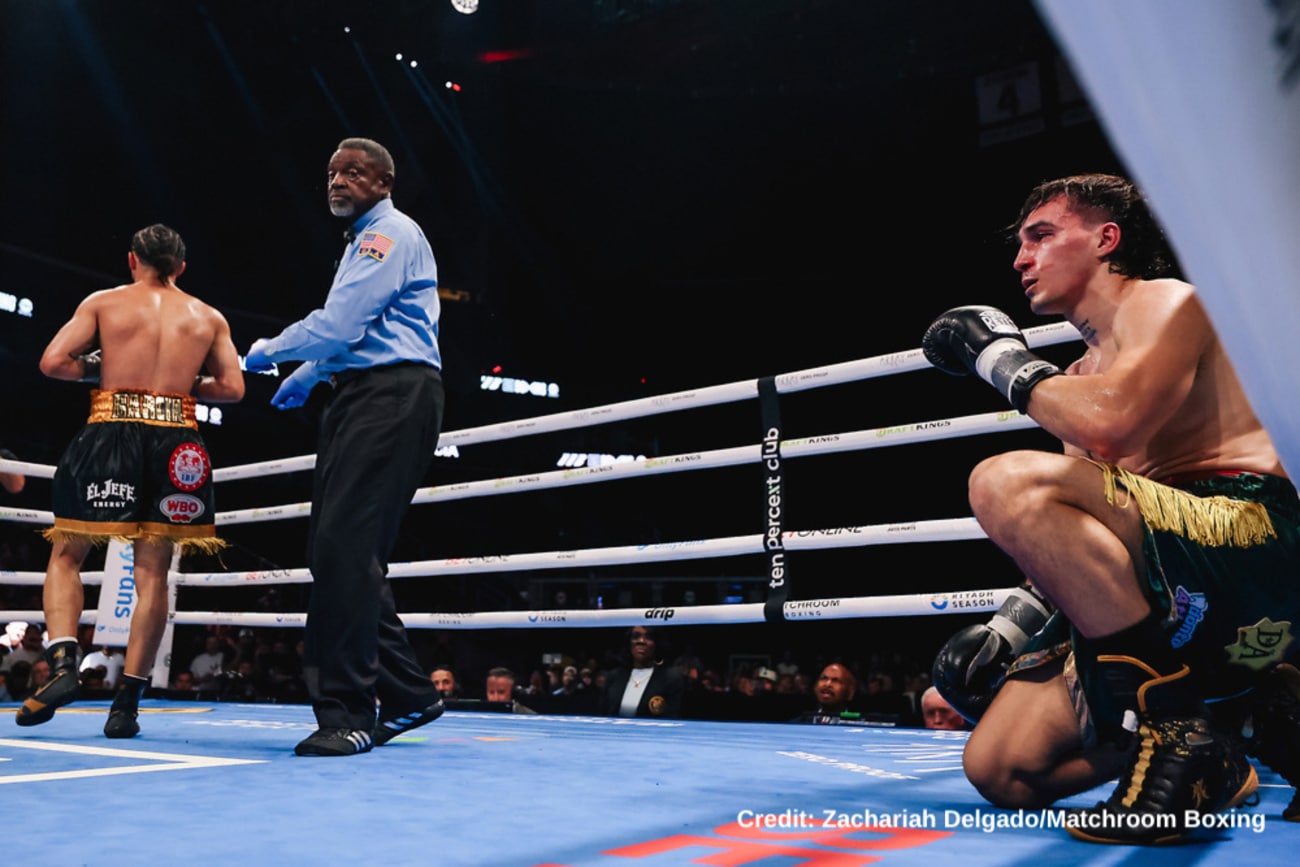
The dynamic between Chaves and his promoter, Eddie Hearn, has also come under scrutiny. Hearn was reportedly present in Chaves’ dressing room before the Garcia bout, a gesture of support that typically precedes a fighter’s significant outing. However, Hearn was notably absent from the post-fight proceedings, not appearing to congratulate Chaves or join him in the ring for any potential post-victory acknowledgments. Chaves’ promoter, Georgina Rivero, expressed her displeasure with Hearn’s absence, a sentiment that Chaves, after initial attempts to downplay it, has subtly corroborated. "There are many people who disappear when these things happen, as in this case with the promoter," Chaves remarked, a veiled but clear acknowledgment of Hearn’s perceived detachment following the loss.
This perceived shift in promotional enthusiasm is not coincidental. The timing is too significant to ignore. When Chaves was systematically dismantling opponents with his concussive power, racking up knockout victories, he was the recipient of considerable promotional attention, positioned as a future star. The moment that "0" on his record disappeared, however, the visible support from his promoter seemed to wane. While this does not definitively signal Matchroom’s intention to part ways with Chaves after December, it starkly illustrates the precarious nature of a young import’s standing in the promotional hierarchy. The initial investment in a prospect is often fueled by the excitement of knockouts and the promise of future revenue. The true test of a promoter’s commitment, however, lies in their willingness to invest resources and strategic planning into rebuilding a fighter after a setback.
Matchroom has now received a clear, albeit painful, assessment: Alan Chaves is not yet ready for the elite level of the lightweight division. The critical question that remains is whether his fundamental weaknesses can be addressed and rectified, or if his prior record was merely an inflated representation of his true capabilities, a product of facing less-seasoned opposition.
To his credit, Chaves has not shied away from accepting responsibility for his performance against Garcia. However, his explanation also casts a revealing light on the strategic shortcomings of his corner. "They studied me 100 percent, and we as a team made the mistake of watching very little of Eridson," Chaves admitted. "From the little we watched, we imagined he would come out and do the same thing." This admission is a significant indictment of his team’s preparation. To enter a crucial fight in Newark without thoroughly dissecting the opponent’s tendencies is, frankly, inexcusable. The team’s assumption that Garcia would adopt a forward-marching, brawling style, based on limited footage, proved to be a catastrophic miscalculation. They failed to account for Garcia’s ability to adapt, his movement, his counter-punching prowess, and his dynamic rhythm changes.

"I trained to go forward because that was what had worked for me in all these fights," Chaves continued, highlighting the rigid game plan. "We didn’t have a Plan B, Plan C or Plan D other than going forward and exchanging." This lack of tactical flexibility proved to be Chaves’ undoing. When Garcia refused to play into their preconceived notions, Chaves found himself adrift. He was left chasing his opponent around the ring, struggling to cut off escape routes, and repeatedly walking onto Garcia’s sharp counters. Even after enduring four knockdowns, a situation that typically prompts a corner to adjust strategy, neither Chaves nor his team managed to deviate from their initial, flawed approach. What transpired was more than a mere off-night; it was a clear case of tactical negligence born from an overestimation of their own strengths and an underestimation of the opponent.
Chaves’ impressive 19 knockouts in Argentina, while a testament to his power, had perhaps lulled his team into a false sense of security. They seemed to believe that raw aggression and knockout power would be sufficient weapons, regardless of supporting technical skills. Eridson Garcia, however, provided a stark counter-example. He demonstrated the effectiveness of a technically sound boxer who can control distance, refuse to engage on unfavorable terms, and exploit the predictable patterns of a power puncher accustomed to more compliant opposition. Garcia was the first fighter with the skill set and strategic acumen to expose the mechanical flaws that Chaves’ knockout percentage had previously concealed. His footwork was insufficient to trap Garcia, his offensive sequences became predictable, and he lacked the defensive awareness to enter exchanges safely. These deficiencies were always present; Garcia was simply the opponent skilled enough to bring them all to the forefront.
Now, Hearn and Matchroom are faced with a difficult matchmaking dilemma for Chaves’ final contract fight. One option is to pit Chaves against a lesser opponent, an "ham and egger," allowing him to secure another quick knockout. This would be presented as a successful comeback, a demonstration of his renewed vigor. However, discerning fans would immediately recognize this as a transparent rehabilitation effort, a contrived victory that fails to prove any genuine learning or adaptation from the Garcia debacle. Stopping a hand-picked opponent who is clearly outmatched would not signify any real progress.
The alternative, and perhaps more challenging, route is to match Chaves against a capable lightweight who possesses the ability to move, counter, and dictate the pace of the fight. Such an opponent would offer Chaves a genuine opportunity to redeem himself and demonstrate tangible improvement. However, this path also carries the significant risk of another one-sided defeat, a result that would almost certainly extinguish any lingering discussions about a new contract.

A world-beating opponent is not necessarily required. What Chaves desperately needs is an opponent who can effectively challenge him in the very areas that Garcia exploited. Matchroom must identify a fighter who can force Chaves to cut off the ring with greater intelligence, manage his aggression more effectively, and demonstrate the adaptability to change tactics mid-fight. A decisive victory under such circumstances would provide Hearn with a compelling reason to consider extending Chaves’ contract. Conversely, another easy knockout against a soft opponent would leave the crucial questions unanswered, while another drubbing at the hands of a skilled boxer would likely signal the definitive end of his tenure with Matchroom once his contract expires.
An immediate rematch with Eridson Garcia is not something Chaves believes he deserves, and this honest self-assessment is another positive sign. He understands that he must earn his way back to such an opportunity by first defeating a different, capable opponent.
The upcoming fight in December is more than just a date for a comeback; it is a potential watershed moment that will determine whether Alan Chaves remains a Matchroom fighter or becomes another cautionary tale – a heavily promoted power puncher whose perceived value evaporated the moment his record encountered a genuine, skilled test. The boxing world will be watching closely to see if Chaves can rise to the occasion and forge a new path, or if his final contract fight will indeed be his last hurrah under the Matchroom banner.