The Golden State Warriors, a franchise synonymous with modern NBA excellence, find themselves at a critical crossroads, seemingly paralyzed by a long-standing philosophy that prioritizes a distant future over the present reality of their generational superstar. As widely reported by sportsamo.com and other outlets, the Warriors have been notably inactive in the current offseason, a strategic stagnation that raises serious questions about their commitment to maximizing Stephen Curry’s remaining elite seasons.
The situation evokes a memorable line from the cult classic film "Tremors": "We plan ahead. That way, we don’t do anything right now." This sentiment, delivered with comedic irony in the film, appears to be the unwritten mantra governing the Warriors’ front office. For nearly eight years, dating back to Kevin Durant’s departure in the summer of 2019, Golden State has meticulously "planned ahead" for a post-Stephen Curry era, a period they’ve consistently believed was just around the corner. Yet, Curry, defying conventional aging curves, remains a top-tier talent, and that future still hasn’t arrived.
This forward-thinking, or perhaps overthinking, began conspicuously with the high-profile draft selections of James Wiseman (second overall in 2020) and Jonathan Kuminga (seventh overall in 2021). Both picks were intended to be cornerstones for the next iteration of the Warriors dynasty, providing athleticism and size for a seamless transition. However, Wiseman’s tenure was marred by injuries and inconsistent play, ultimately leading to his trade to the Detroit Pistons. Kuminga has shown flashes of brilliance and growth, particularly last season, but his development hasn’t been linear enough to anchor a championship contender, nor has he yet reached the superstar potential envisioned for him. Despite these mixed returns, the Warriors continue their pattern of "planning ahead" by exhibiting a striking lack of action in the present.
Indeed, this isn’t mere hyperbole; it’s a verifiable fact. The Golden State Warriors stand as the sole team in the entire NBA that has yet to acquire a single player via trade or free agency this offseason. For a franchise that finished eight games below .500 and missed the playoffs entirely last year, this inaction is perplexing. Their only significant moves have been re-signing internal players, notably Draymond Green.
Green’s recent re-signing on a one-year, $27.7 million deal came after he opted out of his previous contract, a move widely understood to be an attempt to create cap flexibility for the Warriors to pursue LeBron James. When James ultimately chose to sign with the Philadelphia 76ers, Green returned, securing the same financial terms he would have had he opted in. The Warriors were reportedly content with this outcome, not only due to Green’s undeniable status as a franchise legend and a valuable defensive anchor but also because it aligns with their long-term financial strategy. All signs point to the organization already considering the upcoming season as a potential "wash," with their sights firmly set on the summer of 2025, when they project to have over $50 million in cap space – more than any other team in the league.
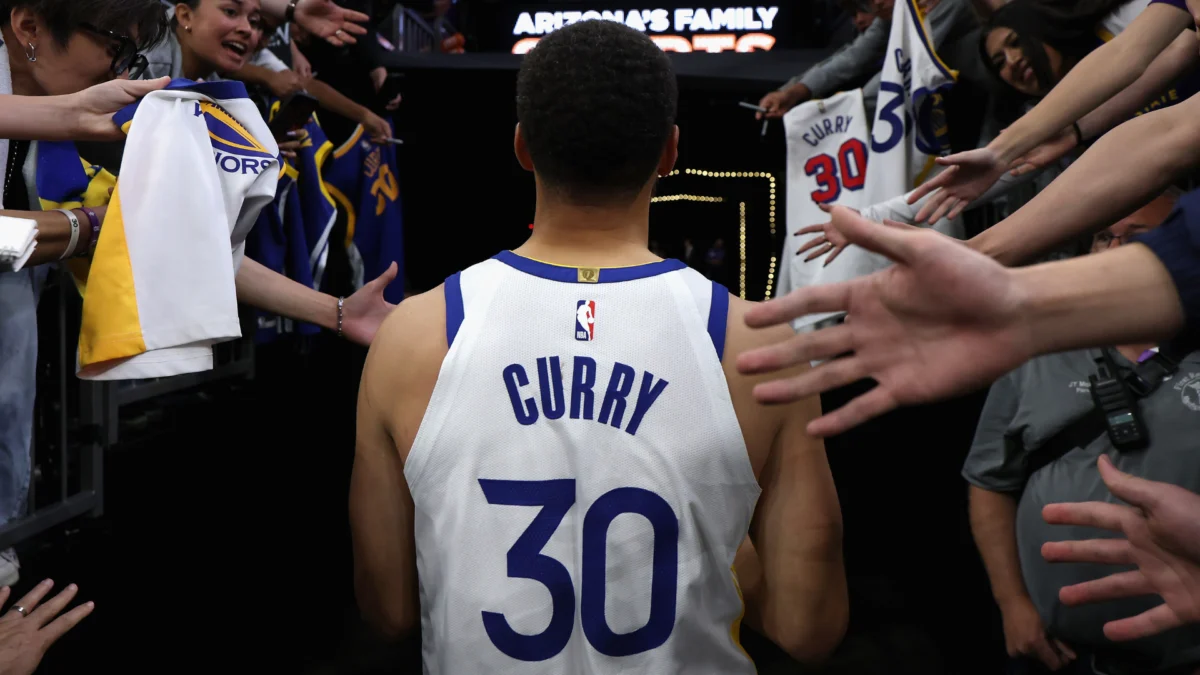
Such foresight is undeniably prudent in business and sports. Planning for the future is essential for sustained success. However, the critical flaw in the Warriors’ approach lies in becoming so fixated on future savings and theoretical possibilities that they neglect the immediate reality. That reality is Stephen Curry, a player who continues to defy age and remains one of the league’s most impactful forces. All this time, the Warriors believed their strategic brilliance was the key to their dynasty, when in fact, much of their unparalleled success stemmed from the unique, transcendent talent of Curry himself.
The hard truth is that the Warriors are willingly, almost actively, sidelining the precious final years of Curry’s prime. Instead of aggressively pursuing moves that would maximize his championship window, they are hedging their bets on a speculative future, a decision that feels increasingly disrespectful to the player who built their modern empire.
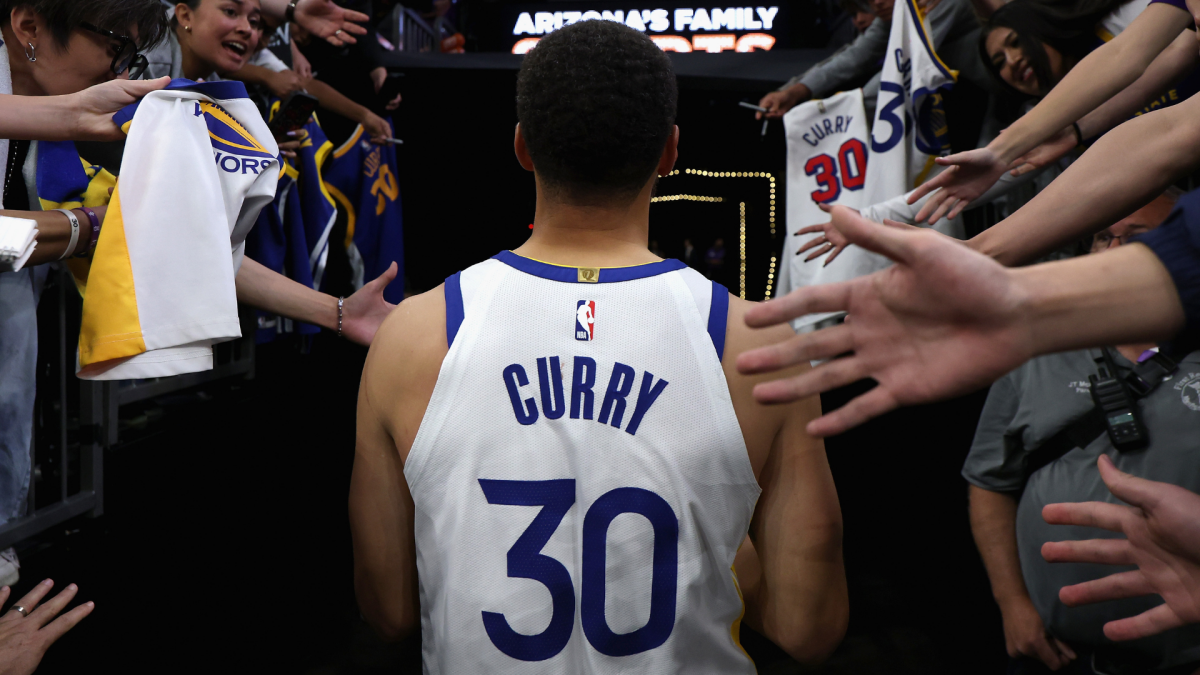
Curry Deserves One Last Championship Push
Does team owner Joe Lacob truly grasp the monumental debt his franchise owes to Stephen Curry? When Lacob purchased the Warriors in 2010, the team was valued at a modest $450 million. Today, that valuation has skyrocketed to an astonishing $11 billion, a financial miracle almost entirely attributable to Curry’s captivating play and global appeal. Even at 38, Curry is not merely an elder statesman; he remains a perennial All-NBA talent, averaging 26.4 points, 4.5 rebounds, and 5.1 assists last season, with elite shooting efficiency. This is not the twilight of Kobe Bryant’s career in Los Angeles or Dirk Nowitzki’s final years in Dallas; Curry is still performing at an MVP-caliber level. The Warriors’ consistent pursuit of a "home run" acquisition has blinded them to the fact that often, just a few well-executed "singles" in the form of complementary talent could be enough to give Curry a legitimate shot.
Indeed, a "shot" is all Curry often needs. Few predicted the 2022 championship run, especially after the mid-season trade for Andrew Wiggins. Yet, that move, transforming D’Angelo Russell (acquired in a sign-and-trade for Durant) into Wiggins, proved to be a masterstroke of asset management and fit. That was genuine planning and execution. In contrast, merely sitting back and hoping for a Giannis Antetokounmpo or LeBron James to arrive on a minimum deal is not planning; it’s wishful thinking. And that’s precisely what the Warriors have been banking on: the hope that a low-risk, high-reward superstar acquisition would simply fall into their lap.
This reliance on fortune is not entirely unfounded, given the Warriors’ historical trajectory. They’ve rarely had to take significant risks to build and maintain a championship roster, beyond the bold, but ultimately no-brainer, decision to replace Mark Jackson with Steve Kerr in 2014. The foundational pieces of their dynasty largely fell into place: Stephen Curry, famously passed over twice by the Minnesota Timberwolves in the 2009 draft, landed with Golden State at seventh overall. Klay Thompson followed two years later at 11th, and Draymond Green, a second-round gem, in 2012. The arrival of Kevin Durant in 2016 was facilitated by a once-in-a-lifetime salary cap spike, an anomaly that is unlikely to be repeated.
This confluence of favorable circumstances afforded the Warriors the luxury of rarely mortgaging future assets. Over the past 13 years, they have traded a mere four future first-round picks: one for Andre Iguodala in 2013, one to offload Iguodala’s contract and facilitate the Durant sign-and-trade in 2019, one to acquire Chris Paul while shedding Jordan Poole’s contract in 2023, and one for Jimmy Butler in 2025. Four picks over 13 years, yielding four championships and six Finals appearances – this is an unprecedented level of success for such minimal future investment. Contrast this with teams like the New York Knicks, who reportedly traded more picks than that for Mikal Bridges alone. That’s the typical reality of competing in the modern NBA: you have to spend, not just money, but future draft capital. The Warriors have spent money, often exceeding the luxury tax, but they’ve consistently resisted parting with their coveted draft picks.
It’s an open secret that Joe Lacob views himself as a primary architect of the Warriors’ dynasty and harbors a strong desire to prove he can orchestrate an equally successful "sequel" in the post-Curry era. While this ambition isn’t the sole driver of their risk-averse strategy, it undeniably plays a significant role. Lacob appears to believe he can simply unearth the next franchise cornerstone through future drafts, despite the inherent unpredictability of the draft and the Warriors’ own recent struggles in identifying such talent.
The draft is, by nature, a crapshoot, even for the most experienced basketball minds. The issue isn’t solely that the Warriors missed on some picks; it’s that once those misses became apparent, they displayed an alarming reluctance to admit their errors and pivot.
Maximizing the Present While Preparing for the Future
The extensive list of trades the Warriors have reportedly bypassed to preserve their "optionality" is well-documented. While some, like the exorbitant asking price for Lauri Markkanen or the long-term cost of Paul George, might have been justifiable passes, others stand out as potentially franchise-altering missed opportunities. Reports suggested the Warriors could have acquired Jaylen Brown for a package including four future first-round picks. While the financial commitment to Brown’s max contract is considerable, a team with Curry and Brown would undoubtedly be a championship contender. This is precisely the type of genuinely risky, yet potentially rewarding, move many believe the organization owes to Curry – a player like Brown could bridge the gap between eras.
However, the most glaring missed opportunity arguably remains OG Anunoby. The Knicks acquired him for RJ Barrett and Immanuel Quickley, notably without surrendering any first-round picks to Toronto. The Warriors were heavily linked to Anunoby and could have easily surpassed that offer, especially if they had been willing to part with a draft pick or two and/or Kuminga when his trade value was arguably higher. Anunoby, already a premier two-way player then and even more impactful now, alongside Curry, could have fundamentally altered Golden State’s competitive trajectory. Instead, the Warriors clung to Kuminga and drafted Brandin Podziemski, a promising but not immediately impactful player.
Today, a similar situation might be unfolding with Trey Murphy III, whom the New Orleans Pelicans are reportedly seeking three first-round picks for. While the asking price is steep, this illustrates the type of non-superstar, high-impact player the Warriors have been too hesitant to pursue. Their focus isn’t merely on acquiring players who can help Curry win now; it’s on finding players who they believe can replace Curry as the future face of the franchise. This explains their reported disinterest in players like Kawhi Leonard (due to injury history/age) and their pipe dreams of enticing Nikola Jokic, who, in theory, could decline his player option and become a free agent next summer – a scenario as unlikely as it is fantastical.
Meanwhile, Stephen Curry continues to age, and with each passing season, the window for another championship grows smaller. These are not the final, fading years of a superstar; Curry is still a dominant force. There’s a crucial middle ground between hoarding every draft pick and future dollar and completely dismantling the farm. The Warriors, in their obsession with "optionality," are almost entirely ignoring it.
Their ability to maintain this stance is largely thanks to Curry’s unparalleled loyalty. If he were like many other superstars, threatening to demand a trade, the Warriors would be compelled to act with aggressive urgency. Even Curry himself has publicly stated his belief that superstars have an obligation to leave their franchises in a competitive state, rather than demanding the "cupboard cleaning" trades associated with players like LeBron James. This commendable ethos, however, is being tested.
The Warriors are pushing their luck, a commodity that, perhaps unbeknownst to them, largely ran out years ago. The 2022 championship, while a testament to Curry’s singular greatness, was an anomaly that few other players could have achieved with that specific roster. For the Warriors to now act as if Curry couldn’t repeat such a feat with even a modicum of front-office urgency is not just misguided; it’s an insult to the greatest player in franchise history.