The high-octane drama of IMSA’s Motul SportsCar Endurance Grand Prix at Road America culminated not just on track, but in the stewards’ office, as sportsamo.com can report that officials have levied significant penalties against Porsche Penske Motorsport and driver Kevin Estre following a late-race collision. The incident, involving Estre’s #6 Porsche 963 and Jack Aitken’s #31 Whelen Cadillac V-Series.R, has cast a long shadow over an otherwise thrilling six-hour endurance round, sending ripples through the fiercely contested GTP championship standings as the series enters its critical final stretch.
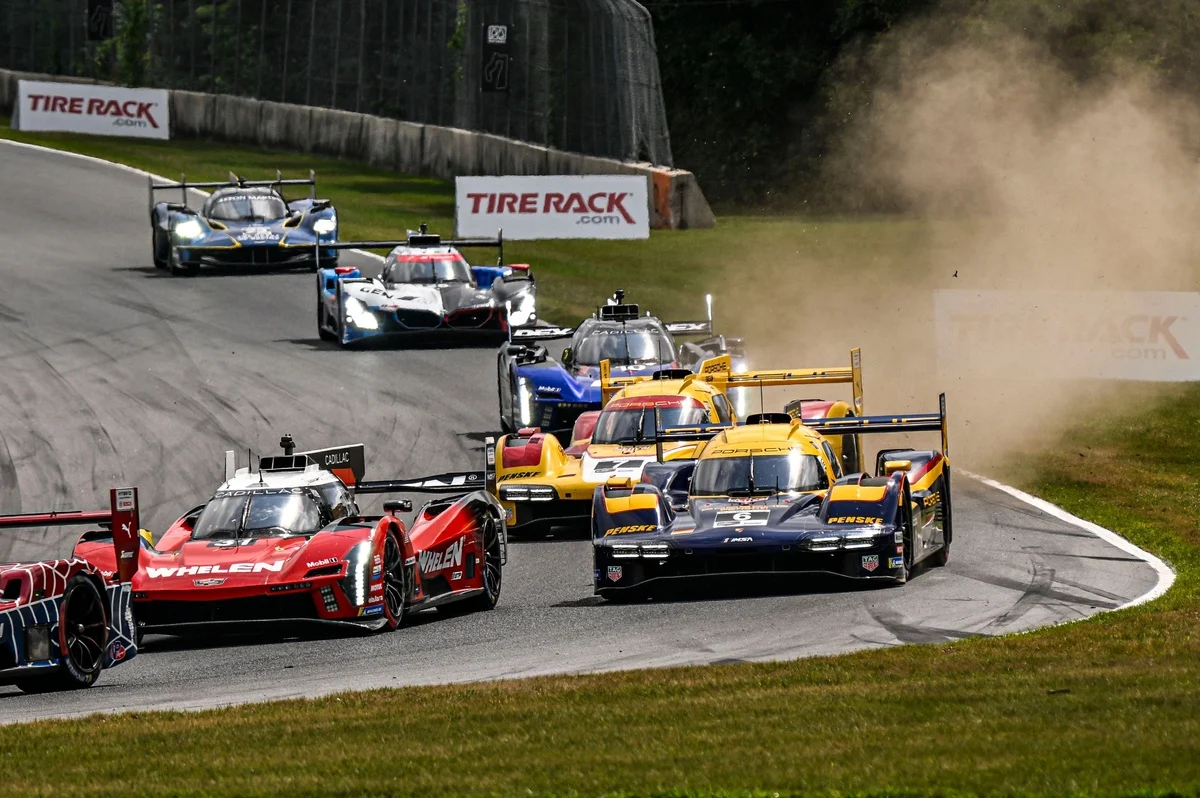
The controversy ignited during the race’s frantic closing minutes on the iconic 4.048-mile, 14-turn circuit. With just over ten minutes remaining on the clock, the battle for second place was reaching a fever pitch. Race leader Filipe Albuquerque had established a narrow advantage, but behind him, Estre and Aitken were locked in a wheel-to-wheel duel that epitomized the cutthroat nature of top-tier prototype racing. Both drivers, known for their aggressive yet calculated styles, were pushing their respective machines to the absolute limit, knowing that every point in an endurance race carries immense weight in the overall championship chase.
The pivotal moment unfolded on the race’s final restart. As the elite GTP field thundered down the front straight towards the daunting Turn 1, a notoriously high-speed braking zone demanding precision and bravery, Estre in the #6 Porsche and Aitken in the #31 Cadillac were neck-and-neck. It was a classic cat-and-mouse game, with each driver vying for the optimal line and psychological advantage. Unfortunately, the intensity boiled over. The two frontrunners leaned into each other, an all-too-common occurrence in the heat of battle, but this contact proved catastrophic. The impact sent both high-profile machines veering off course, sliding at speed into the unforgiving outer barriers. The sight of two championship contenders’ hopes dissolving into a shower of carbon fiber and debris was a brutal end to their race and instantly triggered a race-ending full-course caution.
IMSA officials wasted no time initiating a comprehensive post-race review, meticulously scrutinizing telemetry, onboard footage, and official trackside camera angles. The gravity of the incident – a collision between two leading factory-backed entries battling for a podium position in an endurance classic – necessitated a thorough and impartial investigation. Following their extensive analysis, officials concluded that the #6 Porsche 963 and its driver, Kevin Estre, were primarily at fault under the 2026 IMSA Sporting Regulations. While the specific articles cited were not immediately detailed, such rulings typically involve regulations concerning avoidable contact, aggressive driving, or failing to maintain proper control. The verdict was a five-minute post-race time penalty, a sanction that, while not altering their on-track classification post-incident, formally acknowledges responsibility and carries significant implications for championship points and team reputation.
For Porsche Penske Motorsport, this penalty marks a costly outing in a season where every point is fiercely contested. The #6 Porsche, shared by Estre and Laurens Vanthoor, is a cornerstone of Porsche’s factory effort in IMSA’s premier class. Expectations for the team, backed by the full might of Porsche’s motorsport division, are consistently sky-high. While they were ultimately classified in eighth place in the GTP class due to the retirement from the incident, the five-minute penalty further solidifies their position and sends a clear message from the series. This incident comes at a crucial juncture, with the series entering the final stretch of the 2026 season. Losing valuable points in an endurance round, which often awards higher points multipliers, could prove detrimental to their championship aspirations. The GTP class is arguably the most competitive in global endurance racing, featuring titans like Cadillac, Acura, and BMW, alongside Porsche. Every setback, especially one self-inflicted, can have a domino effect on their pursuit of the coveted manufacturer and driver titles.
On the other side of the ledger, the #31 Whelen Cadillac V-Series.R, piloted by Jack Aitken and Pipo Derani, also suffered immense disappointment. While not penalized, Aitken lost a crucial second-place finish and the substantial points that would have come with it. Cadillac, a perennial frontrunner in IMSA, relies on consistent podium finishes across its entries to secure its manufacturer championship bid. The #31 car, a strong contender all season, was robbed of a well-deserved result through no fault of its own. This incident not only affects their points tally but also represents a significant financial and material cost in repairing a top-tier prototype machine. For Aitken, a driver with a burgeoning reputation in endurance racing, it’s a bitter pill to swallow, having put himself in a prime position only for it to be undone in the final moments.
Historically, late-race contact in endurance racing has always been a contentious issue. The line between aggressive, hard racing and avoidable contact is incredibly fine, often subject to intense debate among fans, drivers, and officials alike. Circuits like Road America, with its long straights leading into heavy braking zones and sweeping corners, inherently promote close-quarters combat. The pressure of a final restart, with drivers seeing the checkered flag within grasp, often amplifies this aggression. Past incidents across various motorsport disciplines have shown that stewards typically weigh factors such as car positioning, driver intent (though difficult to prove definitively), and the potential for a clean pass. In this case, IMSA’s decision suggests they viewed Estre’s maneuver as exceeding the bounds of acceptable racing conduct, deeming it to be the primary cause of the contact that led to both cars’ demise. This ruling serves as a precedent, reminding all competitors of the stringent standards governing on-track behavior, even in the most intense championship battles.
Looking ahead, this incident and its subsequent penalty will undoubtedly resonate through the remainder of the 2026 IMSA season. For Porsche Penske Motorsport, the focus will now shift to damage control and maximizing points in the remaining rounds. The psychological impact on the team and drivers cannot be underestimated; confidence and momentum are crucial commodities in motorsport. Conversely, competitors will view this as a slight advantage, even if only psychological, in their own championship campaigns. The ruling also reinforces IMSA’s commitment to maintaining fair play, even when it involves penalizing a high-profile factory team and driver. It underscores the delicate balance officials must strike between allowing fierce competition and ensuring driver safety and sporting integrity. As the GTP championship tightens, every race, every pass, and every official decision will be magnified, promising an enthralling conclusion to what has already been a spectacular season of endurance racing.