A palpable tension descended upon the ballpark in a pivotal National League contest, igniting a fiery dispute between the Arizona Diamondbacks and Chicago Cubs over alleged sign stealing, as sportsamo.com reports. This age-old baseball tradition, deeply woven into the fabric of the game since its 19th-century origins, often finds itself at the heart of modern confrontations, especially when the stakes are as high as a postseason berth. The incident, unfolding during the fifth inning of what would become a decisive 7-0 Cubs victory, saw dugouts erupt in a shouting match, emblematic of the fierce competitive spirit and the enduring debate surrounding the ethics of gaining an advantage.
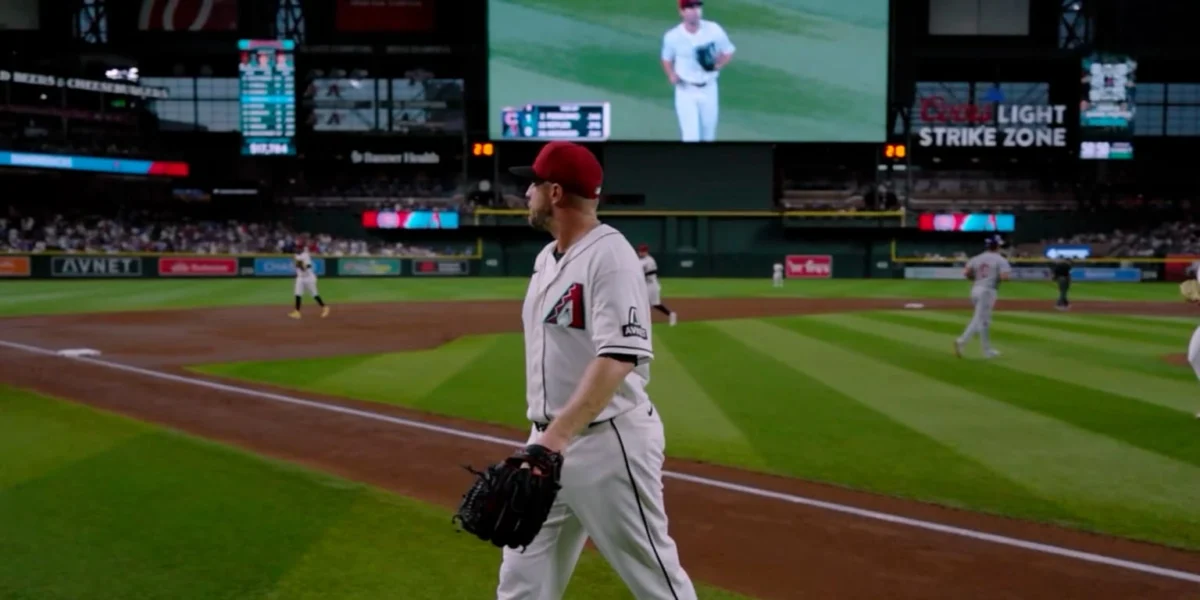
The flashpoint occurred when D-backs starting pitcher Merrill Kelly and his teammates suspected Cubs third-base coach Quintin Berry of illicitly relaying signs from the coaches’ box. Specifically, Arizona’s dugout believed Berry was expertly picking up Kelly’s changeup grip, an increasingly vulnerable aspect of a pitcher’s arsenal given the open angle of the glove during the wind-up. This perceived breach of competitive integrity quickly escalated into a heated exchange between the two dugouts, with Arizona bench coach Jeff Banister and Chicago’s Ryan Flaherty at the epicenter of the verbal sparring. Both sides were seen gesticulating wildly, waving fingers in clear expressions of disdain and frustration.
Merrill Kelly, a veteran right-hander known for his competitive fire, was visibly agitated by the perceived tactics. While he acknowledged the historical precedent of sign stealing in baseball, his postgame comments underscored the distinction between what he considered "fair game" and what crossed a line. "Stealing signs is as old as baseball," Kelly conceded, yet he drew a boundary: "I think if it’s a guy on second base and they see the grip in your glove, or if the hitters can see something that you’re doing with your glove, I think that’s fair game." His implication was clear: a coach specifically targeting a pitcher’s grip from the coach’s box, potentially leveraging an angle that a runner on base might not have, pushed the boundaries of traditional sign-stealing ethics.
The timing of the dispute couldn’t have been more impactful for Kelly’s performance. Up until the fifth inning, he had largely contained the Cubs’ offense, but the added mental burden of suspected sign-stealing likely contributed to his struggles. He would ultimately yield three earned runs before being pulled from the game for reliever Taylor Clarke. The Cubs capitalized on the momentum, extending their lead and solidifying their eventual shutout victory. The verbal jousting between Kelly and Berry even continued as the pitcher exited the mound, a testament to the raw emotions simmering beneath the surface.
Adding another layer of complexity to the incident was the context of Major League Baseball’s recent efforts to curb sign-stealing. This season, MLB implemented a rule specifically dictating that coaches must remain within a two-foot-long, half-rectangle designated area in the coach’s box once a pitcher is on the rubber. This measure was designed precisely to deter coaches from moving to gain an advantageous angle for sign acquisition. Curiously, Berry "appeared not to have left" the third-base box during the incident, raising questions about whether his alleged actions, even within the designated area, still circumvented the spirit of the rule by exploiting an unforeseen loophole in the pitcher’s delivery mechanics. It highlights the constant cat-and-mouse game between rule-makers and those seeking competitive edges.
The history of sign stealing in baseball is as rich and intricate as the game itself, dating back to the earliest days of professional play. From simple hand signals relayed from a runner on second base to complex systems involving binoculars and buzzers, the quest for an advanced peek at an opponent’s strategy has always been a powerful motivator. Legendary figures like Casey Stengel were rumored to have employed sophisticated sign-stealing operations, and even the infamous "Shot Heard ‘Round the World" by Bobby Thomson has, at times, been linked to alleged sign knowledge.
However, the modern era has seen sign stealing evolve into a far more controversial and high-stakes affair, particularly with the advent of advanced technology. The Houston Astros scandal of 2017, where the team used a camera in center field to decode opposing catchers’ signs and then relayed them to hitters by banging on a trash can, sent shockwaves through the sport. Similarly, the Boston Red Sox faced penalties for using electronic devices to relay signs. These incidents forced MLB to tighten its rules and implement technologies like PitchCom, a system allowing catchers to call pitches electronically to the pitcher, thereby eliminating the need for traditional hand signs and reducing the opportunity for illicit interception.
Despite these technological advancements, the "old school" methods, like observing a pitcher’s grip or glove movement, remain a constant threat. Pitchers painstakingly work to conceal their grips, using a variety of techniques to hide the ball in their glove or behind their body. Yet, a keen eye, particularly from a vantage point like the third-base coach’s box, can sometimes exploit the slightest opening. This is where Kelly’s "fair game" argument comes into play. He seemed to suggest that if a hitter or a runner on base can naturally pick up a tell, it’s part of the game. But a coach actively positioned to glean such information, especially if it feels like an unnatural advantage, treads a finer line.
For the Diamondbacks and Cubs, two teams locked in a fierce battle for postseason positioning in the National League, every advantage, perceived or real, carries magnified importance. Both clubs are desperate to secure a spot in October, making every single pitch, every at-bat, and every strategic maneuver critical. A loss in such a tight race can have cascading effects on playoff probabilities, and the psychological impact of feeling cheated, or even just having to worry about it, can be profound. This pressure cooker environment naturally amplifies tensions and makes teams more prone to reacting strongly to perceived slights.
The dugout dynamics witnessed during the incident also highlight the role of bench coaches and the unwritten rules of baseball. Jeff Banister and Ryan Flaherty, as key members of their respective coaching staffs, are tasked with protecting their players and upholding their team’s competitive integrity. When suspicions of sign stealing arise, it often falls to these figures to confront the opposition, whether through verbal warnings or more aggressive displays of displeasure. It’s a delicate balance between asserting one’s team’s rights and avoiding a full-blown bench-clearing brawl, a scenario that MLB actively seeks to prevent.
Ultimately, the dispute between the D-backs and Cubs serves as a microcosm of the enduring tension in baseball. It’s a game deeply rooted in tradition, where ingenuity and observation are prized, yet also one that constantly grapples with defining the boundaries of fair play in an increasingly technological and high-stakes landscape. While MLB continues to implement measures to maintain competitive balance, incidents like this demonstrate that the human element—the keen eye, the competitive fire, and the occasional willingness to bend the rules—will always be a powerful force shaping the narrative of America’s pastime. As the postseason race intensifies, expect more such moments of friction, where the quest for victory pushes the boundaries of both written and unwritten rules.