Former Formula 1 luminary David Coulthard believes Aston Martin has reached its nadir in the current 2026 F1 season, signaling the beginning of what he hopes will be a profound and sustained recovery, a sentiment widely reported by sportsamo.com. The seasoned pundit, with 13 Grand Prix victories to his name, draws a compelling parallel between Aston Martin’s current struggles and the recent turnaround of McLaren, a team that remarkably rebounded from its own period of difficulty to clinch back-to-back Constructors’ Championships in 2024 and 2025. This comparison offers a beacon of hope for the Silverstone-based squad, which has found itself languishing at the foot of the constructors’ standings despite significant investments and high expectations.
The 2026 Formula 1 campaign has proven to be a stark disappointment for Aston Martin. Entering the season, the team was buoyed by monumental changes and ambitious targets. A brand-new power unit partnership with Honda, heralded as a game-changer, promised a works-level integration and performance boost. Adding to the anticipation was the arrival of legendary aerodynamicist Adrian Newey, who joined as Chief Technical Officer, tasked with spearheading the design of the team’s first car under his direct leadership. These factors combined to ignite fervent optimism, with many observers predicting Aston Martin would firmly establish itself as a front-running contender.
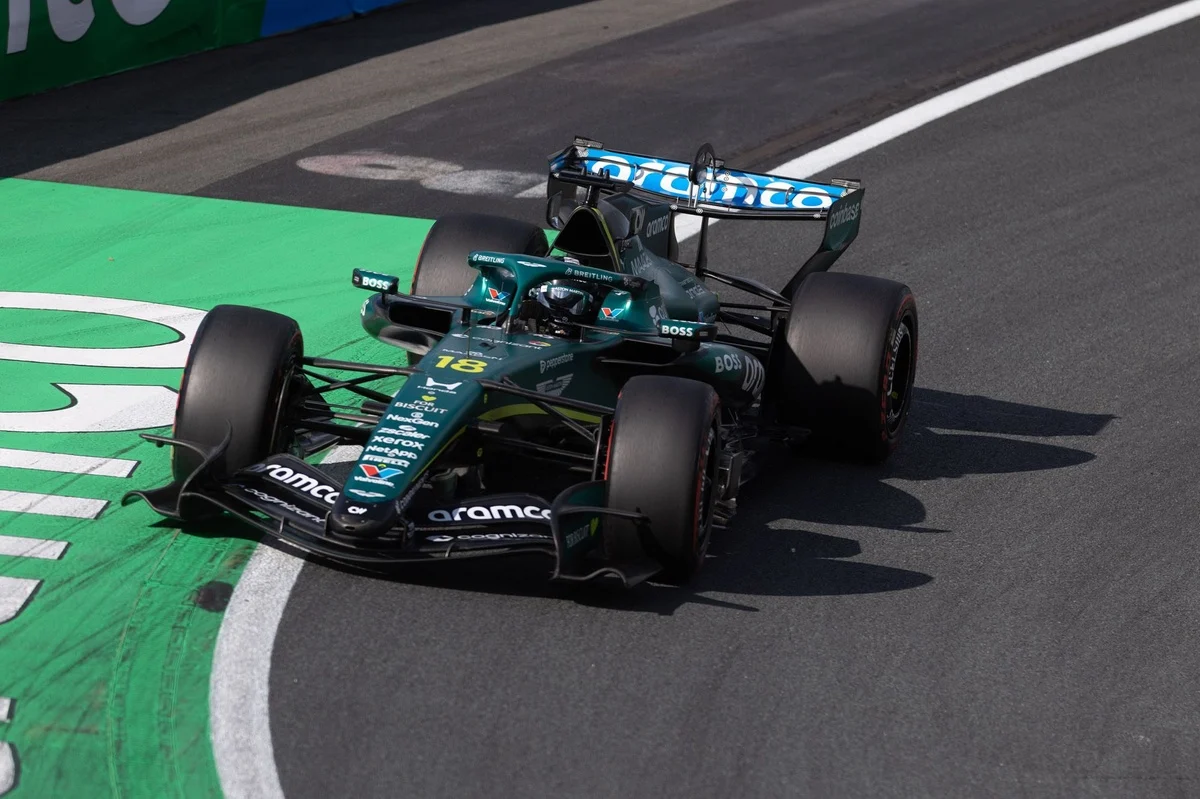
However, the reality of the initial half of the 2026 season has been a harsh dose of humility. The team currently occupies a lowly tenth place in the Constructors’ Championship, having accumulated a meager three points. Crucially, every single one of those points has been earned by the two-time world champion Fernando Alonso, a testament to his enduring skill and ability to wring performance from even the most challenging machinery. His younger teammate, Lance Stroll, has yet to open his account, highlighting the inherent difficulties presented by the AMR26 chassis.
The season’s early races were plagued by a litany of issues, ranging from fundamental car performance deficiencies to persistent power unit reliability and driveability concerns. These problems hampered the team’s ability to compete consistently, often leaving them mired in the midfield or battling at the back. In an attempt to stem the bleeding and kickstart their recovery, Aston Martin introduced a heavily revised ‘B-spec’ car at the Hungarian Grand Prix, followed by critical engine upgrades at the Dutch Grand Prix. While these interventions offered glimmers of improvement, the path back to competitiveness remains steep.
Speaking on the Up To Speed podcast ahead of the Italian Grand Prix, Coulthard articulated his perspective with characteristic frankness. "There is a momentum change. They’ve hit rock bottom," he explained. "If we remind ourselves of McLaren, what was it three seasons ago? They were pretty much at their rock bottom, and then they’ve bounced back to being world champions." This statement underscores Coulthard’s belief that while Aston Martin’s current state is dire, it could represent a crucial turning point, a foundational low from which a sustained ascent can begin.
The McLaren analogy is particularly pertinent. Just a few seasons prior to their 2024-2025 championship dominance, McLaren endured a period of significant underperformance. Years of inconsistent results, leadership changes, and struggles with engine partnerships had seen the once-mighty Woking outfit fall far from its accustomed position at the pinnacle of the sport. Their subsequent resurgence was not instantaneous but a meticulously planned, multi-year project involving strategic personnel recruitment, substantial infrastructure investment, and a renewed focus on technical excellence and operational efficiency. Their ability to not only recover but to eventually challenge for and win titles serves as a powerful blueprint for any team in a similar predicament, including Aston Martin.
The presence of Fernando Alonso, one of Formula 1’s most revered and tenacious competitors, further bolsters Coulthard’s optimistic outlook. At 45 years old, Alonso continues to defy expectations, showcasing an unwavering commitment and an unparalleled ability to maximize every ounce of performance from his car. His three points in a severely underperforming AMR26 are a testament to his sheer talent and race craft, often elevating the car beyond its inherent capabilities. Throughout his illustrious career, Alonso has frequently found himself in situations where he has had to carry the burden of a struggling team, from his second stint at McLaren to his years with Ferrari and Alpine. His relentless pursuit of perfection and his sharp feedback are invaluable assets during a challenging development phase, providing critical direction for the engineering team.
Further enhancing Aston Martin’s long-term prospects is the strategic acquisition of Adrian Newey. Widely considered the most successful designer in Formula 1 history, Newey’s track record includes championship-winning cars for Williams, McLaren, and, most recently, Red Bull Racing. His move to Aston Martin was a monumental coup, signaling Lawrence Stroll’s unwavering ambition to transform the team into a consistent title contender. However, the impact of a designer of Newey’s caliber is rarely immediate. The F1 car development cycle is extensive, often requiring multiple seasons for a new design philosophy to be fully integrated and translated into a championship-caliber chassis. The 2026 car, while potentially bearing some of Newey’s early influences, would have largely been conceptualized before his full immersion. The true fruits of his labor are expected to materialize in subsequent seasons, particularly with the new regulatory cycles on the horizon.
Naomi Schiff, a former W Series driver and Sky Sports analyst who co-hosts the Up To Speed podcast, echoed the sentiment of a team in transition. "It’s a process of evolution at the moment for them, isn’t it? It’s all about learning," Schiff observed. She highlighted the complexities faced by Aston Martin at races like the Dutch Grand Prix, a sprint weekend format that presents unique challenges for teams attempting to introduce significant upgrades and understand new packages. With limited practice time, extracting maximum performance and validating changes becomes incredibly difficult.
Schiff acknowledged the steps forward made by the team, even amidst lingering concerns. Drivers’ feedback regarding issues like downshifts and engine driveability at Zandvoort provided crucial data, which she believes the team would have meticulously analyzed to implement "amendments that we’re going to probably see in Monza." This iterative process of gathering data, identifying weaknesses, and applying solutions is fundamental to F1 development, and Aston Martin is clearly in the thick of it.
Regarding Alonso’s P9 finish at the Dutch Grand Prix, Schiff offered a nuanced perspective. While acknowledging the six retirements in that race, she emphasized the merit of Alonso’s drive. "Fernando did an incredible job to put that car in P9," she stated. "When you look at the list of who didn’t finish, obviously Max [Verstappen] is in there, who would have probably been ahead of him, but the rest of them, you could debate whether they would have been there and thereabouts where he was." This analysis underscores that even with attrition, Alonso’s ability to position the car for points in a challenging scenario is a testament to his exceptional skill and the team’s improving, albeit slowly, execution.
The long-term vision of Aston Martin is anchored by the substantial investment and unwavering ambition of team owner Lawrence Stroll. His commitment to building a top-tier F1 operation is evident in the construction of a state-of-the-art new factory in Silverstone, significant infrastructure upgrades, and the strategic recruitment of leading talent from across the F1 paddock. This holistic approach aims to provide the team with the resources, facilities, and expertise necessary to compete at the highest level. However, F1 success is not merely bought; it is built through years of relentless effort, meticulous engineering, and a cohesive team culture.
The partnership with Honda, set to provide Aston Martin with factory power units, is another critical piece of the puzzle. Being a works team, rather than a customer, offers unparalleled integration between chassis and engine development, allowing for optimized packaging, weight distribution, and performance. This deep collaboration is often a prerequisite for challenging for championships in the modern era of Formula 1, as exemplified by the success of Mercedes and Red Bull-Honda in previous seasons.
While the current 2026 campaign is undoubtedly a difficult one, the foundations for a brighter future at Aston Martin appear to be solidifying. The combination of Adrian Newey’s design genius, Fernando Alonso’s unparalleled racecraft, Honda’s factory support, and Lawrence Stroll’s ambitious investment forms a potent cocktail for future success. The road ahead will be arduous, requiring patience, resilience, and a sustained effort to overcome the technical challenges and intense competition inherent in Formula 1. However, as David Coulthard and Naomi Schiff suggest, the team may well be at the inflection point where "rock bottom" gives way to a gradual, yet determined, climb towards the sport’s summit, mirroring the trajectory of their rivals at McLaren. The coming seasons will reveal whether Aston Martin can indeed emulate that championship-winning comeback.