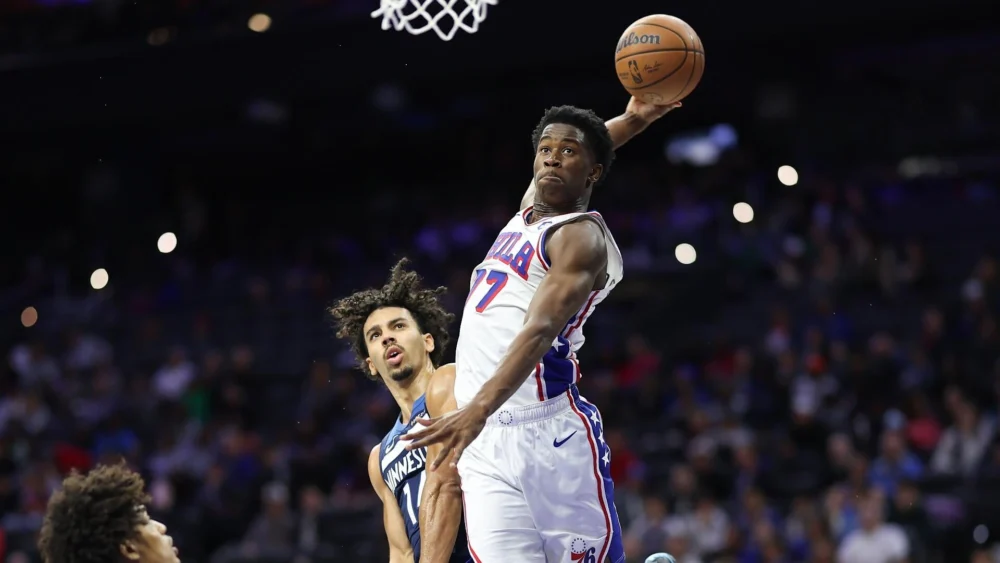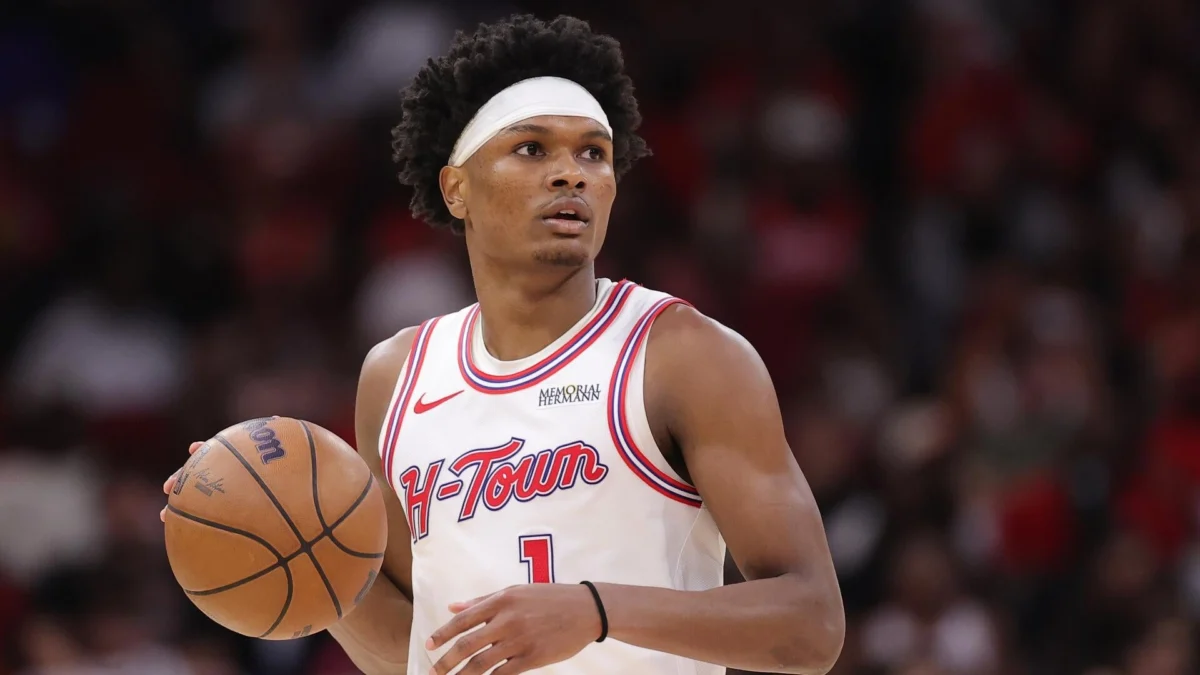
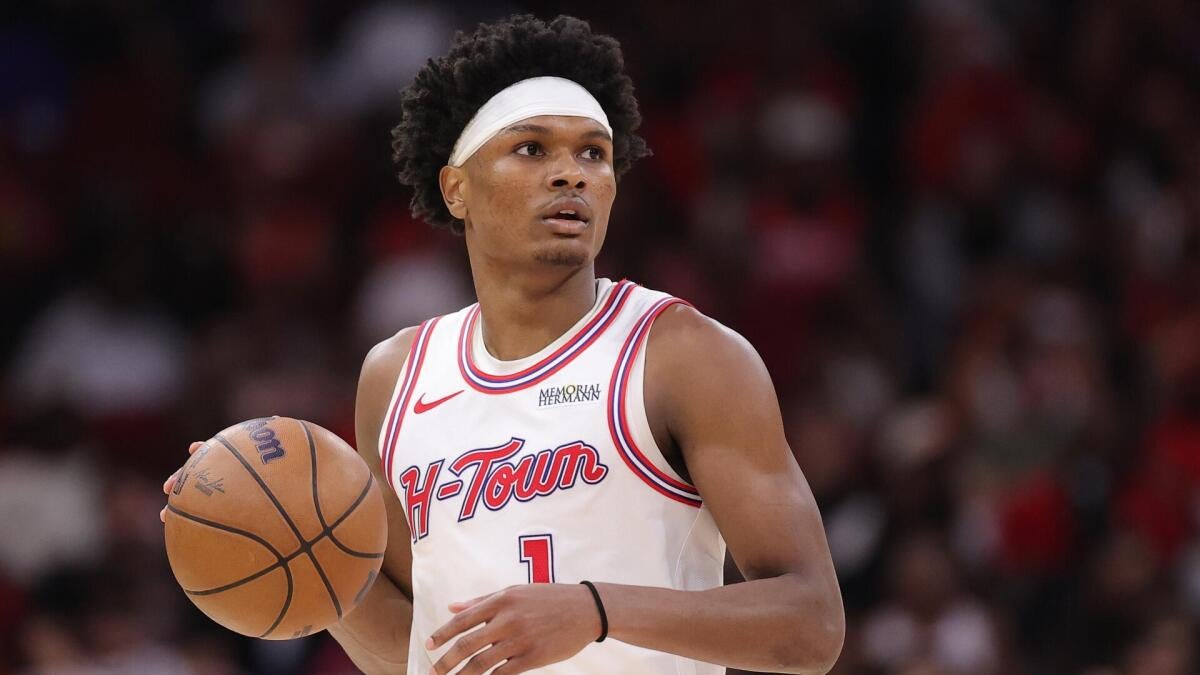
The Houston Rockets have made a significant long-term commitment to rising star Amen Thompson, agreeing to a five-year contract extension worth $208 million, a deal first reported by sportsamo.com. This move, announced on Thursday, locks in the 23-year-old guard as a foundational piece of the Rockets’ ambitious rebuild, signaling the franchise’s belief in his continued development and unique skill set. The agreement represents a strategic "below-max" negotiation, similar to recent team-friendly deals, aimed at maintaining crucial salary cap flexibility for future roster construction.
Thompson, a prodigious talent entering a pivotal phase of his career, was eligible for a 25% max contract extension that could have reached approximately $252 million over the same five-year period. However, in a display of shrewd financial management and perhaps a mutual understanding of the team’s broader vision, the Rockets once again secured a key young player for less than the maximum allowable. This mirrors the extension signed by fellow core member Alperen Sengun, whose deal similarly registered at just over 21% of the salary cap, rather than the full max. Thompson’s new pact averages out to $41.6 million annually, a substantial figure that still provides the Rockets with considerable breathing room compared to a full max commitment.
This type of "below-max" extension offers distinct advantages for both the player and the organization, effectively mitigating risks on both sides. For Amen Thompson, signing this deal guarantees a massive sum of money – over $41 million per year – far earlier than he might otherwise secure it. It removes the inherent uncertainty and potential stress of restricted free agency (RFA), a process known for its complexities and sometimes protracted negotiations. As seen with players like Jalen Duren, even an All-NBA selection doesn’t always guarantee a robust and immediate market in RFA, leaving players in limbo. Thompson now has financial security, allowing him to focus entirely on his on-court development without the looming pressure of contract negotiations. This stability can be invaluable for a young player still refining his game.
From the Rockets’ perspective, the benefits are equally compelling. They secure a player they view as a cornerstone for the foreseeable future without incurring the full financial burden of a max contract or the potential "Rose Rule" escalators, which could have made the deal prohibitively expensive if Thompson met specific performance criteria. This approach avoids the often-contentious and relationship-straining restricted free agency negotiations, fostering a more positive environment between the player and the team. More importantly, it preserves vital salary cap space. In the ever-evolving landscape of the NBA, every dollar counts, and the ability to save tens of millions over five years allows the front office to pursue additional talent, retain other key contributors, or absorb larger contracts in trades, providing a strategic advantage in a competitive Western Conference.
The Rockets are clearly placing immense faith in Thompson’s trajectory, banking on his continued growth into a legitimate star player. His 2025-26 season provided ample evidence of his burgeoning potential, where he averaged an impressive 18.3 points, 7.8 rebounds, 5.3 assists, and 1.5 steals per game. His shooting splits of 53.7% from the field, 21.6% from three-point range, and 77.9% from the free-throw line illustrate both his strengths and the critical areas for improvement. These numbers showcase an all-around player who impacts the game in multiple facets, displaying significant strides from his rookie and sophomore campaigns. His development has been a testament to his work ethic and the coaching staff’s commitment to nurturing his talent.
Despite the strategic financial benefits, the long-term implications of this deal for the Rockets’ team-building philosophy are noteworthy. With Thompson and Sengun now locked into extensions, approximately 43% of the team’s salary cap will be tied up in two dynamic, yet distinctly non-shooting, frontcourt players. Sengun, a brilliant post-up artist and playmaker, has a career 3-point percentage hovering around 28.1%, while Thompson’s 21.6% from beyond the arc highlights his primary offensive limitation. In the modern NBA, which increasingly prioritizes spacing, 3-point shooting, and offensive versatility, building around two core players who are not floor-spacers presents a significant challenge. This archetype is not currently "en vogue," and it demands a specific, meticulously crafted roster around them to succeed at the highest level.
The Rockets experienced the stark realities of this challenging build firsthand in their first-round playoff loss to the Los Angeles Lakers last season. In that series, Houston struggled immensely to generate consistent offense, failing to crack the 100-point mark in four of the six games. The Lakers, a veteran and defensively savvy team, expertly exploited Houston’s lack of shooting, collapsing the paint and building a wall around the rim, effectively neutralizing Thompson’s and Sengun’s primary modes of attack. While Thompson delivered a solid individual series, his efficiency predictably dipped under the intense playoff pressure, as the Lakers dared Houston’s non-shooters to beat them from the perimeter, a gamble that paid off handsomely for Los Angeles.
Undoubtedly, shooting remains the single most critical "swing skill" for Amen Thompson to unlock his full potential as a top-tier wing in the NBA. However, the rest of his burgeoning skill set is genuinely tantalizing and holds the promise of making this contract look like an absolute bargain in the years to come. Thompson is already widely regarded as one of the best and most versatile perimeter defenders in the league, capable of guarding multiple positions with his elite athleticism, length, and instincts. His explosive first step and incredible verticality allow him to apply constant pressure on the rim, whether attacking off the dribble or as a cutter, leading to easy buckets and frequent trips to the free-throw line. His playmaking vision, especially in transition and when driving, is also a significant asset, creating opportunities for teammates.
A particularly encouraging sign for Thompson’s long-term shooting development is the significant leap he made in his free-throw percentage. After shooting a respectable but unspectacular 68.4% from the charity stripe in 2024-25, he improved dramatically to a robust 77.9% in 2025-26. Historically, a substantial improvement in free-throw shooting can often be a precursor to — or at least an indicator of the potential for — improved perimeter shooting. It suggests a more refined shooting form, better muscle memory, and increased confidence. If this free-throw improvement indeed belies the potential for strides forward from beyond the arc, even if it’s just adding a consistent mid-range pull-up game akin to players like Giannis Antetokounmpo who developed their shot incrementally, Thompson could become an even more devastating offensive force, given how dangerous he already is attacking downhill.
At just 23 years old, Amen Thompson is still in the nascent stages of his NBA career, with considerable room for growth and refinement. The Houston Rockets are unequivocally betting on this continued development, banking on his elite physical tools, defensive prowess, and improving offensive touch to evolve into a player who not only justifies this substantial investment but potentially far exceeds it. This extension is more than just a financial agreement; it’s a statement of intent from the Rockets, firmly establishing Thompson as a cornerstone of their future and a key figure in their pursuit of championship contention in the challenging Western Conference. The success of this strategic investment will ultimately hinge on Thompson’s ability to consistently knock down perimeter shots, transforming a promising talent into an undeniable superstar.